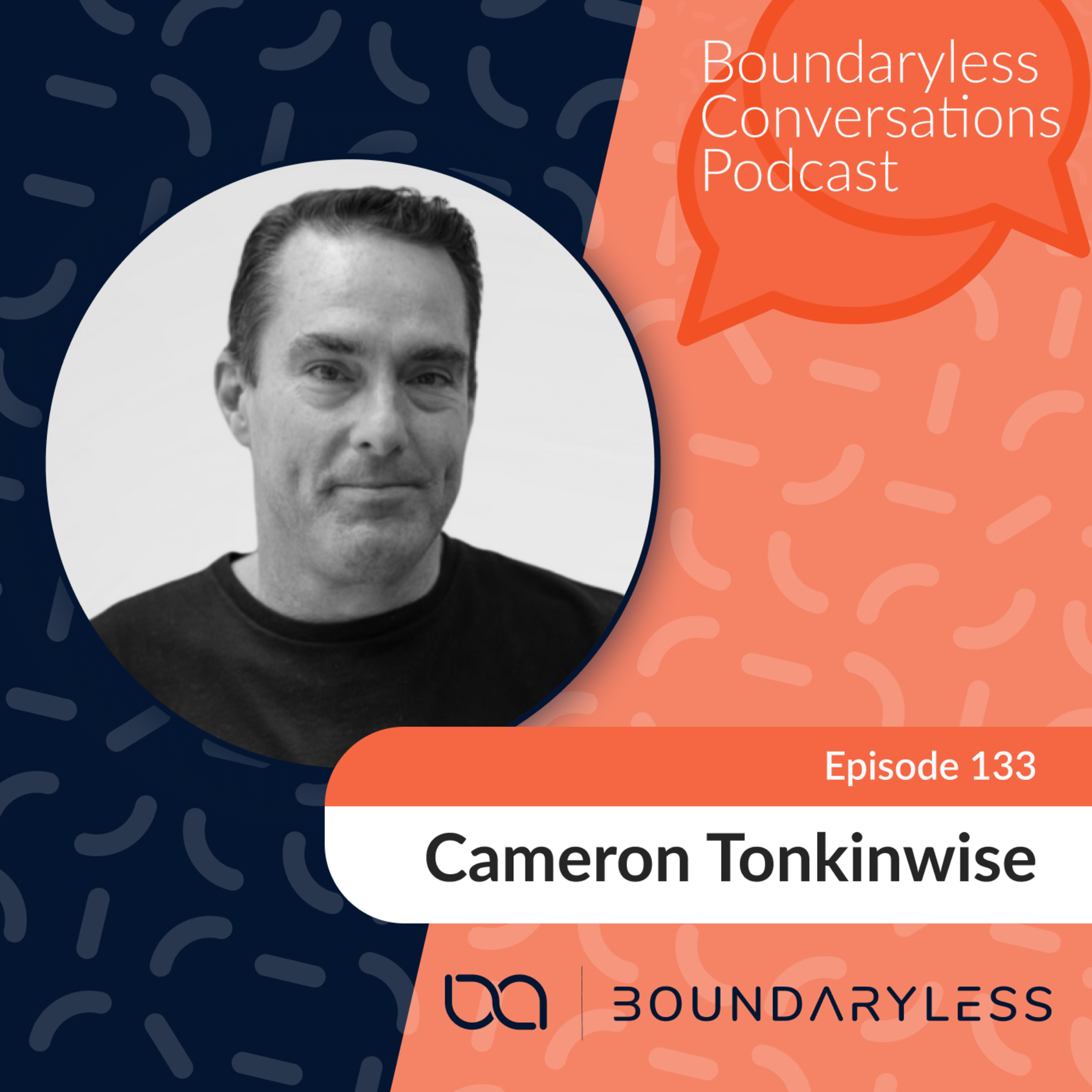
#133 - Is Another World Possible? Transition Design - with Cameron Tonkinwise episode artwork

EPISODE · Jan 20, 2026 · 55 MIN

#133 - Is Another World Possible? Transition Design - with Cameron Tonkinwise

from Boundaryless Conversations Podcast · host Boundaryless SRL

One of the leading voices in transition design for sustainability and societal change, Cameron Tonkinwise, Professor of Design Studies at the University of Technology Sydney, joins us for a deep conversation on what design must become in an era of systemic collapse.In this episode, he speaks on why the logic that drives most businesses - efficiency, growth, and value capture- is often fundamentally at odds with what people actually want and need, and how this tension is giving rise to alternative value systems that challenge dominant capitalist structures.We also explore the evolving role of universities as critical spaces for experimentation and sense-making, and why their ability to shape imagination, culture, and future practitioners may be more important now than ever.As A long-time observer of how design, education, and economic systems co-evolve, Cameron brings a rare ability to connect theory with lived societal consequences.He explores how design is both an ontological and political practice, shaping how people live, relate, and care for one another.Drawing on decades of experience in social innovation and design education, he shows why transition is about co-creating shared visions, not delivering pre-defined solutions.Whether you’re a designer, an educator, or someone curious about how our systems and values could evolve, this conversation is for you.Key Highlights👉 Design is not neutral problem-solving; it actively shapes how people live, relate, and understand what is possible.👉 Most business models are structurally optimised for efficiency and value capture - not for meeting human or societal needs.👉 Systemic transitions cannot be engineered, scaled, or optimised without losing their democratic and participatory core.👉Capitalism maintains dominance by presenting itself as the only viable system, while alternative value systems and economies already exist beneath the surface.👉 What counts as “value” is not fixed; it is produced by institutions, infrastructures, and cultural norms - and can be redesigned.👉 Universities play a critical role as spaces where future practitioners, imaginaries, and societal norms are formed - their decline risks narrowing the futures we can collectively imagine.👉 Designers’ unique contribution to transition lies in making change livable at the human scale, not in accelerating adoption or efficiency.Topics /chapters(00:00) Is Another World Possible? Transition Design - INTRO(01:34) Introducing Cameron Tonkinwise(03:33) Designing Transitions: From Small Interventions to Systems Change(10:40) Technology, and the Politics of Design(22:07) What does good design now look like?(29:05) The Designer’s Role in Interdisciplinary Systems(34:20) Creating new contexts for care(49:56) Breadcrumbs and SuggestionsRemember that you can always find transcripts and key highlights of the episode on our website: https://www.boundaryless.io/podcast/tonkinwise-cameronEpisode recorded on Dec 18, 25Find out more about the show and the research at Boundaryless at https://boundaryless.io/resources/podcast/Get in touch with Boundaryless:Twitter: https://twitter.com/boundaryless_Website: https://boundaryless.io/contactsLinkedIn: https://www.linkedin.com/company/boundaryless-pdt-3eoMusicMusic from Liosound / Walter Mobilio. Find his portfolio here: https://blss.io/Podcast-Music

One of the leading voices in transition design for sustainability and societal change, Cameron Tonkinwise, Professor of Design Studies at the University of Technology Sydney, joins us for a deep conversation on what design must become in an era of systemic collapse.In this episode, he speaks on why the logic that drives most businesses - efficiency, growth, and value capture- is often fundamentally at odds with what people actually want and need, and how this tension is giving rise to alternative value systems that challenge dominant capitalist structures.We also explore the evolving role of universities as critical spaces for experimentation and sense-making, and why their ability to shape imagination, culture, and future practitioners may be more important now than ever.As A long-time observer of how design, education, and economic systems co-evolve, Cameron brings a rare ability to connect theory with lived societal consequences.He explores how design is both an ontological and political practice, shaping how people live, relate, and care for one another.Drawing on decades of experience in social innovation and design education, he shows why transition is about co-creating shared visions, not delivering pre-defined solutions.Whether you’re a designer, an educator, or someone curious about how our systems and values could evolve, this conversation is for you.Key Highlights👉 Design is not neutral problem-solving; it actively shapes how people live, relate, and understand what is possible.👉 Most business models are structurally optimised for efficiency and value capture - not for meeting human or societal needs.👉 Systemic transitions cannot be engineered, scaled, or optimised without losing their democratic and participatory core.👉Capitalism maintains dominance by presenting itself as the only viable system, while alternative value systems and economies already exist beneath the surface.👉 What counts as “value” is not fixed; it is produced by institutions, infrastructures, and cultural norms - and can be redesigned.👉 Universities play a critical role as spaces where future practitioners, imaginaries, and societal norms are formed - their decline risks narrowing the futures we can collectively imagine.👉 Designers’ unique contribution to transition lies in making change livable at the human scale, not in accelerating adoption or efficiency.Topics /chapters(00:00) Is Another World Possible? Transition Design - INTRO(01:34) Introducing Cameron Tonkinwise(03:33) Designing Transitions: From Small Interventions to Systems Change(10:40) Technology, and the Politics of Design(22:07) What does good design now look like?(29:05) The Designer’s Role in Interdisciplinary Systems(34:20) Creating new contexts for care(49:56) Breadcrumbs and SuggestionsRemember that you can always find transcripts and key highlights of the episode on our website: https://www.boundaryless.io/podcast/tonkinwise-cameronEpisode recorded on Dec 18, 25Find out more about the show and the research at Boundaryless at https://boundaryless.io/resources/podcast/Get in touch with Boundaryless:Twitter: https://twitter.com/boundaryless_Website: https://boundaryless.io/contactsLinkedIn: https://www.linkedin.com/company/boundaryless-pdt-3eoMusicMusic from Liosound / Walter Mobilio. Find his portfolio here: https://blss.io/Podcast-Music

NOW PLAYING

#133 - Is Another World Possible? Transition Design - with Cameron Tonkinwise

0:00 55:10

No transcript for this episode yet

We transcribe on demand. Request one and we'll notify you when it's ready — usually under 10 minutes.

That Hoarder: Overcome Compulsive Hoarding That Hoarder Hoarding disorder is stigmatised and people who hoard feel vast amounts of shame. This podcast began life as an audio diary, an anonymous outlet for somebody with this weird condition. That Hoarder speaks about her experiences living with compulsive hoarding, she interviews therapists, academics, researchers, children of hoarders, professional organisers and influencers, and she shares insight and tips for others with the problem. Listened to by people who hoard as well as those who love them and those who work with them, Overcome Compulsive Hoarding with That Hoarder aims to shatter the stigma, share the truth and speak openly and honestly to improve lives. The Small Business Startup School – Business Notes | Financial Literacy | Retail Psychology – For Professionals & Entrepreneurs The Small Business Startup School Inc. Starting or buying a small business? While personal circumstances may vary, business patterns remain timeless. On The Small Business Startup School, we explore strategies, insights, and practical solutions to help entrepreneurs confidently navigate their journey.Hosted by Ola Williams—a retail entrepreneur, fintech founder, and financial coach with over two decades of experience—this podcast marries financial awareness and retail psychology with optimism to deliver actionable takeaways.Join us to learn, grow, and connect as we uncover the keys to business success.Let’s continue to learn together and be encouraged to keep on connecting! DIOSA. Carolina Sanper This podcast is a sacred space created by Carolina Sanper where you connect with your inner wisdom and embody your magnetic feminine power.It is the realization that the mystical realm is where you plant the seeds of your desired reality.It is a portal to your true essence: awareness, presence, and receiving with ease. Welcome home, DIOSA. 🖤 XXX Tech by SOVRYN Dr. Brian Sovryn The crossroads between technology, sensuality, and metaphysics - and the longest running anarchist podcast in the world! Brought to you by Dr. Brian Sovryn.

Frequently Asked Questions

How long is this episode of Boundaryless Conversations Podcast?

This episode is 55 minutes long.

When was this Boundaryless Conversations Podcast episode published?

This episode was published on January 20, 2026.

What is this episode about?

One of the leading voices in transition design for sustainability and societal change, Cameron Tonkinwise, Professor of Design Studies at the University of Technology Sydney, joins us for a deep conversation on what design must become in an era of...

Can I download this Boundaryless Conversations Podcast episode?

Yes, you can download this episode by clicking the download button on the episode player, or subscribe to the podcast in your preferred podcast app for automatic downloads.
URL copied to clipboard!