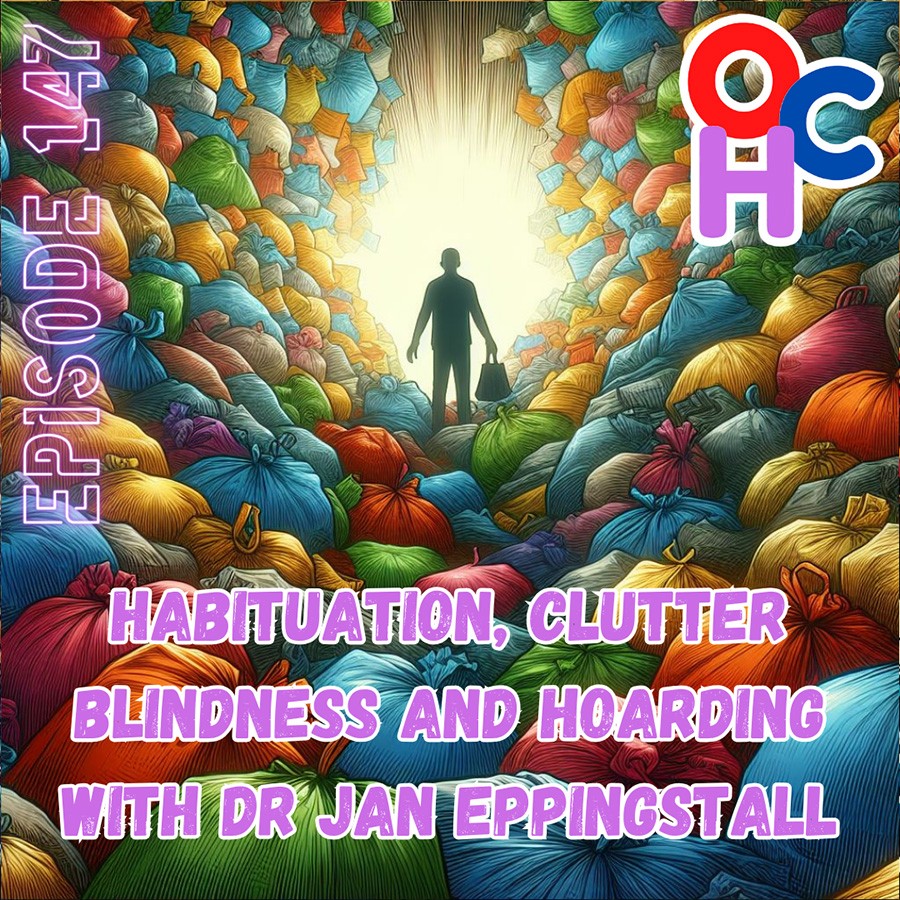
#147 Habituation, "clutter blindness", and hoarding with Dr Jan Eppingstall of Stuffology episode artwork

EPISODE · Jul 12, 2024 · 1H

#147 Habituation, "clutter blindness", and hoarding with Dr Jan Eppingstall of Stuffology

from That Hoarder: Overcome Compulsive Hoarding · host That Hoarder

Come to a Dehoarding Accountability Zoom Session: http://www.overcomecompulsivehoarding.co.uk/ticket Subscribe to the podcast: https://www.overcomecompulsivehoarding.co.uk/subscribe Podcast show notes, links and transcript: http://www.overcomecompulsivehoarding.co.uk/  With Dr Jan Eppingstall, today I delve into the fascinating world of habituation – which you might be familiar with as clutter blindness, but it’s so much more than that! – and its impact on our daily lives. We look at the role of habituation in hoarding, and offer practical techniques to revitalise our perspectives. Join us as we unravel the complexity of habituation and its relationship to hoarding, with valuable insights into improving our quality of life. Habituation and its Impact Definition of habituation Evolutionary and innate nature of habituation Habituation as a form of non-associative learning Role of habituation in daily life Individual experiences with habituation Positive, neutral, and negative aspects of habituation Habituation in hoarding behaviour Habituation and autistic people Effects of habituation on daily tasks and decision-making Habituation in relation to clutter blindness and hoarding Overcoming Habituation Techniques for combatting habituation Changing daily routines and habits Using different modes of transport Performing everyday tasks in different ways Looking at space through a different perspective The need for a variety of approaches to combat habituation Techniques to break habitual patterns The importance of stepping out of your comfort zone The importance of mixing up approaches and embracing what works Habituation in Mental Health and Therapy Deliberate use of habituation in mental health treatment Exposure therapy and fear ladder approach in treating fears and phobias Gradual exposure therapy for specific fears Maintenance of progress in overcoming fears and phobias Implications of habituation for individuals with autism spectrum disorders in relation to hoarding Insight into habituation and its impact on hoarding behaviour Techniques and advice for combating habituation Examples of habituation in daily life Experience of habituation in hoarding behaviour and clutter blindness The impact of habituation on decision-making and compensating for clutter Connection between habituation, working memory, and people-pleasing behaviour Understanding the impact of habituation on decision-making and perceptions Strategies for breaking habitual patterns and experiencing joy Mindfulness and gratitude in daily life Rekindling appreciation for familiar places and seeing them through fresh eyes Encouragement to find joy in life and invest in experiences over material possessions Non-associative learning: Becoming accustomed to stimuli. Habituation serves necessary and neutral purposes. Skipping stages and creating fear ladder for hoarding. Clutter organization leads to joy, not regret. Habituation in hoarding leads to inaction. Removing obstacles can make daily tasks easier. Visual cues and externalising tasks aid memory. Self-sufficiency Observing and changing habits leads to improvement. Experiences linger longer than material possessions. Habituation is normal and can be positive. Habituation is the process of becoming less responsive to repeated stimuli. Habituation serves purposes: prevent overwhelm, allow focus, survival. Good, neutral, negative aspects. Overstimulation and stimming behaviors. Reliance on visuals becomes less effective. Visual reminders and working memory limitations prompt use of external systems to record and remember tasks. Some people have a mindset of overcoming odds and finding resourceful solutions. Changing habits and mindset is key for improvement. Observing and reflecting on how things are done can lead to finding better, more efficient ways. The key is to have a mix of approaches for habit change. Variety is essential and embrace what works, even if just for a bit. The mind values experiences over possessions for lasting impact. Habituation is normal, can be positive, neutral, or negative, and can be used to reduce distress.

Come to a Dehoarding Accountability Zoom Session: http://www.overcomecompulsivehoarding.co.uk/ticket Subscribe to the podcast: https://www.overcomecompulsivehoarding.co.uk/subscribe Podcast show notes, links and transcript: http://www.overcomecompulsivehoarding.co.uk/  With Dr Jan Eppingstall, today I delve into the fascinating world of habituation – which you might be familiar with as clutter blindness, but it’s so much more than that! – and its impact on our daily lives. We look at the role of habituation in hoarding, and offer practical techniques to revitalise our perspectives. Join us as we unravel the complexity of habituation and its relationship to hoarding, with valuable insights into improving our quality of life. Habituation and its Impact Definition of habituation Evolutionary and innate nature of habituation Habituation as a form of non-associative learning Role of habituation in daily life Individual experiences with habituation Positive, neutral, and negative aspects of habituation Habituation in hoarding behaviour Habituation and autistic people Effects of habituation on daily tasks and decision-making Habituation in relation to clutter blindness and hoarding Overcoming Habituation Techniques for combatting habituation Changing daily routines and habits Using different modes of transport Performing everyday tasks in different ways Looking at space through a different perspective The need for a variety of approaches to combat habituation Techniques to break habitual patterns The importance of stepping out of your comfort zone The importance of mixing up approaches and embracing what works Habituation in Mental Health and Therapy Deliberate use of habituation in mental health treatment Exposure therapy and fear ladder approach in treating fears and phobias Gradual exposure therapy for specific fears Maintenance of progress in overcoming fears and phobias Implications of habituation for individuals with autism spectrum disorders in relation to hoarding Insight into habituation and its impact on hoarding behaviour Techniques and advice for combating habituation Examples of habituation in daily life Experience of habituation in hoarding behaviour and clutter blindness The impact of habituation on decision-making and compensating for clutter Connection between habituation, working memory, and people-pleasing behaviour Understanding the impact of habituation on decision-making and perceptions Strategies for breaking habitual patterns and experiencing joy Mindfulness and gratitude in daily life Rekindling appreciation for familiar places and seeing them through fresh eyes Encouragement to find joy in life and invest in experiences over material possessions Non-associative learning: Becoming accustomed to stimuli. Habituation serves necessary and neutral purposes. Skipping stages and creating fear ladder for hoarding. Clutter organization leads to joy, not regret. Habituation in hoarding leads to inaction. Removing obstacles can make daily tasks easier. Visual cues and externalising tasks aid memory. Self-sufficiency Observing and changing habits leads to improvement. Experiences linger longer than material possessions. Habituation is normal and can be positive. Habituation is the process of becoming less responsive to repeated stimuli. Habituation serves purposes: prevent overwhelm, allow focus, survival. Good, neutral, negative aspects. Overstimulation and stimming behaviors. Reliance on visuals becomes less effective. Visual reminders and working memory limitations prompt use of external systems to record and remember tasks. Some people have a mindset of overcoming odds and finding resourceful solutions. Changing habits and mindset is key for improvement. Observing and reflecting on how things are done can lead to finding better, more efficient ways. The key is to have a mix of approaches for habit change. Variety is essential and embrace what works, even if just for a bit. The mind values experiences ove

NOW PLAYING

#147 Habituation, "clutter blindness", and hoarding with Dr Jan Eppingstall of Stuffology

0:00 1:00:27

No transcript for this episode yet

We transcribe on demand. Request one and we'll notify you when it's ready — usually under 10 minutes.

HOMELAND HOMELAND The Church is a body not a building. It's the bride of Jesus Christ! Jesus is coming back for a mature bride. That means it's time for the church of Jesus Christ to move from milk to meat. This is the hour of maturity!HOMELAND is an announcement that the church is being set free. Only the church has the ability to transform the world. The kingdom's of this world will become the kingdoms of our Lord and Savior!All of creation has been waiting for this moment! Sons and daughters of God are rising up and taking their seat! DIOSA. Carolina Sanper This podcast is a sacred space created by Carolina Sanper where you connect with your inner wisdom and embody your magnetic feminine power.It is the realization that the mystical realm is where you plant the seeds of your desired reality.It is a portal to your true essence: awareness, presence, and receiving with ease. Welcome home, DIOSA. 🖤 LIGHTS, CAMERA, SMILE! Creatives Club Media Lights, Camera, Smile, is a podcast for anyone with a dream to share something with the world, out of the overflow of themselves - be it their mind, their heart, their personalities, and much more. Each of us are alive in this moment in time, with an innate ability to have ideas and create various things to benefit both ourselves and the people around us for a reason, and here, you will find the encouragement, the inspiration, and the motivation to do just that. Hosted by Cicily, founder of Creatives Club, she dives into various topics surrounding creativity and business. Exploring entrepreneurship for creatives in a corporate reality, sharing tips and tricks in a media centered company, answering questions regarding what a creative actually is are just a few of the things discussed on this podcast. Be encouraged to create for yourself as Cicily gets vulnerable by pivoting the camera to herself for the first time.To submit questions for Cicily to answer, or have her address certain t Solving for Change MOBIA Technology Innovations Solving for Change welcomes business and technology leaders to share stories of bold business transformation within complex organizations. In an era when technology and markets are changing around businesses, the key to staying competitive is to evolve in response to those changes.  MOBIA’s Mike Reeves and Marc LeBlanc investigate business transformation, deconstructing the challenges, ambitions, and market disruptions that drive companies to embark on transformation journeys, and exploring their unique approaches to achieving meaningful outcomes.  What sparks leaders to pursue business transformation? How do they overcome the challenges along the way? What are the keys to creating enduring change?  Through in-depth conversations with business and technology leaders, Mike and Marc answer these questions and explore how businesses evolve by pulling four key transformation levers: people, process, technology, and culture.

Frequently Asked Questions

How long is this episode of That Hoarder: Overcome Compulsive Hoarding?

This episode is 1 hour and 0 minutes long.

When was this That Hoarder: Overcome Compulsive Hoarding episode published?

This episode was published on July 12, 2024.

What is this episode about?

Come to a Dehoarding Accountability Zoom Session: http://www.overcomecompulsivehoarding.co.uk/ticket Subscribe to the podcast: https://www.overcomecompulsivehoarding.co.uk/subscribe Podcast show notes, links and transcript:...

Is there a transcript available for this episode?

Yes, a full transcript is available for this episode. You can read the complete transcript on the episode page.

Can I download this That Hoarder: Overcome Compulsive Hoarding episode?

Yes, you can download this episode by clicking the download button on the episode player, or subscribe to the podcast in your preferred podcast app for automatic downloads.
URL copied to clipboard!