
If you're a roaster, you've probably felt it. It's getting harder and harder to find great quality coffee at volumes and prices that still make sense. One origin that's often been overlooked in the search is Honduras. For years, it's been treated as a conventional origin, even though there are producers quietly growing exceptional coffees that never make it into the specialty conversation.
The Honduran Coffee Alliance is a social enterprise with a simple mission. Connect those producers and buyers in a fair, sustainable, and commercially viable way. They work with organized producer groups across regions like El Paraiso, La Paz, Olancho, and Comoyagua, helping them evaluate quality, tell their farm stories, and move coffees that belong on specialty menus, not buried in anonymous blends. What that looks like for roasters is previously untapped lots that heat your flavour and quality targets, a minimum of just four bags to get started, transparency reports so everyone can see where every cent of the purchase goes, and turning that first buy into a long-term trade relationship, not just a one-off.
If the idea reforming a long-term relationship with producers in Honduras is of interest to you, reach out to the Honduran Coffee Alliance so that they can work to find you a fit for your 2026 menu. Samples are going to be ready soon. You'll find Sean Warner's WhatsApp and email in the show notes. Send him a message and tell him you heard about the Honduran Coffee Alliance here and start exploring what these overlooked Honduran coffees could do for your menu today.
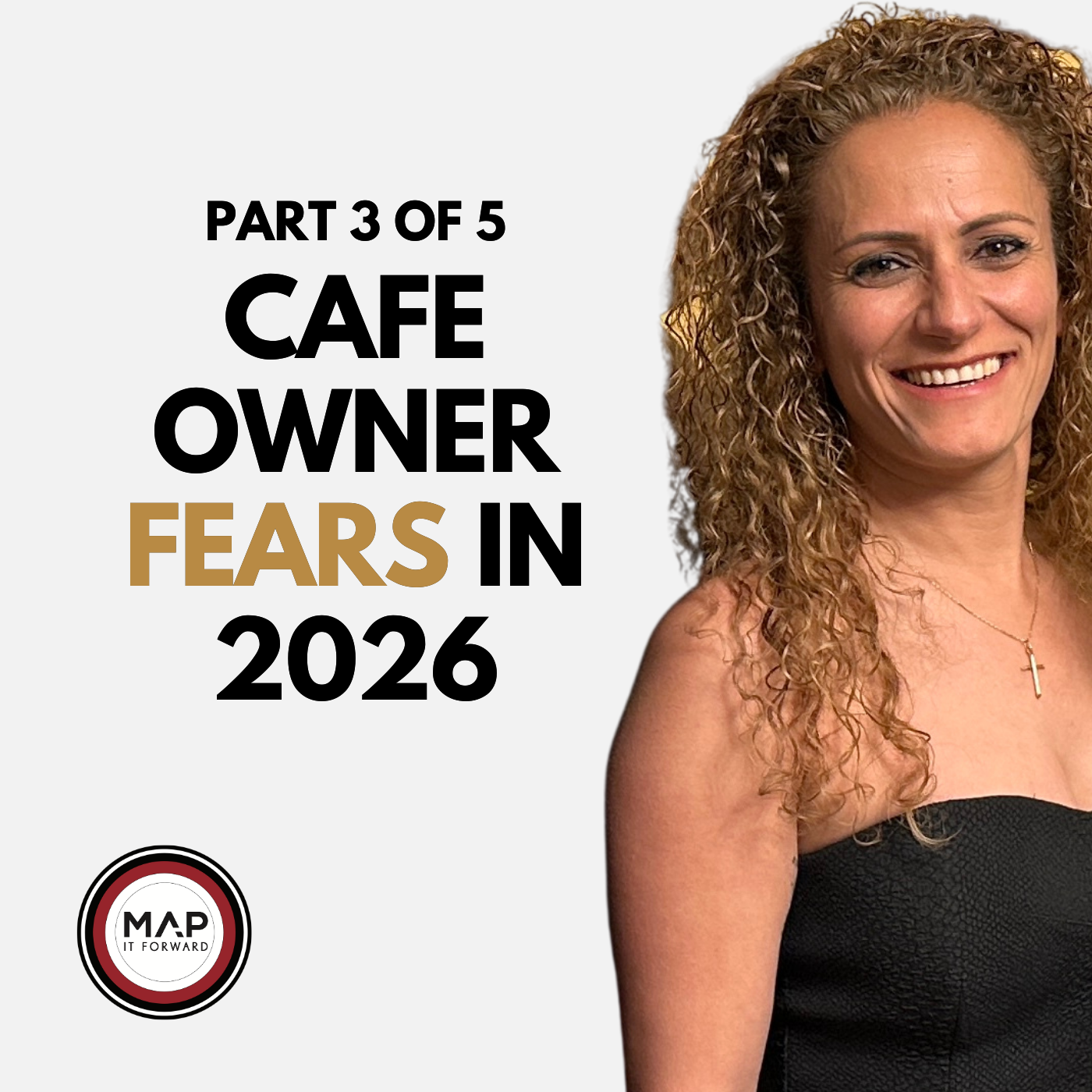
Check the show notes for links. Welcome to the Daily Coffee Pro by Mapper Ford friends. I'm your host, Lee Safar, and this is episode three of a five-part series with Carol Salom, from three tomatoes and previously almond bar in Sydney. We are talking about surviving 2025 and 2026 as a cafe owner.
And in this episode, we're talking about what, Carol, you're most nervous about, as a business owner, as this volatility continues to evolve through 2026. I guess I want to start with anchoring this in for saying hi and second of all saying, do you agree that the volatility is going to continue in 2026 from 2025? A happy bit, yes. I guess short answer, yes, I think it's going to continue.
I think obviously with the state of the world at the moment, with the stock market, the crypto, the gold, the silver, all of that, or everything's intertwined, I suppose, is very much a doom and gloom in the air. I don't feel it in our cafe because our cafe is doing well, but I can see that happening elsewhere. And I feel like if we don't continue on this trajectory that we're on, we could easily fall into that track. I feel like people who don't know what they're doing, who don't do the right thing, the right way for the consumer price, their products accordingly, are not going to survive.
So what used to be, say, 10, 15, 20 years ago, quite easy to set up a cafe and a charge from the average prices, that we're still able to survive. No, no, no, no, no, no, no, no, no, no, no. So you've got to be really smart about it. You know, before we used to look at what other people were charging and go, OK, so I'll charge a little bit more, a little bit less, same, right?
Now you can't even look at what they're charging because you've got to look at what you have to pay and what your costs are. You can't even think about what the competition is charging. You have to believe really strongly in what you're doing and charge accordingly, because, you know, I feel like people get afraid, I'm afraid to charge this price because they're not charging this price. To help people understand deeper what Carol's saying in Australia, that it's so saturated as it is in America, but in Australia, it's incredibly saturated with coffee, good coffee, average coffee.
There's not a lot of bad coffee that you're going to find in Australia, but there's a lot of coffee. And that saturation happened because of what we call a map of forward a success fallacy that people thought and continue to think that because there's so many cafes, it must be profitable. So I make great coffee, my wife, my partner, whatever, makes great muffins. How hard can it be to run a cafe?
If you're just listening to this, if you could see the giggle on Carol's face. Because we talked about this in the last episode and the clip went viral of you saying, you're not just opening anything. It was so good. But what happens is that people turn around and say, well, you know, on in the neighborhood that I'm in or the block that I'm on, there's five other cafes and they're all charging around the same price.
So maybe I have to change. That's the price that I have to charge. And in all the consulting work that I've ever done, when people say to me, how much should I be charging for a bag of coffee? Or how much should I be charging for a cup of coffee?
My first question to them is, how much does it cost you to run your business? What gross profits are you operating on? What's your target net profit? And they look at me like I'm talking in gibberish.
And what I hear you saying, Carol, is your pricing shouldn't be based on what other people are doing. It should be based on the way that you're running your business. Because the hype, again, we go back to hype, right? For many years, opening a cafe was a hype-driven business.
And usually the lowest barrier to entry. Why are you laughing about that? It's just the way that it is, right? It's just stupid.
And there's easier ways to make money than opening cafes. If you don't do this because you love it, this is not the business to get into. If you don't have hospitality in your blood, the way that many cultures do, this is not for you. It's just too fucking hard.
And dealing with humans is just too fucking hard with it. They're your employees or your customers. Like making coffee is the easiest part about this. But when you become a business owner, you don't have time to make the coffee.
That's not what you're going to be doing. So as we move through 2026, what do you think is going to happen to those cafes who don't understand to their business models and don't know their profit and loss statements and aren't pricing accordingly? What do you think comes next for them? Because I can't imagine that, I mean, they had to have just barely survived 2025.
Yeah. Yeah, I think number one is that they need to know their customer, right? So if they don't know who their customer is and what their customer is willing to spend, also, they need to understand the demographic. So, you know, I know where we are, the demographics, probably the disposable income, the understanding who these people are, what they're willing to spend on knowing your customer.
That's number one. If you don't know your customer, then you can't price accordingly, okay? So, I could, I reckon I could charge $30 for a particular dish, Australian dollars, but I don't. I charge $25 because I know that's okay.
I'm making enough profit, but it's also allowing that customer to not feel like we're taking the piss, right? Yeah. So, you have to be really aware. So, you know, recently we increased our coffee price by 20 cents a coffee.
And what I wrote on the announcement was, you know, we're increasing by 20 cents. This is our capital. We've done the calculation for you. If you've got a coffee from us, every single day, you know, it's going to be $70.
So, it's allowing them to see, okay, it's not so bad, it's only $70, right? So, you have to understand the psychology of the customer, you have to understand who your customer is, who their family is, all of that, before you can price accordingly. So, you think the business owners that are not understanding the pricing structures that they've got, after they experience it, you're like 2025. Do you think that we're going to see mass closures in 2026?
Are we at the point where those business owners have realized that they've got to the end of their runway? The stress is just so excessive now. Is that what we see in this next part of this cycle? Like, I mean, I really can understand Sydney, I suppose.
Yeah. And I mean Sydney. Okay. So, in Sydney, like we've talked about before, there's a lot of hype and there's a lot of fickle customers, right?
So, when there's hype, there's fickle customers, or there's no loyalty. The ones that survive are the ones that have the loyalty. So, if you're just busy because you were the next Instagram famous or some blogger put you on, you'll be busy because, sorry, gimmicks, yes. So, if you'll be busy for the next maybe three, six months, maybe, and you'll be like, oh my God, this is fantastic, I don't really, and they become complacent.
I don't have to do much, or I'm so busy, I don't know what else to do, right? That's not going to help, because once the next place comes up, that becomes the gimmick or the hype, they're moving on from you, they don't care about you. Unless you make them feel special or make them feel like they are a part of you, they're not coming back. Is that, do you think that that's new in business, or do you think, I know that it's not new for you in business, that's always been the way that you've run business, but do you think that people are starting to realise that that is actually the business model that creates longevity?
I don't know. I really don't know. I think people still feel like the hype is it? The Instagram ball, the social media, the influencers, I think that's what they think they need to do.
What's the next photo going to be? What's the next so-and-so going to be? Like, I'm the first to say that I am the worst at Instagram, right? But I'll post something, and I can guarantee you anything that has us in it.
So Sharon and I, or our staff in it, anything that has a human dinner, has way more following and way more engagement than if I'm photographing our food. Right. You know, something- Because you've built connection. It's humans.
People just want humans. They don't feel the connection with you. There's no loyalty. I mean, I've been to cafes as you have, where you may have gone four, five, six, seven days in a row, and they still have no idea who you are, right?
Damn. Yeah, of course. With us, we know someone's been there, and the next day, we know that they came to people. You know the name of people.
Yeah. Oh my God. How did you know? Oh my God.
It feels- When I go into a cafe now, and I've been in there like you're saying a few times, and somebody says, Hey, ma'am, have you been here before? I'm like, I feel like I'm an old school barista, because that was like table stakes. We all had the first thing that you're taught as a barista is learn who your customers' names are. Right.
And write their names on a cup, figure out how you remember this is just the first step in doing that. And I feel like perhaps that is being, I don't know, it's going away. I'm not sure. And is it because Starbucks stopped doing it, and then it came back?
Again, go ahead. I feel like, look, this goes into a whole other realm of Gen Z, but anxiety is the leading thing. The leading emotion. It's the problem.
It is the problem. There's a whole lot of anxiety. And whether that be I'm too anxious to speak to you, or I'm too anxious to be me in front of you, or I'm so worried about what's going on for me that I can't be here for you. Or, you know, it's all the anxiety that is existing in our world today that stops people from connecting.
Right. It's the connection that creates consumers, that loyal consumers, okay? In hospitality, the whole word hospitality is to be hospitable, to connect, to form relationships. If you can't do that, people don't feel any kind of welcome.
It's sterile. We've got customers that come from other suburbs that are 30 minutes away just to come and see it. Not shocked at all. We've got customers that work, our customers that are on the bar, that have still come on a regular basis to come and see us, okay?
Because we know who they are, we know their family, we know what they like. We make them feel like, they don't have to think, they just come and they do what they want to do. Except if you're a vegan, and Tony, you better fucking be listening right now, except if you're a vegan, and Tony says to you, we have vegan ice cream, and he serves you vegan ice cream, knowing it's not vegan ice cream. And he's like, I can't believe, I can't believe he was stupid enough to think that I would go and get you vegan ice cream.
I'm like, yeah, but Carol and Sharon would, he's like, yeah, but I wouldn't, so he would, of course, serve you full fat, full cream, cow ice cream. I will never forgive you, Tony, I'm sure you're listening to this. He is a bitch. But he doesn't care about me anymore.
But yeah, but I mean, even that right, that's him, with such a big connection with me that he knows that he can do that. And it's all love, right? Like it's a joke, and it's fun and, you know, like turning the 24 hours. Now, customers are like, I keep coming back.
You're just being abused all the time. Like, well, you obviously like it. Folks, another story about Tony, my mum and I went to Three Tomatoes to get a coffee. And, and I was sitting down and my mom's coffee comes and I'm like, Tony, what about mine?
And he said, Lee, no one cares. It's true. Like, but Tony, he's like, honestly, Lee, no one cares about you. Your mom's here.
Like this is, it's, it's just so, and, and I don't know why, but it makes you feel like more a part of the family when that happens, right? And, and that's what you get when you go to free tomatoes. That's the, you are treated as part of the family. And that's what people want.
I read an article today that said that the new luxury is connection. The new, so all the luxury brands are trying to figure out how to create connection between the consumer and the brand rather than just product because for a few years now, it's all been about, you know, how do I get access to the latest book and have I been invited to buy the latest Kelly, like all of these kinds of things, you know, before I moved to Dubai, I didn't know what any of these fucking words meant. They still don't. The Tony, the Tony does.
The Tony does. But, but I don't, I like, I know what these words mean. I don't have any of these things. And I'm not that kind of person, but previous to this, customers wanted the thing, the asset, they wanted the thing.
Now they want to know that the brand loves them. Oh, completely. Now they want to know the experience of the brand. So what you're saying really tracks about this next phase of the volatility that we're going through in the world, this is what the consumer is going to want at the cafe level, but also like in all forms of retail and consumerism.
Of course, I mean, look on a daily basis, I'd say we without like, and I don't want it to sound like it's premeditated or that we think about it, but in hindsight, when you look at it, we are therapists. We help people through the shit that they got. You're a constant in their life completely and it's someone that's not judging them. That's not going to think bad about them.
That's always going to be, like you said, the constant, I mean, not that we do it. And this is the thing, they can, they can sift out or they can smell the shit, they can smell the bullshit. So we're not, we're not that. And unless you are genuinely caring about your customer, they'll never be connection.
So you know, I think what you're saying is these luxury brands are trying to connect. They need to connect from a personal view rather than, you know, just because they have to or because they feel like that's the only way to get the consumer to spend. You know what the dangerous part of that is, is that when people are very intentionally looking at how do we hack that, what they tend to do is play on attachments and they manipulate the push and pull and that's already happening, right? Like with this idea of like, oh, my salesperson, I can't believe I know that this happens.
But you know, your sales consultant at Omee's has to call and folks I've never stepped into an Omee's store. So don't think that I know this from firsthand, but you know, your Omee's consultant rings you and says, Hey, if you're still looking for that handbag, we can offer it to you, but you have to come to a power store or whatever it is. Like that creates this sense of urgency and, you know, scarcity and that's not real connection. But it can be people can be tricked into thinking that it's connection because I trust me.
Yeah. And yeah, right. That's not real. No, at all.
If that's what they're going to try and cultivate more. That's scary. It's scary. Oh, it's many people.
I find that scary because I think, okay, people do that though, even in in non consumer situation. Oh, yeah. Oh, yeah. It's really scary because you go, okay, they're playing on the emotions of people, but they don't.
That's it. Once they bought the product, what are you doing in, you know, are you, are you connecting with the consumer? Are you making them feel special in a genuine way? I don't.
I don't know. I mean, I don't really like from a luxury brand and connection. I don't know if that's even ever going to be, it's ever going to be. And I think the one of the things that I've learned, one of the very many lessons that Dubai has taught me is that people who grew up in humble means, like us, we look at connection in a very different way than people who grew up.
Yeah. Right. And so our definition of connection and the definition of a connection with someone who grew up very wealthy, I think they have different definitions. It's something that I'm starting to think more on as I watch what's going on here.
And I think that they're happy to be manipulated. I think that that is. Yeah. Yeah.
I agree. I agree. Whereas we sniff manipulation and we're going to put you in the ground. See you.
Okay. Thank you very much. Right. All right.
Next episode, we're going to talk about what business owners should be prioritizing to survive 2026. So join us for the fourth episode of this series. Please have a peanut butter. Have an amazing rest of your day.
If you enjoyed this episode, consider supporting my beforeward our guests and advertisers on social media. Subscribe, hit the like button, leave a comment and share this episode with a friend. And if you'd like to support our work more directly, become a paid premium YouTube subscriber or Patreon backer to get early access to the show, add free directly to your inbox each week. You can find links in the show notes.