Good afternoon everybody and welcome to another episode of Find Your Model Health, the official podcast for those looking to optimize their long-term health and weight goals and understand how their body works. I am your host. I am Shameen Lenny. I am a biohacker and fitness and nutrition expert, and I'm also a certified aerodologist.
I'm very happy to have you back with me this week for another podcast episode, which I hope you will find very very enlightening. This was a spur of the moment podcast episode. The topic has been brought up a couple of times over the last week with some of my clients. So I find that if I can compile the information and the advice into podcasts, it's easy then to just send it to as many people as possible and hopefully answer some of their questions in that regard.
So this will be a series, probably two or three episodes, and I feel it's very important. So I do hope you find it helpful. This week we are looking at cholesterol and what exactly is cholesterol in regards to having high cholesterol. Before week one, I must remind you that the information in these episodes is for informational purposes only and should not be taken as medical advice.
Please consult your health professional before you undergo annual lifestyle changes. Okay, so let's start at the beginning. What is cholesterol? So cholesterol is a type of lipid and a lipid is basically a fat.
So it's like a waxy fat that your liver produces naturally and we need cholesterol. It's super important for our cellular membranes and structures and making sure that our cells are strong and have good buoyancy. It's essential for hormones, especially those female hormones and cholesterol is used in the synthesis of vitamin D. And we know that vitamin D is very important for an abundance of things.
So cholesterol, because it's a fat, it doesn't dissolve in water. So it can't travel through your blood on its own. And because of this, we need then to bind it to another molecule to help it move through the body. And that other molecule is known as a lipoprotein.
So lipo being that fat lipid and that protein being a protein molecule. Now lipoproteins are particles, likes I just mentioned made from fat and protein. And they then carry cholesterol and triglycerides, which we'll get to later on in the episode, trigger bloodstream. These two major forms of lipoproteins are known as, and you'll recognize these, low-density lipoproteins, so LDL and high-density lipoproteins.
There is a third one that you'll hear being thrown around, and that's V LDL. And we'll go into that in one of the other episodes because I don't want to confuse you too much. So here we see, if your blood contains too much of this LDL, cholesterol, so that's the low-density lipoprotein. So low-density meaning if you imagine these fat molecules as marbles, as tiny little marbles, if your blood contains too many of those marbles that are small enough to penetrate through certain areas of the body and tissue, if you're too much of those, you're going to be told you have high cholesterol.
And if something like this was left untreated, that high cholesterol can keep getting worse and worse and worse, and then can lead to many different health problems, cardiovascular issues, fatty liver disease, we'll see connected here and some other issues. So high cholesterol, in general, typically would give you no symptoms. Although, in my opinion, and some other health professionals' opinion, that is to be debated because if your high cholesterol is driven from insulin resistance or an inflammatory disease, then you will have symptoms there. But I suppose the concept that it typically causes no symptoms is there would be nothing to make someone think they needed to get.
They're cholesterol tested, even though I am any other health professionals, if we saw other symptoms would recommend they get their cholesterol tested. Does that make sense? I hope I'm saying that correctly and not confusing you too much. So this is why it's important to get your cholesterol levels checked on a regular basis.
So usually, if someone is going to get a blood panel done or have a checkup done, the cholesterol will be checked. So when you see that LDL cholesterol or that bad cholesterol, that's the type of cholesterol that gets carried to your arteries. And that's where you see it'll build up on the walls of your arteries. We see this plaque where then we may see that cardiovascular disease or stroke happen.
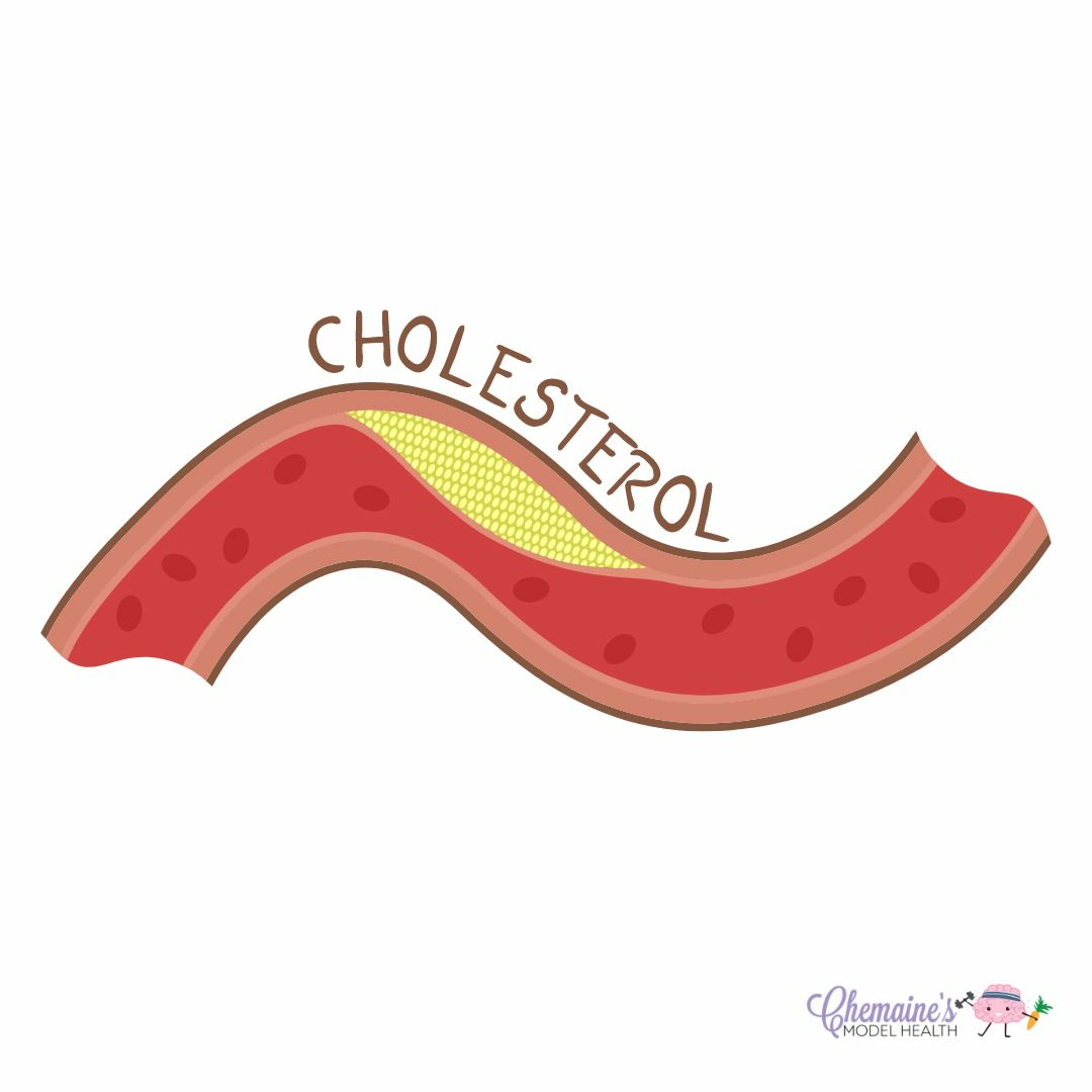
So you'll maybe have heard of someone talk about your doctor talk about plaque. So what they're referring to is cholesterol plaque. And if you think of your arteries as a tube and you get a lot of this plaque build up on both sides, kind of like tar, that is then going to narrow the space between your arteries. That is available for blood to flow.
So this is where you would see blood pressure or maybe heart palpitations because the blood is struggling to get through the arteries. And this is where we'll also see your increased chances of blood clots maybe happening. And that again could be connected to not just having this LDL, but also maybe the insulin resistance and inflammation as well. So if a blood cloth, for instance, blocks an artery in your heart or around your brain, it will cause a heart attack or a stroke.
And I know none of us want that to happen. And I definitely don't. That's why I'm putting this information out there. So according to the Center for Disease Control and Prevention, not that they have been the best people to listen to over the last few months, to be honest, but they say that over one third of American adults have elevated levels of LDL cholesterol.
I would argue that it's higher than that and just not enough people are getting checked or tested. But then on the other end of the spectrum, we see these HDL cholesterol or the good cholesterol. So if you think of, so remember I said the LDL, you think of little marbles and they're small enough to cause issues where they can penetrate into different areas of the body. So if you think of HDL cholesterol, then as like cotton balls, so they're bigger and they're fluffier.
So they're gentler on the body and they're too big to penetrate through a lot of areas and cause damage. So this is your high density, live of protein. And you all have heard it called your good cholesterol. So it can help return that bad cholesterol to your liver and then help it be removed from the body.
And this obviously helps prevent that plaque from building up. So this is where you'll hear in the help world people recommend that you try to increase your HDL cholesterol to improve your LDL cholesterol. When you have generally healthy levels of HDL cholesterol, it can then help with inflammation and then of course lower risk of blood clots and heart disease and so on. Just back to the LDL, there is another area of science looking at different aspects of LDL that maybe it's not completely LDL, that's at fault.
There's other variations of that low density like protein, that is the main problem. We might get into that in another episode, but I don't want to confuse you two more. That would be, it's more in the area of LPA. So LPA levels could be more significant than looking at LDL levels.
So I do have some studies on that if you would like to have a look at them, please reach out and let me know. But otherwise, that's a cholesterol. Now when we look at another area that I mentioned earlier, it was triglycerides. So these are a different type of lipids, so fat.
Triglycerides, they're a bit different from cholesterol. So while your body uses cholesterol, when it's good to do what it needs to do to make those healthy membranes, to make the hormones and so on, the body can use triglycerides as a source of energy. So again, triglycerides are a type of fat and fat as we know can be used for energy, provided it's in the correct dietary and lifestyle environment. I feel it's important you pick up on that.
Fat can be used as energy, provided it's in the correct context. When you eat more calories, then your body can use right away. It'll convert those extra calories into fat or triglycerides. And it stores triglycerides in your fat cells, so your hips, your butt, your abs, back your arms.
The body can also use lipoproteins to circulate triglycerides through your bloodstream. And that, of course, can then carry triglycerides to different parts of the body to be stored or to be used for energy. Now, if you regularly eat more calories than your body can use, then the calories can come from anywhere. So I'm not getting into macros right now, so just calories, your triglyceride levels can get high.
And that then, of course, like anything that's out of balance or we have in abundance, even water in abundance can be detrimental to your health. Even oxygen in abundance can be detrimental to your health. Anyway, so triglycerides, if they get too high, they can raise your risk of other health problems as well, along with those cardiovascular issues and stroke. So when you're getting your blood panel done to get your cholesterol done, you can also request that your doctor tests your triglyceride levels too.
There are different levels your doctor can use a lipid panel to measure your total cholesterol level, as well as your LDL and HDL and your triglycerides. I've noticed that some doctors will only measure the total, so it's important that you ask for the LDL and the HDL and the triglycerides as well, so you can get an idea overall of what inside your body is looking like in regards to fat. So your total cholesterol level is the overall amount of cholesterol in your blood, and that includes both the LDL and the HDL and the LDL and all that. And if your total levels of cholesterol are LDL are too high, your doctor will diagnose you with high cholesterol.
I want to just go over that though. If your total, if your doctor only tested your total cholesterol and it looked like it was quite high, that doesn't mean you have high cholesterol. The doctor would also need to test for LDL to determine if the cholesterol wasn't issue. So that's something, again, you want to make sure that your doctor is testing both the LDL to make sure they're not too high and then your HDL, so those cotton balls to make sure that's not too low either, because ratios are important here, just like ratios in regards to our hormones are important.
So there's a lot of controversy around cholesterol. A lot of the science or the recommendations that's given by many doctors or health professionals is very, very outdated. It was done many years ago, and usually that recommendation is to reduce your consumption of fats and animal products. That's usually the recommendation, and that really makes me cringe.
And I hate to pull people up on it, and I hate to try and correct people and say, sorry, that information is wrong, because I don't want to sound like a nodal. I just want to help people. So when I do usually try to correct people, I'll also provide the studies and the citations and everything, all the research I can, just to say, hey, I'm not just pulling this out of the air. This is what the science now is showing, and what you were told is quite outdated.
So some of the recommendations you'll get from your doctors and health professionals that maybe aren't on par with the science would be to kind of watch your fats, your saturated fats, your trans fats, which I totally agree with, and then your animal proteins. A lot of health professionals and doctors won't even bring up the association between carbohydrates or sugars with cholesterol. Then, again, that really frustrates me. But if you were to ask me, what are the two things we want to pay attention to?
Well, there's a third, there's a lifestyle factor. But the two things we want to pay attention to when it comes to the dietary aspect are going to be your carbohydrates, and I'm going to say carbohydrates, all sugars. You should look at your sugars and see where you are getting sugar from, so carbohydrates, and then those toxic fats, so your trans, hydrogenated, polyunsaturated fats, those are going to be your main contributors. So they're going to cause that inflammation, the insulin resistance, they're going to break cells through other pathways, so the cell membrane gets damaged.
There's a whole biochemical reaction, especially when we look at fats and the fats that your cell membrane is made of with and how they can tear the membrane apart or damage to the membrane, but it comes back to those toxic fats. So you've got your insulin resistance, you've got the damage there on a cellular level, you've also got well dehydration, which is going to be another, it's going to be directly connected to too much fat, trans fats and sugar. So then dehydration is going to damage the cells and how the body transports stuff. And then also the gluggie, sticky blood that we see caused by blood clots is directly connected to those excess carbs and trans fats again.
So depending on your current diet and what it looks like, you may not actually even need to worry about your good fats, like your saturated fats or what kind of animal products you're consuming. Oh, and that per lifestyle factor that I mentioned, that's going to be your stress. Stress is a huge contributor to cholesterol issues. Again, not to sound like a broken record, but we get that inflammation, we get the insulin resistance from chronic stress, we get the inability for cells to function properly, reduction in ATP production, we generally get good issues, we generally have liver issues, like there's a whole host of things, so stress would be that lifestyle factor.
So when looking at nutrition, you'd have to look at your overall eating template and how you eat overall and not just try to target one macronutrients and say, okay, I can't eat animal proteins. If you ask me, that's just silly. You would want to be looking at it and I say this to people all the time, you can't just look at one macronutrient, you can't just do one meal plan, you have to look at everything and say, okay, what will this do? For instance, apple cider vinegar, okay, that's going to activate the vagus nerve, stimulates digestive enzyme, stomach acid, which is going to help emulsify any fats that I take into the body.
It's also then going to support my liver in liver functioning and my kidneys and help with detoxification or movement or excretion of bad fats. So you have to look at everything. You can't just say, I'm not going to eat animal products because generally that's not going to be the problem. It's going to be a lot of other stuff.
And of course, I'm not saying animal products won't cause a problem. Like if you're eating barbecue, charred animal products that are not grass fed and they're full of bad fats and other toxins, of course, that's going to be a problem. The same way if you're eating greasy hamburgers all the time, like that's going to be a huge problem for cholesterol. The same way with hot dogs and toxic bacon in that it's like not clean and like, it's a bad part of the animal products.
That recommendation is correct, but it doesn't mean you totally eliminate a whole macronutrient. You have to look at everything else is the animal lean is a grass fed is a fed antibiotics. What context am I cooking it in? What context am I eating it in?
What food pairing? What timing? Like there's lots and lots of stuff that needs to be taken into consideration. I don't want to go on to be able to that too much, but in all your body does need cholesterol to function properly, including having some amounts of LDL.
But again, if your LDLs are too high, then we're going to have a problem. So in 2013, the American College of Cardiologists and the American Heart Association, again, not that they're the best people to be listening to either because there's a lot of controversy around the American Heart Association and the stupid stuff they recommended over the years. But back in 2013, they did develop guidelines for the treatment of high cholesterol. This may be where your doctor is getting some of those recommendations from, but under these new guidelines, in addition to your cholesterol levels, treatment recommendations do consider other risk factors for heart disease.
These risk factors connected to high cholesterol and cardiovascular issues include diabetes and estimated 10-year risk for cardiac events such as heart attack or stroke. Diabetes, they're back to that insulin resistance. They didn't specify type one or type two before anyone pulls out their hair. It just says diabetes.
What your normal cholesterol levels are, it depends on whether you have other risk factors involved. Back came out from that 2013 guidelines. So these newer guidelines as well, they also recommend that if you don't have risk factors or the risk factors for poor health or heart disease, your doctor should prescribe treatments only if your LDL is greater than 189 milligrams per deciliter and to do that, they should be taking a dietary approach first, in my opinion. But I have heard of doctors say that diet doesn't impact it as much as these medications will help you.
Okay, so just a quick look at cholesterol guidelines. Just really quick, I don't want to go into this. So there are some averages that are acceptable. So just looking at total cholesterol lower than 170, borderline 170-199 high 200 or higher, and they don't have a specific low for total cholesterol.
Generally anything lower than 170 is going to be good. Okay, I'm going to go into this. So the causes of high cholesterol, like I mentioned, they're not going to be your foods as much as in like cholesterol-containing foods, like your good fats, but they're going to be your bad fats. So your trans fats, your hydrogenated fats, your polyunsaturated fats, they're going to be big contributors along with excess carbohydrate consumption and then consumption of those damaged proteins.
So that could be your chard steak, your rose hot dog, your greasy hamburgers, stuff like that pepperoni, greasy stuff, so stuff like that along with your lifestyle influences. So that could be stress. That also could be a sedentary lifestyle, because if we go back to the beginning where I mentioned that if you consume excess calories and you're not getting rid of them, they're going to accumulate in the body. But if you're using them and burning them off, then you're going to have less or lower amounts of lipoprotein circulating in the body because you're burning them off.
So sedentary lifestyle is going to play a part here. Your genetics can also affect your chances of developing high cholesterol. So genes are passed down from parents to children and certain genes instruct your body on how to process cholesterol. In fact, so if your parents have high cholesterol, you're going to be at high risk of having it, but that's not definitive.
That doesn't mean you're definitely going to get high cholesterol. You can change that outcome. So we look at stress, sedentary lifestyle, sleep is going to be a big player in cholesterol. People won't even think of sleep, but sleep increases your chances of having insulin resistance and how your body uses fuel and also how it responds to inflammatory molecules.
If your sleep is a mess, then you and you get a diagnosis of high cholesterol. You want to be looking at your sleep. And then of course your organs is your liver healthy. How are your kidneys?
And this is where urology and sclerology can help and we can look at the eyes and see are there any signs here that shows us maybe the kidneys are having some issue or is there anything that shows us the liver is having an issue? Can we see toxins in the iris? Can we see a yellow tinge in the sclera? Do we see excessive blood vessels in the white of the eye that could tell us there's kidney issues there?
So all of that's going to be important too. And then in rare cases, high cholesterol can be caused by what's called familia hypercholos, familia hypercholos, this is a tongue twister, hypercholos, dralemia. And this is a genetic disorder which prevents your body from removing LDL. You know, I could go back and edit that out, but I can't be bothered.
You get what you get. You're here to learn you're not here for proper punctuation and grammar. Anyway, so according to the National Human Genome Research Institute, most adults with this condition have total cholesterol levels above 300 milligrams per deciliter. So that's total and that's quite a law and then LDL levels above 200 milligrams per deciliter.
So yeah, if we saw that on a blood panel, that is our high cholesterol that would be concerning. Again, other health conditions such as diabetes and hypothyroidism that can also increase your risk of high cholesterol due to this whole feedback loop that the body is one system and all of this stuff is going to affect other parts, which is why it's so important that we address the body as one whole system. Like here's an example. I did a consultation yesterday and straight off the bat, I got asked for a meal plan for weight loss.
And I'm like, hold on, let's just see what's going on with your body first. So during the consultation, I'm able to ask all these questions and see if there's any underlying issues, which of course there was. But if you didn't look at the body as a whole system and you just gave someone a meal plan or made one silly recommendation, you could end up causing more damage than good and hurting that person even more. So I'm going to leave it at that.
There was quite a lot of information there. You may need to listen to it again and reach out to me if you have any questions or any comments or anything you need clarified, any studies, anything like that. I think the big thing I want you to take away from this episode right now is that one of the biggest connections we see to high cholesterol nowadays, okay, the three again are going to be that lifestyle factor of stress, that overconsumption of carbohydrates, which is going to cause the insulin resistance, it's going to stress delivery, it's going to cause an overproduction of triglycerides and inflammation and so on. And then where your meat and saturated fats are coming from, like the sources, there is no need to eliminate them completely.
We're looking at sourcing, we're looking at context, we're looking at timing, we're looking at combinations, all of that sort of stuff. So that's the main stuff I kind of want you to take away today. Keep an eye out for the follow-up episodes where I'll be going into a bit more detail on different aspects of cholesterol, but I hope you found that really helpful. You can always find me on Facebook or Instagram, so that's chamainesmodelhealth or you can email me through chamainesmodelhealth.com if you have any questions or feedback or want me to cover at topic even.
As always, I appreciate you for joining me and sending time with me. I know time is precious and I would really appreciate it if you would share this information with someone you love or someone you feel it would help. I really believe that now is the time where we're learning to doctor ourselves and understand how our body works and heal ourselves. So help me to help you, to help your loved ones.
So you're helping everyone, maybe we can make some really nice changes as we move forward in these crazy times. So thank you so much for you joining me and enjoy the rest of your week. Stay warm and I will chat to you guys soon. Bye-bye.