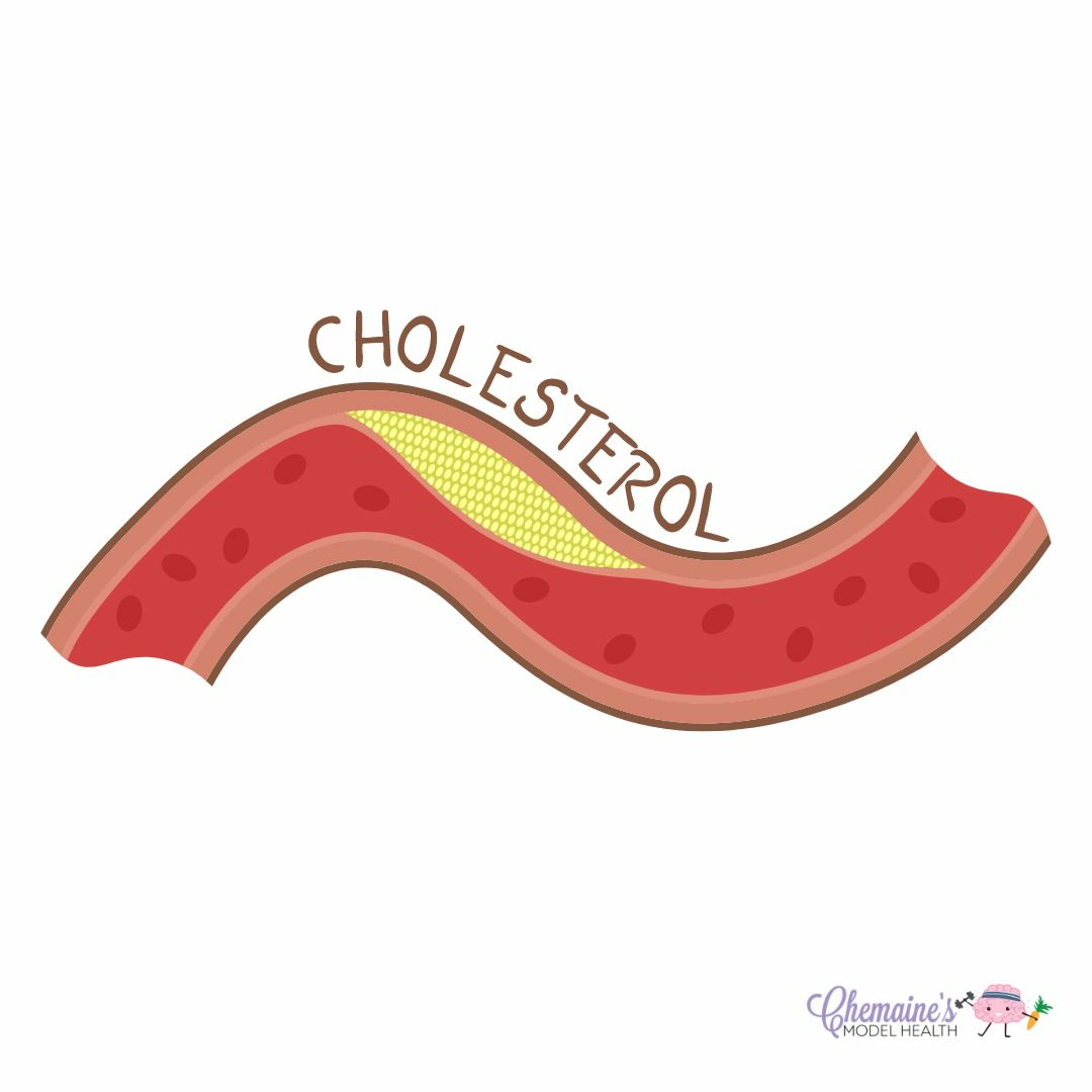
Good morning everybody and I am back to bring you another podcast episode So welcome welcome to the find your model health podcast the official podcast for those looking to optimize their long-term health and wait And understand how their body really works. I am your host. I'm Shamey Lenny I am a fitness and nutrition expert biohacker and certified Erudologist and I'm very happy to have you back with me again for another episode that I hope you will find Super enlightening and it is a follow-up to the last episode I recorded where we looked at what is cholesterol and specifically high cholesterol and I want to do a couple of more of these Probably another one or two more just to make sure that everyone has the information that they need and the correct information Because cholesterol as I mentioned in the last episode is one of these topics where The advice that doctors and health professionals are given out has not caught up with what the science actually is saying As always I'm happy to provide you with any links to studies that you may like to check out You just reach out to me through my website that Shameens model health calm There's a contact me button there or you can find me on Facebook or Instagram at Shameens model health So in this episode we're looking at why dietary cholesterol does not matter for most people before I go on I must emphasize that the information in these podcast episodes is for informational purposes and should not be taken as medical advice Please do consult your health practitioner before making any lifestyle changes. So in the last episode we just looked at cholesterol and what it was and how high blood cholesterol levels are known risk factor for heart disease and this is where things start getting confusing So I hope that this episode will continue to clear up the confusion So for decades people have been told that dietary cholesterol in food raises blood cholesterol levels and causes heart disease So that's as we saw our LDLs or our low-density Lipo polysaccharides or lipo proteins that we saw in the last episode Those are bad cholesterol that caused those heart problems and health problems And the idea that consuming foods high in cholesterol At the time may have been a rational conclusion based on the available science like 50 years ago But we have better science now and we know better and we know how the body works a lot more now So this episode takes a look at what the current research on dietary cholesterol says and the role it plays in blood cholesterol And of course our cardiovascular health.
So a quick brief again Cholesterol is that waxy fat like substance that naturally does occur in our body So our body makes cholesterol and it needs cholesterol and cholesterol can be very good for us It contributes to those strong healthy cell membranes. So within ourselves we have Water hopefully clean water within ourselves, but surrounding the cells We've got our cell membrane and that's made of a fat and we want those facts to be as healthy and as strong and resilient as possible So that ourselves can be healthy and strong and resilient and that they can function optimally Cholesterol also is needed to make hormones, especially female hormones and then vitamin D Keeping our joints lubricated keeping our skin looking good So lots and lots of things and your body will make cholesterol as it needs it But it also absorbs a relatively small amount of cholesterol from certain foods like the tiniest amount from like eggs Or full factory products and that's just a small You'll see that that is not are considering when it comes to looking at cholesterol in the body So when people talk about cholesterol in relation to say heart health They usually aren't talking about cholesterol itself, but they're looking at those lipoproteins of those LDLs and HDLs Those are the structures that carry cholesterol in the bloodstream Some of you maybe also will have heard these Referred to as chylomicrons more of a science-y term not many people will use it But chylomicrons are how we do transport lipoproteins around the body along with triglycerides Anyway, so those lipoproteins are made of fat so lipo being the fat and then the protein is on the outside carrying the fat So again, if you think of a molecule, you've got your little molecule this time the fat is on the inside not the outside Like a cell membrane but the inside and then the protein structure is on the outside holding it together There are several kinds of lipoproteins too. We looked at actually in yesterday's podcast that was only yesterday I'm on a roll creating content the last few days So the two most relevant ones are going to be LDL so our low-density lipoproteins And I mentioned in yesterday's episode that the more concerning aspect of LDL was going to be those V LDL So those very low-density lipoproteins, so they're very very small and then the high-density lipoproteins the HDL So in yesterday's episode, I also referred to LDLs as looking like marbles So there's lots of small marbles and they can penetrate around the body and cause damage in the tissues Whereas your HDL they're more like big fluffy cotton balls They're very gentle and they go around just being nice to the body and they don't penetrate or cause damage So we got our little marbles and then we've got our fluffy cotton balls So those LDLs they comprise of 60 to 70% of total blood lipoproteins And are responsible for carrying cholesterol particles through the body So this is that bad cholesterol that many of us would associate with Atheriosclerosis or the plaque or tar build-up that I mentioned in the last episode I'm going to stop saying that I mentioned in the last episode I'm just going to assume that you listen to it and you know what I'm referring to So having a lot of this cholesterol carried by these marbles is associated with an increased risk of heart disease But there are the caveats and we'll look at them as we move forward So there's different types of LDL and they are either classified as Very small or small so VLDL's those dense LDLs are the large LDLs So we have VLDL's, DLDL's and LLDL's is quite a tongue twister Now studies show that people who have mostly small particles are at greater risk of developing heart issues or cardiovascular issues than those with mostly large particles So the more VLDL's you have in comparison to the LLDL's The bigger trouble you could be in regards to your health So not only have you got the marbles but you've got these Now you've got like pellets not to confuse you So you had marbles that may be caused some damage but now you've got these tiny pellets of these VLDL's That are even smaller and can fit into more spaces and mess stuff up even more And because they're smaller they can cover a greater surface area So I hope that makes sense of you And that's where we see that it may not necessarily be the size of the LDL particles That's the most important factor but the number of them So if you have those pellets you have those VLDL's They can cover a greater surface area especially the more you have of them So that's where we're starting to see the signs now So LDL can be a problem but those VLDL's they seem to be the bigger problem So the higher the number of LDL particles you have The greater the risk of developing heart conditions you have And there's other caveats But if you have a higher number of VLDL's then you have an even greater risk there So that's something I want you to take away from that Then when we look at again our HDL so our fluffy cotton balls HDL picks up excess cholesterol throughout the body So you know cotton can go around and it can pick up little things It can kind of latch onto stuff kind of like a velcro Well that's what HDL does So go around your body and pick up extra cholesterol And take it back to your liver Where it can then be either used or excreted And that's great that's what we want to happen We're either using fat for energy or we're getting rid of it Some evidence indicates that HDL also protects against the build of both plaque inside your arteries Now why do you think that is based on what we learned yesterday in yesterday's episodes? There's a huge connection between having good cholesterol and good facts consumed into the body And lower inflammation And if we have less inflammation in the arteries There's going to be less problem with blood flow or build up happening within the arteries So that could be one of the reasons why we can see that HDL protects against the buildup of plaque inside the arteries And then the other is that because it can prevent HDL can counteract the LDL So with the correct ratios HDL can keep our LDL exactly where it's supposed to be in a good place And there's research And I'm happy to send you the studies To support that Having higher levels of good cholesterol or the HDL or the cotton balls in your body Is associated with a decreased risk of heart disease or cardiovascular disease And again, that usually welcome back to that lower inflammation As well when we look at this from an outsider perspective People that would have higher HDL particles in their body So higher good cholesterol Generally we see they do make better nutritional choices They have better lifestyles They sleep better They're more active They manage inflammation better And all of that is going to come back to having a decreased risk of heart disease So it's not just the cholesterol Like the body is one system Everything plays a part And then when we take a step back We can see well These types of people generally they're doing other stuff right as well So how does dietary cholesterol affect your blood cholesterol?
Well the amount of cholesterol in your diet and the amount of cholesterol in your blood They're quite different And although you think well It seems logical that eating cholesterol would raise blood cholesterol levels It actually doesn't work that way So the body tightly regulates the amount of cholesterol in the blood By controlling its production of cholesterol And this has come back to our liver and our kidney health as well When your dietary intake of cholesterol goes down Your body will still make what it needs Like it'll just make more Because the body is really smart piece of equipment It knows how to compensate and to keep you alive And when you eat greater amounts of cholesterol Guess what? Your body will make less cholesterol And because of this foods high in dietary cholesterol They have little impact on blood cholesterol levels And most people because it's always with every area of health Your body always wants to be in homeostasis Always so if you get an injury Your body will increase inflammation If your sleep is rubbish Your body then will increase your requirement For sugar glucose for energy To keep you alive in case you get chased by a tiger or something If your thyroid starts to run slow Then your body will increase Thyroid stimulating hormones So hopefully stimulate more thyroid And so on Like the body always wants to be in homeostasis And cholesterol is no exception However, there are some people That are known as hyper responders They have this genetic tendency And it will raise blood cholesterol levels And these people make up about 40% of the population And again, this is genetic So you would need to get tested for this And even though dietary cholesterol moderately increases their LDL It doesn't seem to increase their risk of heart disease So there's a few considerations there Do they know they have this genetic risk? Maybe they know it is a family health trait So they're more conscious of their lifestyle and food practices Or are they getting their dietary cholesterol from good sources Like eggs and brass, red meats and clean dairy So they're already very health conscious So there's a lot of questions there that could be asked But again, that's a percentage of people that have a genetic trait And we don't see the increase in heart disease Generally because the increase in their LDL particles It typically reflects in larger LDL particles So bigger particles Not those very small LDLs So back to again, the bigger your LDL particles And then even into your HDL particles The better because they can cause less damage Because they can't fit into the nukes and crannies and mess up shit And there was a study that showed that people who have mainly LDL particles So this study you'll find in Pomer Med And it's the role of small, dense, low density lipo proteins A new look at this then was published in... It doesn't say But if you just search the role of small, dense, low Density lipo proteins and you'll see that this study Said that people who have mainly large LDL particles Have a lower risk of heart disease So these hyper responders They also experience an increase in HDL particles Which of course, as we learned, offsets the increase in LDLs By transporting excess cholesterol out of the body So as such, while hyper responders experience raised cholesterol levels When they increase their dietary cholesterol The ratio of LDL to HDL In these individuals stays the same And their heart disease risk does not go off Again, all those questions could be asked Do they know about this genetic trait?
Are they already making good food choices? Do they have good lifestyle practice? Like what's their awareness? And of course, there are always exceptions in nutrition And some individuals may see adverse effects From eating more cholesterol rich foods With that brings us into the next area And that brings us back to what I mentioned yesterday and yesterday's When we see individuals that experience adverse effects From eating more cholesterol rich foods Even if they were eating grass-fed meat And pasture-raised organic eggs And all the good stuff If they had in excess amounts of sugar or carbohydrates In their diets And they had a lot of inflammation Then this is where we see Even if you're eating the good cholesterol But you're putting it in context with bad stuff You're going to create these problems So contrary to popular belief, heart disease Is not only caused by cholesterol And is definitely not caused by the cholesterol you eat There are many different factors Including inflammation, stress And oxidative stress So that's stress within the body Like cellular stress and tissue stress Constantly over-training That would be considered a stress High blood pressure, alcohol consumption Because alcohol consumption Will increase cholesterol True feedback loop of overwhelming deliver And shutting off that burning While the body focuses on removing the alcohol And then of course smoking as well Because smoking is going to cause damage to the arteries Which will make it more difficult for blood to flow And also generally This sounds Offensive, I hope it's not offensive But generally people that do smoke They don't take care of their health They're not eating good They're not having an active healthy lifestyle And that's very generalized I know it may be somewhat offensive But just from my perspective, over the years So while heart disease is often driven By the lipoproteins that carry cholesterol around Dietary cholesterol in itself Has little or no effect on this What does have the effect Is overconsumption of carbohydrates Overconsumption of trans fats Or hydrogenated or toxic fats Overconsumption of alcohol Anything that's going to put a strain on the liver But also give you an excess of calories Or fat molecules That can be Not liberated But brought around the body So transported out of the liver And around the body And put wherever, whenever for storage So if you overconsume really anything You're going to have an excess of fat molecules And if you're not burning them often They're going to have to be put somewhere But if you have an excess of Particularly bad foods Like carbohydrates, trans fats, greasy foods Alcohol again If you have an excess of them Not only are they breaking down good fats Because they have the ability to damage good fats They're also giving you the excess calories They're giving you the inflammation They're giving you the excess toxins Chemicals, whatever else may be in them You also get the insulin resistance Which we know will contribute to Maybe estrogen issues in a woman Give you sticky blood Now our blood is causing even more problems It's not free flowing Like there's this whole load of stuff That goes on But definitely when we look at cholesterol It does come back to that overconsumption Of foods specifically carbohydrates And don't get me wrong These can be good carbohydrates too If you're consuming too many So-called good carbohydrates You can then of course be creating excess triglycerides So excess fat You also then, if you're not burning off those carbs You can be adding them to other health problems That are in the body as well So there's a lot of new research Out now that finds no link to heart disease When it comes to dietary cholesterol A lot of research has been conducted on eggs Eggs, especially Because those are one of the first things That your doctor will tell you to Hey eliminate eggs or stop eating eggs Which is somewhat funny Because eggs, although I don't like them Like it's a taste texture thing for me They are one of the most nutritious foods On the planet And they are essential for good health In many people A lot of research has been then conducted on eggs Because eggs are a significant source of dietary cholesterol But several studies have shown that eating them Is not associated With an elevated risk of heart disease If anything, they may even help Prevent heart disease One study compared the effects of whole eggs And yolk-free eggs Substitutes on cholesterol levels And people who ate three whole eggs per day Experienced a greater increase of HDL So our cotton balls And a greater decrease in LDL So our marbles Then blows who consumed an equivalent amount of Egg substitute or egg whites So it is though important to note that Eating eggs may pose a risk for those with diabetes But that comes back to the excess blood sugars The inflammation, the excess storage Of fact, the liver challenges that you get with diabetes Maybe they have a sedentary life Like there's a lot of stuff to be taken into consideration So there are studies that will show an increased risk Of heart disease in people with diabetes Who eat eggs But again, let's look at the bigger picture What else is going on there?
It doesn't specify type one or type two Before somebody tries to jump in my throat But let's just assume that it's diabetes From having a poorer lifestyle Or maybe not eating such a good diet Then of course, yeah Maybe eggs are going to cause a problem there Because you already have everything else playing against you With the inflammation, the liver, issues The sticky blood, all that sort of stuff So should you avoid high cholesterol foods? In my opinion, you should look at the bigger picture First, and this is where having health professional In your support, bike or tools As they say, can be very helpful Because they can help you look at everything Hopefully they look at everything So your lifestyle, your stress, your supplements You say everything And say, you know what? This is what we're going to do for this And the problem is not this So in my opinion, no, you don't need to avoid high cholesterol foods You need to look at the bigger picture The studies that I have looked at Have made it clear that cholesterol foods Are not the big problem Many high cholesterol foods Are the most nutritious foods on the planet Again, your eggs, your grass-fed beef, wild game Even some dairy is really good for you Like they're very nutritious foods Shell-ish, sardines, liver If you're into that sort of stuff Many of these foods are also high in saturated fats And studies suggest that replacing dietary saturated fats With polyunsaturated fats Reduces the risk of heart disease But that's not something I'm going to get into Because I find those studies Are not accurate and somewhat controversial Now with the current state of things So I think saturated fats and moderation Are going to be a good choice I try to encourage my clients To focus on mono-insaturated fats As much as possible We kind of veer away from those polyunsaturated fats Definitely trans fats, hydrogenated fats Are a no, so Yeah, my best piece of advice Out of this episode is going to be Don't run away from cholesterol-containing foods But instead, look at the bigger picture of what might be going on And why you might have this higher cholesterol issue So I hope you found this In lightning, I really do And that I didn't overwhelm you That I explained it Kind of in a way that you can understand Because I get that a lot of the science can be overwhelming And that one area that I kind of pride myself in Is that I can take the science and digest it And translate it in a way that people can Consume and understand and then put to use So as always, please share this information That anyone you feel may benefit Help me to help you, to help your loved ones And to slowly together, we can make some nice changes in this world Enjoy the weekend as, well, the week Because this is going to be released on one day So enjoy the week I'll chat to you guys soon And remember, if you want me to cover any topics Just reach out to me and let me know If there's anything you're curious about or unsure about Reach out to me and let me know And I will do my best to help out Okay, stay safe, stay warm And I'll chat to you guys soon Bye-bye