Hello everybody, welcome to another episode of Find Your Model Health, the official podcast for those looking to optimize their long-term health and weight and understand how their body works. I hope you're all keeping really well and December is off to a great start for you. I haven't spoke to you in a couple of weeks because honestly November was a very busy month, but I'm glad to see the back of it. I welcome the Christmas season and I'm very happy to have you back with me for another episode.
I am your host, I am Shameen Lenny, I am a fitness and nutrition expert biohacker and certified erydologist. I'm very, very happy to have you back with me for this week's episode where we're going to understand a bit about cortisol. So the theme on my Facebook page this week and into next week because of the current situation many of us are in is about stress and understanding stress and the adrenals because the adrenals are a very hot topic. People discussing adrenal fatigue, adrenal exhaustion, adrenal insufficiency, low DHEA, and not quite understanding the ins and outs of it.
So as with all of my podcast episodes, I try to break down the signs and the health research in a way that it's easily digestible for you and then you can easily implement. And as always, if you have any questions whatsoever, please do not hesitate to reach out to me. You can reach me on my website, mainsmodelhealth.com. Facebook and Instagram are both mains model health and I would be happy to respond to you.
Now before we go on, I must emphasize that the information in these podcast episodes is not to be taken as medical advice and is for informational purposes only please consult your health practitioner before making any lifestyle changes. Okay, so we're going to look at cortisol and just kind of help you understand it because cortisol really gets a bad wrap. Cortisol is essential for life. If we didn't have cortisol, we would die.
It is both good and bad. So when we look at the good in cortisol, when we do get the spike in cortisol, if there was a tiger or a dinosaur behind us, that cortisol would give us that rush to run away and survive to fight another day. So cortisol also causes immune responses when we hurt ourselves. If we cut ourselves, if we bang our knee, so if you get a really bad break, it's cortisol that's going to send those inflammatory cytokines to the hurt area to protect it.
So they will cause the area to swell and protect the area with fluid and it will get warm. And this is all a protective mechanism. If you got a bad cut or let's just say you chopped your finger off, cortisol is what's going to cause blood to rush to that area and create the angiogenesis, which starts the whole healing process so that that cut can heal over and it also directs stem cells in that direction. So cortisol really does have a good side to it, but it does get a bad wrap a lot of the time because many of us are not experiencing this acute stress where we maybe do cut ourselves or hurt our angle or something.
We're experiencing this chronic stress, so we're not being chased by dinosaurs or sharks or anything like that, but we're still getting the same genetic response as if we were. So the beast that's chasing us today is that chronic stress. It is that constant exposure to the daily grind, kids' stresses, bills, relationship problems, differences of opinions, restrictions from certain aspects of your life. There's a lot of stress, even just burning the toast can be stressful, waking up late, so we just get stressed from every angle and this chronic stress, this is the problem that we're seeing.
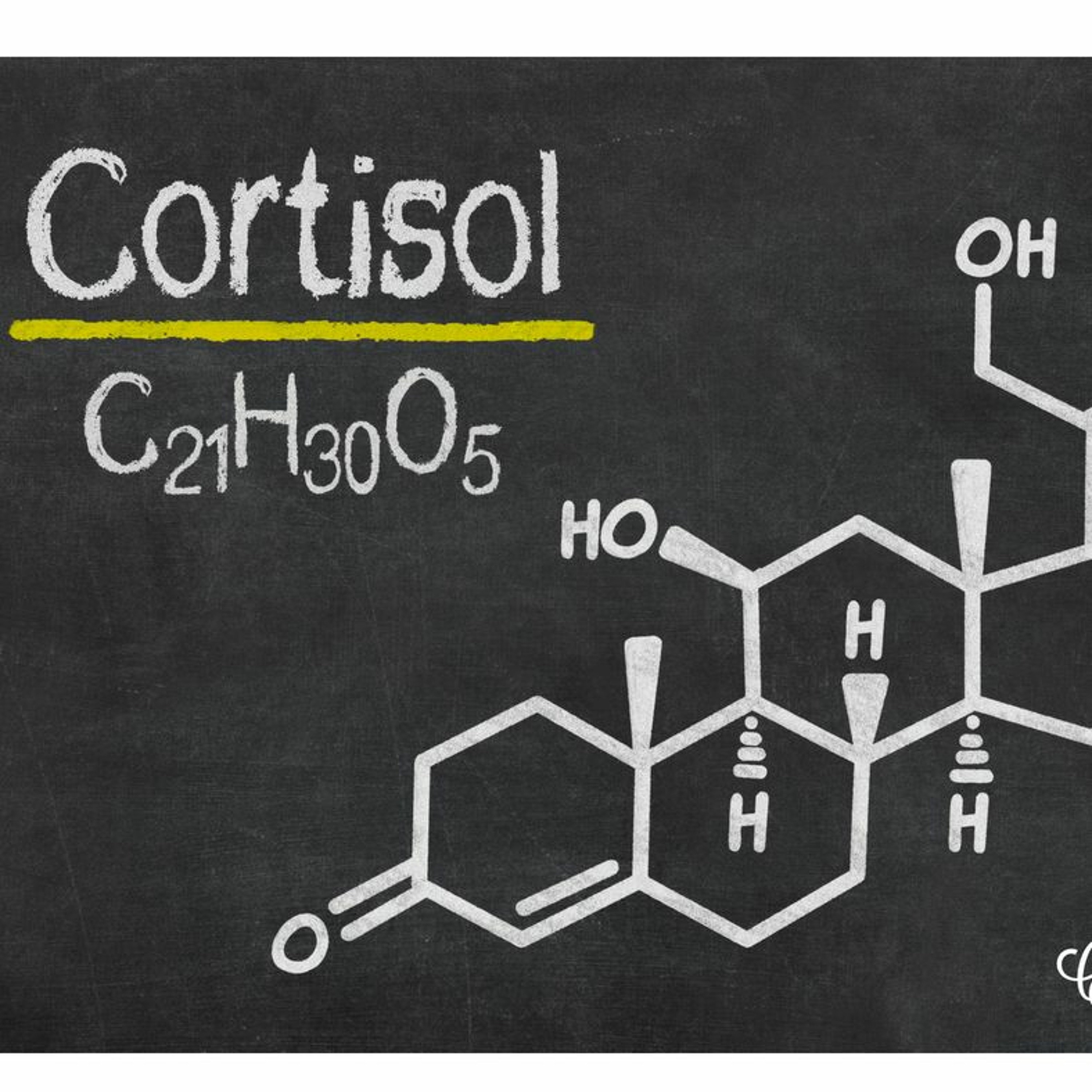
So when we look at this hormone, so cortisol is known as a glutecospheric hormone and it's produced from cholesterol from your two adrenal glands that are located on top of each kidney. It's supposed to be released in response to events and circumstances. The natural more events where we see our natural cortisol rhythm would be waking up in the morning exercising and those acute stresses, so that's where we see cortisol play its natural role in life. And cortisol's far-reaching systemic effects play many roles in the body's efforts to carry out its processes and maintain homeostasis.
Cortisol plays an important role in human nutrition too, which people don't actually recognize. So it regulates energy by selecting the right type and amount of micro or substrate, so carbohydrate, fat or protein, that the body needs to meet the physiological demands that are being placed on it in that time frame. But when chronically elevated, cortisol can have those deleterious effects on how we utilize nutrition, how we absorb nutrition, on our weight, on our immune system and on our risk for chronic disease as well. So cortisol, along with its partner, Norabinephrine, and if you follow me on Facebook, you will have seen my post yesterday, which is today as I'm recording this, on our three main stress hormones and I also touched the bit on the EHEA.
Well, you will see that cortisol along with Norabinephrine are best known for that fight or flight response. So that temporary increase in energy production that allows you to leg it, as we would say in Ireland, or run away from whatever the danger is. But that energy production also happens at the expense of processes that are not required for immediate survival. So the resulting biochemical and hormonal imbalances usually happen to, due to this negative feedback loop that's constantly happening day in and day out.
So to look again at the stress response cascade, and I did post the full step by step hormonal stress cascade on my Facebook page, go check it out, save the picture. But so you are faced with some sort of stressor. So this is your starting point. And the hormonal cascade begins.
The adrenals secrete cortisol, then cortisol prepares your body for a fight or flight response by flooding it with glucose or sugar, which supplies that immediate energy source to the large muscles like the quads and the glutes that you're going to use to leg it. Cortisol inhibits insulin production in that time frame in an attempt to prevent the glucose from being stored or put in its correct place, leaving the glucose then available for immediate use. Cortisol then narrows the arteries while the norepinephrine increases your heart rate, both of which force your blood to pump harder and faster, then you, facing the fear, you, address whatever the problem is, and you resolve the situation and your hormone levels return to normal. So that's an ideal situation.
That's your acute stress. But the problem here is that we generally don't have acute stresses. We're chronically stressed. And when I say where, I mean, everyone, including myself, no one is exempt.
No matter how good they are in help, we all face stress. And right now more than ever, we're all facing a lot of stress. So not only would our current environment, but also our fast-paced lifestyles, our bodies generally are pumping out cortisol almost constantly, which wreaks havoc on our health as many people know. So this is not stuff that people don't know about.
Many people know about this. So when we look at this constant secretion of cortisol, we see many different effects on the body. So if we're to look at a few of them, like starting off with the blood sugar and how it can increase insulin resistance and eventually diabetes, under stressful conditions, cortisol provides the body with glucose or sugar by tapping its protein stores in your liver. So it's creating those sugar stores via gluconeogenesis.
So the creation of sugar and this energy can help you run or fight or flee or whatever you need to do in that moment. However, elevated cortisol over the long term consistently produces glucose, along with the food that you're eating that contains glucose leading to increased blood sugar levels. So this then, of course, causes or can lead to an increased risk for type 2 diabetes. And when we look at the principal function of cortisol, its goal is to inhibit the effect of insulin, essentially rendering the cells insulin resistant so that again you have that sugar available to run.
So when we're constantly doing this, the body remains in an insulin resistance state when cortisol levels are constantly elevated. And over time, the pancreaspan struggles to keep up with the high demand for insulin. Glucose levels in the blood remain high. The cells can't get the sugar they need and the cycle continues under the whole host of other stuff that happens in here.
And then obviously that repeated elevation of cortisol leads to weight gain. True a couple of ways. One way is via visceral fat storage. So visceral fat is that fat if you think of V for very deep visceral fat.
So that's that fat that's dangerous that wraps itself around our internal organs. So what cortisol does is it mobilizes triglycerides and relocates them to visceral fat cells. So those underneath your abdominal muscles, so around those organs, to support and protect the organs. Like that's the goal.
But eventually if you keep doing this day in day out day in day out, you get this big accumulation of visceral fat which adds insult to injury because now you have this dangerous fat. You generally will see this really round hard stomach and that's how you know that. Uh oh, this weight gain is more dangerous than the general subcutaneous fat. But also it's very much stress and insulin resistant related.
We also see recorders all that. It suppresses our immune system. So like I said in the beginning cortisol functions to reduce inflammation in the body. Which is good when you need it and it can also induce the inflammation to protect certain areas of the body.
But chronic inflammation caused by many different lifestyles factors. I don't think I need to tell a lot of people. Chronic inflammation can be from obviously stress, autoimmune issues, food intolerances, smoking, alcohol, some people, caffeine, those trans toxic fats. They were big inflammatory driver.
Like probably one of the biggest. Being overweight in itself causes inflammation on the body. Leading a sedentary lifestyle, not sleeping is a big one. So per sleep quality is a big one for driving inflammation and not pooping regularly.
So issues with bowel movements, that's going to be a big thing too because it will cause toxins to recirculate in your body. So all of this then when left unchecked will inhibit your immune system. Leaving you open to a myriad of problems and increased susceptibility to colds and other viruses, increased risk of cancer, the tendency to develop food allergies, increased risk of loads of gastrointestinal issues because a healthy intestine is dependent on healthy immune system. And in a lovely feedback loop, an increased risk of autoimmune disease.
So along with them, the gastrointestinal problems, like I mentioned, we see an increase in cardiovascular disease, plaque buildup on the arteries, fatty liver disease. Other issues that long-term stress can contribute to or is linked to is chronic insomnia. Again, catches you or puts you in this negative loop that's really hard to get out of chronic fatigue syndrome, adrenal insufficiency, thyroid disorders, dementia, depression, and lots more stuff. So to summarize that, all of that, nowadays most of us aren't being chased by the dinosaurs.
So that beast is chronic stress. That is the problem. Each time, regardless of the trigger, each time we experience stress, we release our neurotransmitters and our hormones and they catalyze that series of events that I mentioned a few minutes ago that help us deal with the challenge. And once that survival mechanism is over, then we are generally supposed to go back to normal.
But because cortisol blocks many mechanisms, including reproduction and digestion, this is where we see the problem. We see problems with menstrual cycles and bowel movements. It blocks relaxation because cortisol inhibits serotonin and serotonin is a precursor to melatonin. You obviously don't get those sleepy chemicals that you need either.
So this is where we see that negative feedback loop where you just can't switch off and relax. You just can't. You struggle with sleep. You wake multiple times throughout the night.
You struggle to fall asleep. You can't switch your brain off. You're constantly irritated. You don't feel good, mentally and physical.
And the problem is with modern life, there is constantly one form of trigger or another. So there is this constant stimulus to pump out these stress chemicals. Like I mentioned, that chronic exposure to a very powerful hormone like cortisol, it increases weight gain. It increases sleep issues and immune issues, digestive issues and other disease issues.
So really we do need to be more aware of what happens when we feel stressed. So we need to create awareness and mindfulness. And I think that's number one because how can you address stress if you're not aware of when you're experiencing stress? If you're not mindful of, oh wait, hold on, there's those butterflies.
There's that anxiety. This is a stressful environment. What can I do? There's a few things you can do.
Lately for me, whenever I feel the anxiety or my stress levels elevate or something's not right, I'll stop for a couple of minutes, not even a couple of seconds. The first thing I'll say is is this a big deal or like is this even important? Do I need to lose my temper over this? Let's just say it's kids.
Is this important? Like is it a case of crying over spilled milk? So I'll always reassess the situation. And then I'll look at how can I reduce the stress in my life?
What can I do to practice better stress management? And this is a hot topic right now. Everyone's talking about stress management and self-care. But this I think is very individual to people.
For me, I love to work out. I love to go for long walks, outdoors in the dark evenings with the fresh cold air. Just be by myself. I love to take off baths.
I love funny, just funny movies, funny podcasts. But I think that's an Irish thing. We love to laugh and joke all the time. I actually do not watch horror films at all.
I just do not want the fright. I don't want to spike my cortisol. I just want to try my best to stack conditions in my favor all the time with stuff that makes me feel good, makes me laugh, keeps my hormones in check. So for me, that's going to be exercise.
That's going to be fresh air. That's going to be walking, hot baths, watching funny stuff. I like to online shop. I like to put loads of stuff in my Amazon cart and leave it there for weeks and then delete it.
I just like to do that. And some people like Pinterest. Some people like to look at crafts. But mine is like online shopping without actually buying anything.
But some other things are where we're not looking at stuff you enjoy. We can look at some other practical stuff. Your nutrition. Maybe you might need to look at an anti-inflammatory diet for a while.
Maybe we might need to look at other nutritional aspects. Well, how much sugar are you getting? What types of sugar are you eating? A lot of trans fats.
Could we maybe try eliminating alcohol? Maybe we'll eliminate caffeine for a while. Maybe we will try some probiotics or would you like to start exercising? So there's a lot of stuff, sorry, stuff that we can look at.
Gratitude journaling is a big one as I digress. I have the five-minute journal. I am very much a creature of habit and routine and I like the way it just gives you the bullet points, fill them in, just do it morning and evening. I find it effective.
I've noticed a difference when I ran out of my first journal. Well, it didn't run out. I finished it. And then I said sure I don't need this anymore.
I'm just going to use a regular notebook. It wasn't the same. It was not. I noticed I was irritable and sounds a bit sad.
And then I bought a new one. And it's not a miracle worker. It's not your magic pill. But it definitely makes a difference.
So now that we understand what happens when we get stressed, what is this hormonal cascade? What's our body's goal? But what happens when we're in this long-term state and the negatives and sometimes having a bit of fear around the negatives helps with that awareness and the mindfulness that I mentioned. So we have to have awareness first.
You have to be able to recognize if something is stressing you or the feelings, those mindfulness aspects of, oh, I feel butterflies in my stomach or oh, I'm getting frustrated or you'll feel it. You will know when you get in a stress state. Then once you have that awareness and mindfulness, then you can approach, okay, is this a case of crying over spilt milk? Is this a big deal or am I just losing my cool at the kids over nothing?
Or even in instances of let's just say someone crashes into the back of you, thank God we all survived. Is there a point in stressing over it if the damage is not too bad? Not really, in my opinion, because you can't undo it. So if it's like a fender bender, you can't undo it.
Let's just contact our insurance companies. The car still works. We're all looking, we got it on harm. So there's attitudes like that.
Then looking at stuff you like to do. Before I wrap up, I'm well aware that the whole idea of practicing better stress management nowadays, that whole sentence is thrown around a lot. Partially because it's true, we do need to have that awareness and practice better stress management. Part of it is out of our control at the same time.
But we need to do what feels good to us, I suppose is what I'm getting at. Do what feels good to us, but it's also a healthy habit. So the glass of wine does feel good once in a while, but that's not something that you turn to every night, whereas we're going for a walk, reading a book every evening. That's something you can do that will not have deleterious effects.
So make your stress management tools applicable to you and stuff that you like and that you'll actually do, but also they're healthy. They don't also have negative effects in themselves. So I hope that that makes sense. I hope to also go over the adrenals and DHEA again really soon to help people understand them.
I get a lot of questions about low DHEA and progesterone and other hormones. So I hope to cover some more of them really soon, but I'm aware that Christmas is coming fast and people want some tips on surviving the holidays and minimizing the damage on their body weight and all that. So and I also had really fun podcast plans that if you know me and you're an avid follower of mine, you'll say, yeah, eventually she was going to do this. Eventually this podcast episode was going to come out with.
So I'm hoping to get that done before Christmas just for like your entertainment, just for my entertainment and just kind of lighten the mood. Anyway, take care you guys. As always, you can message me any topics you would like covered. Please share with anyone you feel may benefit from this information.
Sharing is caring and right now if we all share, we can't make a difference. If you feel like to serve it, I'll review on whatever podcast platform you listen to me on is the biggest compliment you can give me. It really is and I appreciate them so much. Like it helps a lot.
It helps small businesses like mine. And then when our small businesses get helped, we can help you more. So it's that nice feedback loop. But otherwise, take care and I'll chat to you guys really soon.
Bye bye.