#170 A Universal Solution & The Rocket Man
from Anticipating the Unintended Hosted by Pranay Kotasthane
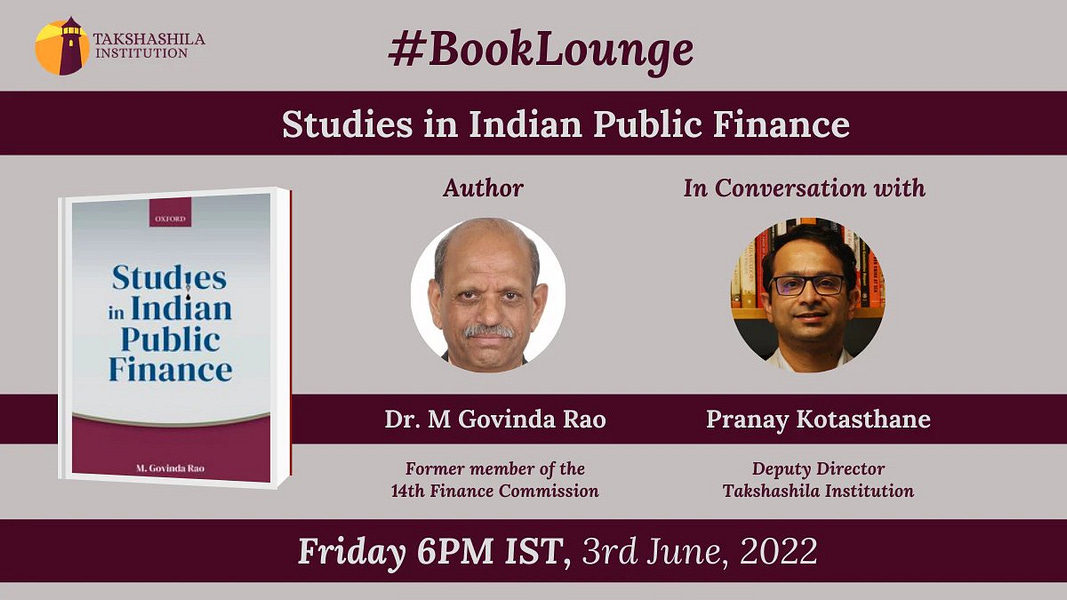
India Policy Watch: Why is UBI Back Again? Insights on burning policy issues in India - Pranay Kotasthane The Universal Basic Income (UBI) proposal made it to last week's policy headlines. The occasion was the release of a report commissioned by the Economic Advisory Council to the Prime Minister. Written by the Institute for Competitiveness, the State of Inequality in India Report bats for “raising minimum income and introducing universal basic income” to reduce “the income gap and equal distribution of earnings in the labour market”. There is no cost-benefit analysis or implementation details of the UBI in the report. Nevertheless, since this report has been commissioned by a government advisory body just a couple of years ahead of the next national election, the report has rekindled the conversation on UBI. What Do We Know About the UBI in India? UBI has been extensively discussed ever since the Economic Survey 2016-17. It is one of those rare ideas for which you will find liberal and progressive arguments both for and against it. So I’ll skip the usual arguments and get to the crux of the UBI in India. What we know is that a “Universal. Basic. Income.” is an impossible trinity in the Indian context. The government can at best meet two but not all three of its elements—a basic income that won’t be universal; a universal income that will be way below what qualifies as “basic”; or something that is universal and basic but not in the form of an income. This trilemma arises due to two reasons. One, India is just not rich enough for the government to fund a full UBI by taxing citizens at reasonable rates. The Economic Survey estimated that even a non-universal basic income for 75% of Indians would cost nearly 5% of the GDP. For context, the total expenditure incurred by the union government including all its portfolios was approximately 13% of GDP before the pandemic. Two, some proponents of UBI argue that the government can stop existing implicit and explicit subsidies, and use the savings to fund a UBI. The UBI would eliminate leakages, obviate the need for complex delivery machinery, and reduce incentives for corruption, they explain. But in a democratic setup where every political party finds it imperative to give individual handouts before elections, this is a leap of faith. It’s more likely that taxpayers will foot the bill for all current subsidies in addition to the UBI. Realising this trilemma, political proposals after the Economic Survey report have tended towards the first option— a targeted basic income scheme, which is non-universal by definition. One such formulation, the Minimum Income Guarantee Scheme for the Poor (MIGS), made it to the Indian National Congress’ 2019 manifesto. What Explains the UBI’s Return to the Headlines? This conversation on variants of UBI has picked up the pace again. Like any major crisis, the pandemic has impacted the poor more than the rich. And hence, various income support schemes are back in favour. The Overton Window seems to be shifting. Interestingly, this trajectory towards increased monetary transfers after a major crisis was anticipated in a book nearly 60 years ago. In a 1961 book titled The Growth of Public Expenditure in the United Kingdom, economists Alan Peacock and Jack Wiseman observed the patterns of government spending in the UK between 1890-1955. The dominant view at that time was that government spending as a proportion of the overall economy keeps rising organically as citizen demands grow with rising incomes. In a poor country, most citizens make do with the State providing them with the bare basic public services. But as incomes and government revenues rise, citizens demand that the State also provide them with quality education, low-cost healthcare, and affordable housing, and so on. Peacock and Wiseman challenged this view of the organic growth of government spending. They saw that government spending rise in the UK happened in the form of step-jumps due to major crises (and there were many in their study period). Their explanation of this phenomenon was as follows. In normal times, the level of public spending is capped by the acceptable level of taxation. Even if citizens might find a higher level of government spending desirable, they won’t accept a higher rate of taxation in return. This equilibrium is shattered by a crisis such as a war, where government spending and rates of taxes increase to manage the immediate difficult situation at hand. However, once the crisis recedes, new ideas of tolerable taxation levels emerge, and government spending does not go back to its original position. This conjecture came to be known as the Peacock-Wiseman Hypothesis (PWH). Are we seeing PWH in action in India, because of COVID-19? If one were to look at costly expenditure policies such as UBI, speculations about a GST rate of 8% replacing the 5% rate, and the high fuel taxes, it does seem that we are moving towards a new normal in government spending. Another interesting element of this hypothesis is the “inspection” effect: “social upheavals impose new and continuing obligations on governments both as the aftermath of functions assumed in wartime (e.g., payments of war pensions, debt interest, reparation payments) and as the result of changes in social ideas. Wars often force the attention of governments and peoples to problems of which they were formerly less conscious—there is an "inspection effect," which should not be underestimated.” The optimist would say that the inspection effect might lead Indian governments to finally focus on key areas such as pro-market reforms, liberalisation of factor markets, defence, poverty reduction and public health. But the realist would argue that the policy debate on public health hasn’t matured enough to present viable options, and hence it is more likely that the government might opt to spend on “quick-win” schemes such as the UBI or PLI, which are simpler and intuitive at face value. So, on the whole, we should keep a close eye on the government spending trajectory. PS: Peacock and Wiseman hasten to remind us that their conjecture is not inevitable, the reality depends on the social and economic context of the crisis itself. Speaking about PWH, we’re hosting a conversation with India’s foremost authority (and my public finance teacher), Dr Govinda Rao, this Friday. His latest book Studies in Indian Public Finance narrates India’s tryst with taxes, debt, expenditures and budgets. A must-read for any public policy enthusiast. Global Policy Watch #1: Axel Leijonhufvud On His Tribe Global policy issues relevant to India - RSJ “The Econ tribe occupies a vast territory in the far North. Their land appears bleak and dismal to the outsider and travelling through it makes for rough sledding; but the Econ, through a long period of adaptation, have learned to wrest a living of sorts from it. They are not without some genuine and sometimes even fierce attachment to their ancestral grounds, and their young are brought up to feel contempt for the softer living in the warmer lands of their neighbours such as the Polscis (Political Scientists) and the Sociogs (Sociologists). Despite a common genetical heritage, relations with these tribes are strained-the distrust and contempt that the average Econ feels for these neighbours being heartily reciprocated by the latter-and social intercourse with them is inhibited by numerous taboos. The extreme clannishness, not to say xenophobia, of the Econ makes life among them difficult and perhaps even somewhat dangerous for the outsider. This probably accounts for the fact that the Econ have so far-not been systematically studied. Information about their social structure and ways of life is fragmentary and not well validated. More research on this interesting tribe is badly needed.” That’s how the paper ‘Life Among The Econ’ began in the September 1973 edition of Western Economic… This is a public episode. If you would like to discuss this with other subscribers or get access to bonus episodes, visit publicpolicy.substack.com
Embed this episode
No transcript yet.