#173 Lathpath, Lathpath, Lathpath, Agnipath*
from Anticipating the Unintended Hosted by Pranay Kotasthane
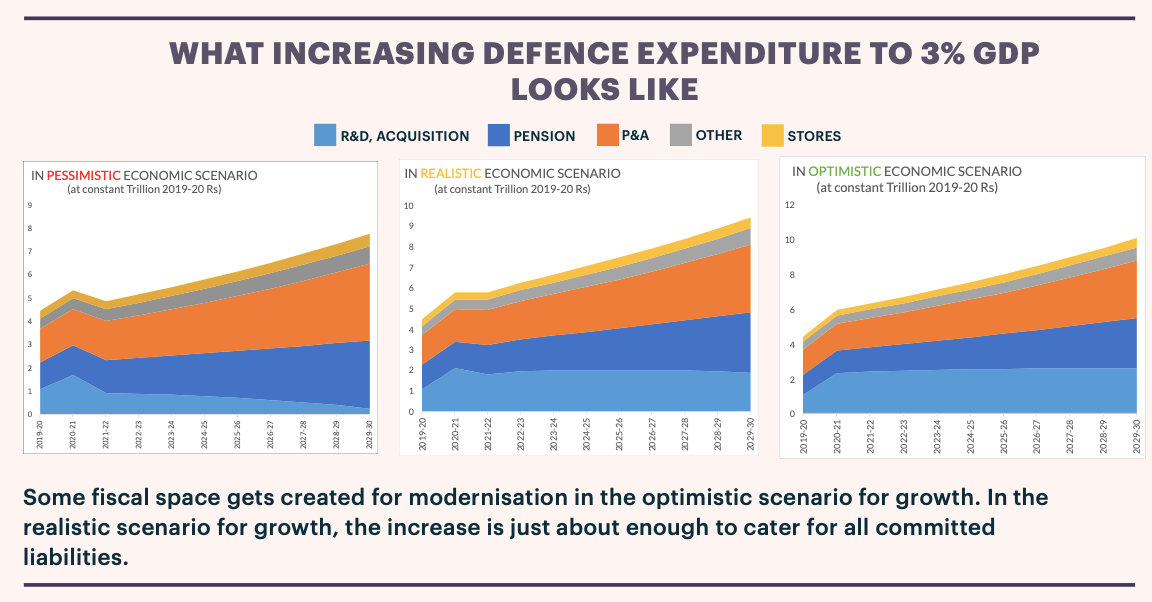
India Policy Watch: The Road Of Fire Insights on burning policy issues in India - RSJ The Union Defence Minister along with the chiefs of the three armed services on Tuesday announced the ‘Agnipath’ scheme for recruitment into the Indian military. You can read more about the scheme here. I have summarised the key features below: * The soldiers under this scheme (referred to as ‘Agniveers’) will be enrolled for a duration of four years in a conscription or tour of duty (ToD) like model that’s prevalent in other countries. They will be paid between INR 30,000 - 40,000 per month during their tenure apart from risk or hardship allowance as applicable. 30 per cent of their salary will be deducted as a voluntary contribution into a corpus called ‘SevaNidhi’ with a matching contribution from the government. Roughly put, the soldiers will get this SevaNidhi package of about INR 11.7 Lacs plus the interest accumulated on this amount at the end of their four years of service. Few other post-retirement benefits are thrown in, including a life insurance cover and access to a bank loan of INR 18.2 Lacs against the SevaNidhi package. * About 25 per cent of Agniveers will be absorbed into the regular cadre after four years. The rest will receive an Agniveer Skill certificate, the SevaNidhi corpus and some preferential treatment in getting into the Central Armed Police Force (CAPF) and maybe even state police forces. * The Agniveers who leave at the end of four years, however, will not get the usual entitlements of gratuity and pension. This is huge. Over a period of couple of decades, this could mean only about 25 per cent of the forces will have the pension benefits that are available to all today. * The enrollment under this scheme will be on an all-India and an all-class basis. This will be, by itself, a distinct rank in the armed forces with its own insignia. The likely implications of this are quite significant. The recruitment of soldiers today, especially in the army, is based on state-wise quotas and on the retirement of soldiers from various regiments that are class based. Class here should be read as an euphemism for caste or community. Drawing Agniveers on an all-class basis will mean withering away from the traditional structure of regiments. It could also mean a larger representation of states where unemployment rates are high because there might not be state-wise quotas anymore. This could further alter the composition mix of the armed forces. The government also positioned this as a move that will infuse youth and vitality (or ‘josh’ and ‘jazba’ as mentioned in various media reports) into the armed forces. The whole thing including the names Agnipath and Agniveer sounds like a campaign for an early 1990s Nana Patekar film. You could soon shoehorn Agni Pariksha (for the recruitment tests), Krantiveer (best Agniveer cadet), Yugpurush (lifetime achievement award for Agniveers), Angaar, Tiranga, Prahaar and so on. You get the picture. We are in this territory now. Anyway, the average age of the armed forces which is 32 now will come down by about five years. The younger workforce will be more technology-savvy that will be more attuned to the changing nature of modern warfare. Also, the 75 per cent of Agniveers who will go back into civil society will serve as a disciplined and nationalistic labour pool to draw from for organisations. There will be Agniveers in every village and taluk who will improve the moral fibre of our society. We will have no riots, no littering, no traffic violations and no crime. The retired Agniveers will change us. Because they will put the nation first. Always. Like Arnab. Well, that’s the official line anyway. Backlash Unfortunately, the response to the scheme hasn’t been what the government was expecting. There have been protests, arson and general lawlessness by unemployed youth that seems to be spreading across the country at the moment. A large section of retired armed forces officials too have questioned both the scale and speed of a change like this. The issues agitating them have some basis: * There have been very few recruitment rallies during the two years of the pandemic. About 60,000 soldiers retire every year and this gap is filled up during the regular recruitment drives. It is safe to assume there's a 1.5 Lac gap that’s opened up since 2020. The expectation among aspirants was this will get filled up in the next year or so. That apart, there are those in the middle of their recruitment process who are unclear about their status now. Roughly put, there could be more than a crore of youngsters under the age of 21 who were waiting for these recruitment drives to restart. What they have now instead is about 46,000 open positions for the current year with a 25 per cent probability of a long-term career in armed services with full benefits. If you work the numbers, it also suggests a reduction in armed forces count by about 1.5 - 2 Lacs (about 10-15 per cent of the workforce) over the next four years. I’m not sure if that’s also a stated intent of this scheme but it will be a collateral result unless the Agniveer recruitment numbers are ramped up significantly in the following years. * There is an inherent contradiction in acknowledging a modern military requires advanced warfare systems, technical know-how and expertise that takes years to build and having only 25 percent of personnel working on longer tenure commissions. Will the constant churn come in the way of managing these systems? Will there be institutionalised knowledge management that will be able to handle this scenario? Also, the eventual dismantling of the class-based system that this move seems to portend will need to be thought through. It is fundamental to how the army operates today. * The other question is about the prospects of the 75 per cent who will be released every four years. This is a number that will keep rising over a period of time. All the romanticisation of the armed forces and its discipline aside, these will be youngsters without a college degree and with limited technical skills. How useful will they be to the wider world? Not much if you go by the current record of hiring of retired defence personnel. They will have to study further and acquire specific skills to be employable. To expect CAPF or the state police force to absorb them is a bit optimistic. Also, there are aspirants for those jobs too with their own patronage system who will scuttle these moves. * Lastly, for all the josh and jazba that are likely to come free because of this move, it will be useful to understand the repercussions of having a workforce that knows only one in four among them will qualify for the longer commission. What behaviour will this engender in them? How objective will the criteria for selection be? And if the 75 per cent who are released struggle to get jobs and earn their livelihoods, the feedback loop to the future cohorts will be immediate. The situation will turn more fraught at the end of every four-year cycle. The comparison with other countries that have a ToD model is useful but it is important to appreciate we are a US$ 2000 per capita economy with over 40 per cent of the employable labour pool either without a job or underemployed. In other countries, those who want to continue to be in the armed forces almost self-select themselves. These arguments, for and against aside, this is a good example to understand the complexities of policymaking, especially in defence, in India. A Difficult Problem Let’s begin with the single most important policy objective for armed forces now in India. This is quite stark and apparent - it needs to modernise its defence infrastructure and increase its capacity in areas of modern warfare like the air force and navy. Given the threat perception on its borders, this is an already delayed exercise. You can read a detailed ORF report on India’s platform modernisation deficit here for more. TL;DR: yes, we do have a modernisation challen… This is a public episode. If you would like to discuss this with other subscribers or get access to bonus episodes, visit publicpolicy.substack.com
Embed this episode
No transcript yet.