
EPISODE · Apr 18, 2026 · 54 MIN
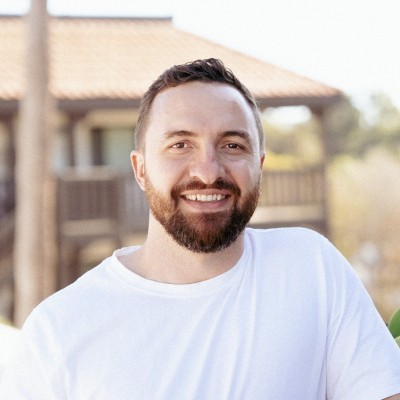
#180 | The Art of Avoiding Injury | Jeremy Bettle, PhD
from wise athletes podcast · host wise athletes podcast
Professional Supplements for Wise Athletes (click to see the huge "always on" discount) Affordable (best pricing by far) Blood Testing at GoodLabs (use code WISE for 20% discount) Jeremy Bettle, PhD Award-winning coach and VITALITY expert UCSB – Director of Sports Performance Brooklyn Nets Basketball – Head of Strength & Conditioning, Director of Nutrition Toronto Maple Leafs Hockey – Director of Sports Science & Performance Anaheim Ducks Hockey – Director of High Performance New York City Football Club – Director of High Performance Vitality Collective – Co-Founder Bettle earned a Ph.D in human performance and a master’s degree in exercise science from Middle Tennessee State University. He also holds earned his bachelor’s degree in sport and exercise science from Leeds Metropolitan University (England). Vitality-Collective.com Discussion Points The Core Injury Framework Injuries happen when the demands of an activity exceed the capacity of the tissue being asked to perform. Demands come in three forms: force (how hard the impact), velocity (how fast the contraction must happen), and direction (planes of movement the tissue hasn't been trained for). Training is the process of systematically raising capacity to match and just slightly exceed demands — not avoiding demands. "The Sport Is Not Enough" Principle Playing your sport builds sport-specific fitness but does not prepare the tissues for the worst-case demands of that sport. The athlete who only cycles or only lifts has gaps in planes of movement that become injury sites the moment life — or a new activity like pickleball — demands something different. Training must prepare the body for more than the sport itself. The Range of Training That Matters Four modalities, all necessary: Strength training — high effort to near-failure, 8–12 reps; equivalent stimulus to heavy singles but dramatically lower injury risk Cardiovascular training — continuous aerobic work High-intensity intervals — critical for performance and longevity Power training / plyometrics — massively underrated, but inherently risky; must be earned through the progression below The Progression — Sequence Matters This cannot be rushed or reordered: Phase 1 — Foundation (weeks 1–8+): Core and hip training first. The core transfers force between upper and lower body — without it, every compound movement is a liability. Start with wall sits, hip work, fundamental movement patterns at 12–15 reps. Phase 2 — Strength: Progress to squat (goblet squat) and hinge patterns. Move from 12–15 reps down to 6–12 reps with heavier absolute load. This is where strength, muscle mass, body composition, and bone density gains accumulate. Phase 3 — Power (only after Phase 2 is established): Power = strength × speed. Sequence within this phase: Slow eccentric loading first (3–4 second descent on squats, pause, fast up) Fall-prevention drills: tip-toe fall-forward-and-catch, snap-downs Vertical jumps in place (no box required for masters athletes) Jump for distance, skater jumps side to side, single-leg jumps Box jumps: Bettle explicitly recommends against them for masters athletes — trip-and-fall risk outweighs benefit; ground-based jumps achieve the same stimulus more safely Sprinting Progression — Velocity Before Distance Joe's mistake: went from jogging straight to 20-yard sprints. Correct sequence: Start at 70–80% maximum sprint velocity for 20 yards, multiple reps Build velocity over weeks to 85–90%, then 95–100% Only after full velocity is achieved do you extend distance Longer distance = more hamstring involvement = new injury site that must be built separately Tempo runs (60–70% effort, longer distance) condition the hamstrings before adding sprint distance Isometrics for Tendon Health Tendons have poor blood flow — nutrient delivery is slow, which is why tendinopathy lingers. Isometrics address this directly: Wall sits, 30–45 seconds, 3 sets — load the tendon, stimulate remodeling Tendon fibers become disordered with injury; only load through range realigns them Isometrics before a run can quiet Achilles pain enough to train Pain tolerance during isometrics: up to 3/10 is acceptable; sharp/pinching/stabbing pain = stop and see a physio PRP and collagen alone without load will not fix tendinopathy — the load is irreplaceable Jump Rope Bettle's Achilles injury prevention tool in the NBA: daily jump rope warm-ups, no Achilles tears in four seasons. For masters athletes: primes tendon elasticity, builds ankle stiffness, low impact. Highly underrated. Collagen + Vitamin C Take 30–40 minutes before tendon-specific training. Exercising the tendon increases local blood flow, which delivers the nutrients already in the system. Bettle's position: not a replacement for loading, but adds benefit with minimal downside. The Injury Cascade — Why Consistency Is the Only Metric That Matters Injury → detraining → all systems downregulate → athlete tries to return at prior level → exceeds now-reduced capacity → re-injury → greater detraining → frailty → withdrawal from sport and social community → metabolic and cognitive decline. The cascade is real and compounding. One bad injury is not a setback — it is the beginning of a sequence that leads somewhere much worse. This is why Bettle kept the Maple Leafs injury-free for 3.5 years — not by training less, but by training intelligently enough to never trigger the cascade. Timeframe 6 to 9 to 12 months depending on starting point. Eight weeks to begin adapting to any given phase. Six to nine months to complete the full progression. The social contract with the client: "Around eight weeks in, you're going to be irritated with me because I won't let you do the fun stuff yet." Related Episodes & Links: Episode 178 | Athletic Longevity isn't Easy | Brendan Egan PhD/ Episode 154 Adaptive Range Expansion for Peak Performance | Mike T Nelson PhD Episode 144 | Muscle for Athletic Performance | Mark Tarnopolsky MD PhD Episode 71 | Framework for Durability | Dr Nick Dinubile Episode 65 | Optimizing Aging Muscle | Brendan Egan PhD Help the show: 3 ways to support our show: Leave a review (or share this episode) Check out our Fullscript site to save big on high quality supplements. Thank you! Email us your questions at [email protected].
Embed this episode
What this episode covers
Professional Supplements for Wise Athletes (click to see the huge "always on" discount) Affordable (best pricing by far) Blood Testing at GoodLabs (use code WISE for 20% discount) Jeremy Bettle, PhD Award-winning coach and VITALITY expert UCSB – Director of Sports Performance Brooklyn Nets Basketball – Head of Strength & Conditioning, Director of Nutrition Toronto Maple Leafs Hockey – Director of Sports Science & Performance Anaheim Ducks Hockey – Director of High Performance New York City Football Club – Director of High Performance Vitality Collective – Co-Founder Bettle earned a Ph.D in human performance and a master’s degree in exercise science from Middle Tennessee State University. He also holds earned his bachelor’s degree in sport and exercise science from Leeds Metropolitan University (England). Vitality-Collective.com Discussion Points The Core Injury Framework Injuries happen when the demands of an activity exceed the capacity of the tissue being asked to perform. Demands come in three forms: force (how hard the impact), velocity (how fast the contraction must happen), and direction (planes of movement the tissue hasn't been trained for). Training is the process of systematically raising capacity to match and just slightly exceed demands — not avoiding demands. "The Sport Is Not Enough" Principle Playing your sport builds sport-specific fitness but does not prepare the tissues for the worst-case demands of that sport. The athlete who only cycles or only lifts has gaps in planes of movement that become injury sites the moment life — or a new activity like pickleball — demands something different. Training must prepare the body for more than the sport itself. The Range of Training That Matters Four modalities, all necessary: Strength training — high effort to near-failure, 8–12 reps; equivalent stimulus to heavy singles but dramatically lower injury risk Cardiovascular training — continuous aerobic work High-intensity intervals — critical for performance and longevity Power training / plyometrics — massively underrated, but inherently risky; must be earned through the progression below The Progression — Sequence Matters This cannot be rushed or reordered: Phase 1 — Foundation (weeks 1–8+): Core and hip training first. The core transfers force between upper and lower body — without it, every compound movement is a liability. Start with wall sits, hip work, fundamental movement patterns at 12–15 reps. Phase 2 — Strength: Progress to squat (goblet squat) and hinge patterns. Move from 12–15 reps down to 6–12 reps with heavier absolute load. This is where strength, muscle mass, body composition, and bone density gains accumulate. Phase 3 — Power (only after Phase 2 is established): Power = strength × speed. Sequence within this phase: Slow eccentric loading first (3–4 second descent on squats, pause, fast up) Fall-prevention drills: tip-toe fall-forward-and-catch, snap-downs Vertical jumps in place (no box required for masters athletes) Jump for distance, skater jumps side to side, single-leg jumps Box jumps: Bettle explicitly recommends against them for masters athletes — trip-and-fall risk outweighs benefit; ground-based jumps achieve the same stimulus more safely Sprinting Progression — Velocity Before Distance Joe's mistake: went from jogging straight to 20-yard sprints. Correct sequence: Start at 70–80% maximum sprint velocity for 20 yards, multiple reps Build velocity over weeks to 85–90%, then 95–100% Only after full velocity is achieved do you extend distance Longer distance = more hamstring involvement = new injury site that must be built separately Tempo runs (60–70% effort, longer distance) condition the hamstrings before adding sprint distance Isometrics for Tendon Health Tendons have poor blood flow — nutrient delivery is slow, which is why tendinopathy lingers. Isometrics address thi
NOW PLAYING
#180 | The Art of Avoiding Injury | Jeremy Bettle, PhD
No transcript for this episode yet
Similar Episodes
No similar episodes found.
Similar Podcasts
No similar podcasts found.