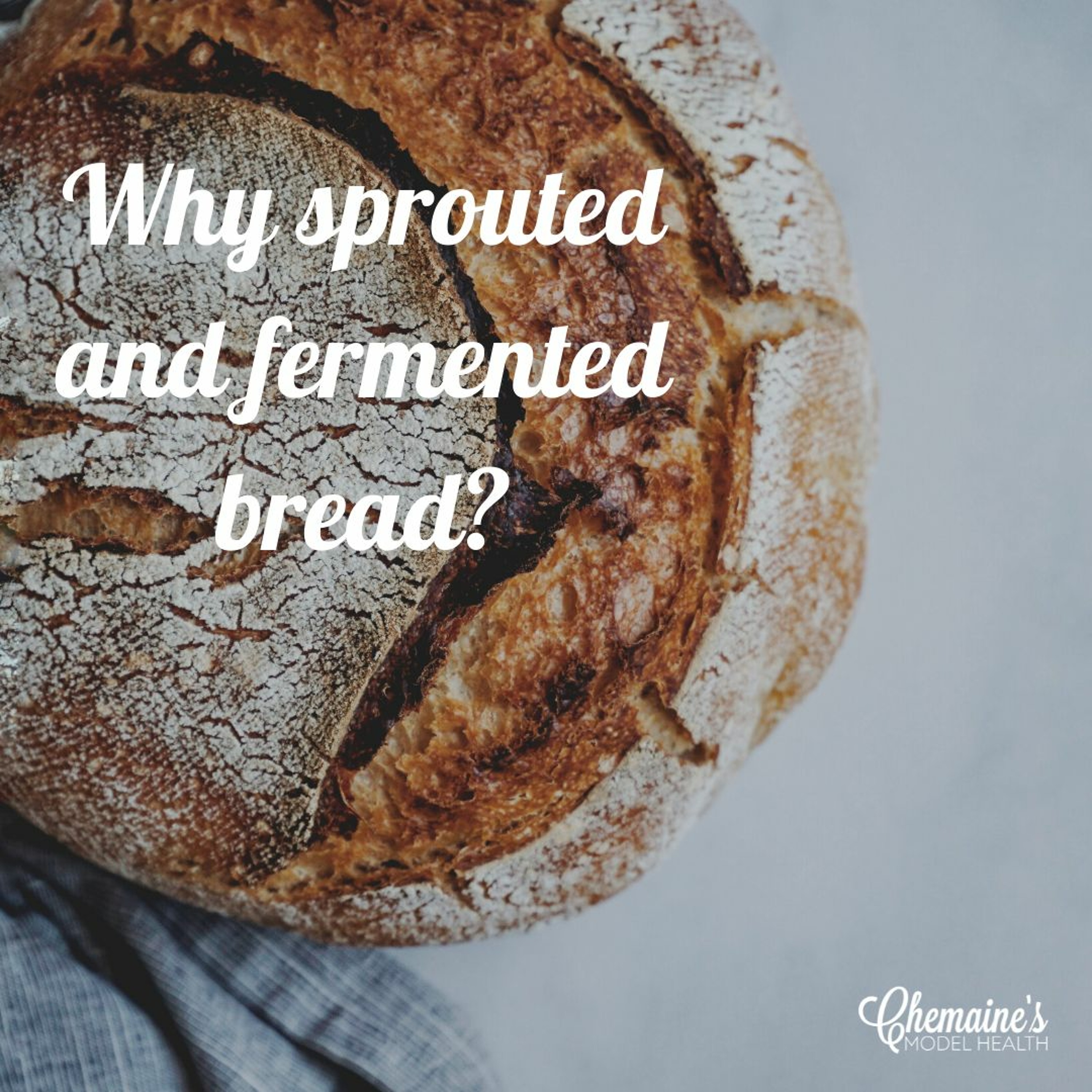
Hello everybody, welcome to another episode of Find Your Model Health, the official podcast for those looking to optimize their long-term health and weight goals and understand how their body really works. I am your host, I am Shmeen Lini, I'm a fitness and nutrition expert certified urologist and biohacker and I'm very happy to have you back with me for my first podcast episode of 2022. Happy New Year, I hope your new year is off to a great start so far. And this podcast episode is quite fitting because this question has came up multiple times this week with my new master's round.
So my master's guide is where I take a group of ladies and I teach them how to listen to their body, understand what it's trying to say and optimize their health, basically become masters of their own body and health. And this week there's been a lot of surprise around the whole bread topic and sprouted grains and sprouted even pasta. So before we go on, I must remind you that the information in these podcast episodes is for informational purposes only and should not be taken as medical advice. Please consult your healthcare practitioner before making any lifestyle changes.
Okay, I'm going to keep this short and sweet and straight to the point. So I have been recommending sprouted and fermented bread since well before it was even fashionable. We were seeing years ago, and even thousands of years ago when our ancestors used to make their bread in this traditional way, where it was easier to tolerate certain foods or certain grains and breads when they had been sprouted or fermented. So most of the time, well, one, when people start a health journey, they're expecting to eliminate bread completely out of their diet.
And some programs will do that. But I like to take a balanced approach with my client. And I'm always, always thinking of nutrition first, always the nutrition, how can we make sure we're getting enough nutrition, especially nowadays, where our food is not as nutritious as it used to be. And there's all these different obstacles that we have to try overcome in the smartest way possible.
And bread is one of them. Now, whole grain was hot, hot topics for a long, long time, even when I started my journey, we were told to eat whole grain because apparently it was healthier for you and healthier for your heart. And then we discovered all of that was a lie. So now we're understanding that the benefits of grains actually come from when we ferment and we sprout the grains.
So grains in themselves can be very nutritious with their very, very inflammatory. And they do contribute to a lot of health issues. And even their sugar content, of course, is going to contribute to metabolic diseases like diabetes. And when we think of grains being very nutritious, that is true, except there's a caveat that these grains are very high in what is an anti nutrient called phytic acid.
And phytic acid basically stops you from absorbing the minerals and the enzymes and the vitamins that would be in the grains naturally. So it's an enzyme and vitamin and mineral inhibitor. So you're not even if you're eating whole grains and you were told that they were good and nutritious, well, you're not exactly absorbing the vitamins and minerals out of that because of the phytic acid. And then you have other aspects as well that are going to be contributing to inflammation.
But when we, and actually there was a very interesting study, I would suppose you would call it an article if you go on to the West in price website, so West in a price foundation, there is an article titled be kind to your grains and your grains will be kind to you. And basically what this article tells us is that, first of all, we were told to eat whole grains, but this article proves that about 80% of the RNA magnesium you're getting or would have gotten in whole grains, you can't even absorb them or digest them when you're consuming quote regular whole grains or regular breads. The only way that you can access these vitamins and minerals is by sprouting and basically breaking open these grains and allowing that nutritional profile to increase. So when we sprout or ferment these breads and grains and cakes and whatever it is, pasta, so you can get fermented sourdough pasta, which my new clients are now discovering is amazing, and way easier to digest because you have broken down this phytic acid through the process of the fermentation.
But not only that, then we have the issue with gluten and lectins. Now sprouting and fermenting also breaks down the gluten and the lectins. So basically you're breaking down their inflammatory coatings, making them easier for you to digest sprouts generally do have higher amounts of lectin because they're the babies of the plants. But if and if you haven't heard of lectins, they're another type of very inflammatory protein that can cause havoc on your body, aches, pains, inflammation, all of that.
But again, when we sprout and ferment them and even soak in pressure cook, you break down these lectins, you break these outer coatings, these protein coatings, so that they're easier for you to extract the nutrition, but also tolerate and digest. So a lot of my clients that believe they have gluten intolerance and they can never have bread again. And when I introduce them to sprout it, or I say, you know, if you get a really good fermented sourdough, real sourdough bread or pumpernickel or even a zucchill for some people can be fine. They can tolerate it.
And they're always so surprised, especially when I say get some real sourdough that's made with fermented starter or even a yeast can also be quite tolerable because these starters and these yeast, they're basically breaking down when they're allowed to ferment, they're breaking down the sugars, they're breaking down these inflammatory proteins. And then it allows us to digest them a lot easier because they've basically been pre digested. So when you think flour naturally contains a variety of yeast and bacteria spores in itself, when we allow them to ferment those bacteria break down the starch in the wheat into more simple sugars like glucose and maltose, which are easier to metabolize by us. And this could be beneficial for people with good issues.
You can go back and check out my posts and podcasts. I think I have an episode on the simple carbohydrate diet and that will give you an idea that simple sugars can be easier for people with gastric issues. And when we also ferment these breads like sourdough, we also change the pH. So the bread is less acidic than regular bread.
Now the whole jury is out on acidic alkaline, the whole, I mean, there's arguments for both sides. In my opinion, you want to be balanced no matter what, the body's always looking for home but we do know that carbohydrates and grains can be very acidic on the body and cause a lot of inflammation and you can even feel it the next day. So when you can change that pH into a more beneficial way, of course, that's going to be better. I mean, some things you can just feel in your body.
So we're decreasing the phytic acid, we're increasing the nutrients and the mineral availability and even the absorption of these nutrients and minerals. We're also then breaking down the gluten and the lectin proteins. So basically getting rid of a lot of their inflammatory aspects we are also then in a sense, we're getting some good yeast and bacteria that are naturally occurring that are also beneficial for us. We're changing the pH and then we're getting to have something that we thought we couldn't and this makes your journey more sustainable because you know what, sometimes it is easier to just have a sandwich and sometimes people do miss having some sourdough and there is research, if you look into Dr.
William Lee's work around eat to be diseased, his anti-cancer work, there is research to support that sprouting and fermented grains and sourdough can be quite beneficial when we come to the approach of fighting and preventing diseases like cancer. And lastly on this, I will say, and this is important because this is very relevant to my clients who are listening. When you go on a new health journey, I talk about fairy dust a lot. I talk about offsetting malnutrition and making sure there's no nutritional deficiencies and making sure that all your nutritional requirements are met as much as often.
I'm true nutrition first and we know that a lot of the food that we consume nowadays is not as nutritious as it would have been a hundred years ago due to many reasons. But when people do start a new health journey or maybe they're trying to lose body fat, they start to cut calories or they might change what they're eating, their portions become smaller, they might start avoiding these foods that they believe are bad for them like breads and sourdoughs and that then leaves this gap in their nutrition because these foods can be nutritious in context, in the correct way used in the correct way. And even for digestion in regards to those bacteria and yeast and fiber, these foods can be beneficial but only when they're used in the right way. So like I said, when we have our sprouted or fermented sprouted breads, I have ones I recommend sprouted wraps.
Again, I have ones I recommend real sourdough and be sure that they're using real cultures in that sourdough starter because some of your biger box stores, they don't use yeast or starter cultures at all. They just add extra gluten to the bread to make it rise and now you're not breaking down the gluten that was already there and you're adding extra gluten. So make sure that your sourdough is sourced from a good bakery or a business of good integrity and that way you're not missing out on this food that can be very nutritious and help prevent nutritional deficiencies and again there's the sustainability aspect. Making a sandwich or a wrap can be really easy.
A lot of people enjoy bread, well of course they do, it's sugar and again it is sugar so my clients will know that I talk about balance all the time. Everything has to be used in context in the right way, at the right time and so on and so on. So just because I say sprouted bread and sourdough bread is actually healthier than whole grain, it does have its negatives in that it still is sugar, it still can contribute to metabolic diseases when abused and it will have still remnants of gluten as well. So some people may not be able to tolerate it at all but in my experience most people are pretty good, like they're fine with digestion of sprouted and fermented breads and that would include pumperniculine, Ezekiel like I mentioned, the only thing I would watch out for if I had a concern was if my clients had one of these and then after that food they experienced blood sugar crashes or went hypoglycemic or increased hunger or cravings that would be a concern but otherwise this is why I recommend sprouted breads and fermented breads and even baked goods because of all of these aspects.
They're generally easier for people to tolerate, they're less inflammatory and we get a higher bioavailability and absorption of the nutrients and minerals they do contain including the yeast, the naturally occurring yeastum bacteria that can be beneficial for us as well. Okay, that's it, I hope you found that helpful, I hope that answers all your questions, let me know if you have any questions you can reach out to me on Facebook, Instagram or to my website, chamensmodelhealth.com please as always sharing is caring, if you know anyone that would benefit from this information please share with them, it really helps me a lot, it helps me reach and help more people which is probably my purpose in life at this stage. Okay, I'll chat to you guys soon, get out there, get some fresh air while the temperature is better and be safe, bye!