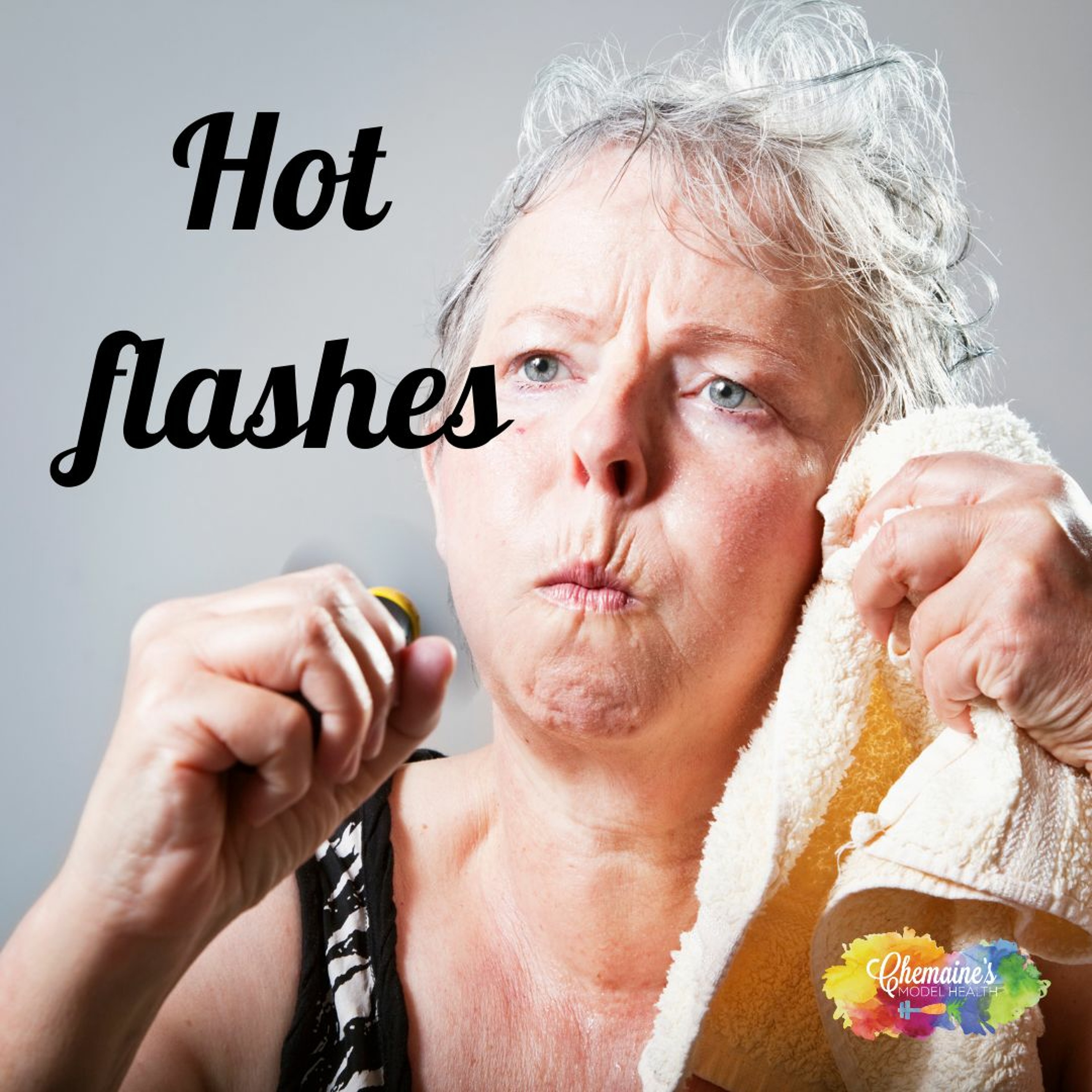
Hello everybody, welcome to another episode of Find Your Model Health, the official podcast for those looking to optimize their long-term health and weight goals and understand how their body really works. I am your host, I'm Shmey Linney, I'm a fitness and nutrition expert certified urologist and biohacker. I hope you're all keeping really well and May is going spectacularly for you. This week's topic I hope will be helpful and interesting and it's came up a couple of times with current and new clients over the last two weeks.
Obviously, when I do these episodes, it is because it's a common trend among my clients right now and using a podcast is an easy way to teach them and give them tips and they can replay it. So before I go on, I must emphasize that the information in these podcast episodes should not be taken as medical advice and is for informational purposes only, please consult your health practitioner before making any lifestyle changes. Okay, so we are looking at hot flashes this week. Eventually, all of us women are going to experience these sooner or later and generally, there's three things that will cause hot flashes.
So one is going to be that hormonal system and the hormonal changes that we get as we transition through our lives. The second one is going to be blood sugar imbalances or insulin resistance and then the third one is stress. So in this episode, we're looking mostly at the hormones. I may discuss the nutrition and stress aspect towards the end.
Let's look at the hormonal aspect. So if you're maybe in your, it could be as early as late 30s, mid to late 40s, maybe early 50s and you're noticing that your body is changing, you could still be having periods, but they're not the same. They might be shorter or longer or lighter or more sporadic. Maybe you're not sleeping as well.
Your libido is different. The weight is creeping on and then you're getting overheated and sweating more than usual, especially at the night or in the most inconvenient times as well. So before we go on, we have to look at what is menopause. So menopause is a time stamp, as I say to my clients.
Menopause is the change in our hormones where we see a decline in estrogen and progesterone that brings us into our wisdom years. It's a natural transition. We're all going to go through it. All of us women have this to look forward to, but it can be a blessing in itself.
We obviously have no more periods and it is a time where we find our confidence. We expand into speaking our truth and we don't care about what other people think as much. We're just more focused on nurturing ourselves and following our dreams. But some of the symptoms, of course, can be quite frustrating and annoying.
So hot flashes and insomnia and mood changes to tend to be the worst. So the actual menopause, which is a time stamp, is defined as when you've not had a period for 12 months. This usually will happen for women around the age of 51, 52. That tends to be the general trend.
But the lead up to that menopausal time stamp is what we call perimenopause. So perimenopause is that lead up and the time around menopause where we experience the symptoms that most people complain about. So what we're looking at is obviously the hot flashes and night sweats. About 75% of perimenopause of women in the US experience hot flashes and that would account for Canada.
Most countries, 87% have them daily, 33% have 10 or more each day and 15% have them and severe symptoms to go along with it. So much fun, right? They may overcome you like a wave of heat, leaving you drenched and then you get a chill after. Night sweats are hot flashes that will wake you up.
You'll kick off the blankets. Some women will soak through their bedding and their clothing and they'll need to change. But it can be obviously exhausting and uncomfortable and frustrating. And hot flashes usually last one to two years depending on the individual.
And symptoms range from a mild sensation of just rising up your body or your face to a seriously uncomfortable feeling of being overheated and even drenched and sweat. Like I said, like you can get so hot, you drenched and sweat during the night and you kick off the blankets, you cool down the next minute, you've got the chills, you're pulling the blankets back on and this can go on all night. It can be exhausting. And it can be embarrassing depending on who's in the bed with you or if this happens and you're out and about and suddenly your face reddens and you perspire profusely at an inconvenient time like at a board meeting or giving a speech or even standing in line at the stores like hot flashes and these sweats, they can really be a pain.
Let's just say that they can be a pain. So about 40% of women report that hot flashes and night sweats negatively affect their quality of life interfering with work, leisure mood, concentration, sleep and even their sex life. So getting a handle on them can spare you a lot of discomfort and stress, distress and these hot flashes because they're interfering with sleep quality, they are then in a round about way interfering with weight gain or encouraging weight gain because they will increase inflammation and insulin resistance and that fatigue where you just don't have the energy to cook or make good food choices either. So while these symptoms usually resolve over time, for some women they persist for years and even if they don't, it's disruptive to your life.
It's a pain. But luckily for us there is health. Now there are medications available but I try to encourage women to go down the more natural roots where I can before they turn to medication. This is my thing.
I would rather they weren't taking medications that potentially have some side effects to them. So I mean there is always the option of hormone replacement therapy which would be bioidentical hormones and they can be great for women but not every woman wants to do that. So even natural hormone therapies, they're not without risks for any of us. So one of my goals, one of the things that I'm notorious for doing is helping people go about changing their health and their lifestyle in a more natural way and hopefully avoiding unnecessary and potentially risky medication use.
So medication don't get me wrong pharmaceuticals. They have a time and a place but unless symptoms are severe and debilitating, I always suggest a natural approach first. And hopefully the tips that are in this episode are going to be helpful for you so you don't have to go down the medication aspect of things. So we're going to go through this step by step.
So first we're going to look at lifestyle. So what can you change in your life to help you deal with hot flashes? So you can wear breathable natural fibers. You can layer your clothes.
That can help then taking off clothes. You can keep a small fan in your room or your work area but you have to be cognizant that fans can encourage dehydration as well. You can sleep with your bedroom temperature at a really cool temperature. Have the window open but again be cognizant that any outside noise or light could also interfere with your sleep.
And then acupuncture. Acupuncture has been shown to relieve hot flashes and reduce sleep disturbances and improve quality of life in women. There's not a lot of research to support it with the antidote. So there.
So we'll get to the food aspect and the stress aspect shortly. If we were to look at other lifestyle practices. So using mindfulness practices have been shown to significantly reduce the frequency and severity of hot flashes and improve quality of life, sleep, anxiety and perceived stress. The tea is also going to be a contributor because the more tired you are, the more you're going to have inflammation and hormones causing further frustration and those adrenaline and cortisol hormones can bring on a hot flash.
And then there's going to be the nutritional choices around that too. There's also a technique called paste breathing and it can help to cool your body in, well studies say that it can cool flash frequency and severity by as much as 40%. So you would simply inhale for five seconds and exhale for five seconds and you would do this for up to 15 minutes twice a day. So think of this breathing exercise or this breath work as like a preventative measure that can.
And then all the research shows us that it can make a difference. And then other lifestyle is your attitude. I mean, if you do sweat through your clothes at a board meeting or an event or something just on it. This is part of being a goddess and the joys that we get to experience on our journey of womanhood.
So you can just own it. So people always are going to ask about supplements and herbs when it comes to addressing hot flashes and night sweats. Two of my go to are going to be Chaseberry or Vitex and then Rosemary. And Rosemary, firstly, is quite easy to get into your diet.
You can get a really good Rosemary tea or you can add Rosemary to your recipes and your meals. Chaseberry, I have several podcast episodes just on Vitex. So Chaseberry is the tree and then the synthesized derivative form is going to be Vitex. And Vitex can reduce frequency and severity of hot flashes.
It may take up to four weeks to see an impact. Sometimes I'll see it sooner in clients. But go check out the podcast on Vitex. Vitex is great for increasing progenstron.
And as we go through paraminopause and hit menopause, our estrogen and progesterone levels drop. But unfortunately, our progesterone drops a lot faster than the estrogen. And most women already have lower levels of progesterone. So the Vitex can make quite a difference.
And then we have Valerian or Valerian root can reduce hot flash severity and frequency by day and night and can also improve sleep. So it's best taken before bed and it's even better if it's combined with lemon balm and hops. Of course, it's something that we find in beer. It's one of the key ingredients.
But hops decreases hot flashes and promotes sleep because it has a hormonal effect. And beer in general is something that I only recommend to my clients that are postmenopause or going through paraminopause. Otherwise, because it has estrogenic effects, I try not to give it to my younger clients, especially if there's risk factors for estrogen receptor, positive breast cancer, or estrogenic cancers in general. So I kind of keep an eye on the beer, although people love beer and they still have it.
And then lemon balm can be very calming and cooling and soothing to the body as well. So you would combine those with your Valerian root. Then we have black cohosh. Black cohosh has some interesting research.
It's not very potent, but some women report seeing excellent results around day and night hot flashes and it's giving them some relief. Then there's Chinese or Siberian rubar can help with hot flashes, night sweats, sleep quality, anxiety and depression. It's in a number of products for perimenopause women. If you look at the ingredients, but you can get a refined form as well.
This is not the rubar that you get in your garden, but the rubar in your garden can actually be helpful. Another easy one is cranberry. Cranberry, because increased urinary tract infections in menopause are more common. They generally need to be improved by treating any bacterial imbalances.
And cranberry is a great one for that. Cranberry is what we would call a mud biotic and it's very tart on the stringent and it can be used either in tea form, in whole food form, or you can get a cranberry supplement or extract and you're looking for cranberry di manos on that one. And then the last one here in regards to herbs is going to be, well, it's not so much a herb as it is an aromatherapy tool. So sage lavender aromatherapy mist comes your central nervous system.
It helps promote sleep and may help reduce hot flashes. Now I'm not big on knowing what each essential oils company sells. I don't know if young living or doTERRA has this one. I believe Mountain Rose herbs does have this blend.
You can always make your own sage and lavender blend yourself. I would also add in a little bit of peppermint or eucalyptus because they're also very calming for the central nervous system and the brain. So you would put 20 drops of each essential oil in a cup of water into a mister or a diffuser or even a humidifier, if you're humidifier allows you to add essential oils and you could keep beside your bed. I keep my humidifier slash essential oils, de-mister in my on-suite or my little bathroom beside my bedroom.
And that way as it works throughout the night, the essential oils and mist, they're slowly coming into my bedroom. I also keep the door closed too because I don't like lights in my face. Anyway, or you could put this mix of essential oils and water into like a spritzer and then you could have it on your bed or buy your bed or on your desk and just be spritzing the air around you every couple of hours. Now when we look at nutrition and stress, from my clinical experience, in my practice, I see these two things make the biggest impact on women when it comes to hot flashes and sweats.
Now everything I've just listed between the lifestyle and the herbs aspect of things, they can really be awesome, especially Rosemary. I like Rosemary tea and you can get chasberry tea as well. It's an acquired taste, but it's actually pretty good once you get used to it. Chasberry also increases dopamine receptor activity so it can enhance mood and then help you get into sleep as well.
So it's not just that progesterone aspect of things, but when we look at nutrition and stress, well, stress is a huge cause of night sweats and hot flashes, like huge. One of my clients, she was transitioning into a new position in her job and she just broke out in night sweats for no reason. Her nutrition was good. I speak to my clients a lot, so I know what's going on.
And the only factor that had changed was her stress. So we looked at that, we tweeted a few things, we got her managing stress a bit better. Within a week, her hot flashes were gone, they're completely gone. Then I was going through renovations at the start of the year.
It was very stressful and I'm pretty good with my nutrition and my fasting and everything. And I was just waking up drenched and it was a stress and anxiety. And once I got a hold on that, it stopped. Now, the only time that I'll get hot flashes or night sweats is like refeed day or refeed nights.
Those of you that are my clients, you'll know what they are and you'll probably be nodding in agreement. But one of the biggest causes apart from stress, this would be even bigger because some people are more resilient than others when it comes to stress and they better stress management tools. But nutrition for sure, I would say is number one for causing hot flashes and sweats. So it would probably in my opinion, from my experience working with women, I would mark nutrition as number one, then the hormonal changes and then the stress aspect.
And then of course, if you've all treated together, you're in for a lot of fun then. But when we look at nutrition, blood sugar imbalances, too much sugar in your diet, eating too late in the day, having alcohol late in the day, having chips and cookies and heavy meals late in the day, anything close to bed, anything that's going to interrupt blood sugars while you're going asleep, that is going to cause hot flashes and night sweats. Fact, it absolutely is at 100% will just look at your refeed day and night and you'll see what I'm talking about even the day after refeed day, you can experience sweats and increased feeling of blood pressure. Part of that is metabolism, part of it is the extra carbohydrates your body is trying to burn off.
But that's more isolated to my clients. In general, if you're having, basically, if you pour nutrition, you're eating too much and you're eating too late in the day, for sure that is going to encourage hot flashes and night sweats. And then lastly, while the changes you're going through physically may cause you varying degrees of discomfort and there's a lot we can do, as you just heard, it's important to remember that this can be the beginning of a great new phase of life for women. You've got the confidence, you're prioritizing yourself now and here's the amazing news embracing menopause as something natural and something to celebrate.
Having that change in mindset, staying more in that positive energy and frequency can help decrease the number of frequency and severity of symptoms too and that goes back to the whole stress aspect. So embracing the change with a positive attitude can increase that transformative power and ease of your experience. So although it's an up and down journey adventure, this life of being a woman, there are aspects we can embrace, there's plenty of tools that we can use. Obviously, mind over matter is a big thing and if you absolutely need to, medications can be a very valuable tool for some women too.
My recommendation would be to at least try the natural approach first before medications, but in a way, it's a wonderful time we live in. Now we have all of these options at our fingertips. So I'm going to leave it at that. I hope you found this podcast episode helpful and informative and if you know anyone that made benefit from this information, I'm sure you know plenty of women that would benefit from this information, please do share with them.
Sharing is caring and there really is no better time than now for us all to take responsibility for our health and learn how to help ourselves. If you haven't subscribed or liked my podcast episodes already, please do. If you would like me to cover a topic on future episodes, you can reach out to me through Facebook or Instagram or my website, that's jomainesmodelhealth.com and I will be happy to take a look at it for you or if you have any questions. Otherwise, have a great evening and I will chat to you all soon.
Bye bye.