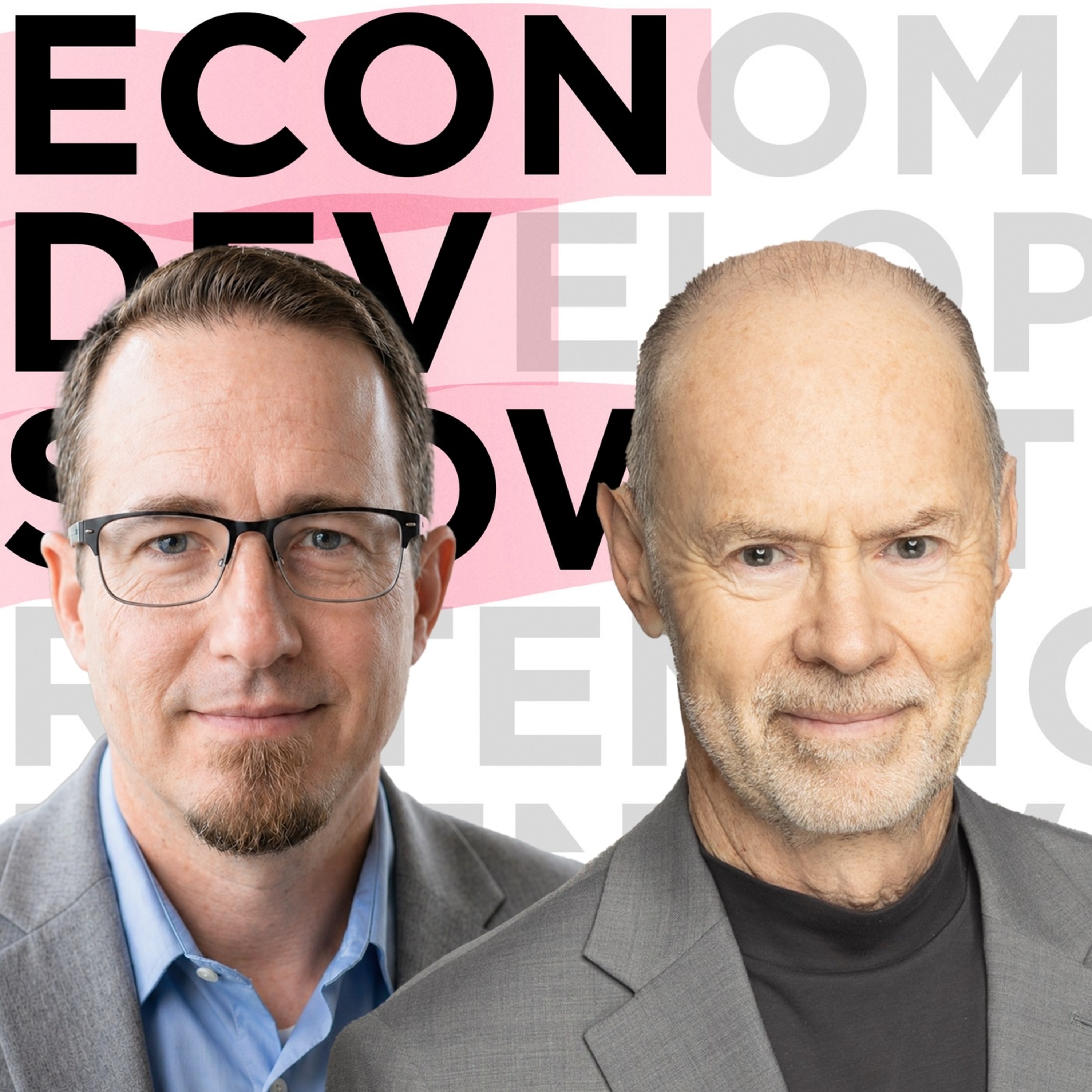
220: The Hidden Cost of Becoming Cool with Jon Roberts episode artwork

EPISODE · May 25, 2026 · 29 MIN

220: The Hidden Cost of Becoming Cool with Jon Roberts

from Econ Dev Show Podcast - Economic Development · host Dane Carlson

In this episode Dane Carlson talks with Jon Roberts of TIP Strategies about his new book, The Cost of Cool: Austin's Tech Growth and the People Left Behind, and what Austin’s rise can teach economic developers everywhere. They discuss how Austin became a tech and talent magnet, why that growth created real pressure around equity, housing, and displacement, and whether tech growth inevitably widens community divides. Jon also explains why entrepreneurial ecosystems need more than enthusiasm, why universities and major companies matter, how communities like Green Bay and Racine County, Wisconsin are building on their own assets, and why economic developers need to think about AI, quantum computing, bioengineering, and the next wave of technology without forgetting the people who may be left behind. Like this show? Please leave us a review here — even one sentence helps! 10 Actionable Takeaways for Economic Developers Treat equity as a front-end strategy, not a cleanup project. If tech growth is coming, plan for housing, displacement, affordability, and access before the growth accelerates. Be honest about the tradeoffs of tech growth. Jon argues that more tech investment has historically been linked with greater inequity, so economic developers should discuss that risk openly instead of assuming growth automatically benefits everyone. Do not build an entrepreneurial strategy around vibes alone. Incubators and startup events help, but the conversation emphasized the importance of real links to research, tech transfer, and major corporate activity. Know the assets you actually have. Green Bay's example shows that communities can build from distinctive local strengths, including major institutions or brands, instead of trying to copy Austin or Silicon Valley. Create tight relationships with universities and companies, even if they are not in your backyard. Physical proximity may help, but the more important issue is whether the connection is real, active, and tied to specific development opportunities. Use major projects as platforms, not endpoints. A data center complex, corporate investment, or innovation park should raise the question: "What turns this into something more?" Protect vulnerable neighborhoods before market pressure arrives. Once high-income workers begin bidding up undervalued neighborhoods, the available responses become more limited. Understand that "cool" is hard to manufacture. Austin's music, counterculture, local institutions, and "Keep Austin Weird" identity became part of its attraction, but they were not simply chamber-of-commerce slogans. Keep a long view on technology. AI matters, but Jon cautions economic developers not to treat it as the final technological shift. Quantum computing, bioengineering, and other changes may be next. Make the uncomfortable conversations part of the work. Questions about displacement, inequality, tech disruption, and who benefits from growth may not have easy answers, but avoiding them makes communities less prepared. Special Guest: Jon Roberts.

In this episode Dane Carlson talks with Jon Roberts of TIP Strategies about his new book, The Cost of Cool: Austin's Tech Growth and the People Left Behind, and what Austin’s rise can teach economic developers everywhere. They discuss how Austin became a tech and talent magnet, why that growth created real pressure around equity, housing, and displacement, and whether tech growth inevitably widens community divides. Jon also explains why entrepreneurial ecosystems need more than enthusiasm, why universities and major companies matter, how communities like Green Bay and Racine County, Wisconsin are building on their own assets, and why economic developers need to think about AI, quantum computing, bioengineering, and the next wave of technology without forgetting the people who may be left behind. Like this show? Please leave us a review here — even one sentence helps! 10 Actionable Takeaways for Economic Developers Treat equity as a front-end strategy, not a cleanup project. If tech growth is coming, plan for housing, displacement, affordability, and access before the growth accelerates. Be honest about the tradeoffs of tech growth. Jon argues that more tech investment has historically been linked with greater inequity, so economic developers should discuss that risk openly instead of assuming growth automatically benefits everyone. Do not build an entrepreneurial strategy around vibes alone. Incubators and startup events help, but the conversation emphasized the importance of real links to research, tech transfer, and major corporate activity. Know the assets you actually have. Green Bay's example shows that communities can build from distinctive local strengths, including major institutions or brands, instead of trying to copy Austin or Silicon Valley. Create tight relationships with universities and companies, even if they are not in your backyard. Physical proximity may help, but the more important issue is whether the connection is real, active, and tied to specific development opportunities. Use major projects as platforms, not endpoints. A data center complex, corporate investment, or innovation park should raise the question: "What turns this into something more?" Protect vulnerable neighborhoods before market pressure arrives. Once high-income workers begin bidding up undervalued neighborhoods, the available responses become more limited. Understand that "cool" is hard to manufacture. Austin's music, counterculture, local institutions, and "Keep Austin Weird" identity became part of its attraction, but they were not simply chamber-of-commerce slogans. Keep a long view on technology. AI matters, but Jon cautions economic developers not to treat it as the final technological shift. Quantum computing, bioengineering, and other changes may be next. Make the uncomfortable conversations part of the work. Questions about displacement, inequality, tech disruption, and who benefits from growth may not have easy answers, but avoiding them makes communities less prepared. Special Guest: Jon Roberts.Sponsored By:Sitehunt: Sitehunt helps economic developers understand their sites, match them to projects, and respond with confidence in minutes instead of scrambling for days. Links:Jon Roberts | LinkedIn The Cost of Cool: Austin's Tech Growth and the People Left Behind | Amazon The Cost of Cool • TIP Strategies TIP Strategies: Economic Development, Strategic & Workforce Planning

NOW PLAYING

220: The Hidden Cost of Becoming Cool with Jon Roberts

0:00 29:38

No transcript for this episode yet

We transcribe on demand. Request one and we'll notify you when it's ready — usually under 10 minutes.

MG Show MG Show The MG Show, hosted by Jeffrey Pedersen and Shannon Townsend, is a leading alternative media platform dedicated to uncovering the truth behind today’s most pressing political issues. Launched in 2019, the show has grown exponentially, offering unfiltered insights, comprehensive research, and real-time analysis. With a commitment to independent journalism and factual integrity, the MG Show empowers its audience with knowledge and encourages active participation in the political discourse. Breaking News Show | eTurboNews Juergen Thomas Steinmetz News is relevant to the global travel and tourism industry, human rights and global issues.Breaking news when it happens and only from the source. That Hoarder: Overcome Compulsive Hoarding That Hoarder Hoarding disorder is stigmatised and people who hoard feel vast amounts of shame. This podcast began life as an audio diary, an anonymous outlet for somebody with this weird condition. That Hoarder speaks about her experiences living with compulsive hoarding, she interviews therapists, academics, researchers, children of hoarders, professional organisers and influencers, and she shares insight and tips for others with the problem. Listened to by people who hoard as well as those who love them and those who work with them, Overcome Compulsive Hoarding with That Hoarder aims to shatter the stigma, share the truth and speak openly and honestly to improve lives. The Small Business Startup School – Business Notes | Financial Literacy | Retail Psychology – For Professionals & Entrepreneurs The Small Business Startup School Inc. Starting or buying a small business? While personal circumstances may vary, business patterns remain timeless. On The Small Business Startup School, we explore strategies, insights, and practical solutions to help entrepreneurs confidently navigate their journey.Hosted by Ola Williams—a retail entrepreneur, fintech founder, and financial coach with over two decades of experience—this podcast marries financial awareness and retail psychology with optimism to deliver actionable takeaways.Join us to learn, grow, and connect as we uncover the keys to business success.Let’s continue to learn together and be encouraged to keep on connecting!

Frequently Asked Questions

How long is this episode of Econ Dev Show Podcast - Economic Development?

This episode is 29 minutes long.

When was this Econ Dev Show Podcast - Economic Development episode published?

This episode was published on May 25, 2026.

What is this episode about?

In this episode Dane Carlson talks with Jon Roberts of TIP Strategies about his new book, The Cost of Cool: Austin's Tech Growth and the People Left Behind, and what Austin’s rise can teach economic developers everywhere. They discuss how Austin...

Can I download this Econ Dev Show Podcast - Economic Development episode?

Yes, you can download this episode by clicking the download button on the episode player, or subscribe to the podcast in your preferred podcast app for automatic downloads.
URL copied to clipboard!