
EPISODE · Dec 16, 2025 · 17 MIN
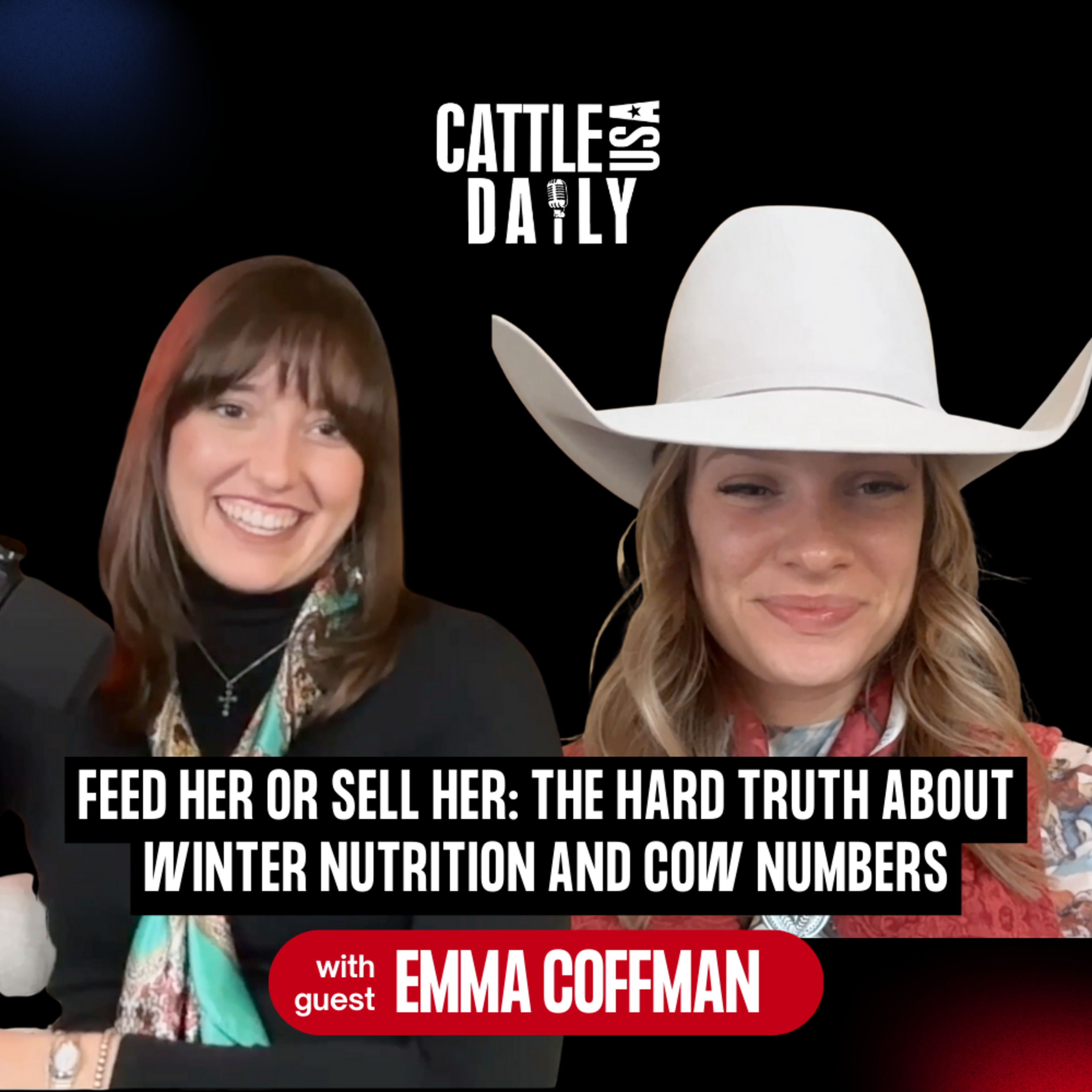
221: Feed Her or Sell Her: The Hard Truth About Winter Nutrition and Cow Numbers with Emma Coffman
from CattleUSA Daily · host Lauren Moylan | Cattle USA
Winter is here, forage is fading, and a lot of cows are walking into the hardest part of the year underfed and overworked. In this episode, Lauren Moylan and advocate Emma Coffman get brutally clear about what that really means: every decision at the feed bunk shows up later in your calving ease, your BRD rates, your weaning weights, and the size of your check at the sale barn. From why a cow needs to calve in a body condition score 5–6, to how fetal programming works, to when it’s smarter to sell cows than starve them, Lauren Moylan and Emma Coffman walk through practical, science-backed winter nutrition strategy. They dig into hay and forage testing, mineral programs, regional differences, using extension services, and why “pay for it now or pay for it twice later” is the economic reality for every herd heading into 2026.LinksEmma's Links - https://linktr.ee/doubleeranch CattleUSA Website - https://www.cattleusa.com/ Facebook - https://www.facebook.com/cattleusamedia Instagram - https://www.instagram.com/cattleusa.media/ Subscribe to our newsletter - https://www.cattleusadrive.com/ CattleUSA Media - https://www.cattleusamedia.com/ Lauren’s Instagram - https://www.instagram.com/_laurenmoylan/ Lauren’s Youtube - https://www.youtube.com/@Showboatmediaco The Next Generation Podcast Website - https://www.thenextgenag.com/Takeaways• A calf’s potential starts in utero; genetics mean nothing if the cow is underfed during pregnancy.• Cows need to calve in a body condition score 5–6; too thin or too fat both create calving and health problems.• Underconditioned cows (3.5–4 BCS) rarely “bounce back” and their calves stay stunted and discounted for life.• Winter is not the time to make harsh budget cuts on feed, supplements, or minerals if cows are already behind.• If feeding the herd properly is not financially realistic, downsizing is smarter than running twice as many skinny cows.• Hay and forage testing is non-negotiable; crude protein and quality swing more than most producers assume.• One bale sample is not enough; pH, soil, and field variation mean multiple core samples across lots are needed.• Mineral or soil tests done once are not a lifetime answer; drought, rain, and storage all change the nutritional picture.• Not every “miracle” product fits every operation; ranchers should lean on science and numbers, not marketing.• Regional extension services and universities can often test forage cheaply or free and connect producers to local expertise.• Having cows in good flesh buys time when forage quality drops, leases change, or drought tightens conditions.• Keeping detailed cost and feed records is the only way to know true breakeven and whether the operation is actually profitable.• True diversification or “extra” jobs don’t justify ignoring the math; if the cow business doesn’t pencil, it won’t last.Chapters00:02 Vegas, NFR, and Staying Healthy on the Road01:31 Why Winter Nutrition Starts the Day a Cow Conceives03:35 Body Condition Score: The 5–6 “Sweet Spot” and What Happens Outside It06:18 Thin Cows, Stunted Calves: Long-Term Damage from Undernutrition08:52 Hay and Forage Testing: Knowing What You’re Actually Feeding11:14 Mineral Programs, Soil Tests, and When to Ignore the Sales Pitch12:12 Using Extension Services and Local Experts to Get Real Data13:42 Planning for Drought, Hay Shortages, and a Stable 2026 Calf Crop14:12 Good Foundations Buy You Time When Conditions Change15:38 Recordkeeping, True Breakevens, and When Downsizing Makes More Sense16:30 Closing Thoughts and How to Get in Touch with Emma Coffmanwinter feeding, fetal programming, body condition score, BCS 5–6, cow nutrition, forage testing, hay quality, mineral program, cow-calf profitability, downsizing, drought planning, extension services, BRD risk, weaning weights, ranch recordkeeping
Embed this episode
NOW PLAYING
221: Feed Her or Sell Her: The Hard Truth About Winter Nutrition and Cow Numbers with Emma Coffman
No transcript for this episode yet
Similar Episodes
No similar episodes found.
Similar Podcasts
No similar podcasts found.