
EPISODE · May 19, 2025 · 16 MIN
25: mtDNA discovery in Solve‑RD: phenotype‑driven reanalysis
from Base by Base · host Gustavo Barra
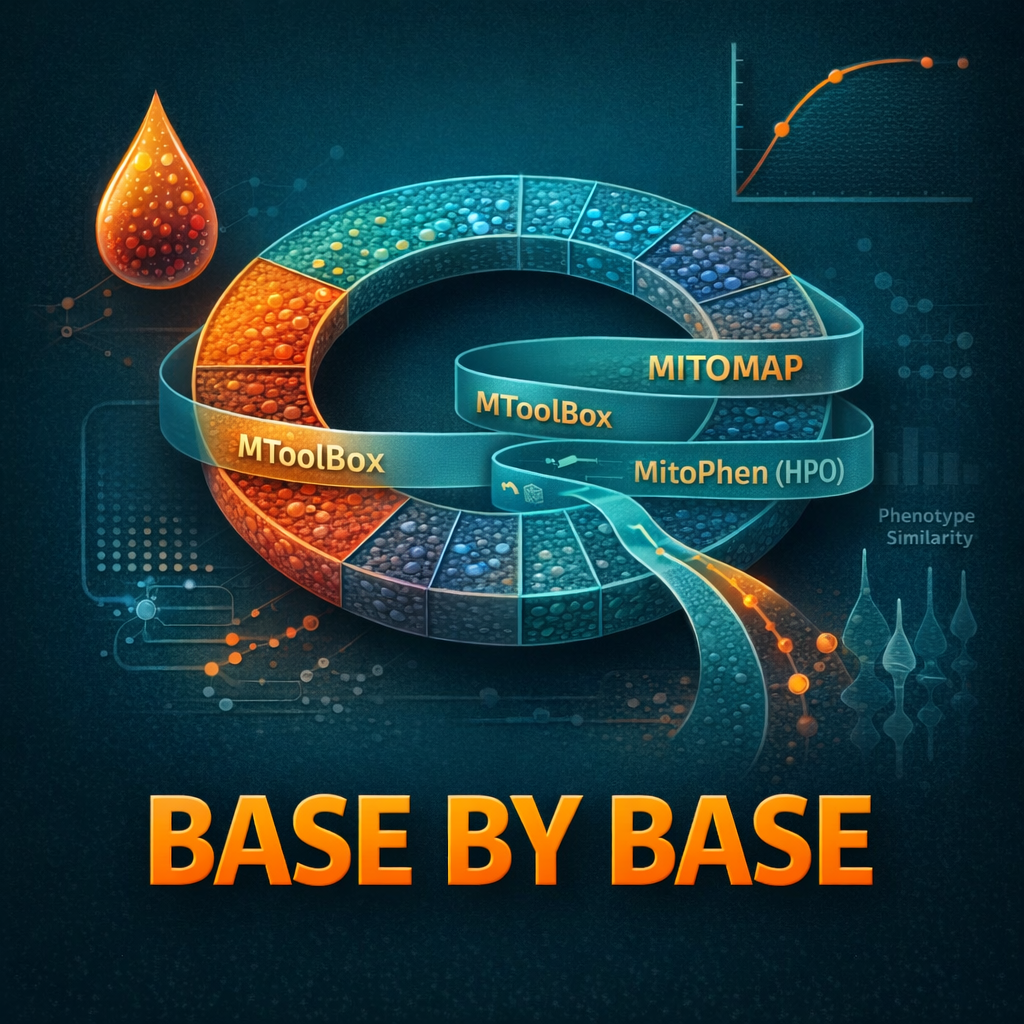
Ratnaike et al et al., The American Journal of Human Genetics - A semi-automated mtDNA reanalysis pipeline using MToolBox and MitoPhen HPO-based phenotype similarity was applied to the Solve-RD cohort, identifying previously undiagnosed mtDNA variants and adding a 0.4% diagnostic uplift. Key terms: mitochondrial DNA, heteroplasmy, MitoPhen, Solve-RD, phenotype similarity. Study Highlights:The authors validated an mtDNA calling and prioritization workflow on 42 pre-solved exomes and then applied it to 10,157 ES/GS datasets from 9,923 individuals in Solve-RD. Automated filtering (heteroplasmy ≥1%, MITOMAP annotation, haplogroup exclusion) prioritized 136 mtDNA variants in 135 undiagnosed individuals. An HPO-based phenotype similarity score from MitoPhen (threshold >0.3) was tested and used to prioritize candidates, capturing 34 of 37 confirmed or likely causative diagnoses. The integrated genotype-phenotype pipeline yielded 37 new confirmed or likely mtDNA diagnoses, a 0.4% diagnostic uplift in this heterogeneous cohort. Conclusion:Incorporating structured mtDNA analysis and HPO-based phenotype similarity scoring into ES/GS reanalysis can reveal previously undiagnosed mitochondrial diagnoses and modestly increase diagnostic yield in large rare-disease cohorts. QC:This episode was checked against the original article PDF and publication metadata for the episode release published on 2025-05-19. QC Scope:- article metadata and core scientific claims from the narration- excludes analogies, intro/outro, and music QC Summary:- factual score: 10/10- metadata score: 10/10- supported core claims: 7- claims flagged for review: 0- metadata checks passed: 4- metadata issues found: 0 Metadata Audited:- article_doi- article_title- article_journal- license Factual Items Audited:- MToolBox/MITOMAP/MitoPhen-based reanalysis identified 136 mtDNA variants in 135 undiagnosed individuals and produced 37 confirmed or likely mtDNA diagnoses, yielding a 0.4% diagnos- Phenotype similarity threshold of 0.3 provides high sensitivity; higher thresholds increase specificity; 92% of diagnosed/likely cases had a score > 0.3.- All diagnostically relevant mtDNA variants were detectable in blood with heteroplasmy > 11%; lower blood heteroplasmy can hinder diagnosis.- A homoplasmic MT-TL1 variant m.1555A>G confers risk for aminoglycoside-induced deafness; recognition enables avoidance of this drug.- Incorporating focused mtDNA analysis and phenotype similarity scoring into routine exome/genome reanalysis can reveal actionable mitochondrial findings and modestly increase diagno- Diversity of study populations is limited; European ancestry predominates (about 96%), underscoring the need for diverse cohorts to ensure generalizability. QC result: Pass.
Embed this episode
Ready to play
25: mtDNA discovery in Solve‑RD: phenotype‑driven reanalysis
No transcript for this episode yet
Similar Episodes
No similar episodes found.
Similar Podcasts
No similar podcasts found.