
EPISODE · Jan 9, 2026 · 19 MIN
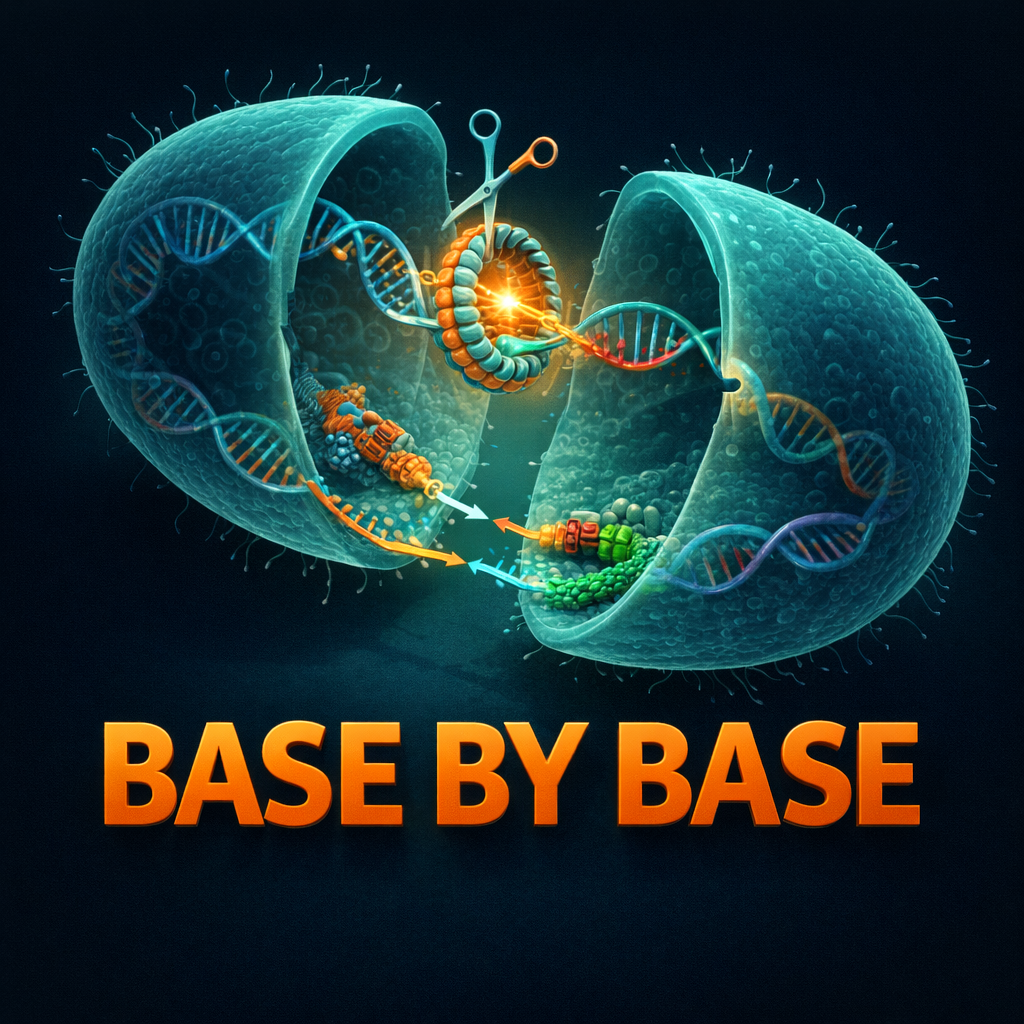
254: Rescuing the replisome at a nick
from Base by Base · host Gustavo Barra
Winterhalter et al., Nature Communications - Cas9 nickases in Bacillus subtilis show that single-strand nicks in either template strand arrest DNA replication, create single-end double-strand breaks, and require homologous recombination plus PriA-dependent helicase reloading for replication restart. Key terms: DNA replication, recombinational repair, AddAB, PriA, SSB. Study Highlights:Site-specific nicks created with Cas9D10A block DNA synthesis downstream of the nick and induce RecA bundling in live cells. ChIP-qPCR shows helicase enrichment upstream of nicks and persistence downstream when the leading strand template is nicked, indicating helicase runs off the template for lagging-strand nicks but translocates onto dsDNA for leading-strand nicks. Genetic and marker frequency analyses identify AddAB helicase activity, RecFOR, RecA, RecG and PriA as essential for repair and PriA-dependent helicase reloading to resume replication. SSB C-terminal tail is required to recruit RecO and enable RecA loading, while AddAB nuclease activity is largely dispensable if helicase activity and an alternative nuclease provide ssDNA. Conclusion:B. subtilis repairs replisome inactivation at single-strand discontinuities via AddAB-mediated end-processing, RecFOR/RecA-mediated recombination, and PriA-dependent helicase reloading to restart replication Music:Enjoy the music based on this article at the end of the episode. Article title:Rescuing the bacterial replisome at a nick requires recombinational repair and helicase reloading First author:Winterhalter Journal:Nature Communications DOI:10.1038/s41467-025-66550-w Reference:Winterhalter, C., Stratton, K.J., Fenyk, S. et al. Rescuing the bacterial replisome at a nick requires recombinational repair and helicase reloading. Nat Commun (2025). https://doi.org/10.1038/s41467-025-66550-w License:This episode is based on an open-access article published under the Creative Commons Attribution 4.0 International License (CC BY 4.0) – https://creativecommons.org/licenses/by/4.0/ Support:Base by Base – Stripe donations: https://donate.stripe.com/7sY4gz71B2sN3RWac5gEg00 Official website https://basebybase.com On PaperCast Base by Base you’ll discover the latest in genomics, functional genomics, structural genomics, and proteomics. Episode link: https://basebybase.com/episodes/replisome-nick-repair QC:This episode was checked against the original article PDF and publication metadata for the episode release published on 2026-01-09. QC Scope:- article metadata and core scientific claims from the narration- excludes analogies, intro/outro, and music- transcript coverage: Audited the transcript’s presentation of the nickase system, replication arrest, downstream molecular events (AddAB end-processing, SSB recruitment, RecFOR/RecA loading, RecG/RecU roles), PriA-dependent helicase reloading, and the manuscript’s implications for antibiotic strategies.- transcript topics: Cas9 nickase system in Bacillus subtilis; Replication arrest and MFA evidence; Fate of helicase at leading vs lagging strand nick; PriA-dependent replication restart pathway; AddAB end-processing and SSB recruitment; RecFOR-mediated RecA loading via SSB-CTT QC Summary:- factual score: 10/10- metadata score: 10/10- supported core claims: 8- claims flagged for review: 0- metadata checks passed: 4- metadata issues found: 0 Metadata Audited:- article_doi- article_title- article_journal- license Factual Items Audited:- Cas9 nickase system creates site-specific nicks in Bacillus subtilis- Nick on either leading or lagging strand arrests replication downstream- Replication restart requires recombinational repair and PriA-dependent restart- Add...
Embed this episode
NOW PLAYING
254: Rescuing the replisome at a nick
No transcript for this episode yet
Similar Episodes
No similar episodes found.
Similar Podcasts
No similar podcasts found.