
EPISODE · Sep 18, 2025 · 21 MIN
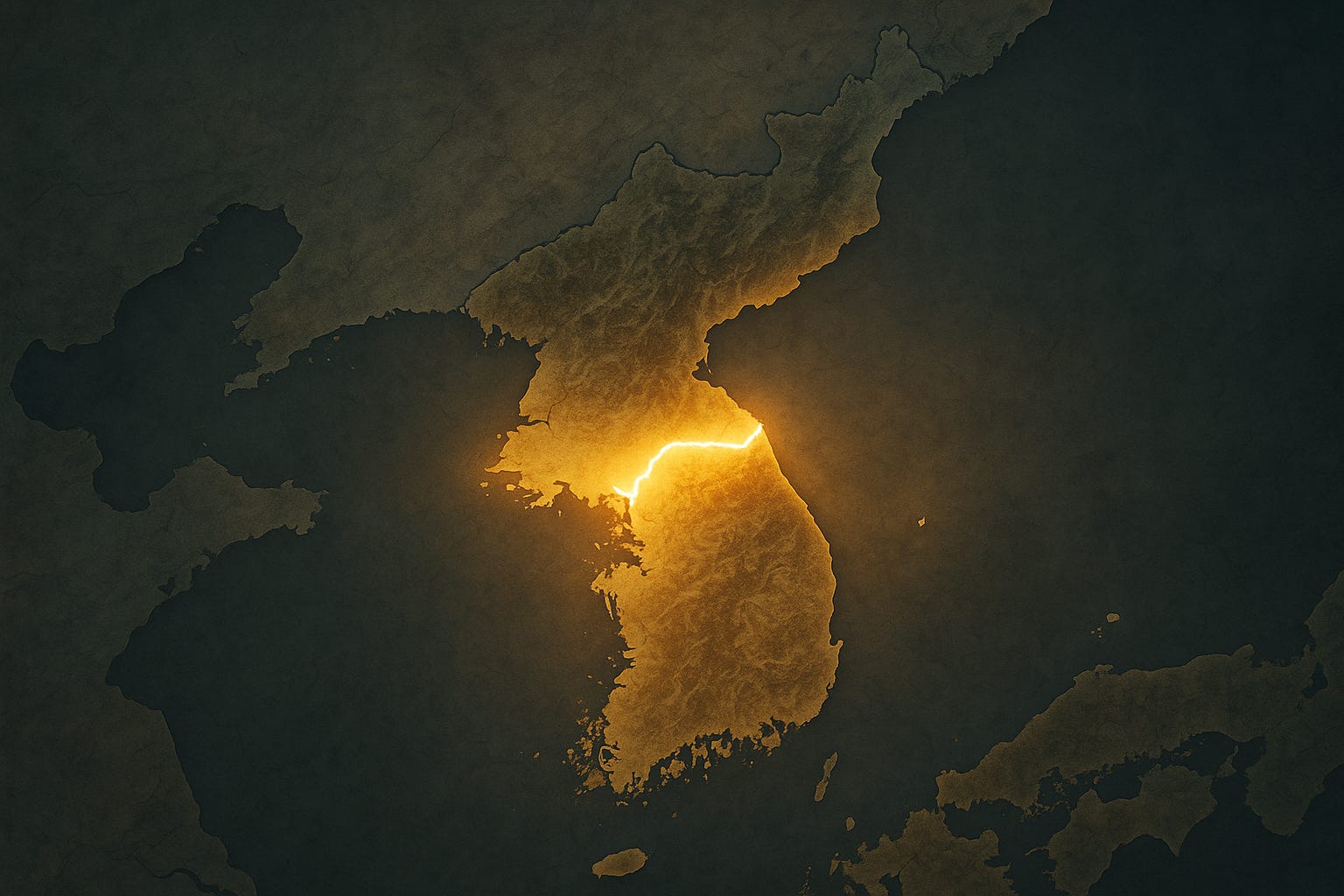
27(17). How a Pencil Line Split Korea
from Understanding Korea, One Story at a Time Podcast · host Dr. Jiwon Yoon
How a Pencil Line Split Korea: Why Korea’s division is key to understanding South Korea’s democracyDisclosure: This episode was produced with assistance from Google NotebookLM. It draws on reporting conducted while writing the Substack article and includes additional material that did not appear in the original piece. The audio was created using NotebookLM’s Deep Dive overview.🔗 Original article: https://yoonjiwon.substack.com/p/how-korea-was-dividedEpisode SummaryIn 1945, a rushed line on a map became the 38th parallel—and then the DMZ. Here’s why that division still shapes South Korea’s hard-won democracy under a permanent ceasefire.Key Takeaways- Korea’s division began as a temporary 1945 line and became a system.- The Korean War ended with an armistice, not a peace treaty; the DMZ marks a ceasefire, not closure.- South Korea’s democracy was won under pressure, with unique checks: mass protest, independent reporting, and impeachment used rarely but decisively.Glossary of Key Korean Terms (Romanization · Hangul · Meaning)(Timestamps indicate the first mention in the episode; they may vary by a few seconds depending on your app.)Rhee Syngman (이승만) — 5:48: South Korea’s first president. When all-Korea elections failed, he pushed to found a South-only government, a move critics say helped harden a division first drawn by the U.S.–Soviet occupation line in 1945.Kim Gu (김구) — 5:52: Iconic independence leader and head of the Provisional Government in exile—often invoked as a symbol of unity and a hope for one Korea.Jo Man-sik (조만식) — 9:07: A respected nationalist in Pyongyang who opposed “trusteeship” after 1945. Soviet authorities sidelined Jo Man-sik and instead promoted Kim Il-sung (김일성), a Soviet-trained anti-Japanese guerrilla, as the North’s leader.Kim Il-sung (김일성) — 9:11: Soviet-backed guerrilla commander who became North Korea’s first leader—Moscow’s choice to consolidate power in the North.Kim Kyu-sik (김규식) — 11:05: Diplomat-educator and independence activist who pushed for moderation and a negotiated, unified government for all Koreans.Yeo Un-hyeong (여운형) — 11:08: Broad-tent nationalist who worked to unite left and right soon after liberation; advocated “build the state first, then argue.”Park Heon-young (박헌영) — 11:27: Leading communist organizer in the South; later held top posts in the North before falling from power during early purges.Jeju 4·3 (제주 4·3) — 11:50: The Jeju Uprising (1948–54): protests, armed clashes, and a severe crackdown on Jeju Island with heavy civilian casualties—key to understanding how national politics turned deadly on the ground.Yeosu–Suncheon 10·19 Incident (여수·순천 10·19 사건) — 12:34: In 1948, soldiers ordered to suppress the Jeju revolt refused and rose up; the rebellion spread to Yeosu and Suncheon and was crushed by government forces—a chain-reaction moment in early South Korean history.Reading tip for learners:Names appear as Romanization (Hangul) so you can recognize them when spoken and also search them later. Explanations are simplified on purpose—so you can follow the story arc (who’s who, what they stood for, and why it mattered) without getting lost in jargon. Get full access to Understanding Korea, One Story at a Time at yoonjiwon.substack.com/subscribe
Embed this episode
NOW PLAYING
27(17). How a Pencil Line Split Korea
No transcript for this episode yet
Similar Episodes
No similar episodes found.
Similar Podcasts
No similar podcasts found.