Hello everybody, welcome to another episode of Find Your Model Health Be a Visual Podcast for those looking to optimize their long term health and weight goals, and understand how their body really works. I am your host, Anchume Linney, I'm a fitness and nutrition expert, certified nutritional therapist, urologist and biohacker, and I'm very happy to have you back with me for another piece of your day. I hope you're all keeping really well this afternoon. The heat has lifted here in Alberta for a while, so that's a nice relief.
And while it's lifted, I want to talk to you a little bit about hydration and more specifically electrolites. But before I go on, I must remind you that the information in these podcast episodes is for informational purposes only, and should not be taken as medical advice, please consult your health practitioner before making any lifestyle changes. Okay, so when we're looking at hydration, we're not just looking at water and drinking lots of water, because that in itself can be problematic. When experiencing a lot of heat like we have been across Canada for the last few weeks, not only are you looking at the health of the United States, but also the health of the United States.
Not only are you sweating and losing water, but you're also losing electrolytes, and these electrolytes are very important for many functions in your body, and if you're not replacing those electrolytes, you're going to have some problems, probably some muscle cramps, maybe some dizziness, maybe you're getting a bit of vertigo, or you're tired, or you've got brain fog, maybe more than you would because I know a lot of people have issues with brain fog. If you're following a low carb diet or you're doing some sort of intermittent fasting or you exercise a lot, you could be losing a lot more electrolytes than the average person. So you really want to replenish these, or there's going to be issues, and some of them can be very detrimental. Many of you will remember or know, either last summer or the summer before, I suffered extreme dehydration to a point that my brain went into survival mode, so I experienced hyponatremia, and I think that it's so I passed out, and it was quite scary, and it was uncontrollable.
During this time of the fainting, my blood sugar dropped, it took me the whole day to recover, and I took a hit that day, and I really then learned a lesson to pay much more attention to my hydration, especially for the type of lifestyle I leave. You know, we can get so obsessed about eating a certain way, and exercising, and dare I say, I over exercise, well I'll pull back on it, but at the time I was very much over exercising, and I paid the price because you know what they say, help as well, then if you constantly chase the aesthetics, eventually your help is going to be compromised, and that is what happened to me. So we're going to look at what our electrolytes, I'm sure a lot of you already know, but it's good to kind of get a refresh and look at these things again. So electrolytes are a group of minerals that carry an electrical charge, and this electrical charge helps them get into the cells better.
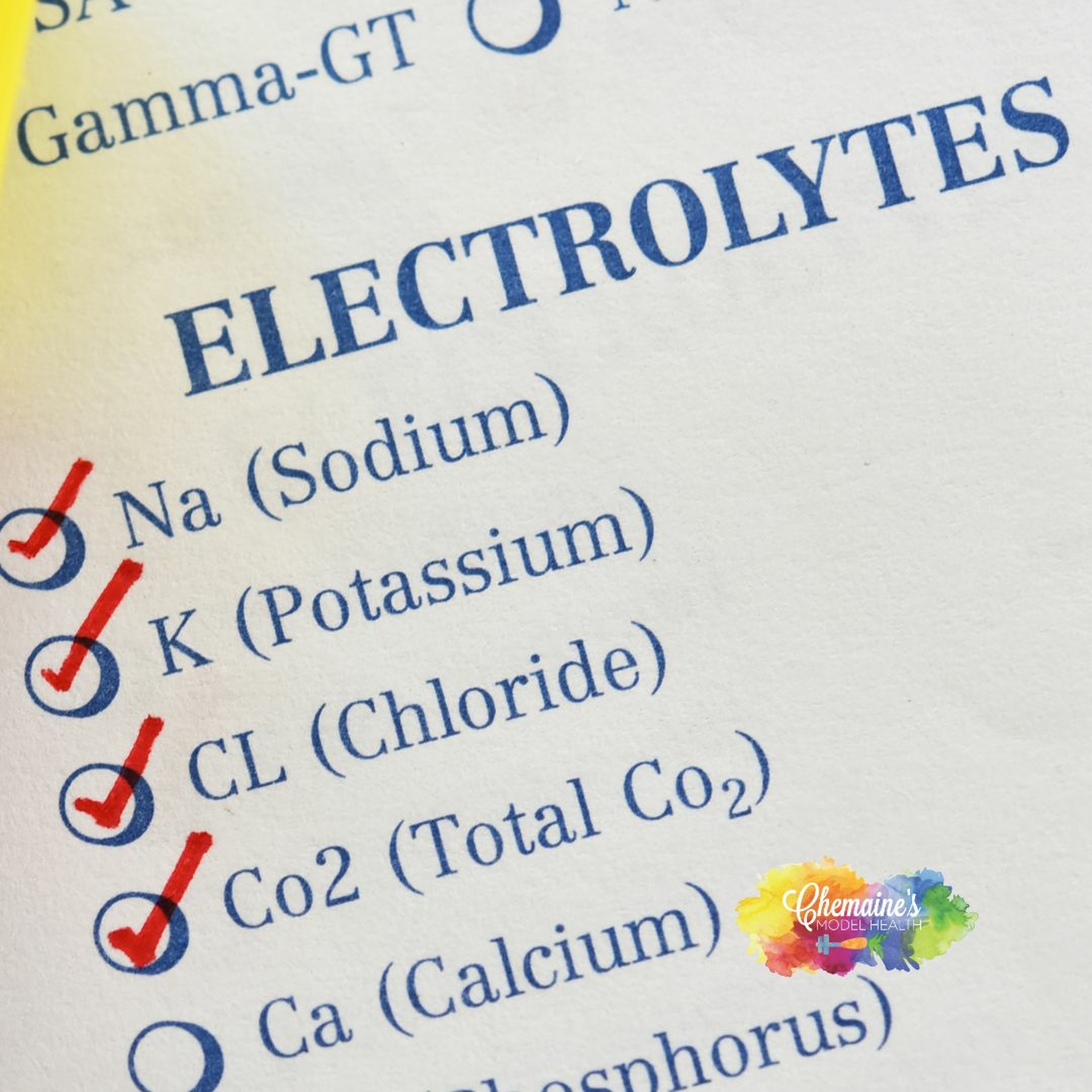
So our main electrolytes are going to be sodium, potassium, magnesium, calcium, then we have chloride, phosphate, and bicarbonate, and these are essential minerals which play a role in the fundamental metabolic processes, such as hydration, but also nerves signaling, and muscle and activation, and function. The electrical charge that electrolytes carry is literally the spark of life, like without it, you wouldn't have thought or movement wouldn't be possible. I was in the gym the other day with my husband and it was like very hot. I think we had hit 32 degrees in Ira, Alberta, and it got to a stage, luckily I was at the end of my workout where I just couldn't anymore.
I had nothing left in the tank, I had sweat so much from the workout that the last few reps I wanted to do, my muscles just wouldn't respond. There was no charge left, there was no power, and I knew that I had just depleted all my electrolytes and I said to him, okay, let's just go because I have nothing left in the tank, and that is that muscle intervention. So without even thinking, this is happening to you, it very well may be happening to you. So when electrolytes are dissolved in the body's fluids, such as your blood stream and the cytoplasm or the water inside your cells or your interstitial fluid outside your cells, they become ions that can conduct this electrical charge that you need.
And this is how electrolytes facilitate the physiology that benefits your brain and your body and your overall wellness. So your body keeps electrolytes at certain levels known as your electrolyte balance. And when the balance is disturbed, you have an imbalance, and electrolyte dependent systems stop working properly. So what can cause this electrolyte balance?
Well, there can be that excessive sweating from heat, and it doesn't have to be the sweat where you would see the droplets on your forehead or you're seeing the sweat patches under your arms or your back. It can just be that you're having the slow, steady sweat across the day. Maybe your hands are clammy, maybe you can feel in between your elbows are clammy because the whole day is constantly warm or hot, and even if you're not exercising, you have this steady sweat going on. And if you're not replenishing, then you're getting this electrolyte in balance.
So the next one would be that cause of an adequate dietary intake. And then you have that dehydration. And even overhydration, I've spoken about this a lot with my clients, that if you're overhydrating in a way that all you're drinking is water, water, water, water. And you've already lost a lot of minerals and electrolytes, and you're not replenishing them, but what you're doing is you're thinking you're hydrating by drinking more water, but because that water may be void of electrolytes, what you're doing then is you're further diluting the minerals that you have left in your body and electrolytes that you left, so that concentration decreases even more.
So without even thinking, you could be making things worse instead of better. And then we have vomiting and diarrhea can cause an electrolyte imbalance, a fever, of course, some medications, especially diuretics, and then pearly controlled blood sugars can actually be an issue when it comes to electrolytes. So what are those symptoms again? Well, we've got the dizziness, we've got the vertigo, we've got fatigue, brain fog, weakness, a general feeling of malaise, like your body's just not responding.
One of my clients kind of refers to it like her legs are dragging her legs field weak when she's there, so without weakness, a regular or rapid heartbeat, you can get swelling and puffiness, bloating, of course, muscle cramping and spasms and twitches. Diarrhea and constipation can be a sign of an electrolyte imbalance, and I spoke about this in the question of the week, this week in my Facebook biohacking group, because you get that inflammatory immune response because this imbalance causes such a stress, and that tissue in the gas or the test in the lining is so sensitive. So we also have confusion and then mental tension and irritability. So there are some others, and you might not have any symptoms at all, especially with a mild imbalance.
However, as electrolyte imbalance has progressed and severity, symptoms will become more pronounced than the impact can be life-threatening. Like I mentioned, I'm lucky that my husband was in the room at the time I fainted and he was able to respond then and get me some mineral water. He got me molecular hydrogen. I can't even remember what else it was, but I do remember the mineral water and the molecular hydrogen, and I was basically stuck in bed for the whole day.
I had nothing left in me. It was just gone, and it happened so quick. So how would you know if you have an electrolyte in balance? Well, right now in the heat and the summer and heat waves, you can assume everyone can kind of assume like I'm losing electrolytes each day.
If you're exercising a lot and you're sweating a lot, you can assume that you need to replenish electrolytes. I think most people know that if you have diarrhea or vomiting, I remember when we would get like a stomach bug when we were kids. Back in Ireland, my mom used to give us, it was called the Oralite. I think it's called Petitlite here in Canada, and we hated it.
Oh my god, it was so gross. It basically was designed to replenish those lost minerals and fluids and electrolytes, but it was so gross. I can still taste it in my mouth. That was like 20 years ago, I think I'm traumatized from this.
But you can get a blood test performed by your healthcare provider called an electrolyte panel, which can tell you if your electrolytes are out of balance, especially if you're not just in the summer, if you're regularly experiencing vertigo and dizziness and mental tension and cognitive performance issues. If they're willing to do this test, it would be no harm. Since we also get our electrolytes from the foods we eat and the liquids we drink with the exception of bicarbonate, which we can take as we need it, you can track your intake of electrolytes and increase or decrease your electrolytes as needed. Tracking is pretty easy.
Chronometer is my favorite, and they do have the option to track electrolytes, and they give you percentages at the end of the day, and you hit 70%. You have 59% of your electrolyte needs. 100% accurate, but it is giving you a good idea of how you need to increase or decrease your electrolytes. If you're looking to boost your electrolytes, it's easy enough to make your own or purchase.
A lot of people will just purchase electrolytes. It's easy enough in a sense that you can just do some water, laminar line juice, and some sea salt. So which foods contain electrolytes? Well, for sure, your fruit and vegetables do.
Anything that really comes from the soil will, because our minerals come from the soil. So sodium and chloride in nature are bound together in the form of salt, as we know it like sea salt. So that would be our sodium chloride. So the recommended intake of sodium from a lot of practitioners is less than 2300 micrograms a day.
So this is about one teaspoon, but a lot more people, especially if you're eating a clean lifestyle or clean diet, need a healthy lifestyle can do a lot more than one teaspoon, but even one teaspoon is a lot when you consider the taste aspect. If you're getting adequate sodium from your foods, then you're most likely getting that chloride requirement as well. So sodium being the premier, what most controversial electrolytes, if you haven't taken a look at the salt fix book by James D. Nickel Antonio, it's quite good and it's very eye opening in regards to salt and the controversy around it.
The way I put it, and I've put it in a lot of my content, is look, if you're leading a healthy lifestyle, your exercise, and you're sleeping well, you're controlling inflammation, your nutrition is generally good, then I wouldn't be too concerned about the amount of salt you have in regards to like, don't worry that you're having too much. But if you lead an unhealthy lifestyle and you're eating a lot of processed foods, you've sedentary lifestyle, maybe there's a lot of alcohol, maybe there's a lot of inflammatory issues, then you may want to be careful with sodium. So there was an extensive study published in the New England Journal of Medicine that found that people who consumed a moderate amount of sodium were healthier than people who consumed either more than this or less, so that range was three to six milligrams a day, so not even micrograms, it was quite a lot. And then there was a more recently published, PURE, QRE study of over 90,000 subjects, and they also had similar findings.
But again, these people are generally leading healthier lifestyles, so I do want to just remind you of that. If you're not leading the best nutrition and exercise lifestyle and you can sleep lifestyle, maybe you want to consult your doctor first, get a blood panel done, just check where your sodium levels are already, and I would also check in inflammatory markers too. Now potassium is the other major electrolyte, so potassium is generally widely available in whole unprocessed foods. If you're eating a lot of processed foods or junk foods or takeout, the chances of you not getting enough potassium in your diet is pretty high.
My favorite forms of potassium like to get potassium, dates, I really like dates for potassium, potatoes are great for potassium, and then I'm sure most of us have heard of bananas and avocados being a good source of potassium. But all fruits, vegetables, nuts, beans, and dairy are going to have some potassium in them. Meat also does contain a nice amount of potassium too, so although potassium deficiency is rare, healthy, optimal levels of potassium are rarely met in a lot of people, and I think this is due to lower amounts found in people's diets today in animals and plant foods based on soil quality, environmental factors, maybe the displacements of potassium-rich foods from a diet high-end process foods or even just having no whole foods. So the reganendidalian take of potassium is 4,700 milligrams for adults and children aged for and older.
And then the next one, so we've covered sodium chloride or just sodium, potassium, and then the next most, should we say, prominent electrolyte is going to be magnesium. Now 75% plus of people do not get enough magnesium in their diet, and although I feel this is spoken about a lot lately, magnesium, or it could just be where I'm looking and what the algorithm is showing me based on my searches, but most people need magnesium. You need it to function. But even when I speak to people, most people are not even taking magnesium in a supplement form.
It's one of these nutrients or minerals that's essential. The main sources of magnesium are going to be our whole foods, our green vegetables, dark chocolate, my absolute favorite for magnesium, like food source, dark chocolate all the way. Fatty fish like salmon and mackerel. Red meat does contain some magnesium, your avocados and bananas, again, let's see it's whole grains.
If you're going to go to the path of whole grains or legumes, I recommend you sprout them or ferment them. But magnesium is so important for so many functions in the body, especially with the day and age we live in now where stress is all around us. And one of the first minerals or nutrients or whatever you want to call it, to be depleted when you experience a lot of stress, which most people do nowadays, after you're being vitamin C, is magnesium gets depleted next. This is why when people get very, very stressed, they'll start to get crumbs, they'll get restless legs, they'll get hair palpitations, they'll get eye twitches like their eyelid tool twitch, all indications that you have magnesium deficiency and taking a good quality magnesium or introducing more magnesium rich foods into your diet is going to help out a lot.
So then the next few, we're going to fly through calcium. Obviously, dairy is our largest dietary source of calcium. However, leafy greens like collards, turnips, bok choy, fish with soft bones like canned salmon, anchovies, sardines and the soft end of soup bones are excellent bioavailable sources of calcium. A lot of people are not meeting their calcium needs either.
I generally think it's due to the overconsumption of junk food and processed foods. So all of this indicates let's try to stay to our whole foods as much as possible. And then the last two is phosphorus and bicarbonate, phosphorus and bicarbonate are two electrolytes. We generally don't have to be concerned about from a dietary perspective, phosphorus, which can also be referred to as phosphate is found in abundance in animal foods like meat and dairy.
So maybe if you're vegan, you may have a concern there. But for the majority of us who are eating meat and some sort of dairy, we're going to be hitting our phosphorus requirements. And we're actually more likely to get too much phosphate rather than too little since not only is it widely available naturally, but it's also commonly found in processed foods as an additive. And then bicarbonate can be consumed in its finely ground form as baking soda.
One of my favorite tools, ingredients to use in baking, especially my carrot cake and my sweet potato cupcakes, baking soda is great. And you're getting the nutrient benefits. But it can be made by the body as needed as well. So if you're not using baking soda, don't worry too much about it.
I know a lot of people actually that will bathe in baking soda along with Epsom salts. And then I know people who brush their teeth with baking soda and then of course there's people who will take baking soda in some water for acid reflux, which can be effective. So again, why do you need electrolytes every day? Not just when you're sweating or you're depleted of electrolytes.
So apart from the symptoms that we mentioned already, we have brain and nervous system support or every thought from the simplest to the most complex thoughts starts with a spark of inspiration or more literally an ionic spark involving sodium, potassium and chloride ions. So the activity of electrolytes has the ability to alter our nerve cell membranes, which then allows information to be transmitted and received by cells in your brain and throughout your entire nervous system. Then as I mentioned, we need it for performance and healthy muscles. If you want to perform in the gym, if you want to lift optimally, you want cardiovascular performance and endurance, then this is true.
You are going to need electrolytes. Calcium promotes the quickness and force of muscle contractions and then magnesium helps with recovery and relaxation as well. For of course, our hydration and our fluid balance, a lot of us will experience swelling of our hands and our feet and our ankles on very hot days. Or if you go for a walk on a very hot day, you'll come home and you'll feel your hands are stiff or they look puffy or swollen.
That can be a sure sign that there is some sort of dehydration going on there. Like I mentioned, the worst of dehydration gets, the worst of symptoms. Again, that again is not only water, but that is also the loss in the electrolytes and the minerals, especially sodium, potassium, magnesium. So for most people, even mild to dehydration is not desirable.
But we've looked at some of the foods, we've looked at some of the ways you can rehydrate. I will discuss other electrolyte options in a minute. But dehydration isn't just a water loss problem. It is accompanied by electrolyte losses.
So for proper rehydration, you want to re-mineralize, replace the lost fluids and replace those lost electrolytes. Because again, you do not want to experience hyponatremia, which is what I experienced. And for those of you that are athletes out there or that do exercise regularly and intensely, you are going to be particularly vulnerable for hyponatremia, which is basically the hydration of the brain. It also helps to balance your mood, help you feel happy.
So many studies have shown that magnesium helps to promote feelings of calmness and well-being. And calcium also supports a balanced happy mood too. And then we've got the acid pH-based balance in our body. So the acid-based balance or the pH level of your body, it generally maintains itself and it will remain in a tight range.
You don't need to mess around with that too much. Your body knows what to do. All different parts of your body have different pH's. But making sure that you can get in these electrolytes is going to help maintain that balance or help your body maintain the balance.
So I had mentioned a lot of people will take baking soda when they get acid reflux or hair burn, because they know that base will help neutralize some of the acid. And then you do not want to do that long term because you are going to mess with the stomach pH. And then you open Pandora's box and a whole can of worms. You just don't want to do that.
Well, by carbonate functions to keep the body in the acid-based homeostasis or balance. So I hope you found this insightful. I did mention that I would, I don't want to give out too many names of products. There's a lot of great products out there for if you didn't want to make your own electrolyte, which again is easy lemon lime juice and fruit and some water fruit.
Whole fruit juice, not fruit juice, you buy in a store with some sea salt. You can get some good brands. I like Prairie Naturals electrolytes. I really like ATP labs electrolytes and a shout out to them.
They are a Canadian company. LMT, a lot of people ask me about them. It's a good electrolyte. I personally do not like the flavor of any of them.
It's like they're very hard to consume. That could just be my taste buds. But if you like them, you totally can. Bioseal is an option.
Just make sure you read the labels. Most of their ingredients are good, but I believe one or two of their products may contain sucralose and or aspartame. Then just being aware, if you're following a keto or a low carb diet or even like extensive fasting, these protocols are going to be naturally lower in minerals and electrolytes, but also because they're lower in carbs, that causes the kidneys to retain less fluids and electrolytes. You could be losing a lot more than the average person.
Then of course, the standard American diet generally is an adequate of good nutrition on minerals. Then if you get sick and then like I mentioned exercise on athletic performance, these are all risk factors. So I hope you found this episode helpful. I think we covered everything.
If you have any questions, please let me know. If you know anyone that would benefit from this information, please send it to them. Sharing is caring. If you haven't already, please like and subscribe on whatever platform you're listening to this too.
And if you feel like deserve it, I would very much appreciate a review on whatever platform you're listening to. These reviews help small businesses and small podcasts like my own reach more people so that we can give this information to more people and hopefully help them make progress on their own health journey. So thank you guys for spending some of your day with me. I hope you have a wonderful week and a wonderful rest of summer and I'll chat to you guys real soon.
Bye bye.