
EPISODE · Oct 9, 2025 · 14 MIN
30(20). How Trauma Built Modern Korea: From "Ppalli-Ppalli" to the Miracle on the Han River
from Understanding Korea, One Story at a Time Podcast · host Dr. Jiwon Yoon
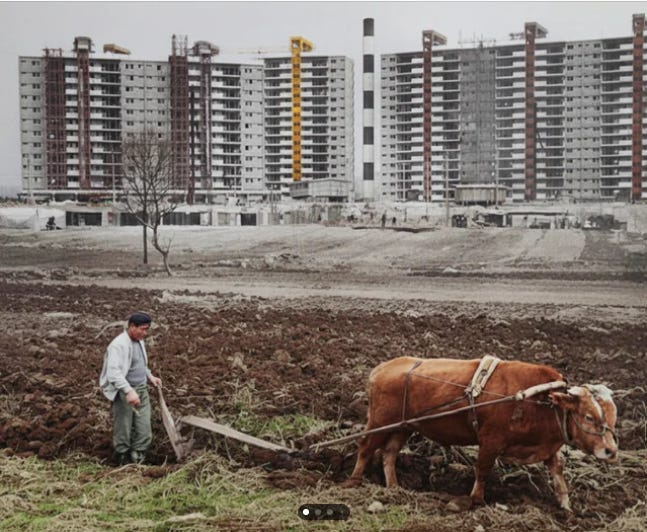
30(20). How Trauma Built Modern Korea: From "Ppalli-Ppalli" to the Miracle on the Han RiverThe postwar survival algorithm—speed, education, real estate, and han—behind South Korea’s rapid riseEpisode summaryThis episode traces how the Korean War’s unresolved grief—ambiguous loss, hypervigilance, and a family-as-fortress mindset—evolved into a national operating system: ppalli-ppalli speed, education as an indestructible asset, real estate as a tangible anchor, han as fuel, and village-style mutual aid. We follow that code from expressways and apartments to cram schools and conglomerates—and we confront the bill: burnout, gwarosa (death from overwork), and a mental-health strain that shadows the “Miracle on the Han.”Original post & full show notes: https://yoonjiwon.substack.com/p/how-trauma-built-modern-koreaEp. 30(20) — Glossary of Key Korean Terms(Romanization · Hangul · Meaning — timestamps show first mention; app variances ± a few seconds.)ppalli-ppalli · 빨리빨리 — 1:28 Literally “hurry-hurry.” The shorthand for Korea’s speed reflex—reply fast, build fast, ship fast—rooted in postwar survival logic.Park Chung-hee · 박정희 — 2:55 South Korean president (1963–1979). Drove state-led industrialization and export-oriented growth; also synonymous with authoritarian rule.Gyeongbu Expressway · 경부 고속도로 — 3:11 The Seoul–Busan highway, completed in 1970 on an accelerated timetable—an emblem of “build fast” development.Seoul · 서울 — 3:14 South Korea’s capital; massive urban expansion, especially south of the Han River, defined late-20th-century growth.Busan · 부산 — 3:15 Major southern port city and wartime refuge; the south anchor of the Gyeongbu corridor.ugoltap (“cow-bone tower”) · 우골탑 — 4:45 A biting phrase from the 1970s–80s: selling the family cow to fund university—i.e., the family burden around education.ingoltap (“human-bone tower”) · 인골탑 — 5:03 A darker update of ugoltap: university “towers” built on parents’ back-breaking sacrifice—social critique of education costs borne by families.hagwon (cram school) · 학원 — 5:22 Private after-school institutes for test prep, languages, music, etc.; core to the education arms race.han · 한 (恨) — 6:43 A debated concept: a knot of sorrow, grievance, and resolve. In this episode, it frames how loss can harden into motion — “never this helpless again.”jaebeol (chaebol) · 재벌 — 7:48 Family-controlled conglomerates central to Korea’s rise (e.g., Samsung, LG, Hyundai); vast scope and complex legacies.Samsung / Hyundai · 삼성 / 현대 — 7:50 Flagship chaebol groups; their founding lore often symbolizes grit, speed, and scale in high-growth decades.dure · 두레 — 9:31 Traditional village work teams for collective farming; a form of mutual aid.pumasi · 품앗이 — 9:37 Reciprocal labor exchange between households — “help me today, I help you tomorrow.”Saemaul Undong (New Village Movement) · 새마을운동 — 9:59 1970s rural modernization drive channeling community labor and state resources into roofs, roads, and waterworks.gwarosa (death from overwork) · 과로사 — 11:48 Fatal outcomes linked to chronic overwork and stress—the pressure-cooker cost of speed.Han Kang (novelist) · 한강 — 12:43 Nobel Prize in Literature (2024) and International Booker Prize (2016)–winning South Korean novelist (The Vegetarian, Human Acts, Greek Lessons). In this episode, we introduce her as a writer whose fiction lays bare the pain and contradictions of modern Korean society. Get full access to Understanding Korea, One Story at a Time at yoonjiwon.substack.com/subscribe
Embed this episode
NOW PLAYING
30(20). How Trauma Built Modern Korea: From "Ppalli-Ppalli" to the Miracle on the Han River
No transcript for this episode yet
Similar Episodes
No similar episodes found.
Similar Podcasts
No similar podcasts found.