
No one can take this away. Welcome to another episode of the Find Your Model Health Podcast. I am your host, I'm Shameen Lenny. I'm a nutritional therapist, integrative health practitioner, urologist and biohiker.
I'm very happy to have you all back with me for another piece of your day. I really do appreciate that you choose my podcast to listen to during your day. I hope you find them informative. Hopefully this one will be too.
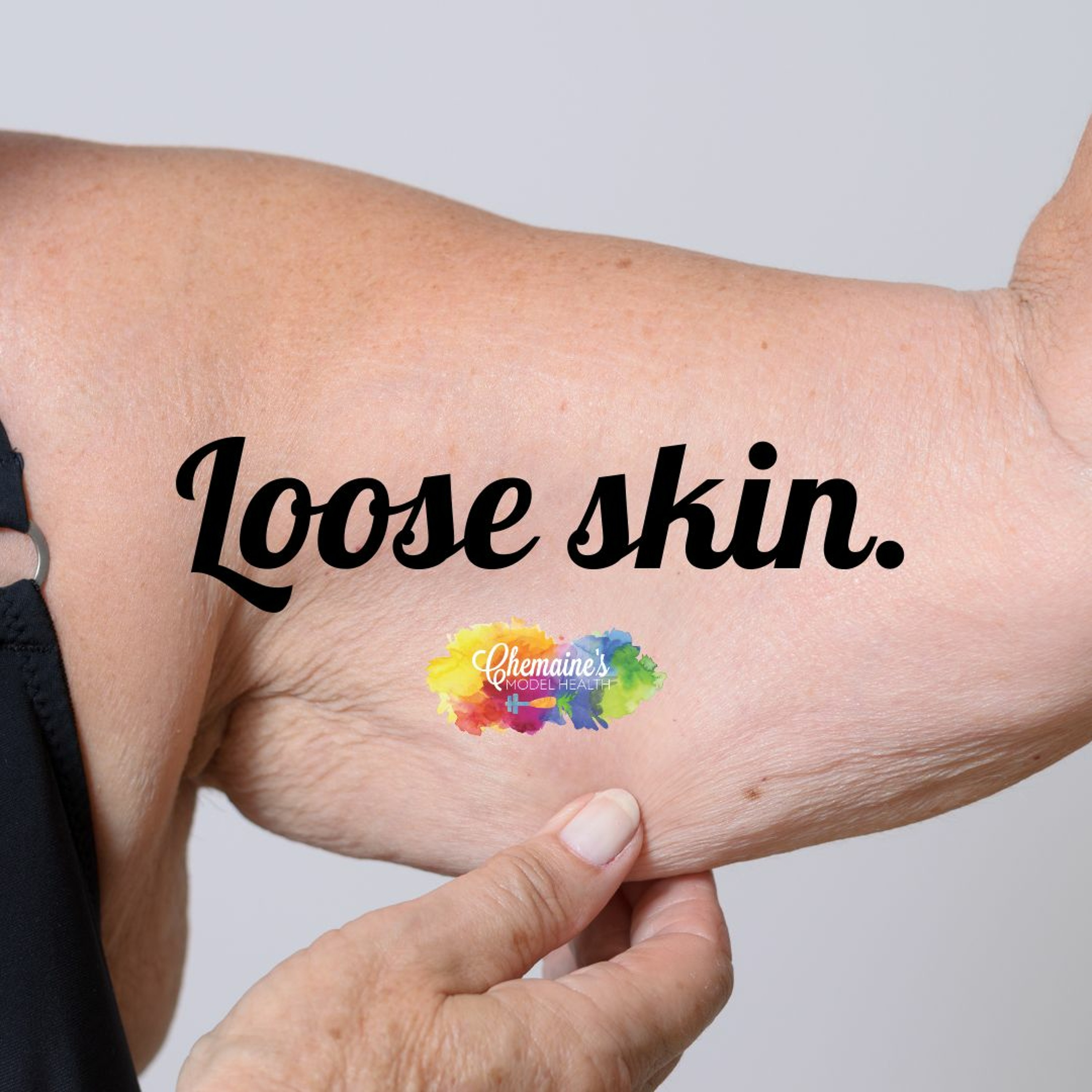
Before I go on, I must remind you that the information in these podcast episodes is for informational purposes only. Should not be taken as medical advice, please consult your health practitioner before making any lifestyle changes. In this episode, we're looking at loose skin. I've spoken about loose skin a lot, especially after weight loss.
You don't necessarily need to lose a ton of weight to have loose skin. Many women will experience some sort of loose skin even after pregnancy. There's many factors when it comes to having saggy or loose skin or skin that's lost. It's integrity or bounce.
But when it comes to weight loss, this is a question I will get a lot. Especially when I start working with women who have a lot of weight to lose 100 or 200 pounds. They usually ask me at the beginning and my general response is, hey, don't worry about it now, the protocol that we're going to take is going to help with that as we move along on your journey. But when there's a couple of factors that will drive skin to be looser, and I've spoken about my loose skin a lot, I lost 165 pounds of body fat.
I am left with loose skin. Compared to other people, it's not that bad, but in my opinion, it's still pretty bad. Around my stomach doesn't bother me too much because I'm generally not showing off my stomach. I did also have two full-term pregnancies.
What actually bothers me a lot is the loose skin at the back of my arms. A lot. My arms are quite muscular and I've purposely built them to be that muscular to try fill out some of my arms and pull the skin a bit. It has helped, but there's still that little bit there that the majority of the time, but there's still that part of me that I'll say gets upset looking at it because I've put in a lot of hard work to make my body look a specific way.
I really do practice what I preach and I think that's very important. If you have a teacher, they should know the struggles, but also practice what they preach. I have spoken to a few people. I know a girl here recently in Erdary who just had a huge amount of skin removed.
I won't be about her name in case she gets embarrassed, but if she listens to this podcast, you'll know who she is, which is amazing for her. But I was telling her, like, I'd love to get it done. I'd love to get the skin cut off the back of my arms, but I just, the pros and cons don't weigh up for me. Like it would be amazing to have that loose skin cut off and really show off my arms to like their full extent and the amount of work I've put into them.
But the recovery time is 16 or more weeks, probably less for me because I know a couple of hacks that encourage peeling and regeneration. But regardless, it was 16 weeks and I couldn't lift weights and I couldn't exercise and I started to go carabolic and lose some of my strength and my muscle, which would happen. And then that's going to affect my mental health. And then I start eating, like, this is what goes through my head.
Then I start eating because my mental health's messed up because I can't work out properly. And then I gain the weight, some of the weight back. And those of you that have lost a lot of weight and who are predisposed to obesity, like I am, you know, it's very, very easy to gain the weight back. Yeah, there's some things that we can do to stack conditions in our favor, but it's still pretty easy.
So then I'm like, no, that's not going to, it's not worth the risk. And really, the big thing there is my mental health, like that would really affect me a lot if I couldn't work out. So what is the alternatives? Well, like I said, you can build a lot of muscle to try pull the skin out and part of building muscle obviously involves consuming the right foods, including proteins, like cartilage, collagen, good fatty acids, obviously lean protein, parts of an animal that would also include a last in it.
So let's get into this. What are some things? Well, firstly, if you're going to start off in a health journey or a fat loss journey or fat loss campaign, whatever you want to call it. If you have 20 pounds lose, 30 pounds, the chances of you having loose skin after losing that is pretty slim, unless you have really bad skin integrity.
Now, people whose ancestry has more that salut skin closer to the equator, their skin generally tends to bounce back a lot better and be of better quality, whereas people of like Northern European and Northern American descent, like Irish skin is more prone to having stretch marks and not bouncing back as well. And I think a big part of that is genetic expression because of sun exposure throughout our lives. But anyway, so if you're in the 20 to 30 pounds, probably I'm not going to have a lot of loose skin, but as you start to get 50 pounds down, 70 pounds down, 100 pounds, 200 pounds. Now we have a risk factor that there's going to be some loose skin there.
So what I will say first is, and I will stand by this all the time, as much as people want to lose weight super fast, and it does happen to some of my clients, but I watch them very carefully. As much as people want to lose weight fast, you really are better off losing slow and steady and consistently. That kind of range, ideally, now this is going to be individual because a heavier person could lose more weight per week because their metabolism is going to be higher potentially. But the average weight loss, I like to see what my clients is around 1.5 to 2 pounds per week.
And again, it depends on the person, someone who is maybe 300 pounds, I would like to see them lose a bit more each week. But regardless, you want to lose slow and steady and consistently so that your body, your cells, your tissues have a chance to adapt and slowly reform and reshape. A lot of people don't consider their cell when they're losing weight, and not just a fat cell, all the cells, your body is one system, it's all connected. But the cells are pretty much, when you combine all the cells in your body, well guess what, that gives you the shape of your body, that is your body.
So you have to consider cell structure is like cellulite, there's a big part of cell structure there that's going to influence if you have cellulite or not. And generally people with poorer skin integrity are going to be more prone to cellulite because they have pure tissue integrity, or to break that down even more, it's poor cellular integrity. So right at that cellular basis, that cell shape the structure, the strength of that outer matrix of the cell, that's going to influence how things bounce back and the structure that's going to be there. The body overall.
So slow and steady because you're allowing your body to catch up with itself and provided everything is done right as you're losing body fat and you're doing the correct practices, your body is flushing out those damaged cells, those broken fat cells, the toxins that are in fat cell, all that fun stuff. And then it's starting to form newer, stronger cells, healthier cells that are more resilient, they have more buoyancy to them. And the buoyancy comes to really how clean your diet is as well because buoyancy comes from what the cell is made up of. The outer cell membrane is made up of fatty acids and that's basically going to be the fatty acids that you consume.
So the cleaner your fatty acids are. Cryl oil like my one of my most recent podcasts, this goes is at a cat oil, coconut oil, macadamia oil, good fats from grass-fed and pasture-raised animals, stuff like that like clean fats, then your cells are going to be strong and made up of these structured strong fats, whereas if most of your diet is made up of trans fats and polyocetrated fatty acids and fats that have been oxidized, then your cell is going to be the outer cell matrix is going to be made up of that and that does not form a smooth cell. Because these fat chains are damaged. And then inside the cell, you've got water and that's going to be like ideally very clean water and we have very clean water inside the cell.
Then you've got your like cellular functions, your metabolic functions, the mitochondria, the spinning heads, they can all work properly. So that helps with metabolism, but also it's within the cell that you have these collagen strands that hold the cells and the tissues that give them their structure and their shape. So this all combines then, gives your body structure, like I said, and then we also have another molecule in there called elastin fact contributes to that buoyancy and helps things bounce back, like, I don't know, like a bounce, the kids bounce evolved. So you want to consider all of this, that as you're breaking down the fat cells, slow and steady winds the race, you're detoxifying, you're eliminating them properly, you're killing off any damaged dead cells, and now you're helping to build newer strong cells because we build, we make cells like every night, whether or not they're going to be healthy, depends on the size of the cells.
So it's going to be healthy, depends on the lifestyle you live, but we also then any cells that can kind of be redeemed, that have still got a bit of life in them, we want to give them new life, we want them to be healthier and better. So I did, so time is important, take your time, I know you want to rush ahead, but come on realistically, I say this to people all the time, if you lost two pounds a week over 20 weeks, let's say between January and May, just before summer, two pounds a week, that's 40 pounds, for many people, that is them hitting their goal between January and May, and there you go, they just been to maintenance, and this is very doable, very, very doable, provided. You take the right approach. Now in that, along with time, and I mentioned detoxification, you want to have optimized detoxification pathways, I mentioned college in there, college in, oh, that college needs the whole podcast episode to itself, and I've done two years ago, but I do intend to do another new one because some of the comments I see about college on social media are insane.
So college is very bio available, it is very active when you consume this, college is produced by fibro glass within the body, and the older you get these fibro glass and the enzymes that stimulate them, the production starts to slow down, and then you throw in a bad lifestyle, too much TV, watching too much TV, not exercising, blue light exposure, pollutants in the environment, alcohol, poor nutrition, then you're going to really speed up that process of degrading your college in and slowing down, and slowing down production of new college, and college in is what gives you that taught and firm skin, and college in plays a huge part in bone health, and ligaments, tendons, cartilage integrity, college in plays a big part in women's menstrual cycle, and building up the uterine lining, like college in is so important, but college in you get, as a supplement, there's a lot of silly comments that go around social media, oh, my son so said that it's not bio available or that it doesn't work or it's wasting money, well I can tell you here and now, that is false, if you get a good bio available, hydrolyzed college in peptide, it can be easily assimilated, and when it's in peptide form, there's a lot of talk about peptides now, so when it's in peptide form, it's almost like an enzyme that it'll go straight in and do what it is supposed to do, there are certain dosages that you need to take, but college in is a big player in creating the cell, not just the way people think, oh, college in is good for hair, skin and nails, no, let's get to the cellular level, you want strong cells and the all of those cells accumulate to make you strong and you have to consider like this is at a cellular level, so college in really does play a part here, now there's also context, like you can just a part here. Now there's also context. Like you can't just take a college and supplement and continue to have put it bluntly a shitty lifestyle and nutrition habits and expect it to perform miracles. It does not work like that.
But if you have made the appropriate diet and lifestyle changes and you're consistent with them and you're consistent with collagen and you do another things to complement and encourage cellular production, then yes it's going to work. It's going to give you some really really nice results. This studies on collagen, the research now is in the thousands. There is a lot of research on collagen and its specific amino acids, especially glycine.
Collagen does work, but it's in context as well because again if you're eating Wendy's every day and you're drinking alcohol a couple of times a week and you're not getting exercise and you're going to bed late and you're watching TV and blah blah blah taking some collagen at that point it is wasting money like you take it it may have teeny tiny benefits but not a lot. Now you don't have to just get collagen from a supplement. Of course we get collagen from mostly animal meats and animal products and we also get elastin. So that elastin that kind of helps everything stay together and bounce together.
Well elastin also predominantly comes from animal proteins and animal meats and animal products, cottage cheese, milk, fish of course contains collagen and elastin but you need a higher concentration with fish. So marine collagen is not as potent or effective as bovine collagen. You do need it in a higher dosage but you can get the elastin as well. You can get from nuts and seeds and if you can do legumes, if you can do beans you will.
Brazil nuts are amazing. Brazil nuts are also very rich in vitamin E. So selenium, Brazil nuts are well known for selenium and selenium is important because it helps with the healing and regeneration. Selenium directly influences thyroid metabolism and that's going to directly influence healing and regeneration.
But you've also got vitamin E in there as well. Vitamin E is super important for good skin. Most of the fatty acids are important for your skin. So fatty acids being your essential fatty acids like your EPA and DHA.
So what we would get out of krill oil or really good cod liver oil. Go check out my recent podcast on krill oil versus fish oil. Fatty acids you would get out of nuts and seeds. You would also get out of your animal products.
You get out of avocado, your cheeses, your yogurts, coconuts. Yeah, you get fatty. Oh olive oil, amazing. Avocado oil, extra virgin olive oil, amazing.
For the skin, so good for the skin. But the fatty acids are essential again for that cellular membrane but also keeping your skin moist and bouncy. So you want to get enough of the fatty acids and it doesn't mean you have to supplement with everything. This is where diet plays a huge part having good diet.
And then our antioxidants and our vitamin C, they come in and they complement how collagen and elastin works. So really quick a lot of people have heard, well in order for collagen to be effective you need vitamin C, well yeah, for its antioxidants are going to help the collagen work a lot better. Now antioxidants is kind of an umbrella term for these molecules that scavenge free radicals. So free radicals are basically these toxins that get into your body.
They're loose electrons and they act like you know those pinball machines when you pull the handle back the spring then hits the ball and it goes bing bing bing bing bing bing. Well, that's what free radicals are like in your body. These crazy electrons that go around and they bounce off everything and they just mess stuff up and they smash everything and they just cause damage all over your body. So then antioxidants as we in layman's terms would consider them, they scavenge these free radicals.
So they basically donate an electron which calms them down and then they don't bounce around like lunatics anymore causing trouble. Then so once you have them under control then you've got the antioxidants in the polyphenolic aspect, your catechins, your flavonoids, all of these amazing kind of subsets of antioxidants and polyphenols, they come in and they do amazing things in themselves. They encourage stem cell production, they reduce inflammation, they cool down that fire that a lot of people have in their body. They help encourage genetic expression, they promote good healthy cells, they promote good neuro and muscular connectivity, like they do so much and they help then your proteins work even better.
Again though, you can't just take collagen and eat a load of blueberries and expect miracles. It's in context, you need to do the whole lot. Your body is one system so you have to have a whole system approach to this. But polyphenols are very very important when it comes to weight loss.
So at college and I say to my clients all the time, like collagen is very underrated in weight loss. It's one of these things that if we have enough collagen in our diet then we can, as we're losing weight, we can really start to slow down the chances of rebound, weight gain, like we can influence that. But also we obviously have better looking skin and body shape or structure if that makes sense as we're on our fat loss journey because everything is renewing better and holding together better. But there's a lot of research showing how polyphenols help to prevent rebound weight gain.
There's one study titled and I shared this in my master's group a couple of weeks ago. It's basically about post dieting polyphenol intervention. I've been speaking about this for years because polyphenols, they influence your body on so many levels. But this study from the BMJ basically discussed how dietary flavonoid intake and weight maintenance were directly connected.
The more polyphenols or flavonoids you consume and have in your diet, like the more bitter tart and sour foods you have, like I discussed in the recent apple podcast, then there's a higher chance of maintaining or keeping the weight off in the long term because these polyphenols really influence how your body stores fat and creates new cells. There's just so many that influence your gut. There is another study on Pub with meds, excuse me, that basically shows polyphenols, reverse obesity and metabolic syndrome. The title of that study was, that's not too old, the L 2018 intervention with citrus flavonoids reverses obesity and improves metabolic syndrome and arthyroscallerosis.
And then there's another one I really like this when I've quoted this one a lot to my clients, higher polyphenols, diet aids in weight maintenance. That one is LBMJ as well. That was in the main one, dietary flavonoid intake and weight maintenance, three prospective cohorts of 124 men and women followed over 24 years, which is a good study, which can obviously tell us a lot about maintaining your weight over two decades. So polyphenols are very important, not just for what I mentioned there in preventing weight gains, but also influencing genetic expression, but also influencing your microbiome and inflammation.
I'm going to start to wrap this up now. Two other things you need to consider with loose skin, inflammation. Inflammation is the main driver of aging. I did a podcast episode on this.
It doesn't need an updated one, it's still 100% relevant. It's called inflamaging. That's what aging is referred to now when it's driven by inflammation, which is the most people. So when the skin gets inflamed, when the blood gets inflamed, when the brain is chronically inflamed, they start to die and age very fast and they struggle to recover and regenerate.
So inflammation is a big part of this because if your skin and your tissues are constantly inflamed, they're not going to bounce back properly. So you really have to address inflammation. That's where taking that whole system approach comes in. That includes one of the biggest drivers of inflammation is poor sleep.
You need to prioritize sleep for so many reasons. Like sleep is number one. And like a broken record saying that's my client's sleep is number one for so many reasons. But if you want healthy skin, you've got to prioritize sleep, you know, sleep is literally considered the original fountain of youth.
If you compromise your sleep, you don't have good sleep quality and you're staying up all night and cramming in Netflix or scrolling on YouTube or TikTok and then only getting five or six hours sleep, guess what? You are going to get wrinkles way faster and you're going to start looking old very, very fast. I can guarantee you that that's not me just being scary or exaggerating. I can guarantee you you're going to age faster if you do not prioritize sleep.
And I know many people, this has happened to, especially a couple of people in my family when they listen, they will know who I'm talking about, but it's not like I didn't warn them. And then the last thing is hydration. Hydration, as many people know, is very important when it comes to weight loss, but also for the skin integrity. As you break down your body fat, all of that that's inside the cell.
Okay, so you here's that work. You break down a fat cell fat cell has a carbon backbone. The carbon gets taken away and you exhale the carbon. The rest of the fat cell, the toxins, the chemicals, the hormones that were stored within that fat cell, they get dumped into your bloodstream.
So then the bloodstream has to take them through your excreter organs or your detoxifier. Organs goes through the detoxification pathways. Hopefully they're working optimally and then you pee them out or you sweep them out. So a lot of fat loss is the metabolic byproducts of exhaling and water.
When you break down a fat cell, you end up with carbon, metabolic water. So you're sweating or you're peeing a lot, people who lose a lot of weight tend to pee a lot. And that's not just because they're drinking more water. It's because they're breaking down a lot of fat cells.
They're making a lot of metabolic water. This is how camels work. They don't carry around water in their homes. That's fat.
When they break down that fat, that's metabolic water. But anyway, I'm rambling now. And then you also dump all these hormones and toxins into the bloodstream and they then have to be eliminated. Part of that elimination is flushing.
You have to flush. So that's where clean water comes in. And clean water, ideally, is not water that's laden with fluoride and aluminum and all these different toxins. I think about water a lot.
You know, I'm very particular about water, especially the water I put in my own body. But also the quality of the water influences that cell. Remember I said the inside of the cell is made up of water. The cleaner the water is, the better that cell is going to work.
I've spoken about deuterium a lot. I did a whole podcast episode with the Center for Deuterium just before the summer. It was a great conversation. Go check it out if you want to kind of understand more about what deuterium is and how it influences not just your cell and your metabolism, but your overall health.
So that was with Dr. Q and Dr. Anne out of the Center for Deuterium Depletion. That was a great conversation.
Anyway, so the cleaner your water, the lower the deuterium is going to be. But regardless, deuterium goes into the mitochondria and it jams up the spinning heads. Then the spinning heads can't spin. Therefore, your mitochondria breaks and you cannot make energy because the mitochondria is where you make energy.
If you can't make energy, your metabolism slows down. If your metabolism slows down, of course, you're going to gain weight, you're going to struggle to lose weight, but all the other metabolic processes slow down too. So do toxification slows down, circulation slows down, cognitive performance slows down, healing and regeneration slows down. It all does.
Clean water is so important on so many levels. Trust me when I say this. Apart from that, there's a couple other things. Really quick, activating heat shock proteins.
There's a lot of research showing that they can help the skin kind of bounce back. I love the research around heat shock proteins. I've been recommending very hot facts and hot showers and saunas for years and years and years. I've been practicing them for years and I think they're playing a huge part in my recovery and my anti-aging.
Oh, would you say how I age? I think I'm aging pretty well and I think the heat exposure plays a big part in that. So activating those heat shock proteins. I've got a lot of studies on that in my biohacking Facebook group if you want to go check them out.
Also, the stuff you put on your skin super important. I use beauty counter on my face. I use a clean body butter from a local company, green butterfly here in Air Dream, my friend, Alicia Bowman makes and owns everything super clean. Lots of herbal extracts in them.
So what you put on your body, very, very important. I try to just really take care of myself. I use coconut oil on my skin. I did a whole podcast on skincare, not too long back.
I think it's titled total skincare. Go check that out. I'm pretty particular about putting chemicals on my skin. So again, it's like a whole system approach.
Yeah, I know there's options out there, not just the removal of the skin. Like I mentioned, there's laser therapy. There's cold therapy options from some of the local dermatologists. There's a couple of options, but really, like if you're doing everything daily while on your fat loss journey, it's not something you need to concern yourself.
Too much of it will provide you're doing everything. And then as well, you're going to know like my skin's pretty good or my skin's pretty crappy, especially if you've had kids, you'll know how your skin bounces back or it doesn't bounce back. Now, of course, higher risk of loose skin. If you have a lot of weight to lose, like if you were pretty slim and then you had a pregnancy and then your stomach bounce back pretty easy, couple of stretch marks, no loose skin.
Okay, well, 10 years later, you've now gained 100 or 150 pounds. That's a complete different kettle of fish. Like that's a different scenario. But anyway, I don't want to keep rambling.
I hope you guys found this helpful. Really, this is my best advice to give you for a loose skin. I know somebody's going to ask me about supplements. So here, if I was going to give you some supplement recommendations, get out of pen and paper.
These will be them. Tried your life college and peptides. Pure creole oil, 1000 milligrams of vitamin C each day. Try get a good one.
I like now has a really good vitamin C pill that's got bioflavonoids and rose hips in and we spoke about the flavonoids. So you want to make sure you have minerals because minerals help the body work better. So I like to drink a lot of sampalogrino. I drink boughs and Gerald Steiner as well.
These are very mineral rich clean waters which are lower in deuterium than our average waters, and definitely lower in cleaner than tap water would be. So that's the collagen, creole oil, vitamin C, mineral with clean water. You could also add in electrolytes as well if you want there. I take vitamin E and not vitamin E.
I take a vitamin A with my vitamin D daily. Always take my vitamin D. If I don't have it in fatty capsule, I'll take it with a fatty meal. I really love royal jelly for skin, for woman skin.
And then you could go down the avenue of bioidentical hormones. But I think that's some no, I think those are some good options there. If you've got a slower thyroid and slower detoxification, you may consider like an enacetylcysteine product or glutathione. But it may not be necessary if you're doing everything else correct.
I hope this was helpful. I'm going to leave this at this. If you have any questions, please reach out to me on Facebook or Instagram at chaminesmodelhealth. I'm pretty good on Facebook Messenger, not so good on Instagram.
Or you can email me if you go to my website chaminesmodelhealth.com. There's a contact me button at the top there. And that will send me an email. And I'll respond as soon as I can.
If you like this podcast episode, feel free to leave me a review. It is Christmas and sharing is caring. And I would really appreciate it. Also like and subscribe if you haven't done already.
Okay, everyone. Enjoy the rest of your day. Bye-bye.