No one can take this away. Hello everybody, welcome to another episode of the Find Your Model Health podcast, the official podcast for those looking to optimize their long-term health and weight goals and understand how their body really works. I'm your host, I'm Shume Lini. I'm a nutritional therapist, integrative health practitioner, certified aerodologist and biohacker.
And as always, I'm very happy to have you back with me for another piece of your day. I hope you enjoy this episode and I hope you learn lots. Before we go on, two things. One, my microphone broke, so I'm using the computer microphone.
If it's not as clear as it normally is, I apologize. And the second thing is that the information in these podcast episodes is for informational purposes only and should not be taken as medical advice. Please consult your health practitioner before making any lifestyle changes. Okay, we're continuing on with our hormones.
I hope you really enjoy this because we're going to be talking about DHEA today. And of course, I pronounce things a little bit different from being from Ireland and one of them. Hopefully you understand everything I say. I'm sure you will.
I've no doubt you will. So we talk so much about the other sex hormones progesterone, estrogen testosterone. We haven't touched too much on DHEA and they're all very, very important. And DHEA is just as important as the others and some might propose that it's more important.
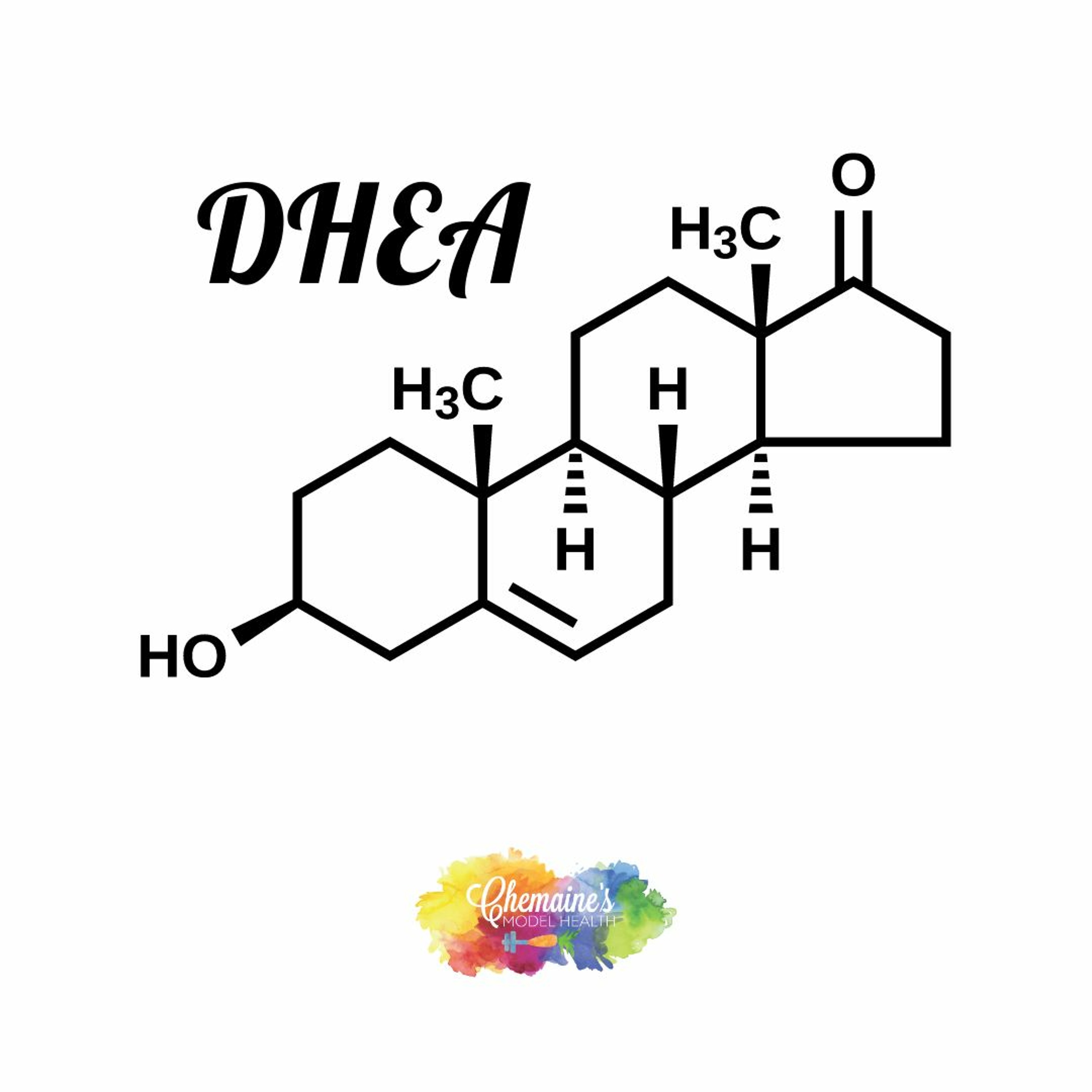
But DHEA, which is dihydroepiandrosterone, which is a hormone produced by the adrenal glands, remember that produced by the adrenal glands, but also by the gonads, like the reproductive organs, the brain and the skin. And it serves as a precursor to male and female hormones. And it is sometimes referred to as our parenthormone. So through this whole hormonal cycle, we have like, okay, we've got our B vitamins and our cholesterol, and then we've got bregnanalone, which is the immediate precursor to DHEA as well as progesterone.
And then we got our other sex hormones. But just go back to what I kind of highlighted on a minute ago is that it's mainly produced by the adrenal glands. And that should give you a big indication of what can impair or affect DHEA. What else affects the adrenal glands?
Well, it's chronic stress. So a lot of my clients, or a lot of women who do a hormone panel, or they get a Dutch test on, they can see their DHEA is tanked. Now DHEA does start to reduce over time as we get older. And not in the context of what people think like paren manopause or manopause, like DHEA generally peaks in our 20s.
And then after the age of 25 or so, it starts to decline, decline, decline. And in a normal body, it would be at its lowest in your 70s. But the way we live nowadays, we're seeing this lowest in people in their 30s, 40s, and 50s, because again, of the way we live. So this hormone DHEA or dihydroepion, Joe, sterone is a very important hormone, like very important.
And we don't talk about it enough, even though we know enough about it. Since the 80s, there's been a lot of papers published on the multiple health functions of DHEA, and its importance, and why we should be paying attention to it. It improves cognitive performance and mental health, decreases, excuse me, depression and anxiety improves sleep and hormonal, other hormonal rhythms, as we learned about in our previous episode on sleep, how sleep affects hormones. It has anti-aging qualities.
I actually said that in my, it was one of my videos recently, maybe it was my group call, that there's a lot of talk about longevity and anti-aging out there. But a lot of our anti-aging stuff is already in our bodies, if we just optimize for it. Anyway, DHEA can help a lot with inflammatory disorders and osteoporosis, it can improve blood vessel function, it can help with insulin sensitivity back to those hormones. It's important for the immune system, it's important for metabolism, very important for autoimmune issues, because we know a lot of autoimmune issues, they usually come out of dormancy, or they're driven with stress.
And then there's a lot of other things DHEA can be helpful with, because it influences other sex hormones, of course, it can help with off lashes and night sweats, and the symptoms that we associate with perimenopause as well. But for most of us, DHEA, it starts to decline from that age of 25. And in a normal body, in a normal situation, that decline would be a straight line, but because of the way we live nowadays, and we have so much stress for a lot of people, that straight line is not so straight, it can be up and down, or it can just be a big plummet straight down. And it is believed that a lot of the manifestations that we consider to be quote, like, ooh, fingers, aging, like, you know, so often I'll hear people say, oh, I'm just getting older, this just happens, well, we're aging.
A lot of that can be contributed to deficiency DHEA, and if we were to kind of elaborate on that, then we look at, okay, well, what's affecting DHEA? Why is it plummeting or not producing optimally as it should be? So DHEA is considered the biological marker of aging and people that have highest levels of DHEA, according to my mentor, Dr. Michael Platt, seems to have the greatest longevity, and in fact, some believe that by optimizing for DHEA, we can slow down the aging process.
So there is, there's a lot to DHEA, obviously there's a lot to hormones and how important they are, and can we supplement them? Is it safe to supplement with them? What are the potential side effects of it? But DHEA, very important, and you can supplement with it.
When it comes to supplementing with DHEA, some women, there's multiple ways you can get it. If you're in the States, it's easier to get your hands on DHEA. In Canada, you can get your hands on DHEA without a prescription. This is not me making a recommendation.
This is me just saying what I've seen and what I have heard through the grade fine, that you can get the AHEA shipped from the States to Canada if you so wanted to do something like that to help boost your immune system or enhance your cognitive performance or improve chronic fatigue syndrome or decrease depression and anxiety or even address autoimmune issues. It can be done, I'm not saying you should do it, but it can be done. Then there's natural aids that can help boost the production of DHEA, but regardless as we age, you are going to see that decline. DHEA does have its own receptor sites throughout the body, and it has an intricate part in the levels of human growth hormone that we have.
Then DHEA, because if you remember in my last episode on how sleep impacts hormones, I spoke about how absolutely important human growth hormone is, and then how important testosterone is for women, well, DHEA raises growth hormone, but it also then is a precursor for testosterone. If you don't have enough DHEA, you're going to have problems with both growth hormone and testosterone, and then all the issues back home with them, low motivation, low libido, all that fun stuff. We also see that people with higher levels of DHEA have lower instances of Alzheimer's and Parkinson's disease. I know a lot of people have a lot of concern with Alzheimer's nowadays, like a lot, but anyway, so DHEA, you can measure DHEA.
A Dutch test is going to be one of the more accurate tests, so you want a lab test that's going to test both DHEA and DHEAS, which is DHEA sulfur. In men, if you're taking DHEA, you want to monitor your estrogen levels as well. In men, the estrogen, we don't want it to be high because obviously there's going to be a lot of consequences there. Generally, we're looking at the range of 20 to 30 in men.
In women, we can go a little bit higher because we know estrogen in women. It's more dominant hormone. It is how our bodies are designed to function optimally with higher levels of estrogen than what a man would have. It's important to remember that DHEA is impacted greatly by stress, and you can see this whole stress connection, even with the pregnant alone or the progesterone steel.
Like I said before, and I'll say it again, as much as we think stress is just this woo-woo invisible emotion or feeling, it's not. It is a chemical in our body. It does have a biochemical system of its own. It does have a ripple effect throughout the body.
It does impact other hormones and organs, but so stress, and I know people hate to hear it because it is prominent in most of our lives, it's something you really need to pay a lot of attention to, especially if you have hormone issues, so like we've learned before in previous conversations and previous episodes, I've done stress will directly diminish progesterone, but it also will directly diminish DHEA. So we want to be very much proactive in our stress management, and I'm kind of careful what I say, because I don't want people feeling guilty that they're not doing their self-care or they're not prioritizing stress management or their walks or the yoga or whatever. I don't want people to feel guilty. We can only do what we can only do, but I do want people to at least have the awareness like stress is not just some invisible emotion.
It is a real, almost tangible thing. I mean, if you worked in a laboratory and you could extract cortisol, then it would be somewhat tangible for us. It is a real thing regardless. So the first thing in this stress management is awareness.
It's awareness. And you know, it's funny because when I do consultations and I talk to people, especially women, I'm like a stressor anxiety and they're like, no, no, I'm fine. And by the end of the call, I'm like, you have a lot of anxiety and you're running on adrenaline. Like your body is super stressed.
I think it's because women again, we're always, we're used to doing everything in juggling and just go, go, go, go, go. We become so familiarized with our daily life and practices that we don't think it's stress when really it is. And in women with chronic stress and adrenal insufficiency, DHEI has been shown to increase feelings of anxiety and depression, as well as reducing how well they feel overall and reducing even sexual satisfaction, which is not fun. Like if you have a lot of chronic stress or you have adrenal insufficiency or dysfunction or you think you have adrenal problems, you probably want to talk to your physician or practitioner about DHEI and see if that could potentially help you.
When we're looking at dosages, the dosages could be anywhere between 10 to 500 milligrams, a common dose, like a more common dose if you were supplementing with DHEI. Let's say you're picking up a bottle of Whole Foods, it's going to be 25 to 50 milligrams per day. A lot of women will do 25 in the morning, 25 in the evening. Ideally, I think we should be doing it in the evening, 50 milligrams in the evening, just before bed.
Seems to be quite efficacious for a lot of women. Like DHEI supplements have been used safely in studies for years now, without any side effects. It's pretty safe. There's been a couple of side effects people have noticed like greasy skin, maybe some chain acne because of the changes in the hormone, maybe increased hair growth in the armpits and pubic area, but that seems to then regulate itself after a week or two.
If you're worried about it, you could reduce the dose and slowly titrate it up. It's important to note that DHEI supplements should not be taken by people with cancers affected by sex hormones. I think those people are already pretty aware of that. It is best to speak to your practitioner or your doctor before you start taking a DHEI supplement.
The bottom line is DHEI is very important when it comes to hormones. It may have a lot of benefits for you, especially when we look at certain health conditions and stuff that we'd say stress is driving this. It can be beneficial for a lot of people, especially older people or especially those that have a lot of adrenal issues, low libido, a lot of stress in their life. You can consider DHEI.
I know there's a lot of hormone talk and options when it comes to different symptoms like, well, should I try this or should I try that? We talk about low libido. Well, a good hormone for low libido is DHEI, progesterone, estrogen because it can encourage blood flow test. Does that mean I take all four?
No, you don't necessarily need to. Well, what would be a smart idea would be to speak to your doctor or a health practitioner or do a consultation with someone like me so we can help refine the symptom picture and then make the best recommendation possible. Some people will need to take all of the hormones. It depends on how bad your hormone profile is.
Some people maybe they just need a bit of progesterone to help them sleep. But anyway, I hope you found this helpful. If you've got any questions, please post them in the comments and I'll respond as soon as I can. Or you guys can also reach out to me on Facebook or Instagram at chamainesmodelhealth or you can email me through my website.
That's chamainesmodelhealth.com. There's a button at the top of the website that says, I think it says, connect with me or ask me a question, something like that. Click that, send me an email and we can chat. Otherwise, please like, share and subscribe if you haven't done so already.
If you feel like a server review, I would love that. That would be very helpful. And also, if you would like to support me in the podcast, you can buy me a coffee because you know, good coffee fuels my brain and my capacity to learn and teach and sure don't you want me to be optimal. So if you do, you don't have to.
But if you do, I'll post the link below to buy me a coffee. Okay, otherwise have a great day, guys. Girls, I'll chat to you all real soon. Stay warm out there.
Bye-bye.