
EPISODE · May 17, 2026 · 5 MIN
32 - History, Africa.
from Slavery. · host Popular Culture and Religion.
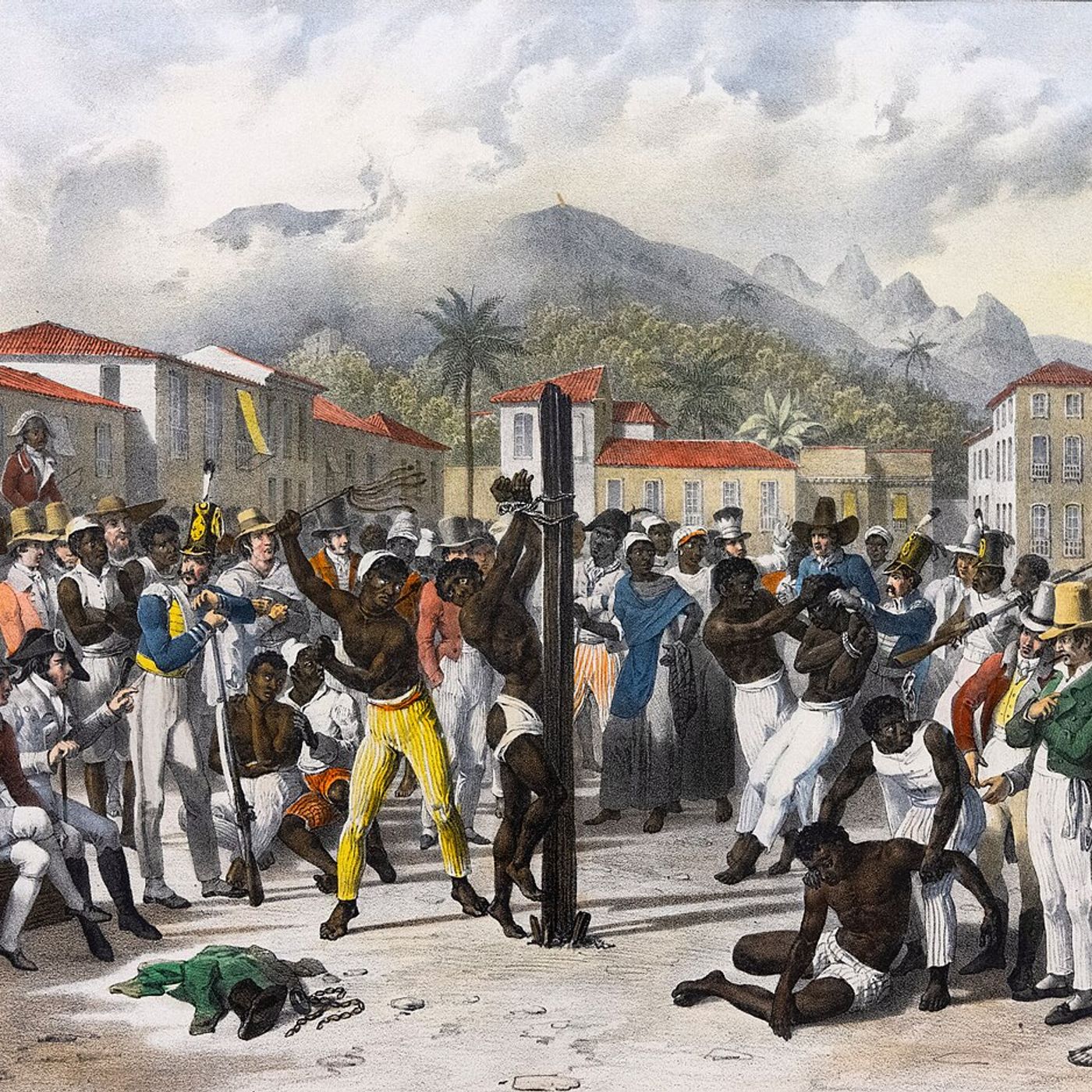
History, Africa. Slavery predates written records and has existed in many cultures. Slavery is rare among hunter-gatherer populations because it requires economic surpluses and a substantial population density. Thus, although it has existed among unusually resource-rich hunter gatherers, such as the American Indian peoples of the salmon-rich rivers of the Pacific Northwest coast, slavery became widespread only with the invention of agriculture during the Neolithic Revolution about 11,000 years ago. Slavery was practiced in almost every ancient civilization. Such institutions included debt bondage, punishment for crime, the enslavement of prisoners of war, child abandonment, and the enslavement of slaves' offspring. Africa. Slavery was widespread in Africa, which pursued both internal and external slave trade. In the Senegambia region, between 1300 and 1900, close to one-third of the population was enslaved. In early Islamic states of the western Sahel, including Ghana, Mali, Segou, and Songhai, about a third of the population were enslaved. In European courtly society, and European aristocracy, black African slaves and their children became visible in the late 1300s and 1400s. Starting with Frederick II, Holy Roman Emperor, black Africans were included in the retinue. In 1402 an Ethiopian embassy reached Venice. In the 1470s black Africans were painted as court attendants in wall paintings that were displayed in Mantua and Ferrara. In the 1490s black Africans were included on the emblem of the Duke of Milan. During the trans-Saharan slave trade, slaves from West Africa were transported across the Sahara desert to North Africa to be sold to Mediterranean and Middle eastern civilizations. During the Red Sea slave trade, slaves were transported from Africa across the Red Sea to the Arabian Peninsula. The Indian Ocean slave trade, sometimes known as the east African slave trade, was multi-directional. Africans were sent as slaves to the Arabian Peninsula, to Indian Ocean islands (including Madagascar), to the Indian subcontinent, and later to the Americas. These traders captured Bantu peoples (Zanj) from the interior in present-day Kenya, Mozambique and Tanzania and brought them to the coast. There, the slaves gradually assimilated in rural areas, particularly on Unguja and Pemba islands. Some historians assert that as many as 17 million people were sold into slavery on the coast of the Indian Ocean, the Middle East, and North Africa, and approximately 5 million African slaves were bought by Muslim slave traders and taken from Africa across the Red Sea, Indian Ocean, and Sahara Desert between 1500 and 1900. The captives were sold throughout the Middle East. This trade accelerated as superior ships led to more trade and greater demand for labour on plantations in the region. Eventually, tens of thousands of captives were being taken every year. The Indian Ocean slave trade was multi-directional and changed over time. To meet the demand for menial labour, Bantu slaves bought by east African slave traders from southeastern Africa were sold in cumulatively large numbers over the centuries to customers in Egypt, Arabia, the Persian Gulf, India, European colonies in the Far East, the Indian Ocean islands, Ethiopia , Sudan and Somalia. According to the Encyclopedia of African History, "It is estimated that by the 1890s the largest slave population of the world, about 2 million people, was concentrated in the territories of the Sokoto Caliphate. The use of slave labour was extensive, especially in agriculture." The Anti-Slavery Society estimated there were 2 million slaves in Ethiopia in the early 1930s out of an estimated population of 8 to 16 million. Slave labour in East Africa was drawn from the Zanj, Bantu peoples that lived along the East African coast. The Zanj were for centuries shipped as slaves by Arab traders to all the countries bordering the Indian Ocean during the Indian Ocean slave trade. The Umayyad and Abbasid caliphs recruited many Zanj slaves as soldiers and, as early as 696, there were slave revolts of the Zanj against their Arab enslavers during their slavery in the Umayyad Caliphate in Iraq. The Zanj Rebellion, a series of uprisings that took place between 869 and 883 near Basra (also known as Basara), against the slavery in the Abbasid Caliphate situated in present-day Iraq, is believed to have involved enslaved Zanj that had originally been captured from the African Great Lakes region and areas further south in East Africa. It grew to involve over 500,000 slaves and free men who were imported from across the Muslim empire and claimed over "tens of thousands of lives in lower Iraq". The Zanj who were taken as slaves to the Middle East were often used in strenuous agricultural work. As the plantation economy boomed and the Arabs became richer, agriculture and other manual labour work was thought to be demeaning. The resulting labour shortage led to an increased slave market. Wikipedia: Creative Commons Attribution-ShareAlike 4.0 License.This episode includes AI-generated content.
Embed this episode
Ready to play
32 - History, Africa.
No transcript for this episode yet
Similar Episodes
No similar episodes found.