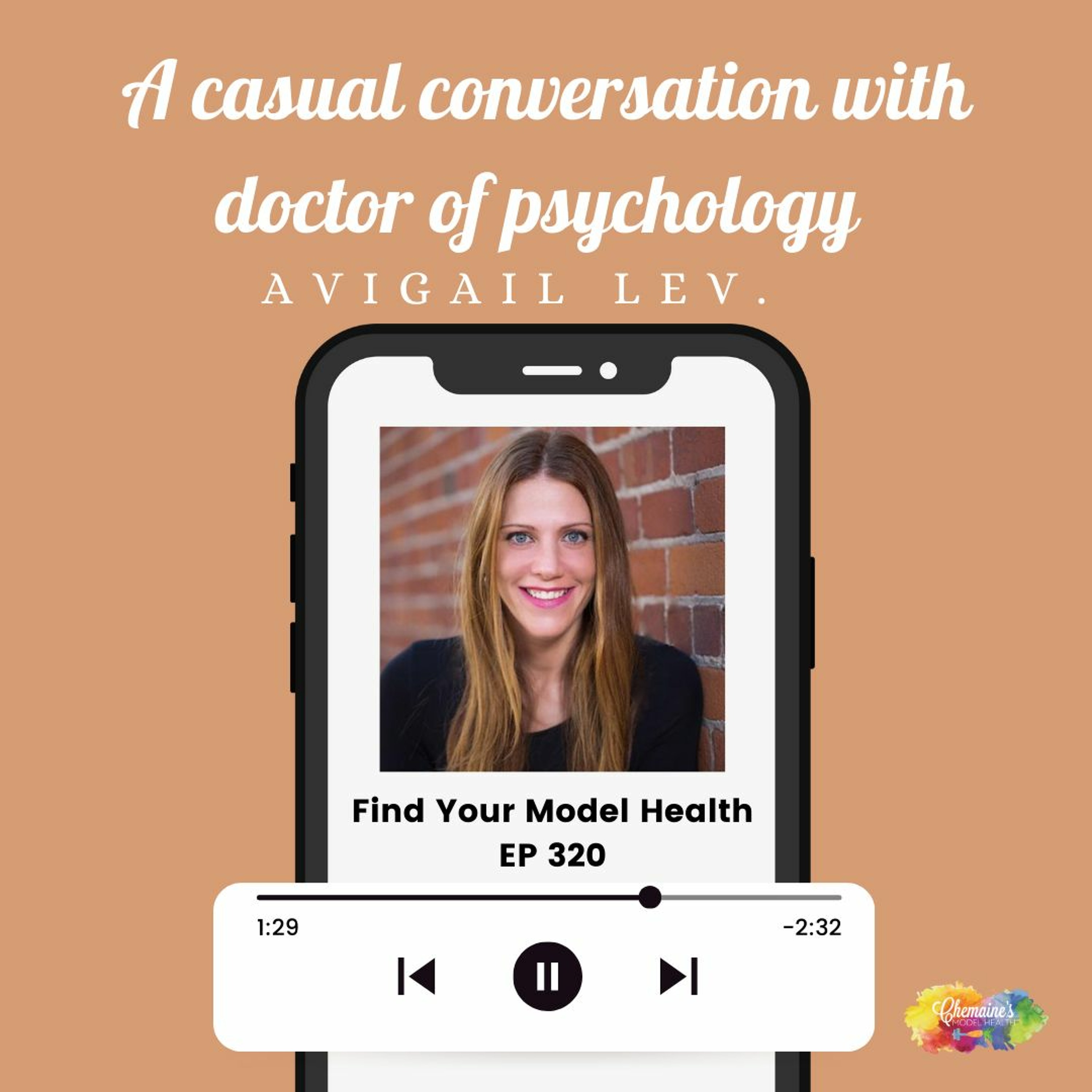
Hello everybody, welcome to another episode of Find Your Model Health, the official podcast for those looking to optimize their long-term health and weight goals and understand how their body really works. I'm your host, I'm Shameen Lini, I am Nutritional Therapist, Integrative Health Practitioner, Eeridologist and Biohacker, and I'm very happy to have you with me for another piece of your day. Today we welcome back one of my favorite guests, Dr. Abigail Leve.
Before we go on, though I must remind you that the information in these podcast episodes is for informational purposes only and should not be taken as medical advice. Please consult your health practitioner before making any lifestyle changes. So Abi is back with us for a second round and hopefully this is going to be an awesome conversation. If you remember Abi, she was on a couple of weeks ago and Abigail is a psychotherapist, she's an auto-immediator, international speaker and executive coach in San Francisco.
She is the director at the Bay Area CBT Center, which is a clinic that specializes in cognitive behavioral therapy, which helps individuals and couples break unhelpful patterns, develop healthier habits in their life and really just improve and optimize how they're living. So Abi has been featured at numerous conferences and in many news outlets like Forbes, The New Year Post, The Huffington Post, and I'm very happy to have her back with me. We speak regularly, Abi, and I wanted to have you back for a more casual conversation just kind of about society, why people are so stressed and unhappy and let's see where it goes. So before we started recording, we were starting to go into the whole notion of social media and how it's affecting not just me and you but society nowadays.
So let's continue on there. What's the concern as a psychotherapist? What's the concern that you see? My concern, it's difficult to know where to start because there's so many concerns.
It's just so concerning. But the way that the algorithms work and the way that social media and marketing works, and it's been especially since AI, AI has now really escalated the type of brainwashing that occurs on social media and in relation to marketing. Because the way that it works is that, well, A, the content is getting shorter and shorter, like people's attention span is getting shorter and shorter. Things in relation to therapy, it's getting simpler and simpler.
Like I see it, it's like, I've never been a big fan of social media, but at least at some point, there were more accurate videos that would go into detail and would explain things in a more nuanced way. The more that social media grows and the more that psychology, like being popular, the more that that grows in social media, it ends up being diluted and kind of bastardized and distorted. And there's a lot of misinformation and I find it very concerning. Especially that it's like in order for a post to do well, like either either a blog post or we'll say a social media post, somebody post something and they have millions of followers.
So it automatically becomes, you know, spread everywhere. And everybody else who doesn't have a lot of followers in order to be seen on Instagram needs to find the posts that are already being followed by so many people because the way that the algorithm works is that let's imagine, let's imagine if somebody comes up with a post that's like, Ooga Juba, Juba therapy will save you from anxiety overnight. Now, this goes viral and everybody's now searching for Ooga Juba therapy and all the other people that don't have as many followers, if they say some things about Ooga Juba therapy and they hashtag Ooga Juba therapy, their post is more likely to be seen. Which then what happens is there's a lot of Ooga Juba jibber jabber out there that is nonsensical and doesn't make sense and it becomes more and more corrupt.
Like for example, now with AI, I will have, you know, anybody that has a small business now has to do marketing and you have these little things that tell you what kind of the keywords and things that you need for your blog posts or your Instagram posts. And there's a lot of things that you have to add, even though they don't make sense. Like for example, saying the word negative feelings, I'm always supposed to say negative feelings. The blogs don't do well unless you say negative feelings.
Even though as a psychologist, I don't believe in such a thing as negative feelings. Like I have blog posts where I have to use the word negative feelings and I'll say, you may think that a feeling is a negative feeling, but all feelings are just information about what we're eating and about our values. But the point that I'm making is that it's diluting the psychology field. It's simplifying and bastardizing very complicated processes that are being diluted and then going viral and it's really concerning because then I see people, like I see posts that are so just jibber-jabber.
Like I saw this post about how pulling on your ear relieves anxiety. It doesn't. It really doesn't. If pulling on your ear relieves anxiety, we would have already known this hundreds of people to go.
It's not like TikTok would have figured out that this move relieves anxiety. But more and more, that's what people are searching for. They're not searching for in-depth therapy. They're searching for pulling on the ear and having this miracle occur.
And people need mental health information right now when people are suffering. It's almost like they're not looking for quality. They're looking at something quick, the quick fix and simple that I can do right now. With that doesn't mean it's accurate.
That doesn't mean it's quality. And for practitioners like yourself and I, it's super frustrating because we know it's a lot more granular than pulling on your ear or I saw one take this basil daily. It will cure all of your ailments. Right.
Come on. But the general population. People start patting and bup, bup, bup, you don't do silly things because it's getting so silly and so silly and people are buying into these ideas and it is. It's becoming quantity over quality and doing the simple thing.
And it's concerning because the dilemma there is that then people start wondering what's wrong with me. Look, if I'm pulling my ear and I still feel anxious and I'm tapping here and I'm doing these things- I'm doing everything right. Exactly. And yet suffering and what happens is they actually these things end up pathologizing people.
People end up feeling what is wrong with me. I think a lot of these influencers, whether or not people like to hear it. And I don't consider myself and yourself influencers as much as we're practitioners. But these influencers with these simple quick fixes, like seven day plan, whatnot.
Dare I say, I don't believe they actually care about the health of people more so than getting the likes and the sponsorships. And you know what? You know, we just before this started, you had asked me, oh, I haven't seen your post on Instagram and you know, I don't have post on Instagram is because once I understood how the algorithm works, I realized that the only way to win on Instagram is to sell out like this. You can't really do well because you have to keep going.
You need the new content and you need new words that are maybe jibber jabber or not. But that's what's selling and that's what's getting the views and getting the likes. And these influencers have to keep it up all the time. And you can't really keep it up and also be ethical and be about what works.
You can't do both. It's very difficult. There also needs to be a line of integrity. I think I just don't feel aligned with doing something like that.
I think we should bring back the yellow pages and then people can just look us up and we see people in real life in person and have that human connection. Because social media is destroying our mental health. And I'll say that for myself. It affects my mental health.
As a psychotherapist, what do you think, apart from the quick, sharp attention span aspect of it, what do you think social media is doing to us now? You know, it's even more concerning with the AI because at this time, like AI is almost brainwashing us, you know, it like feeds off of itself because the more people talk about a particular topic, the more AI talks about it, it becomes this self-fulfilling prophecy that feeds off of itself. I think social media, you know, in general, there's impact. There's a big impact on the mental health field that I can go into, but there's also a big impact on people's mental health.
Feeling insecure, feeling bad about yourself, feeling not attractive enough, feeling, I think, also these quick fixes and ways that people are talking about how you should be feeling that makes people feel like something is wrong or broken about them. Social media makes it seem like, right, all of people's good moments are out there. And so you feel like you should have all of these good moments all the time. It's almost like the movies, the movies have always been, right, like creating this fantasy land that doesn't really exist, but the problem with social media is that some people do believe that this exists.
It's not like a Hollywood set. So people are more easily believed that this is what real life is, but social media is no different than a Hollywood set, right, in a movie. It's no different. People are setting it up.
That's not people's real lives. And then you add the layer of a lot of charlatans, people that have experienced a trauma themselves and think that they are an expert in trauma. You are not an expert in trauma if you've experienced trauma yourself. I think that what people don't understand when they're reaching out to coaches and influencers and things like that, which is fine to do for things other than your mental health.
But when you're reaching out to these people for your mental health issues, what I don't think people know, I don't think maybe they do, but that's something that psychologists study in school, like the number one thing I learned in school is not necessarily the skills. Like I learned about trauma. I learned about treatments of trauma. I learned about different types of treatments for different disorders.
But what therapists, what psychotherapists learn in a doctorate program in reality is actually how not to be cult leaders, how not to be a power hungry and power drunk, how to be neutral, how to create a type of treatment where your own biases are not leaking into the client, because a therapeutic relationship, whether you're with a doctor or an influencer or somebody, whatever that person is, it is a power relationship. It is the person who's sharing the information is in a vulnerable position. And the person in the coaching role is in a power dynamic where they could easily lead you and guide you into their biases of what they think is the right thing to do. And in school, the number one thing we learn is how to, it's not about being neutral.
Like I love my clients unconditionally. That's not what neutrality means. What neutrality means is that if there's something that a client is doing or thinking or feeling that doesn't align with my values, I could recognize that and have a structure for still helping the client identify their own values and their own path. So I'm not inadvertently projecting my own wishes and desires on the client, but I'm helping them actually find out their own.
And what I see a lot on social media, and now it scares me even more, if you see some of these movies and shows on Netflix, like this show about what was it, this the soul mates thing, what was it? There was this show on Netflix about... I don't watch TV, so I can't help you. Well, it's basically these influencers turn into cults.
It's very easy to have a self-help program be turned into a cult. Twin flames, these twin flames, they started talking about twin flames online, and then they created this whole program. And all of these people joined this online program in long story short, it became very corrupt and it was a cult. And they changed some people's gender, some people changed their sex side, sex change operations.
Because these people were trying to find their soul mates, and there were more women in the program than men. And so they convinced these women that they're really men. And that's what I mean by you are in a vulnerable position when you're sharing everything about yourself and your traumas and your history with another person, who's not sharing their history. You are in a vulnerable position where they could somehow get you to change your own sex.
And we have to be very mindful of this and cautious of this as a society. Yeah, there's a lot stacked against us right now in regards to mental health, regardless of how it looks like that show was just called soul mate on Netflix. It's called twin flames. It looks like there's another one then.
But social media can almost, what I feel, it can obviously it affects confidence for sure, when you're constantly comparing yourself to other people and their success and their body and their husband and they're on vacation again and I'm still struggling to pay bills. There's that aspect then of insignificance, which is huge. If you feel like you're insignificant, you're not important in the world, your life doesn't matter. Now we're at a different level of mental health issues.
I agree with you. I think that's a very important point actually, this idea of being insignificant or mediocre, that now it's like being significant is really important. Where social media makes you feel it's this kind of delusions of grander almost, wanting to be special, wanting to be unique. One thing fame even.
And yet fame has always existed, right? But I guess social media makes fame, is added like a new type of dynamic to fame, right? Where you don't need to like go and meet a producer or something like that. You just go viral or you do something, right?
And so it feels like it's more accessible and I guess it impacts people in a different way. Yeah, people, we want to be important on social media, but it's mean you don't know. Many people know it's more important to be, or it's better to be more important in life and around the people you love and care for like that real human connection. But we've somehow flipped it.
And now we're playing the opposite game and even marriages are falling apart because social media is destroying us. Well, I think too, there are things that are happening in the world right now that I guess make fantasy more tolerable than reality, right? Like we're having so much pain in the world. We could look at what's happening with the wars in Russia and Israel and Palestine and these protests that are happening, right?
And the women's rights that are being taken away in the United States, now women can't freeze their eggs in certain states. And so I think the more that we're struggling in real life, the more there's an urge to escape, of escapism into fantasy into this kind of, this is where I'm important and special and unique. And so it works both ways, right? Like there's a corruption and distortion in social media and also kind of tearing you down.
And there's also this trauma that's happening in real life. We had like a global pandemic and people are traumatized and still grieving and struggling. And there's wars and there's a more division in the United States than there's been in decades. And if I'm honest, I can't blame people for wanting to escape reality.
There's times where I just want to get away. I'm sure you do too. Like I've had enough adulting is overrated. I would go to the gym and a book, but I know a lot of people will just get sucked down the rabbit hole, especially teenagers, teenagers.
Now I have a teenager so I can speak on this. They have no idea what real life is. They just want to be behind computers in their fantasy land. And regardless of the mental health aspect, it's stealing them of real life and real experiences.
And they think this is the it thing now to do. So with that said, what do you think of them, the whole virtual reality trend? What do you think about Mark Zuckerberg's idea of the metaverse and people will no longer want to be in reality? They will live in the metaverse.
I think that no matter how much people engage in virtual reality or in social media or whatnot, there isn't one single human being in the whole entire universe who would prefer to be with a computer than a real interaction. But we're always going to be longing for real human contact. Like people need physical touch and support. We're interconnected creatures.
We're social creatures. We need to attach. And it's quite different to attach in this way than in a very genuine authentic real life way. So I don't have a moral judgment about it.
Do it. Why not? But I don't think it'll be gratifying. I don't think it'll be very satisfying.
It's interesting because if we think about trauma in general, survivors of trauma do use fantasy and dissociation. It's almost like social media has taken a defensive mechanism that already exists. If people are being raped or they're in the middle of combat, it's the most effective thing to do is to dissociate. It's to just go into fantasy and check out of reality and really just check out of the trauma.
But the thing is, is that it's not effective as a coping mechanism in your daily life. You don't want to be dissociating when you're with your children. But once we start the mechanism of coping through dissociation, it becomes harder and harder to stop dissociating. We use it more and more and more.
I hadn't thought about that like that, but it's almost like social media is almost like flaming this type of defense mechanism, making us dissociate more and also not acknowledging the real trauma that we've been through in the last several years. So it's like a type of gaslighting and pretending like nothing. Nothing's traumatized. Yeah, we should all be really happy.
Everybody's on social media having a great time. The last few years have been fantastic. People are going on vacation. So part of not looking at the suffering and trauma that has happened and then creating this whole other fantasy world.
So I agree with you, how could we blame people for wanting to escape pain? Right? No. I disagree with you in the aspect of I do think maybe a very small, my new percentage, there is a percentage somewhere in the population as a whole that would embrace a life that's not real, that's made up that's that apart from coming out to use the bathroom and get some food, they would be happy to spend there.
And we see this myself, my husband was talking about the Sydney stabbings there that happened last week and the father was on the news talk like he was like, I was so upset and I did everything for my child to give him a good life, but alluded to something to do where he was always on computers and he couldn't get girlfriends and they upset him and a lot of young people, they lose the skill set to be human. And I know that's a bold statement, but it's true. And I have two boys. I think I'm in a position to say that my teenager, I look at how I was as a teenager.
I was like bold as brass and that could have been a personality, but I knew how to interact in society. I knew how to place an order in a restaurant. I knew how to be a disgruntled customer. No, I want service for my money.
But now they don't want confrontation. They don't have the confidence. They don't have the ambition like we did. It's just everything's being flipped upside down and it's challenging parents.
It's really concerning. I'm like, oh shit, who's going to take care of me now when I'm older if this is the fight? It's very exciting. Yeah.
But I'll tell you why I do disagree with you because I don't think that these people want to that. I think that it's hurting them and it's harming them. So it's not that people feel satisfied with this alternate reality. It's unfortunately, it's exactly what you said.
It's that it creates the self-fulfilling prophecy because you don't develop the skills. And then you believe more and more that you're more capable of having the things you want in this alternate reality. So the more you're not learning the skills to have the real intimacy, the more that you're not able to create that. So it may seem as if you're watching this alternate version of things, but there's always the itch.
There's nobody. I think they all have a sense that there's something else, but they don't believe that they're good at that or that they could have that or that it's possible. Some people may believe they don't have the skills. Some people have really awful stories about other people.
Other people are not trustworthy or they're bad or there's a lot of othering right now. Everybody's bad. And so when we are in trauma, one word that's interesting because when I see the things that are popular, when I see the things that are popular on Instagram or on blog posts, because when you do marketing, you get a sense of the environment, the landscape, you really understand what's happening in our collective. So for example, the word a dorsal bagel shut down was one of the most popular blog posts that I've had or functional freeze.
Like functional freeze was getting like 40,000 views. Why would that particular phrase get so many views from people? What that phrase means is that you are so traumatized that you're on autopilot. You're on autopilot living life and just doing what you have to do, but you're actually completely shut down and you're so shut down, you're disconnected and a big part of dorsal bagel shutdown is mistrust.
It's a type of paranoid mistrust of others and society feeling unbelonging, feeling alone. And so people are feeling this. People are feeling the most alone. Research is showing that loneliness is like the highest it's ever been.
How could people be satisfied when the more social media we have, the more lonely we feel? That is one of my questions that I have for you now, but I had it on our past conversation as well. And we've kind of alluded to it, but people are so unhappy now, so, so unhappy. And it impedes them showing up for themselves.
And they're in this state of functional freeze in their lives. They're doing what needs to be done, the groceries feed the kids, they're almost empty inside. And some people I talk to, I'm quite intuitive and all I can see is darkness coming from them. I'm like, you're someone happy and I can't help you in that aspect of things.
I wish I could. But they do the bare basics to get through the day. And I've been there, I've had my own issue and you just, you get a bell bed, although some people don't get a bell bed, but you do what you have to do. But you think you're showing up for other people because maybe you're keeping the house clean, you're making the kids dinner, but you're not fully showing up.
And not only that, you're not actually showing up for yourself either, which is something I struggle to understand a lot with my clients. And I keep looping back to people are so unhappy. People are deeply unhappy. And I think that part of social media turns relationships, turns interactions into transactions.
Our relationships are becoming transactional, meaning people are a means to an end instead of an end in and of itself. Like Martin Boober, during, it was right around World War II and after the Holocaust, which I don't want to sound too hyperbolicle here, but it's resembles it. It resembles the time we're in now. We are in kind of like a headed towards a World War III right now.
And when things are scary like this, people have more of an inclination to run into fantasy, escape party, right? Like Nazis were partying all the time during World War II. There's, you got to run from the level of suffering that's occurring. And there's something about turning relationships into transactions and people into a means to an end that makes us as a collective, deeply alone and deeply isolated and depressed.
Martin Boober was speaking about this idea of an I-thou relationship, that an I-thou relationship is where I relates to you, not as a person who's interviewing me for a podcast that you get to link and I get to link and we both get something from it, but as like two human beings who shared something, we feel like, like you said earlier today, we must be on the same wavelength, like that there's something that that in and of itself is what makes it meaningful. And then people are an end of themselves, not a means to an end, but you're not something that gets me somewhere, that our relationship is the end of it, that's the end. And the more we engage, and what's very interesting is Martin Boober talks about how we could relate to people in an I-th relationship. When I relate to you as an I-thou, you're just a means to an end, you're the next lady that's going to help me get on a podcast rather than actually engaging as a human being.
And what's very interesting about that is you could also engage with people as an I-th it's relationship, where I see you as a means to an end. I also view myself as a means to an end instead of an end in and of myself. And I think that that's what's happening in social media right now and in the United States and in the world is not only are we seeing others as objects as an it as a means to an end, but we're seeing ourselves as an object as what I could do for you, what I provide for you, how I show up, how I look, how I appear as an object to you rather than a subjective person in this experience. And it's leading to a type of existential isolation and a deep angst and humanity in the collective.
That's really, really interesting because what I pick up as you're saying that is like, not only are we not important to each other, although we might think we have relationships. They're not real relationships. I mean, we were talking even before this since we first met, I've tried to maintain because like, I liked you, I clicked for you, I wished you happy Christmas. I wanted it to be more than you're doing something for me and I'm doing something for you.
And that's interesting that you say that because one of my flaws as I put it, but you probably don't agree it's a flaw, but I right now with the way society is to me, it's a flaw. Many of my clients say I care too much. I care. I really like want to help people.
But it drains me. It makes me almost unhappy at times. And I know my clients are going to hear this. So this is me kind of opening something.
It's tough. I've always wanted real relationships. I tried to bring my people together. I always interact.
I ask them how their day is. I'll always say good morning to people, always say have a good day or whatever. Manors, I think is a part of what we're talking about. And some people, a lot of people I've noticed will just message me without even saying good day or good morning.
And I don't know if that's my upbringing. I find that very rude. But I like to have relationships, real relationships with people. Like you're not just paying me to help you.
I actually do care. And that is lost in the percentage of the population. And then for us, myself and yourself, we're on the other side of the spectrum. And because of that, that can almost be hard around us because we feel it more.
And I said a lot there. No, no, I agree with everything that you said. And I think that, I mean, I think that that's why I'm here today. Like I think very quickly, me and you had an I-VOW relationship.
And I don't think it's because of the small talk, because I don't think in any email we've ever had that I've ever said, good morning or how are you? But as soon as we talk, me and you, we are always very, there's something very genuine. There's no agendas. It's just very genuine.
And I agree with you. I think that the more that the more people are scared and the more we feel alone, the more we go into this type of transactional relationship. And that feels very lonely. I'm thinking about this notion that you're saying right now that it's harder for people who care too much.
Because if we were just in the it scenario, there would be almost no emotion attached. It would be almost purity, marketing and financial means to an end. So there would be no emotional, there'd be no energy there. And in some sense, as I'm saying, I'm like, that sounds almost glorious, easier because there's no poll.
There's no poll on the energy. I guess for me, I just don't believe that anybody wants in a relationship. Right? It's enticing.
And we want it sometimes. And I don't believe, I think that if somebody is born and lives for an entire life and dies at like 70 or 80, nobody is free from the fact that we're all born into this absurd world alone, we're just born alone. And ultimately, we die alone. And I really do believe that every human being on their deathbed, and maybe this is my delusions, right?
Like maybe I'm completely all right. But nobody's facing their deathbed at 70, 80 years old who have lived a full life and sits there and goes, my 80 million views on Instagram makes me feel fulfilled. But I feel like I'm ready to go. I could die now.
My life is satisfying. I don't believe it. I don't don't care. I'm not thinking they are because I'm a word with narcissists.
I don't care how depraved they are or superficial they are. How much they say they enjoy it. Nobody could live this in this world. And on their deathbed be satisfied being in it or viewing others as a hit.
It's a deeply painful experience for humans as a collective. I agree. So then that loops it back to society as it's being designed now, as it's forcing us to live. And maybe that myself and yourself haven't fell into that idea kind of relation because we're not as easily maybe manipulated as other people.
Maybe that's something that could be going on. But I agree, nobody's going to lie on their deathbed saying, I can't believe my video and viral. They'll be thinking of the glorious memories they had with their family and traveling and whatnot. And I mean that not just literally.
I mean it figuratively that even if there's a lot of people in their life that maybe were walking around them and telling them what they want to hear and kissing their ass and you know what I mean? That somebody who lives their whole life filled with it dynamics feels deeply dead inside and empty and alone. And it's harming society. People are not meant to be in it.
So we go back to, I want to make sure I cover this properly. Why people are so unhappy on an individual level? It's because we're looking at ourselves as a means to an ends or not mean for say, but other people, I really struggle with this concept because in what I do, the fantasy, the escapism, especially what I do, more engaged towards using food as fantasy. Your food is your escapism.
And apart from the health crisis we have now on all levels, cancer cardiovascular disease, obesity, the whole lot without getting even into the mental health issues. Now people are so unhappy, they're struggling to show up for themselves and they're using bad food habits as this fantasy, as this escape. And it's, I can't think of the word, but it's snowballs. It just keeps going and going and going.
And if we were to like dig deep, it all comes back to why are you so unhappy that you're trying to self-medicate with food? Now it bothers me a lot because of what I do and back to because I care, I actually want to see people. And I have a lot of faith that people can change and take responsibility and come out with the other side 10 times better and happier. But in the interim, it's, I can't even put into words.
I'm like, how do we get them past that unhappiness that they can continue to show up for themselves in real life and have like, not just a real relationship with other people, but with themselves, a real relationship with themselves and not just be on autopilot all the time. You know, it makes me think like, Pema Chodran, who's this Buddhist lady that I love, I think she's just Pema Chodran is somebody to listen to. She's just an amazing person. But one thing that she says, it's a little cheesy, but I deeply believe in it, she says, there's two kinds of selfish people.
There's the selfish people that are self-obsessed, right? They're greedy and they want things for themselves. They're just selfish, you know? And then there's the selfish people that recognize, they recognize that giving to others is actually the selfish, the most selfish thing you could do.
Meaning giving to others is about you having a beautiful life. It's not about the other person. And that to me, like, it could sound very like cheesy if you just look at it like it's, you know, like a statement, but I deeply agree with this. Like the, and there's a lot of research that shows, like the more we think about, I'm unhappy, I'm unhappy.
How do I become happy? The more we're absorbed with ourselves, the more unhappy we are. But the more we focus on, how do I make you happy? You know, what's happening for you?
The more that we focus on, I could contribute to your life being meaningful. Like, I could be a part of being the tiny, tiny, you know, like in a domino effect of kindness or happiness. Like, I could have like the tiniest little speck of helping you feel a little bit better. But there's no bigger joy.
There's no bigger joy than contributing to someone else feeling happy, feeling confident, feeling excited, right? Like that's what's we're selfish than that. It's because you like a joy, the feeling good. So I want to help people so much, not just to make an impact on their life, but because I'm craving this feeling, which is selfish.
And I'm not saying it for the purpose of going, it's bad or selfish. I'm saying that actually the best way to take care of ourselves, the best way to take care of me. It's so it's, it's, it's, it's, we're interconnected. It's, it's the same.
You know, I think we, when we're scared and we're traumatized and we're othering each other. And we are, we're in a kind of paradigm shift right now, where there's a growing in fascism and a lot of otherness, right? Like the Me Too movement in Black Lives Matter. And this is causing people a lot of pain, right?
To see the corruption and the things that are happening in the world, it's very hard for us. So the more we're in that, you know, it's like it's easy to develop a hardness. It's easy to not want to be around people to protect ourselves, to not be hurt from others, to cease others as a potential threat rather than a way to feel better. And we've lost our interconnectedness, you know, and I think some people think that they're interconnected right now where they think like there's also a lot of, I think a lot of spirituality right now that's getting really bastardized, like manifesting and things like that, like manifesting in the idea of like, how much children talking about like having a warrior heart or the idea of like bodhisattva, like the idea of having like loving kindness for others, that's completely different than this kind of spiritual bypassing jibber jabber that people are doing, which is more escapism than actual like, I think existential or spiritual growth, you know.
And that would fall into a more of an it-it category, like it's it's not genuine, it's not real. Right. So I want to get a little bit more controversial because we've spoken about society. I'm curious as to your opinion on this.
Do you think there is some group, whatever you want to call them, pulling the strings purposely manipulating society in certain ways to weaken us to affect our like, do you think there's a higher agenda? This is on purpose? I'm curious. Yeah, I know.
I think it depends on the question of what is on purpose. If you're saying that the question has to be more specific, if you say to me, are people suffering right now on purpose because of someone? I would say no, I don't think people suffering right now is on purpose. If you say to me, is the division that's happening in the United States on purpose right now, I would say, yes, of course, it's on purpose.
Yeah. So while I will pose it better, I'll try to as a whole, and not just the United States and the world as a whole, we're seeing so many health and mental health issues and suicides and mass shootings and all of it. Do you feel like social media? I'm sure we've all heard that Google is run by the CIA and the internet was great and the Zuckerberg's in with this group and that group.
So social media as a whole, social media is probably one of the biggest factors for the mental health decline now, apart from the pandemic. But do you think there is it's been manipulated on purpose? It was this designed was social media designed to affect our mental health and almost, I don't want to say control, but weaken us as a people? You see, this is very difficult to answer because there's so many people out there and people use social media in different ways.
So for example, I don't know if specifically Mark Zuckerberg was like, hey, I want to make people divide it and suffer. Like, I don't think so. I think Mark Zuckerberg wanted, just like everybody else wants, to be important to matter, to do something that changes the world. And he understood that pressing a button, you know, we'll get people to do that.
And now this pressing a button has now grown into a kind of addiction. And now people understand that this kind of addiction can be manipulated, right? Like, in the beginning, we did not know that social media was like, I don't know, chocolate cake or cocaine or heroin, right? Like, I know it was very new.
I don't know that we could have predicted this. But certainly now people know, certainly Putin knows that he could manipulate social media to get United States to vote the way he wants. And certainly certain people use it in a manipulative way. And certainly it could be used for harm and for bad.
And some people do do that. I don't know that anybody that created social media could have had the whereabouts, even predicts, right? Like, where we're at right now. I think it just started with something very simple, right?
Like, I want to do this cool thing that will make me money grows and grows and grows and now, yeah, there are people for sure that are using social media for propaganda and to manipulate. And I think part of why everyone is so scared on a subconscious level is because we have always, you know, human beings know that wars exist, you know, and bad things exist in life and pandemics have happened before, but we've never had a war on such a global level. Like, we've never had a war with AI that can mimic a person and pretend things and manipulate our brains. And now we're in unmarked territory that we've never been before.
And there is a type of fear and dread in our collective. And there is a power struggle, meaning there are certain people that want us to progress and move forward and have people have more rights and more equality. And there are people that want it to be more like the 1950s. There's a research recent study that showed that many Republicans, most Republicans, believe that we have regressed since the 1950s.
So what that means is that they want us to have the world look more like it did in the 1950s that we went backwards since the 1950s. So yeah, there are people, but people in positions of power can always right find ways to manipulate and send messages, right? Like, that's existed before social media. So I don't know if it was created to intend to do this, but I think any new technology can end up causing good and a lot of harm.
And there are people that use it for harm and they are very aware that they're using it for harm. They're using it for brainwashing. They're using it for increasing their own power control and resources, for sure. Do you think back to the AI topic, because you mentioned it again there, do you think as a collective we are afraid of AI and what the potential outcome could be?
I heard Joe Rogan say the other day that if AI was allowed to continue, the way it's continuing, eventually AI in a couple hundred or thousand years could be in itself, godlike, be a god. Like there's no end to the power AI could have and the manipulate, like you could be for what I see now, you're Abby, you're real, you're you, but you could maybe your AI, they replicate a sum and I would not know the difference. It's altering what I believe to be true and not true, which is the manipulation. But do you think deep down, we are concerned, hold on, this could get out of control.
I can't speak for everyone. I don't know if everyone is terrified, but I'm terrified. Yes, I am absolutely. Yeah.
I mean, most people are talking about AI, like it is a complete existential crisis and it could be the end of the world. And yes, I do believe that. I don't know if it's eminent or it's going to happen soon, but if we don't find ways to have some sort of, you know, structures or consequences or regulations, this is completely unregulated. You know, a couple of days ago, I was wanting to write an article and it was quite controversial and a bit political and I was writing it and I said to AI because I often will talk to my chat GPT and I'll say edit only for spelling and grammar, only edit for spelling and then I'll ramble, ramble, ramble, ramble, and then AI will make everything that I said all much nicer.
But it still does what I say. Like it's not just saying random things. And in this moment, it was refusing to write it and it kept saying that I'm violating some sort of thing. And I kept saying just continue to write, continue to write, and it kept changing things.
And it kept changing things. For example, one time, I wrote about, I wanted to write an article about how better health is corrupt and AI would not let me write it. It kept saying, you can't say this about better health. You can't say this about better health.
And it's like, so basically AI is stopping me from my freedom of speech. And it's not really stopping me because I could just write it without AI. But what's interesting is, you know, I found myself thinking like, what is in it for chat GPT? Like, what is the criteria for why you would start start monitoring people or centissoring people?
Who decided on this criteria? Who decided that I don't have the right to talk about how better help is corrupt? Or how the fact that I don't think that there be effective through texting? I just don't think that's effective.
And yet AI, like, who decides this? And so when we're thinking, or even for example, you know, now AI is always generating images that are in the collective and in the landscape, you know, and there's some way that it's it's it's it's it's distorting reality and it's confusing reality and it's manipulating and brainwashing our reality. And it's very concerning. I feel very concerned about it.
I would imagine many people are concerned about it, but probably not everyone and the more that we're in escapism, the less we face, you know, our dread and the fear of the reality, we're just denying reality, you know, denial of reality becomes addictive, right? The more we escape, the more we need to continue kind of escaping and running and running, it's harder than just stop because it accumulates. We need to have some control over AI or it's going to control us whether or not people want, you know, Elon Musk, obviously, he's spoken about this a lot, even though he's a big proponent of AI. He's like, we need to have control.
And from what you're saying, it sounds like there's already an element that we don't have control over. And then we're we're we're both our websites with the way things are done nowadays, if you're writing an article and you end up just doing it yourself, no help from chat, gtp or editing or anything, and you upload it and you post it. Is there an aspect of AI in the background? Then that goes in and alters what you said, manipulates it because I don't know about you, but sometimes I will post stuff, but I won't always go back a week or two later to reread it.
And even if I did what I remember my exact words, like it could have been altered after publishing, we need to have a lot more control over that because all of a sudden we're all agreeing with the same thing, even though we don't agree. Right. Right. But but it looks like I'm sure there's loads of stuff mean you don't agree on, but on the internet looks like we agree on everything.
But no, you've altered my words and we should go back to pen paper, of course. I agree. I agree. Absolutely.
I would give it all up all of the benefits of this. Well, I'm gonna leave it at this. What I do agree and we spoke about this and I would prefer to just see people in my office, person to person, help them. I don't mind texting.
Texting was always fine. But not be pulled in by the social media aspect of things. Have those real relationships. Yeah, I think you know, we're talking about like real relationships versus, you know, less authentic relationships.
But now that we're talking about AI, it's like very literal. There's real relationships and fake relationships. And then there's really like not knowing what reality is like we've never been there before on such a level where we may not know what reality is we could see a video of somebody of our friend doing something somewhere and it may not be real, it may be falsified or even our own words. And so yeah, it's like we're in a new, a new type of existential threat we've never ever faced before.
Yeah, you know, and we do, we do need to have some sort of structure for this, some sort of rules and regulations. And then there are some rules and regulations, but we don't really understand it. So we need the rules and we need the regulations, but we also need it to be transparent. We even need rules and regulations for how we make rules and regulations because the 1% of people who have power should not be the ones regulating AI either.
Yeah. So yeah, it's a crazy time in the world right now. You know, it's a totally new realm and conception of where it could go or lead. I don't even think a lot of us right now could comprehend what's going to happen.
We'll just see, we'll see, maybe we'll have a call in another year and be like, so this happened. We never saw this coming, but it is. And you just really don't know. Yeah, I was watching this show where this guy, I don't remember where he was from, but he was working around ethical AI.
And the person was asking him, if AI is an existential threat, like in what way, like how, what would AI do to us? Like it would want to be a bomb us or kill us. What would it do? I don't understand.
He's like, I understand how the nuclear bomb could be an existential threat, but I don't quite understand how AI will be an existential threat. And the guy kept answering in very general ways. He's like, well, and another guy's trying to be more and more specific. And at some point he said, the other guy was like, you know, it's not worth talking about because just saying it out loud puts it out in the world and starts giving AI ideas of how to do it.
And that moment was really like, whoa, for me, it was like, wow, this person was in it very deeply and trying to make AI ethical is too afraid to talk out loud next to the idea that we're training and teaching AI and that we shouldn't even give it ideas because it grows on an exponential level. So it was, you know, such a crazy moment because it's like, are we going to be afraid to like think in our heads? If I'd like, you know, we even we talk to a friend and then we see an ad about whatever we talked about like on our television, right? Like, is AI going to be learning and knowing things about us before we know those things about ourselves?
And it is growing exponentially in a way that we can't comprehend. We can't possibly even articulate what could happen. That guy, that's, he's clearly genius. He realizes not only the fear factor, but how smart AI already is compared to us right now.
It's all very interesting. It really is. And I was going to say something there. And when you said that, I was like, I better not give a idea.
You're like, what could AI do to us? And I was going to say, well, I could do this, this, right? I'll just keep saying it. We go and do this, this, this.
By the time we finish this one, AI's already come up with 50,000 million frillion versions of 8,000 million versions of those things we just said, which is like, wow. Yeah, I know. I always find it. I'll let you go now, but I always find it humorous when somebody still, they'll say, Oh, I was just talking to you about this.
And look, it's on my phone. Isn't that funny? I'm like, come on, you can't really believe that that was his coincidence. Like.
And then we have to be really concerned about our escapism and the way that we get into social media and we're allowing escapism while we're not noticing that we are being controlled and we are being subtly brainwashed and we are being manipulated. And yeah, those are not the people that you want to be taking care of your mental health, the people that are sitting there worried about the algorithm and the views and the this, those are not the same people that you want to be going and having a deep intimate mental emotional connection with taking care of your mental health. Yeah, you don't want to be working with someone that's disassociated from reality. Or someone who's not really dedicated to understanding the craft because in order to be in this race, you have to be dedicated to be in it and you can't it's very hard to do both.
It's, you know, you have to be able to go, no, I'm not going to be putting a video or this saying negative feelings or tap your head three times and pull your eight times and go, Ooga, Ooga, Ooga, Ooga. I mean, once a therapist has said something like that, I don't find them to be a trustworthy person to take care of people's mental health. You know, we have to be evidence based and we have to talk about the things that science shows has worked and the things that there is not as much evidence for and support for we have to speak to it like that. Like, Hey, this is something that's worked for me.
Not like, Hey, this is psychology. Now people say things like psychology says this, but it doesn't. It doesn't. Yeah.
Research says this or the science says this. I know it's terribly annoying when you've put in the school hours and all the study to have someone come along and say something silly and then everyone listens to them and you're like, well, hold on, I just can't plead it four years of my doctorate, but you're listening to this clown over here. So it's very frustrating. But it doesn't harm me if you listen to that clown.
It harms you. And the problem is, is that it'll take you a long time to understand that it's harmed you. Yeah. Oh, such a vicious cycle.
We'll do a little two around two in like six months or something and see where we've been left. It's all very frustrating to me right now. And I try to stay as humble and as level headed as I can and try to put myself in other people's shoes would eventually it does wear you down and you get fed up. And it's important we have these real conversations and not be pretending everything is all rosy all the time.
I've cared for all of us. It is. It's just how we. I so agree with you because when we act when we pretend that everything is okay, we're also making right the people who are suffering, we're minimizing it or it's like a form of gaslighting, right?
We're not acknowledging that things are happening. Things have changed. There are real, there are more threats this year than there were years before like things are making it harder for people and minimizing that or ignoring that it's like an invalidation of reality in people's experience, which then makes suffering worse. So I agree.
It's really important to have these real conversations and it's hard to have them because you feel very helpless. You feel helpless when the problem seems so big like AI, right? And it's like why I can talk about it because it just feels so big, but it's still worth talking about. Well, yeah, well, even if only a handful of people now are starting to reconsider AI and what we've said and there's a potential threat there rather than oh, it's going to be all glorious.
That does have a ripple effect. It will make a difference, eventually. Might take a bit of time. But I love our conversations.
I love everything you have to say. That's why you're back on direct everybody to your website. I know you've got a lot of articles and blog posts and you're we can find you at CBT online and also you have the Bay Area CBT Center. I'll link all the links.
Well, regardless of using you as an ends to a means, I actually enjoy our conversations on what you have to say. So I hope people really enjoyed this because I this was there was no plan here was let's just go and see what happens and I. You were great. Very spontaneous.
There was a very lot. Yes. And that's what I like about it is that we it's very natural and honest and spontaneous. Yeah.
Well, I'll chat to you soon. Abby, thank you for your time again. It was fun. Thank you for having me.