
EPISODE · May 17, 2026 · 4 MIN
36 - History, Americas.
from Slavery. · host Popular Culture and Religion.
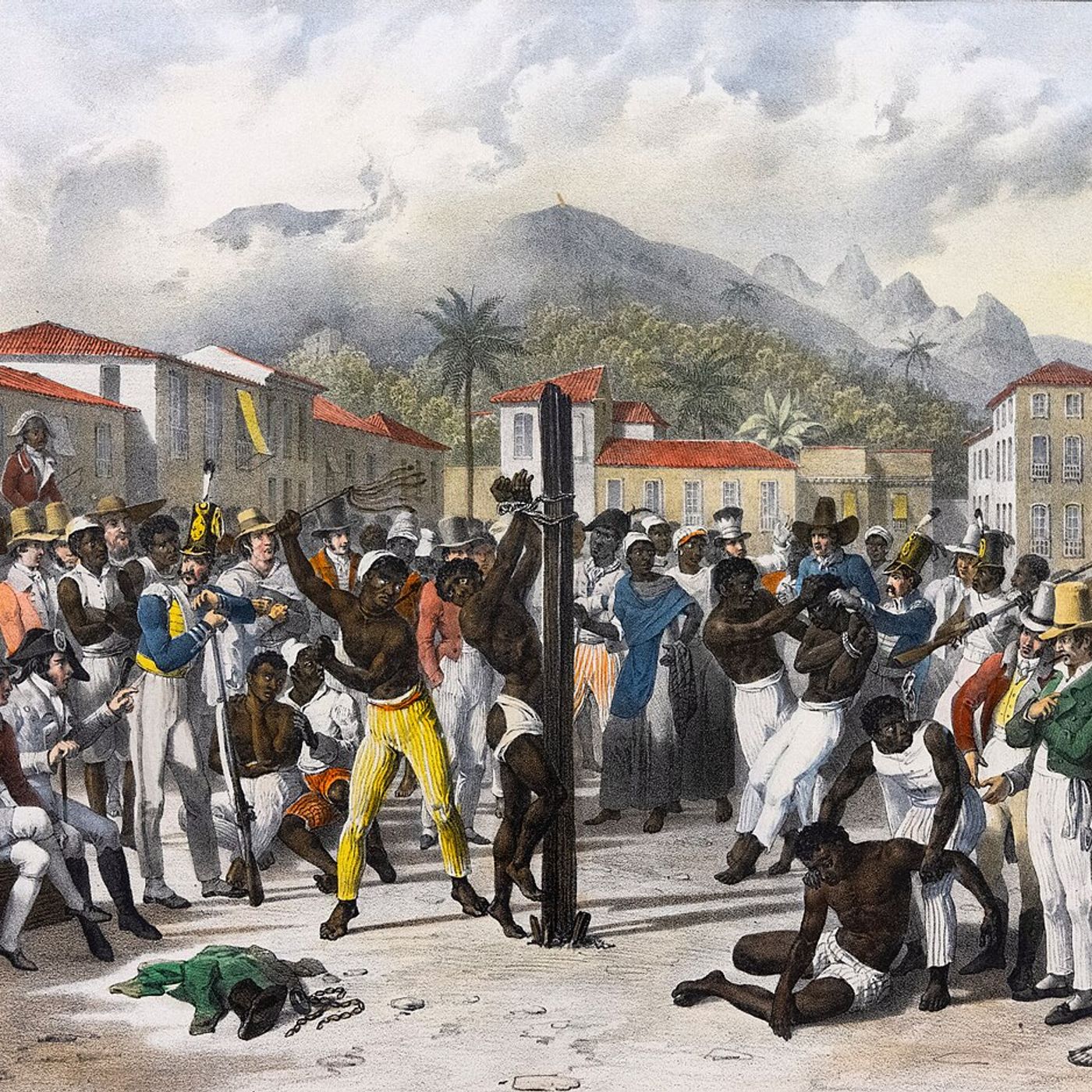
History, Americas. Enslavement in the Americas existed before European arrival and was used for numerous reasons. Slavery in Mexico can be traced back to the Aztecs. Other Amerindians, such as the Inca of the Andes, the Tupinambá of Brazil, the Creek of Georgia, and the Comanche of Texas, also practiced slavery. Slavery in Canada was practiced by First Nations and by European settlers. Slave-owning people of what became Canada were, for example, the fishing societies, such as the Yurok, that lived along the Pacific coast from Alaska to California, on what is sometimes described as the Pacific or Northern Northwest Coast. Some of the indigenous peoples of the Pacific Northwest Coast, such as the Haida and Tlingit, were traditionally known as fierce warriors and slave-traders, raiding as far as California. Slavery was hereditary, the slaves being prisoners of war and their descendants were slaves. Some nations in British Columbia continued to segregate and ostracize the descendants of slaves as late as the 1970s. Slavery in America remains a contentious issue and played a major role in the history and evolution of some countries, triggering a revolution, a civil war, and numerous rebellions. The countries that controlled most of the transatlantic slave market in terms of number of slaves shipped were the UK, Portugal and France. In order to establish itself as an American empire, Spain had to fight against the relatively powerful civilizations of the New World. The Spanish conquest of the indigenous peoples in the Americas included using the Natives as forced labour. The Spanish colonies were the first Europeans to use African slaves in the New World on islands such as Cuba and Hispaniola. It was argued by some contemporary writers to be intrinsically immoral. Bartolomé de las Casas, a 16th-century Dominican friar and Spanish historian, participated in campaigns in Cuba (at Bayamo and Camagüey) and was present at the massacre of Hatuey; his observation of that massacre led him to fight for a social movement away from the use of natives as slaves. Also, the alarming decline in the native population had spurred the first royal laws protecting the native population. The first African slaves arrived in Hispaniola in 1501. This era saw a growth in race-based slavery. England played a prominent role in the Atlantic slave trade. The "slave triangle" was pioneered by Francis Drake and his associates, though English slave-trading would not take off until the mid-17th century. Many whites who arrived in North America during the 17th and 18th centuries came under contract as indentured servants. The transformation from indentured servitude to slavery was a gradual process in Virginia. The earliest legal documentation of such a shift was in 1640 where a black man, John Punch, was sentenced to lifetime slavery, forcing him to serve his master, Hugh Gwyn, for the remainder of his life, for attempting to run away. This case was significant because it established the disparity between his sentence as a black man and that of the two white indentured servants who escaped with him (one described as Dutch and the other a Scot). It is the first documented case of a black man sentenced to lifetime servitude and is considered one of the first legal cases to make a racial distinction between black and white indentured servants. After 1640, planters started to ignore the expiration of indentured contracts and keep their servants as slaves for life. This was demonstrated by the 1655 case Johnson v. Parker, where the court ruled that a black man, Anthony Johnson of Virginia, was granted ownership of another black man, John Casor, as the result of a civil case. This was the first instance of a judicial determination in the Thirteen Colonies holding that a person who had committed no crime could be held in servitude for life. Wikipedia: Creative Commons Attribution-ShareAlike 4.0 License.This episode includes AI-generated content.
Embed this episode
Ready to play
36 - History, Americas.
No transcript for this episode yet
Similar Episodes
No similar episodes found.