
EPISODE · May 17, 2026 · 3 MIN
38 - History, English and Dutch Caribbean.
from Slavery. · host Popular Culture and Religion.
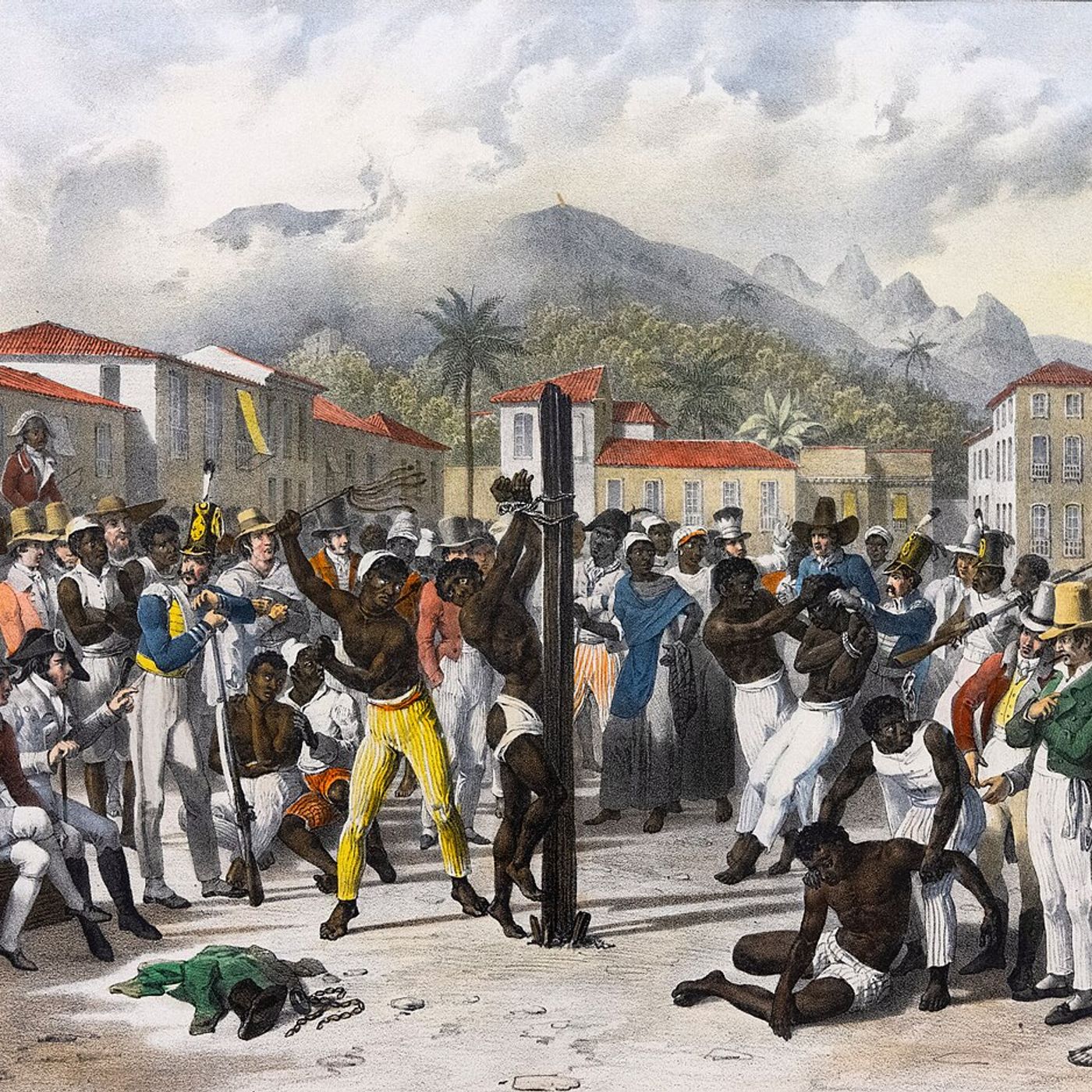
History, English and Dutch Caribbean. In the early 17th century, the majority of the labour in Barbados was provided by European indentured servants, mainly English, Irish and Scottish, with African and native American slaves providing little of the workforce. The introduction of sugar cane in 1640 completely transformed society and the economy. Barbados eventually had one of the world's largest sugar industries. The workable sugar plantation required a large investment and a great deal of heavy labour. At first, Dutch traders supplied the equipment, financing, and African slaves, in addition to transporting most of the sugar to Europe. In 1644, the population of Barbados was estimated at 30,000, of which about 800 were of African descent, with the remainder mainly of English descent. By 1700, there were 15,000 free whites and 50,000 enslaved Africans. In Jamaica, although the African slave population in the 1670s and 1680s never exceeded 10,000, by 1800 it had increased to over 300,000. The increased implementation of slave codes or black codes, which created differential treatment between Africans and the white workers and ruling planter class. In response to these codes, several slave rebellions were attempted or planned during this time, but none succeeded. The planters of the Dutch colony of Suriname relied heavily on African slaves to cultivate, harvest and process the commodity crops of coffee, cocoa, sugar cane and cotton plantations. The Netherlands abolished slavery in Suriname in 1863. Many slaves escaped the plantations. With the help of the native South Americans living in the adjoining rain forests, these runaway slaves established a new and unique culture in the interior that was highly successful in its own right. They were known collectively in English as Maroons, in French as Nèg'Marrons (literally meaning "brown negroes", that is "pale-skinned negroes"), and in Dutch as Marrons. The Maroons gradually developed several independent tribes through a process of ethnogenesis, as they were made up of slaves from different African ethnicities. These tribes include the Saramaka, Paramaka, Ndyuka or Aukan, Kwinti, Aluku or Boni, and Matawai. The Maroons often raided plantations to recruit new members from the slaves and capture women, as well as to acquire weapons, food and supplies. They sometimes killed planters and their families in the raids. The colonists also mounted armed campaigns against the Maroons, who generally escaped through the rain forest, which they knew much better than did the colonists. To end hostilities, in the 18th century the European colonial authorities signed several peace treaties with different tribes. They granted the Maroons sovereign status and trade rights in their inland territories, giving them autonomy. Wikipedia: Creative Commons Attribution-ShareAlike 4.0 License.This episode includes AI-generated content.
Embed this episode
NOW PLAYING
38 - History, English and Dutch Caribbean.
No transcript for this episode yet
Similar Episodes
No similar episodes found.