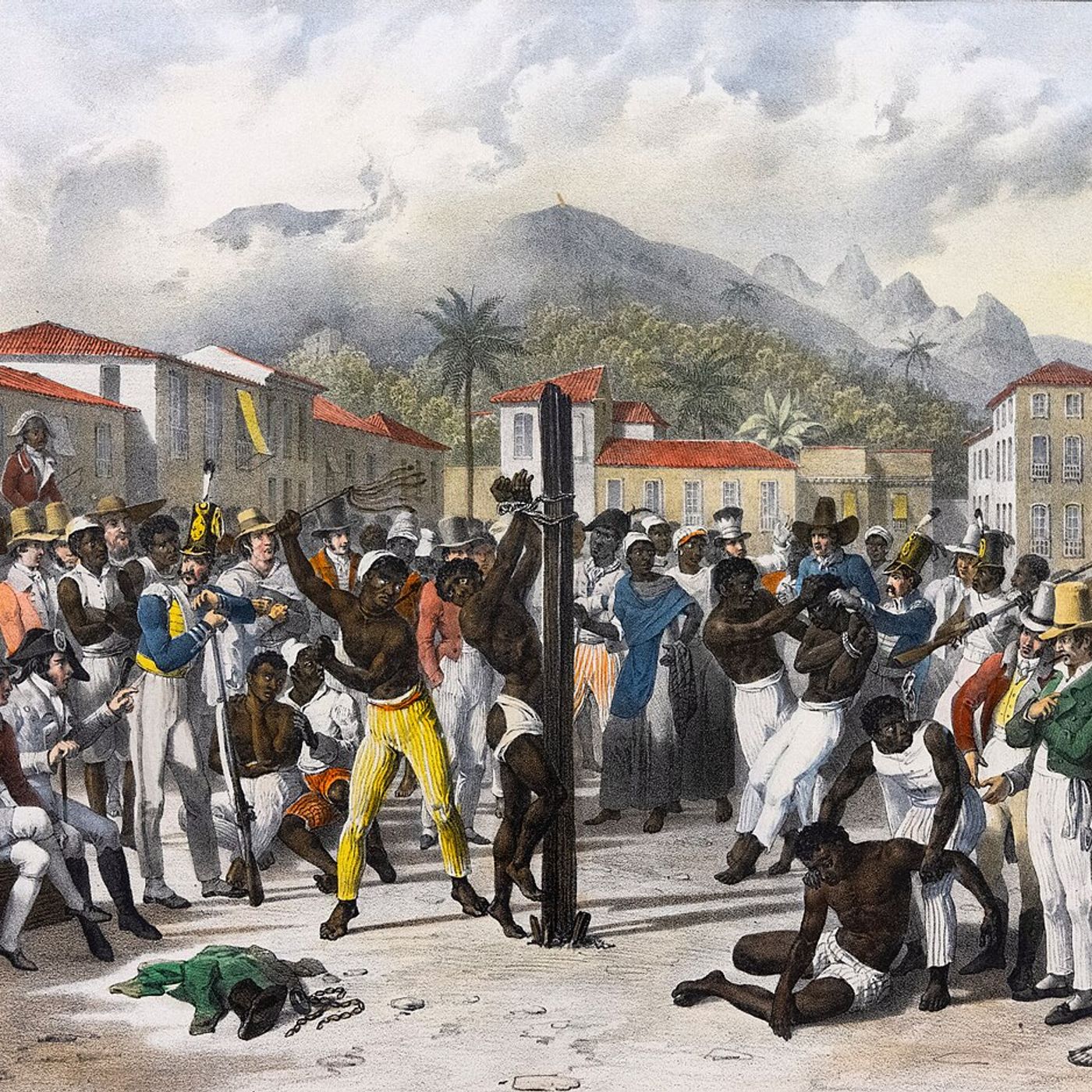
39 - History, Brazil. episode artwork

EPISODE · May 17, 2026 · 2 MIN

39 - History, Brazil.

from Slavery. · host Popular Culture and Religion.

History, Brazil.  Slavery in Brazil began long before the first Portuguese settlement was established in 1532, as members of one tribe would enslave captured members of another.  Later, Portuguese colonists were heavily dependent on indigenous labour during the initial phases of settlement to maintain the subsistence economy, and natives were often captured by expeditions called bandeiras. The importation of African slaves began midway through the 16th century, but the enslavement of indigenous peoples continued well into the 17th and 18th centuries.  During the Atlantic slave trade era, Brazil imported more African slaves than any other country. Nearly 5 million slaves were brought from Africa to Brazil during the period from 1501 to 1866. Until the early 1850s, most African slaves who arrived on Brazilian shores were forced to embark at West Central African ports, especially in Luanda (in present-day Angola). Today, with the exception of Nigeria, the country with the largest population of people of African descent is Brazil.  Slave labour was the driving force behind the growth of the sugar economy in Brazil, and sugar was the primary export of the colony from 1600 to 1650. Gold and diamond deposits were discovered in Brazil in 1690, which sparked an increase in the importation of African slaves to power this newly profitable market. Transportation systems were developed for the mining infrastructure, and population boomed from immigrants seeking to take part in gold and diamond mining. Demand for African slaves did not wane after the decline of the mining industry in the second half of the 18th century. Cattle ranching and foodstuff production proliferated after the population growth, both of which relied heavily on slave labour. 1.7 million slaves were imported to Brazil from Africa from 1700 to 1800, and the rise of coffee in the 1830s further enticed expansion of the slave trade.  Brazil was the last country in the Western world to abolish slavery. Forty percent of the total number of slaves brought to the Americas were sent to Brazil. Wikipedia: Creative Commons Attribution-ShareAlike 4.0 License.This episode includes AI-generated content.

Episode metadata supplied by the publisher feed · Published May 17, 2026

History, Brazil.  Slavery in Brazil began long before the first Portuguese settlement was established in 1532, as members of one tribe would enslave captured members of another.  Later, Portuguese colonists were heavily dependent on indigenous labour during the initial phases of settlement to maintain the subsistence economy, and natives were often captured by expeditions called bandeiras. The importation of African slaves began midway through the 16th century, but the enslavement of indigenous peoples continued well into the 17th and 18th centuries.  During the Atlantic slave trade era, Brazil imported more African slaves than any other country. Nearly 5 million slaves were brought from Africa to Brazil during the period from 1501 to 1866. Until the early 1850s, most African slaves who arrived on Brazilian shores were forced to embark at West Central African ports, especially in Luanda (in present-day Angola). Today, with the exception of Nigeria, the country with the largest population of people of African descent is Brazil.  Slave labour was the driving force behind the growth of the sugar economy in Brazil, and sugar was the primary export of the colony from 1600 to 1650. Gold and diamond deposits were discovered in Brazil in 1690, which sparked an increase in the importation of African slaves to power this newly profitable market. Transportation systems were developed for the mining infrastructure, and population boomed from immigrants seeking to take part in gold and diamond mining. Demand for African slaves did not wane after the decline of the mining industry in the second half of the 18th century. Cattle ranching and foodstuff production proliferated after the population growth, both of which relied heavily on slave labour. 1.7 million slaves were imported to Brazil from Africa from 1700 to 1800, and the rise of coffee in the 1830s further enticed expansion of the slave trade.  Brazil was the last country in the Western world to abolish slavery. Forty percent of the total number of slaves brought to the Americas were sent to Brazil. Wikipedia: Creative Commons Attribution-ShareAlike 4.0 License.This episode includes AI-generated content.

PodParley-generated summary based on available episode metadata and transcript content.

NOW PLAYING

39 - History, Brazil.

0:00 2:20

No transcript for this episode yet

We transcribe on demand. Request one and we'll notify you when it's ready — usually under 10 minutes.

Race Relations Inception Point Ai The  series "Understanding Race Relations" delves into the complex history and present dynamics of race and racism, tracing its roots from the development of race as a social construct to contemporary struggles for equality. Each episode examines pivotal moments, from slavery and segregation to the civil rights movement, while also exploring the subtler, modern forms of racism like implicit bias and systemic inequality. The series also focuses on intersectionality, showing how race intersects with gender, class, and other identities, and concludes with a forward-looking perspective on how education, policy, and community action can shape a more just future for race relations.This show includes AI-generated content. Uncle Tom's Cabin Inception Point Ai "Uncle Tom's Cabin" is a novel written by Harriet Beecher Stowe and published in 1852. It is one of the most influential books in American history and played a significant role in shaping public opinion on the issue of slavery before the Civil War.The novel tells the story of Uncle Tom, a faithful and devout black slave, and several other characters, including the evil slave owner Simon Legree, the tragic mulatto woman Eliza, and the kindly St. Clare family. Through the intertwined tales of these characters, Stowe explores the moral and human implications of slavery, including its brutality, the degradation of black people, and the effects of the institution on both the enslaved and their enslavers.Uncle Tom's unwavering Christian faith is a central theme in the story, and it serves as a contrast to the inhumanity of slavery. The book was a powerful indictment of the institution of slavery and was instrumental in galvanizing anti-slavery sentiments in the North.Though "Uncle Tom's Cabi Microchip Advocateworldwide Artist: AdvocateLyrics by: Andre J. BenjaminMusic by: Quinton DavisMicrochip"Everything that glitters ain't gold"Silicon Valley promised freedom. Delivered digital slavery instead.This track exposes the truth: You're not the customer - you're the product. Big Tech built addiction machines disguised as "connection platforms" while selling your soul to the highest bidder.Why do they promote darkness but censor truth? Because division = profit.These "Silly-Con simps" turned human connection into commodity extraction. We were never meant to process everyone's emotions 24/7 - we're not omniscient for a reason.Hard bars. Harder truths. Time to unplug from the matrix. Tracing the Roots of the Climate Crisis Ben Cushing This podcast explores some of the root causes of the climate crisis. But, maybe surprisingly, it doesn‘t spend very much time talking about the climate crisis itself. Instead, it examines the ways that climate change grows from the same root as other crises we face, including racial and gender injustice and economic exploitation and precarity. Each of the four chapters of this podcast will explore the roots of the climate crisis from different angles - ranging from a discussion of the consequences of the capitalist economic system, to an examination of the cultural stories that justify colonialism, genocide and slavery. And throughout, it will try to keep sight of our own agency to resist systems of power and to co-create alternatives to the way things currently are.

Frequently Asked Questions

How long is this episode of Slavery.?

This episode is 2 minutes long.

When was this Slavery. episode published?

This episode was published on May 17, 2026.

What is this episode about?

History, Brazil.  Slavery in Brazil began long before the first Portuguese settlement was established in 1532, as members of one tribe would enslave captured members of another.  Later, Portuguese colonists were heavily dependent on indigenous...

Can I download this Slavery. episode?

Yes, you can download this episode by clicking the download button on the episode player, or subscribe to the podcast in your preferred podcast app for automatic downloads.
URL copied to clipboard!