Do you keep hearing podcast ads? Like this one, for example. But always wonder how you actually get involved with them for your own brand or organization? Well, it's easier than you think.
We're Acast, and we give you the platform to do it all yourself. Browse thousands of popular podcasts. Choose the shows that match your perfect audience, set your budget, and launch. And if you want to hand, our podcast specialists are there to help you launch with confidence.
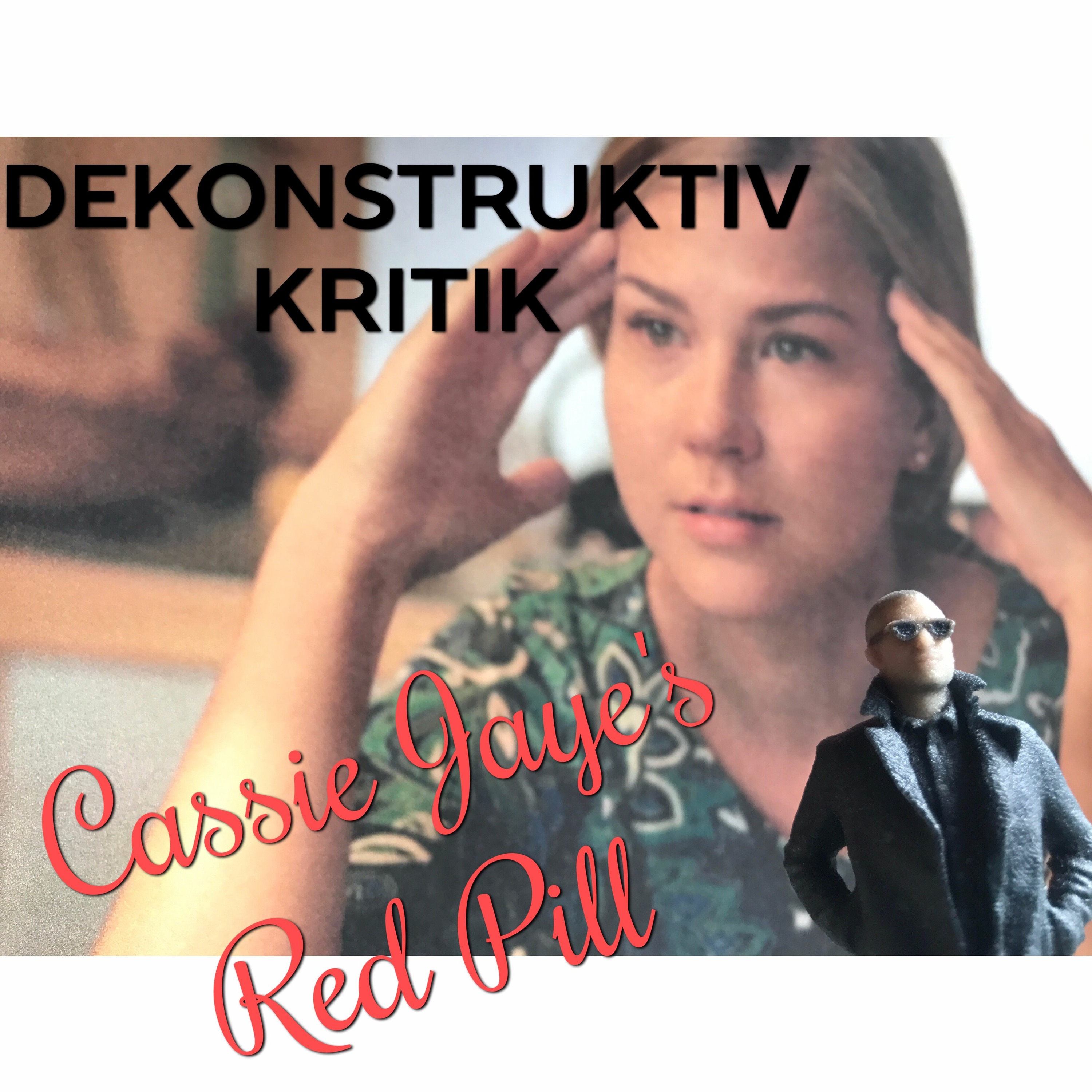
This is podcast advertising without barriers. Get started at acast.com slash advertise. The film is a bit surprising considering it is the second most viewed documentary you can rent on Swedish YouTube at the moment, and have been for a while now. The film is about the men's rights movement, whereas you might have heard of them, Raybopologists, and Cass' investigation into their nefarious activities.
But it is also a film about Cassie, an accomplished feminist filmmaker who has been celebrated by the left only to be shunned now, and she can no longer support the theory that underlies their policies. The title of the film, The Red Pill, might be a bit confusing for Swedes, and so I should explain that it refers to the magic pill that Morpheus offers Keanu Reeves' character, Neo, in the film The Matrix. It is the pill that has the power to transport him beyond the world he lives in now, and that has been pulled over his eyes to hide the truth from him. He's also offered a blue pill, which promises to let him forget ever having met Morpheus at all.
It's self-notic confusing metaphor, especially in the US, where the colors of the pills correspond to the colors attributed to the political spectrum. In the United States, red states are conservative, and blue states are liberal. In Sweden, the left side of the political spectrum are the reds, and the conservative side are the blues, so if I had to translate the title, it would have to be the blue pill. But then I also had to change the film The Matrix, and I'm not entirely comfortable with that.
I noticed Cassie on the Rubin Report and became interested in her when she, in a passus only, mentioned the awesome power of the Swedish feminist movement. Whereas I usually refer to them, the matriarchy. And I wanted to find out what she knew of them. That's why I contacted her.
Turns out she didn't know much more than she said on the Rubin Report, but it became a very nice talk anyway, about her film, and in the end about male circumcision. Cassie is very much against it, whereas I am four. As a circumcised man, I have never had any problems with it. I don't consider it to be genital mutilation, since my penis works fine.
I tell you it works fine. But since this podcast is as much about freedom of speech as it is about taboos, I cannot explore the latter without the former. I still want you to hear her speak. Please support this podcast on Patreon, and please watch my latest comedy special, Shaser in an Octum, on YouTube.
It now has English subs. Enjoy. Welcome, Mrs. Cassie to the constructive criticism.
Thank you. It's a pleasure to have you on. I'm calling you from Sweden right now. I don't like to label people, usually, because people are so sensitive nowadays.
But is it fair to call you a documentary filmmaker? Yes. Yes. All right.
So how long have you been making documentary films? Well, now 10 years. I started when I was 21, and before that I was acting in Hollywood and was involved in camera productions in front and behind the camera in that way. So I've always been interested in the film industry and some respects, but I transitioned to documentaries when I was 21.
Okay, so you had a previous career before you were 21? Yes, yeah. That's kind of unusual, isn't it? Yeah, well, I moved out to LA when I was 18, because it was either going to college and getting a theater degree, which my acting coach said would get me a job as a theater teacher or going out to Hollywood when you're 18 and a woman and have a lot more opportunities when you're younger to get acting roles.
And then you started making documentary films. Yes. Yes. And what sort of, because I don't think a lot of people here in Sweden know about you.
I've been following both the pre-production of your latest film online, and I saw it online just a little while ago, and I really enjoyed it. And I think it would be important for Swedish people to know about it. That's why I wanted to contact you. But I want to start to talk about your previous production, because you've always had a certain, well, interest, one would say, theme in your previous production, right?
So your first film was called Daddy I Do. That's right. Yes, and that was about what? That was about the absence only movement in America, which is a sector of sexual education.
That says wait until marriage, nothing else, and they actually go out of their way to say how ineffective contraceptives can be. So it's a faith-based initiative to try to get kids to a wait until marriage. And it largely happened in the red states, the Bible Belt in the South and the US. And there was an event that started to spring up called Purity Balls, where a father would take his daughter as young as six years old to this prom-like event, like a banquet kind of dancing event.
And the girl would vouch remain a virgin until marriage, and the father would vow to protect his daughter's chastity until marriage. And it was kind of a strange thing for people to think about. And I thought it was interesting. And I wanted to meet people who were a part of this and why they did it, and that the girls really knew what they were vowing to at six years old.
So I embarked on a journey with my mom, who my mom is my producer, and at the time I'm a camera operator for Daddy I Do. So her and I hit the road filming. And eventually, Daddy I Do evolved into a film about the bigger discussion of comprehensive sexual education in the US. So teaching abstinence, wait until you're older, because that's always that can't hurt anyone by waiting as long as you can to start having sex.
But also if they do choose to have sex, how to protect themselves from unwanted pregnancy and STDs. So that came out in 2010, and that was my first film I ever made. And it won a lot of awards, which encouraged me to continue filmmaking. Yes, I remember I saw it at the time, and I remember thinking, but don't they understand how incredibly kinky this practice on Puritable is?
It's amazing, really. Yeah, it is. And I don't think period of balls happen as much now. But it's something that happens largely in the evangelical Christian community.
And of course, it's an unfortunate title period of balls. But DaddyIDo.com, if anyone wants to see that film. And also, there must be an upper limit for not having sex where it actually starts harming you. I mean, if you're, let's say for instance, the movie 40-year-old virgin talks about this problem, not in a very, maybe, intellectual way, but still.
Right. And yeah, that's, I think maybe the 40-year-old virgin types is also an extreme scenario that can happen from lack of information on sexual health and biology and urges and human needs and all that. So yeah, I think just the more we can educate kids on a technical level as well as a social cultural level to be open to this discussion and not feel weird about talking about this when you're an eighth grader or 13 years old in school. So yeah, I think we should have these conversations.
Absolutely. But after this, this afforded you to embark upon a journey where you made several documentary films, most of them about women's issues, I suppose. Yes. I've made three feature-length films, the latest thing, The Red Hill.
And then I've made over a dozen short films. And my short films largely are women's issues centric. So I made a film called The Story of Goldie Bloks, talking about how we need more female women getting into STEM education to become engineers because currently in the US there's only 11% of engineers are women. So that was a short film, The Story of Goldie Bloks.
And I made a film for the International Museum of Women. For Mother's Day, it was an arts installation trying to make mothers visible. Yeah, I think a lot of my films have kind of focused on women's issues and stories. And that's my innate passion.
And then the last one, The Red Hill, was the change in my resume, I guess. So how come you maybe should start by explaining to the listener what The Red Hill is about? Because maybe I should explain to you. When we talk about politics in Sweden, the red side is the socialist side and the blue side is the equivalent of your conservative side.
So if you say, red, pale, and Swedish, it should mean if we had that expression that you're actually swallowing the socialist pill and not the conservative pill. Oh, interesting. Thanks for clarifying that, Miss Mille. Well, The Red Hill terminology comes from the 1999 movie The Matrix.
And in The Matrix, the main character, Neo, is offered the choice between taking the blue pill, where he will stay within The Matrix, which is this false reality, is kind of you're walking through life with a film over your eyes or not releasing the truth of where you are, or taking the red pill, which is waking up from this sleep and seeing the harsh reality, the truth that's very uncomfortable. And you won't necessarily like it, but it is the truth. So the red pill terminology, that term has kind of morphed in a sense, the film is released into any number of issues that where people are saying, if you see my perspective or see the truth here, you're taking the red pill. So environmentalists have used the red pill, alien conspiracists have used the red pill.
And when I stumbled across the men's rights movement in 2013, they used the red pill as their term for seeing their point of view. And even the website that it came across, the Voice from N.com, their logo was Take the Red Pill. And so a lot of their online blogs and writings were using that metaphor, like, well, my first red pill experience was, and then they explained when they started to look at men's issues. So the term really succinctly explains my journey of making this film, because I can't see the world the same way again after making the red pill.
And I think a lot of viewers can't see the world the same way again after watching the red pill movie. No, I think you're right. But the movie itself is about the men's rights movement. Yes, yes.
So the red pill movie follows my year-long filming journey meeting the leaders and the followers of the men's rights movement in North America. And I also interviewed feminist for a counter perspective. And I had already been a feminist of about 10 years before I started filming the red pill. And something that I've always done for as long as I can remember is I keep video diaries or something personal to track my evolving views on a lot of these social issues and political topics.
And I kept the video diary while I was filming the red pill. Because I ended up choosing to include a few of my video diaries in the movie and make myself a part of the film's story. Because I did transform through making this film. And it's pretty apparent in my video diaries.
But I started off as a feminist making this film, looking to expose the men's rights movement as misogynist who want to turn back the clock on women's rights and want that are anti-gender equality. That's what I thought they were. And I interviewed 44 people over a year, spending up to eight hours filming each person and realized that it was a lot more nuanced than that. And they weren't anti-women.
They weren't anti-equality. They were actually, I would say even more pursuing gender equality and wanting to address what are men's issues and how are they treated unequally in the court systems or culturally with bias. So the film I made is the journey I went on. And it's very complicated.
And I think people have to watch the film to see the full scope of it because it's a lot to explain in an interview. So you did a film about the men's rights movements. And I'm assuming you were met with love and open arms from the world once it was done. Absolutely not.
No, no, no. I am hard pressed to think of any film in recent history that has had many petitions and protests and banings as this film has had. And it was released in theaters in October 2016. And then we were released online, online platforms in March 2017.
And so it's widely available now. And I don't want to discredit the success of the movie by saying there's been so many protests and banings because we've had great success. We're currently the top selling movie on YouTube in Australia ahead of Moana and Logan and Guardians of the Galaxy and Rogue One, the Star Wars movie. I mean, of all genres, it's pretty unheard of for a documentary to sell like this.
So people are going to watch it. People are trying to find it online. And they are certainly talking about it online in the forums and sharing it secretly with their friends. But that seems to be the trend is that a lot of people are afraid to tell their friends and family that they've watched it or that they like it and that they want other people to see it because they're such a stigma around talking about men's issues.
That's why a lot of men's rights activists choose to remain anonymous. They don't want their public information shared because they're worried they will lose their job and I've heard that many people have lost their job by saying they're a men's rights activists or a men's rights movement. So we are doing well sales-wise, but the press has definitely taken the stance that they want to smear my name, my reputation, smear the film. Most people who are against the film and wanting to pull it from theaters have never seen the film for themselves.
But they're basically getting hysterical about the idea of being a film about men's rights that people are actually listening to and taking pause with and considering their perspective. My film, the Red Pill, it doesn't promote the men's rights movement. I'm not a men's rights activist. At the end of the film, I do not become a men's rights activist.
There are a lot of areas that I disagree with men's rights activists in the movement. So I'm essentially a free agent. I don't have any label now after making the film. I no longer call myself a feminist and that could be maybe a reason why feminists are against this film is because I drop the label feminist at the end of the film.
But I'm not anti-feminist either. I saw a clip of you where you were. It was labeled why I'm not a feminist anymore. And I think your exact wording was learning about feminism made me leave feminism.
What do you mean by that? Quick question. When was the last time a display ad changed your mind? Now think about the last time a friend told you about something they loved.
Different feeling right? That's how podcast advertising works. A host who's built a real trust with their audience who talks about your brand and their own words and their own voice. It doesn't interrupt the experience.
It's part of it. With ACAST, you can access the world's largest podcast marketplace. Choose the right shows, the right audiences, the right format. Then watch the data to tell you it worked.
You're not buying impressions. You're buying influence. Learn more by visiting ACAST.com. Well, what I said is that it wasn't learning about men's issues that made me leave feminism.
It was actually learning about feminism. That made me part with feminism. When I started to really listen to what men's rights activists are saying and go to the studies to find the sources and the proof behind what they're saying with all these various issues, I realized that men's issues need to be involved in the gender equality discussion. If we have the gender equality movement, we need to talk about these issues.
Suicide for men is worldwide in almost all countries. There's roughly 80% of all suicides are men. That's a symptom of something. Something is happening for men where they are wanting to take their own life.
I'm shocked that we don't talk about that in the gender equality discussion with feminism. Family courts and male disposability as far as workplace deaths and ward deaths and lower life expectancies and mental health and the lack of funding for men's health organizations compared to women's health. I found all these issues valid and needing to be discussed. When I would go to feminist with these issues, basically sharing what I learned from men's rights activists, I would be shut down and they would use arguments against men's rights activists that I knew weren't true.
It's kind of strong in arguments saying that they're white supremacists or they're anti-women's reproductive rights, which they're not. Almost all men's rights activists are for women's reproductive rights. Actually, a lot of men's rights activists say that were feminists before they became men's rights activists. They very much cared about the gender issues.
I started to see the dismissiveness within feminism, also the hypocrisy and how quickly a lot of feminists can say things that are male bashing and not realize that if the genders were reverse, this would not be acceptable at all. And then beyond that, because a lot of what I'm saying here is just personality traits or how they react or respond to men's issues. But beyond that, another reason why I've left feminism is because I believe the core platform that feminists stand on is patriarchy theory. I think that's a very harmful way to base all of your conclusions and assumptions is around this theory that men throughout history and even today oppress women.
And if you believe that, you can dismiss any issues men have because you believe they are the oppressors. But lumping all men together as if all men have oppressed all women is ignoring male victims and it's not having, it's excusing, not having compassion for male victims. So, I mean, there are many reasons why I left feminism. I'll throw one more out there before I give it back to you.
But another reason, I dropped the feminist label during or just about around my Kickstarter campaign, which I did for the film. It's a crowdfunding platform. I still finance the film with my mother and fiance for two years while we're filming. And we got denied from all grant applications for film funds and all my previous investors.
I used to get almost an automatic approval, right, for earlier productions. I certainly had a lot of support, absolutely. And I had Angel investors for my previous films who were very passionate about LGBT issues and women's issues. So, they all shut the door on me and did not want to be a part of this film.
Didn't want to see a film like this be made. And I was offered funding from a very large feminist organization, a large chuck money. And with the caveat that they would have control over the final product. So, I had to decline because there wasn't, there was no amount of money that was going to let me give up creative control over my film because I knew I had to tell the journey that I went on and I had all the footage to show that journey.
But I didn't know if it would be marketable. And I certainly didn't think, you know, any kind of agenda driven organization would let me tell the truth of the story I went on. So, I declined funding from the feminist organization. And at this point, it looks like I'm never going to complete the film.
I had a hundred hours of footage, but I needed about a hundred thousand dollars for post production funds for editing and color and music and graphics and all these things. And I didn't know how to, you know, where to find the money where I can keep complete creative control. So, as a last ditch effort, I went to Kickstarter and it was a ridiculous amount of money that I asked for on Kickstarter, I asked for $97,000, which is less than what I needed. But I put it out there that if this is what I need to complete the film and if I don't raise it, the film is not going to be made.
And we had a four week Kickstarter campaign and by the end of it, we raised over double of what my asking price was. We raised $200,000. And it's unheard of on Kickstarter for a documentary to have that much success. So, it was just another indicator to me that people need this film and there are people all around the world that want to see this film made.
And it gave me complete license to make the, I didn't have any contact with any of the Kickstarter backers during the filming or completion of the film. I didn't even meet them until after the film was released in theaters. And a lot of them told me that, you know, we didn't know if you're for real, if you're really going to make the film you said you would make. A lot of people thought I was a feminist in this guy is going to try to do a smear or hit piece on Mentor Octavus.
Fair enough, that's how you started out, isn't it? Yeah. Yeah. And anyway, so I was able to complete the film that I always intended to make and it was wonderful.
But during the Kickstarter campaign, I sent the Kickstarter link to all of my previous contacts from my previous films, people who supported and like publicized my film on their website. So I sent it to my contacts at Upworthy and having a post and all these different, you know, mainstream platforms trying to get some eyeballs on my Kickstarter campaign. And they wrote back saying your trailer doesn't show enough of Mentor Octavus being violent and freaking out or yelling at you. We want to see more of that.
And so they wouldn't, none of them would publish or talk about it. And then I had a lot of feminists start to start writing blogs to take down my reputation and my credibility. And one radical feminist blogger in particular had zeroed in on me and wanted to make up whatever he could to make me seem like something or not. And I was just really surprised because I also read his writings for, you know, many years prior to making this film.
And I thought, you know, I thought I trusted what he wrote and also a lot of the news outlets that did start to write kind of smear campaign stories about me I used to trust, like Vice and the Guardian and Village Boys. And so I started to see, I guess the matrix, but you know, the facade and how the average person is being fed these lives and how easily they can be fed these lives. And so because a lot of the smear campaign was coming from feminists, I just couldn't see how I could remain within the movement. And clearly they don't want me apart in the movement and I don't agree with what they're doing.
Completely understandable. I googled around in Sweden on the Swedish Google, so to speak, to see if you had many mentions. But I must say the Swedish feminist movement where just Sweden as a whole seems to give you the classical silent treatment. There's almost nothing about you except for one men's right activist blog who's probably just one person.
We used to have men's right activist sort of a movement in the early 2000s, maybe 10 people, but they were crushed by matriarchy. So good riddance. And because on the Ruben report, you mentioned, I saw you on Ruben Port and that's what made me go see your film. No.
Yes. And my pleasure. You mentioned Swedish feminists just in passing and it's only in passing in your film as well, the Red Pill. But I was wondering if you during your production process found out more and what you could in that case share with me.
Well, I can't say much both because I largely focused on North America while I was filming and the research I did, but also because I don't want to say too much, I get in trouble. What I could say is that I was shocked to find that in Sweden with the man tax, which it was dubbed. That's not really what it was called, the extra analyses of something. But the man tax was the idea behind it was we should, I guess feminist group who was pushing for this was saying that men should pay more in taxes for the domestic violence shelters in Sweden.
But something I was surprised to find was that either the leader or one of the leaders of this initiative and this large-time group in Sweden was connected to Jane Fonda who lives in the US, she's an actress and Jane Fonda is a part of this new men's center that is springing up in New York called the Center for Men and Masculinities and it's being headed by Dr. Michael Kimmel who is a very well-known feminist author and professor here in the States and I interviewed him in my film. And so being headed by Dr. Kimmel and Gory Steinem is a part of it and one of our cats, not Patricia Arquette but her sister I think is on the board and Jane Fonda is on the board.
And so I was just fascinated to see that the big feminist movement in Sweden is connected with the big feminist movement in the States. So yeah, I found it fascinating. I know because I've watched you online that you don't like it when the interviewers break the interview mode and go in and involve themselves in the interview. But first of all, I'm a comedian, I'm not a documentary filmmaker.
But I can tell you a little story. The thing is this that we have a historian and professor of history called Yvonne Heerdmann and in 1987 she wrote a small pamphlet really, no longer than 37 pages called the Gender System, Reflections of the Female Social Subordination to Men. Now it was basically from an academic standing point. She took the classical Marxist view of the class system, the class society.
It's a pyramid, you've probably seen posters of it when you were younger in dorms and so forth. And Swedes are very familiar with the class system because this was the first social democratic state in the world. And they are well indoctrinated with it. It's basically the religion.
I jokingly say after two other immigrants or people who, well, foreign dissent here in Sweden that the class system is the whites way of telling each other apart. But anyway, it's mostly a joke. But she took that class system and instead of having the working class, the economic interests, priests and kings, she put in gender. Yes, and that was it basically.
She took a Marxist concept and morphed it with feminism and she produced this little pamphlet which is basically just a loose conspiracy theory where she doesn't really define any of the concepts. She just raises a lot of questions and wants to have a discussion. Now three years later in 1990, this becomes part of state policy because her little pamphlet is suddenly included in one of us, one of our government official inquiries or whatever, which usually they are usually used to construct policy. And I don't know how much you know about Sweden, but we're great believers in social engineering programs because we believe that humans are blank slates that you can mold whichever way you want if you just program them with the right cultural information.
It is, in essence, a very collectivist culture, Sweden. And we also appreciate conformity and unity above all else. So anyway, it got into a government document and became state policy, official state policy. So the theory of patriarchy in Sweden is actually state policy.
And yes, and it's been quite a ride, my dear. My, my, ah, I had no idea. Thank you for sharing that. patriarchy is, it was one of those things that it took a long time for me to start to break down because I've been, had been a feminist for so long and it was so indoctrinated in my psyche and the way I looked at the world.
But something that doesn't fit with patriarchy theory is all the ways that women are privileged and all the ways that men are disadvantaged. And it's just, it's really fascinating to me because we don't talk about female privilege and, ah, you know, at times I wonder if people are fighting for the victimhood status because that is the power position. If you are the victim, you will have more support doing the other way around. Ah, ah, yeah, that's really interesting.
Yeah, it is. According to official Swedish state policy, we are a cis-patriarchy, not the worst cis-patriarchy in the world, but we're still a cis-patriarchy. And we believe in the gender wage gap that's part of official, our official statistics bureau. We've had gender pedagogy in schools now for 30 years and the gender grade gap between boys and girls is the second largest in the world, right after Finland who has the largest in the world and has also gender perspective on education.
Gender grade gap, is that girls who are skipping grades or boys are falling behind? No, the gender grade gap is the gap in grades between boys. Oh, how are they? Yeah.
So A, D, C, F. Yes, and girls generally get better grades than boys because they mature quicker, they're more well behaved, they appreciate being perceived as good and efficient. And boys are, well, they're less attentive and so on and so forth. So there's always a gender grade gap.
But usually boys are better at physics and math and girls are better at reading and languages. But in Sweden, in the last 30 years, we have been so successful, if that is the right term, that boys now don't even excel in math and physics. Wow. So the girls have passed in every subject.
Do you see that this is being talked about in the media? No, not at all. It's a, we treat problems by using the silent treatment. It really works well until everything goes up in your face.
Oh dear. Wow. So that's why I wanted to talk to you with a connection to Sweden. And you already skipped ahead to my questions about why you don't call yourself a feminist anymore.
But in this clip where you say that you don't call yourself a feminist anymore, you address men's issues as human rights issues. And could you please just relate to my listeners what you view as uniquely men's issues that are still human rights issues? And what you meant by that? Well, I think the most obvious one that comes to my mind, and I don't know the statistics in Sweden how prevalent this issue is, but very much in the United States, infant male circumcision, general mutilation happens routinely.
Is that similar in Sweden? Not really. We don't, well, it didn't used to be. There was a big discussion back maybe when I was a child about Jewish circumcision, but we're a small minority here.
And now we have a larger Muslim majority who also practice male circumcision. But I don't really think it's an issue. Not anymore. I don't know the exact statistics, but I think it's still around 70% of all boys born in the US have this done.
And it's something, it's not a huge chapter in my film because I think it's especially in the US, it's such a sensitive topic. Most people haven't even thought about it before it's a gender issue and when they hear about it their instant reaction is being flabbergasted that it would even be brought up as a men's issue or a human rights issue. But we have, and also something to note is that men's rights activists who are anti-circumcision or intactivists, they are not saying that. It's similar to female general mutilation or that male general mutilation is worse than female.
They don't say that at all and they don't intend to suggest that. But it is a violation of consent and bodily integrity. Your rights to choose how you want your body to be. And this happens to boys usually a couple of days after they're born.
And even in the US, I don't go into this in my film, and I learned that many circumcision that are done for lower income families are funded by the state. And so these are taxpayer dollars that are being funneled to, I don't know how many, but a lot of infant male babies being circumcised. And anyway, so there's no country in the world that outlaws infant male general mutilation. And I do think that is a human rights issue.
Especially when you start to really look into the issue and realize that there's no valid argument as to why this should be done in all the studies show that there's, go ahead. Well, I think most Swedes would agree with you. They're very secular people and they would say that male genital mutilation or circumcision is also child abuse. And I have no rational argument to defend the fact that I'm circumcised except aesthetic arguments.
And yeah, that's basically it, I suppose. Freedom of religion, no? Well, I think it's a great way to encounter. Also, I really learned not to trust anyone at a very young age.
Sorry, yeah. I came about, and even the feminist group, because I really went down the rabbit hole into this issue, and I don't go into it enough in my film. But I would constantly see feminist groups talking about, so definitely the importance of breastfeeding and for many different reasons, but the connection between mother and child and the skin-to-skin contact, and even right after a child is born to have a mother hole, the child is important for both of their chemistry and biology to connect. And so this is constantly talked about in women's groups and in feminist groups.
Quick question. When was the last time a display ad changed your mind? Now think about the last time a friend told you about something they loved. Different feeling, right?
That's how podcast advertising works. A host who's built a real trust with their audience, talks about your brand and their own words and their own voice. It doesn't interrupt the experience. It's part of it.
With ACAST, you can access the world's largest podcast marketplace. Choose the right shows, the right audiences, the right format. Then watch the data, tell you it worked. You're not buying impressions.
You're buying influence. Learn more by visiting ACAST.com slash advertise. And so I was just thinking how, you know, we obviously place a lot of importance on these little moments of touching and being and carrying and looking into your baby's eyes and all these things. So how can you think that strapping a two-day-year-old baby boy to a table with, you know, like Velcro strips on his arms to hold him down and then mutilating him down there?
And so a lot of times there is no kind of anesthesia. And if there is, it's not, you know, completely putting him out that he doesn't feel anything. And so I, but here's the thing. I interviewed a lot of men's rights activists who are intactivists and I heard their arguments and I was so, I had a lot of walls up to this issue because I just never thought about it before.
And a lot of girls, especially in the US with the show Sex and the City, they would make fun of guys who were in tact and say how they want to be with a guy who's not circumcised. And so it's very much it kind of embedded in our pop culture to Shane guys who aren't circumcised. So, so I appeared in the men's rights activists and the tact of these issues and I really didn't get it until someone told me if you see it happen, you will never do that to your child. So as a doctor and a researcher, I was hard pressed to find it, but I finally found a medical training video of avoiding circumcised.
And the screen is like nothing I've ever heard before. It is completely different than a normal baby's cry. It was blood curdling and I can't imagine what that subconsciously does to a child and how they do walk through the rest of their life having had that done to them, having that trauma embedded in them. And so I, there are a lot of feminists who say they are anti-male circumcision or anti-insitting male circumcision because of course when a guy's grown up he can choose whatever he wants to do if he wants to do a first set of reasons or whatever.
But it's not talked about enough and they definitely don't make it a part of the feminist platform or the gender equality platform to address this issue. So yet another reason why I just didn't see feminism as being all encompassing to the full gender equality discussion. I understand. So and there were other things that uniquely affect male.
There was something about false paternity? Well, paternity fraud is, so for people who don't know what that is, it's when a father later in life finds out that the child he's been raising as his own child is actually not his. And this can be for many different reasons. Either the woman didn't know that it was his child but she was having affairs or sleeping with few people or it could be a malicious act that she did know he wasn't the father but she chose to let him believe that he was either for financial reasons or for him to say with her she wanted that family unit instead of another.
And there's no repercussion for a woman who knowingly misleads a man into thinking that he's the father of her child. There's no repercussions. That's shocking to me that you don't hold someone accountable for that kind of ruining someone's complete world to find out that kind of information. And of course the father's still connected often times to the child that they thought were there and now, depending on how they go through the legal process, now he may not have any rights to visitation to see his child if they do the paperwork to transfer paternity.
Or if they don't transfer paternity and put it on the legal books that, so if they just remain that this child is his, even though it's biologically not his child, he can still be indebted to paying child support for this child that knowingly the paternity test proves that it's not his but the birth certificate says that it's his child. And there's one story in the red pill that we show where a man is owing $30,000 worth of child support for a child that paternity test proved is not his child. But because his name was written on birth certificate, he owes this or he's facing jail time. So it's amazing how many different ways women can abuse men in family court and that there's no repercussions for it.
Of course not. Women are always victims and men are always perpetrators. That is official Swedish doctrine. You can quote it if you want to.
So I want to thank you so much for participating in the podcast. Could I do you have any projects lined up? What are you working on now? I am looking for my next film topic.
I like to keep it busy so now I'm starting to look at what's the next two or three years of my life going to be focused on. And I haven't picked a topic yet and I can't tell all the ideas but I am interested in exploring stories that the average filmmaker is too afraid to tell because a lot of these issues that I cover or at least the red pill, many people told me it was career suicide and possibly that's true. I don't think I would get the same kind of support moving forward from mainstream filmmaking communities but as long as I can remain independent and hope to climb my way up at completing another film and then I intend to do a topic that maybe others are too afraid to do. So I believe the only surefire way in Sweden to watch the red pill I think is Vimeo, V-I-M-E-O.
That's how I talk. Is that how you talk? Okay because I don't know if we're on iTunes or Amazon Prime. Okay, sorry about that.
It depends on how the distributor works with the different territories and for some reason some countries choose to not release the film on their platform. You can rent it on Vimeo, no problem. And also I'd like to pitch you if you are out of ideas or looking for new ideas. Please do documentary about gender politics in Sweden, how it all started and spread to your country and to England and to France and to Finland and so on and so forth because I think that would be a real Mitzia to make the world I think.
Do you think Sweden led the way in a lot of these issues? Absolutely, yes. We have invested more in this than any other country in the world as far as I know. Sweden, Stokum University, when I attended there I think decided that they wanted to be best at gender science in the world.
Of course that would be an easy task since no one wants to participate in that race really, especially anymore. I also wanted to ask you, have you seen Norwegian comedian? He's actually originally a sociologist but then he turned comedian. He has made a series called Janovask.
It means brainwashed in English. Oh yes, I have seen that series. Yeah. It's a YouTube, and after he'd made that they actually stopped funding gender research in World Gender Science in Norway.
Oh wow. So that would be good to talk then. Actually, I tried to pitch that to Swedish State Television for years and they didn't want to have anything to do with it and they don't acknowledge it exists. Swedish papers don't mention that Norway has changed its policy on this.
So it's an interesting place, Sweden. And there's lots of good here and there's lots of crazy stuff going on. So if you're looking for your next project, that's my pitch at least. All right.
Well, thank you so much. And thank you for having this chat and letting me share my piece. I'm so used to interviews where people edit me out of context or try to do catchy moments on me. So I really appreciate this honest open conversation.
I have no interest in that. And this will come up both as a sound file on SoundCloud and as a video feed on YouTube in due time. And I want to thank you so much for participating and learning me an hour of your time. Thank you.
Thank you for listening to deconstruct to criticism. Please support this podcast on Patreon and please watch my latest comedy special, Shae Sen in Orkian on YouTube. It now has English subs. Until next time, good time unit.
Then I'll put on a screen of the news below or me or on flam or klipsch or mikzad or toaster seven. Great question. When was the last time a display ad changed your mind? Now think about the last time a friend told you about something they loved.
Different feeling right? That's how podcast advertising works. A host who's built real trust with their audience talks about your brand and their own words and their own voice. It doesn't interrupt the experience.
It's part of it. With ACAST, you can access the world's largest podcast marketplace. Choose the right shows, the right audiences, the right format. Then watch the data tell you it worked.
You're not buying impressions. You're buying influence. Learn more by visiting acast.com slash advertise.