
EPISODE · May 17, 2026 · 3 MIN
40 - History, Haiti.
from Slavery. · host Popular Culture and Religion.
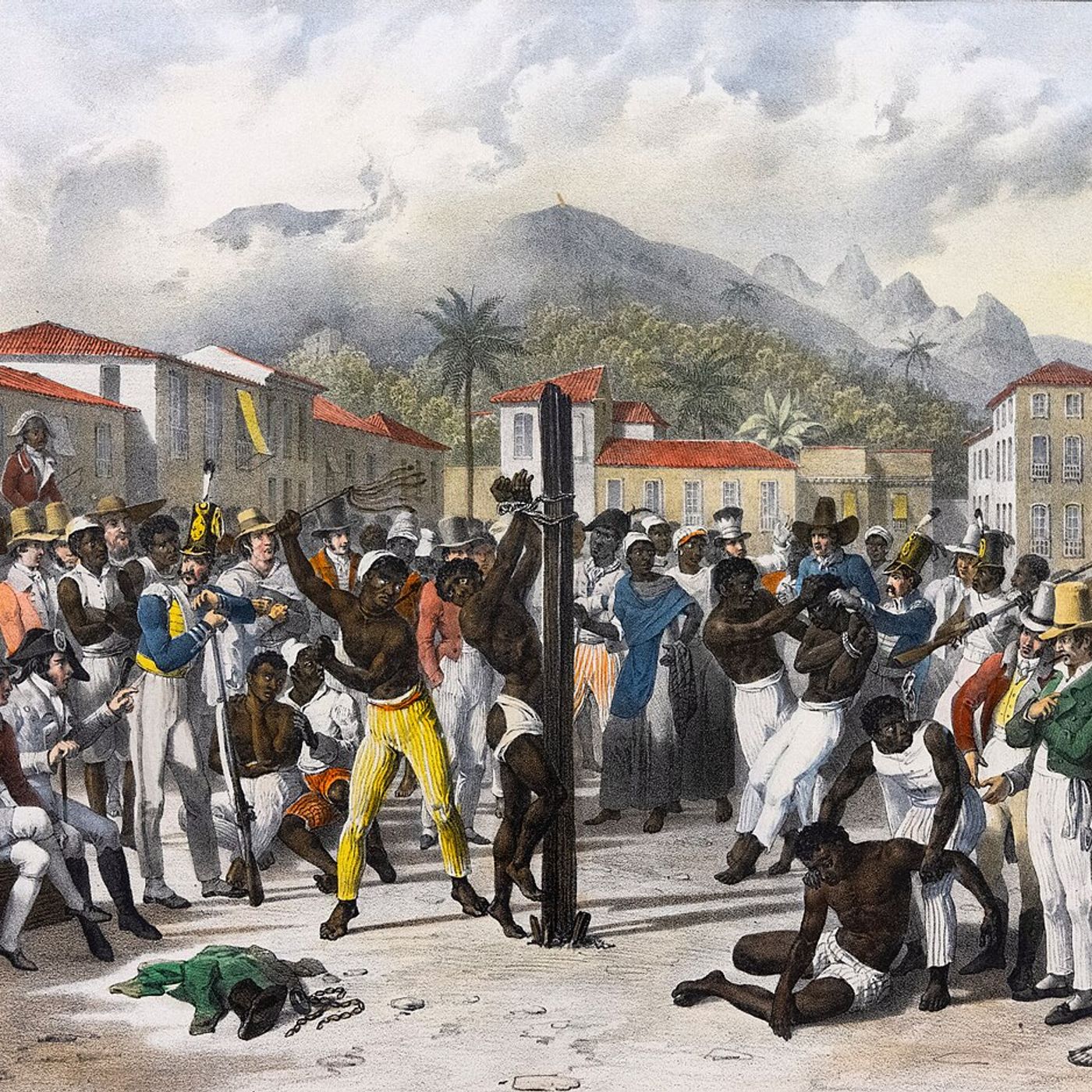
History, Haiti. Slavery in Haiti began at an unknown time with slavery being already practiced by the native populations when Christopher Columbus on the island in 1492. European colonists would go and institutionalize slavery on the island and turn it into a major business which was devastating to the native population. Following the indigenous Taíno's near decimation from forced labour, disease and war, the Spanish, under advisement of the Catholic priest Bartolomé de las Casas, and with the blessing of the Catholic church, who also wished to protect the indigenous people, began engaging in earnest in the use of African slaves. During the French colonial period beginning in 1625, the economy of Haiti (then known as Saint-Domingue) was based on slavery, and the practice there was regarded as the most brutal in the world. Following the Treaty of Ryswick of 1697, Hispaniola was divided between France and Spain. France received the western third and subsequently named it Saint-Domingue. To develop it into sugarcane plantations, the French imported thousands of slaves from Africa. Sugar was a lucrative commodity crop throughout the 18th century. By 1789, approximately 40,000 white colonists lived in Saint-Domingue. The whites were vastly outnumbered by the tens of thousands of African slaves they had imported to work on their plantations, which were primarily devoted to the production of sugarcane. In the north of the island, slaves were able to retain many ties to African cultures, religion and language; these ties were continually being renewed by newly imported Africans. Blacks outnumbered whites by about ten to one. The French-enacted Code Noir ("Black Code"), prepared by Jean-Baptiste Colbert and ratified by Louis XIV, had established rules on slave treatment and permissible freedoms. Saint-Domingue has been described as one of the most brutally efficient slave colonies; one-third of newly imported Africans died within a few years. Many slaves died from diseases such as smallpox and typhoid fever. They had birth rates around 3 percent, and there is evidence that some women aborted fetuses, or committed infanticide, rather than allow their children to live within the bonds of slavery. As in its Louisiana colony, the French colonial government allowed some rights to free people of color: the mixed-race descendants of white male colonists and black female slaves (and later, mixed-race women). Over time, many were released from slavery. They established a separate social class. White French Creole fathers frequently sent their mixed-race sons to France for their education. Some men of color were admitted into the military. More of the free people of color lived in the south of the island, near Port-au-Prince, and many intermarried within their community. They frequently worked as artisans and tradesmen, and began to own some property. Some became slave holders. The free people of color petitioned the colonial government to expand their rights. Slaves that made it to Haiti from the trans-Atlantic journey and slaves born in Haiti were first documented in Haiti's archives and transferred to France's Ministry of Defense and the Ministry of Foreign Affairs. As of 2015, these records are in The National Archives of France. According to the 1788 Census, Haiti's population consisted of nearly 40,000 whites, 30,000 free coloureds and 450,000 slaves.The Haitian Revolution of 1804, the only successful slave revolt in human history, precipitated the end of slavery in all French colonies, which came in 1848. Wikipedia: Creative Commons Attribution-ShareAlike 4.0 License.This episode includes AI-generated content.
Embed this episode
Ready to play
40 - History, Haiti.
No transcript for this episode yet
Similar Episodes
No similar episodes found.