#40 - The Myth of The Framework: On the possibility of fruitful discussion episode artwork

EPISODE · May 30, 2022 · 45 MIN

#40 - The Myth of The Framework: On the possibility of fruitful discussion

from Increments · host Ben Chugg and Vaden Masrani

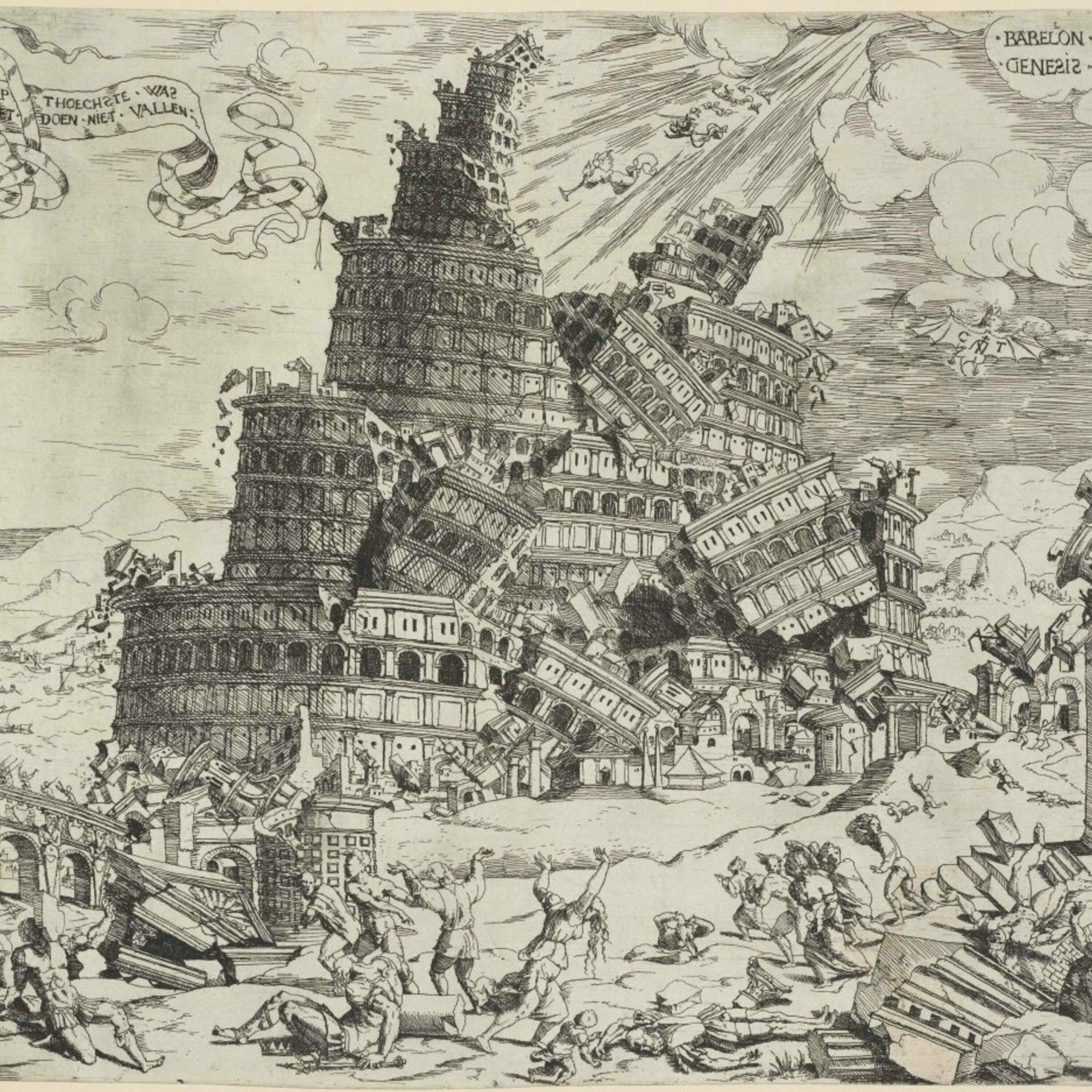
Is there any possibility of fruitful dialogue with your mildly crazy, significantly intoxicated uncle at Thanksgiving dinner? We turn to Karl Popper's essay, The Myth of the Framework, to find out. Popper argues that it's wrong to assume that fruitful conversation is only possible among those who share an underlying framework of beliefs and assumptions. In fact, there's more to learn in difficult conversations which lack such a framework. We discuss What is The Myth of the Framework? The relationship between the myth of the framework and epistemological and moral relativism Modern examples of the myth, including Jon Haidt's recent Atlantic essay and Paul Graham's Keep your identity small. Why there's more to learn from conversations where the participants disagree, and why conversations with too much agreement are uninteresting Linguistic relativism and the evolution of language as a refutation of the myth The relationship between the myth of the framework and the Enigma of Reason Quotes I think what religion and politics have in common is that they become part of people's identity, and people can never have a fruitful argument about something that's part of their identity. By definition they're partisan. - Paul Graham, Keep your identity small The story of Babel is the best metaphor I have found for what happened to America in the 2010s, and for the fractured country we now inhabit. Something went terribly wrong, very suddenly. We are disoriented, unable to speak the same language or recognize the same truth. We are cut off from one another and from the past. It’s been clear for quite a while now that red America and blue America are becoming like two different countries claiming the same territory, with two different versions of the Constitution, economics, and American history. But Babel is not a story about tribalism; it’s a story about the fragmentation of everything. It’s about the shattering of all that had seemed solid, the scattering of people who had been a community. It’s a metaphor for what is happening not only between red and blue, but within the left and within the right, as well as within universities, companies, professional associations, museums, and even families. - Jonathan Haidt, Why the past 10 years of American life have been uniquely stupid The proponents of relativism put before us standards of mutual understanding which are unrealistically high. And when we fail to meet these standards, they claim that understanding is impossible. - Karl Popper, MotF, pg. 34 The myth of the framework can be stated in one sentence, as follows. A rational and fruiful discussion is impossible unless the participants share a common framework of basic assumptions or, at least, unless they have agreed on such a framework for the purpose of the discussion. As I have formulated it here, the myth sounds like a sober statement, or like a sensible warning to which we ought to pay attention in order to further rational discussion. Some people even think that what I describe as a myth is a logical principle, or based on a logical principle. I think, on the contrary, that it is not only a false statement, but also a vicious statement which, if widely believed, must undermine the unity of mankind, and so must greatly increase the likelihood of violence and of war. This is the main reason why I want to combat it, and to refute it. - Karl Popper, MotF, pg. 34 Although I am an admirer of tradition, and conscious of its importance, I am, at the same time, an almost orthodox adherent of unorthodoxy: _I hold that orthodoxy is the death of knowledge, since the growth of knowledge depends entirely on the existence of disagreement. Admittedly, disagreement may lead to strif, and even to violence. And this, I think, is very bad indeed, for I abhor violence. Yet disagreement may also lead to discussion, to argument, and to mutual criticism. And these, I think, are of paramount importance. I suggest that the greatest step towards a better and more peaceful world was taken when the war of swords was first supported, and later sometimes even replaced, by a war of words. This is why my topic is of some practical significance._ - Karl Popper, MotF, pg. 34 My thesis is that logic neither underpins the myth of the framework nor its denial, but that we can try to learn from each other. Whether we succeed will depend largely on our goodwill, and to some extent also on our historical situation, and on our problem situation. - Karl Popper, MotF, pg. 38 References Why the past 10 years of American life have been uniquely stupid, by Jonathan Haidt Keep your identity small, by Paul Graham The Enigma of Reason by Hugo Mercier and Dan Sperber Glenn Loury and Briahna Joy Grey Normal Science and its Dangers Social media everywhere Follow us on twitter (@Incrementspod, @VadenMasrani, @BennyChugg), and on youtube. Tell us about your shaken framework at [email protected] Image: Cornelis Anthonisz (1505 – 1553) – The Fall of the Tower of Babel (1547)

Is there any possibility of fruitful dialogue with your mildly crazy, significantly intoxicated uncle at Thanksgiving dinner? We turn to Karl Popper's essay, The Myth of the Framework, to find out. Popper argues that it's wrong to assume that fruitful conversation is only possible among those who share an underlying framework of beliefs and assumptions. In fact, there's more to learn in difficult conversations which lack such a framework. We discuss What is The Myth of the Framework? The relationship between the myth of the framework and epistemological and moral relativism Modern examples of the myth, including Jon Haidt's recent Atlantic essay and Paul Graham's Keep your identity small. Why there's more to learn from conversations where the participants disagree, and why conversations with too much agreement are uninteresting Linguistic relativism and the evolution of language as a refutation of the myth The relationship between the myth of the framework and the Enigma of Reason Quotes I think what religion and politics have in common is that they become part of people's identity, and people can never have a fruitful argument about something that's part of their identity. By definition they're partisan. - Paul Graham, Keep your identity small The story of Babel is the best metaphor I have found for what happened to America in the 2010s, and for the fractured country we now inhabit. Something went terribly wrong, very suddenly. We are disoriented, unable to speak the same language or recognize the same truth. We are cut off from one another and from the past. It’s been clear for quite a while now that red America and blue America are becoming like two different countries claiming the same territory, with two different versions of the Constitution, economics, and American history. But Babel is not a story about tribalism; it’s a story about the fragmentation of everything. It’s about the shattering of all that had seemed solid, the scattering of people who had been a community. It’s a metaphor for what is happening not only between red and blue, but within the left and within the right, as well as within universities, companies, professional associations, museums, and even families. - Jonathan Haidt, Why the past 10 years of American life have been uniquely stupid The proponents of relativism put before us standards of mutual understanding which are unrealistically high. And when we fail to meet these standards, they claim that understanding is impossible. - Karl Popper, MotF, pg. 34 The myth of the framework can be stated in one sentence, as follows. A rational and fruiful discussion is impossible unless the participants share a common framework of basic assumptions or, at least, unless they have agreed on such a framework for the purpose of the discussion. As I have formulated it here, the myth sounds like a sober statement, or like a sensible warning to which we ought to pay attention in order to further rational discussion. Some people even think that what I describe as a myth is a logical principle, or based on a logical principle. I think, on the contrary, that it is not only a false statement, but also a vicious statement which, if widely believed, must undermine the unity of mankind, and so must greatly increase the likelihood of violence and of war. This is the main reason why I want to combat it, and to refute it. - Karl Popper, MotF, pg. 34 Although I am an admirer of tradition, and conscious of its importance, I am, at the same time, an almost orthodox adherent of unorthodoxy: _I hold that orthodoxy is the death of knowledge, since the growth of knowledge depends entirely on the existence of disagreement. Admittedly, disagreement may lead to strif, and even to violence. And this, I think, is very bad indeed, for I abhor violence. Yet disagreement may also lead to discussion, to argument, and to mutual criticism. And these, I think, are of paramount importance. I suggest that the greatest step towards a better and more peaceful world was taken when the war of swords was first supported, and later sometimes even replaced, by a war of words. This is why my topic is of some practical significance._ - Karl Popper, MotF, pg. 34 My thesis is that logic neither underpins the myth of the framework nor its denial, but that we can try to learn from each other. Whether we succeed will depend largely on our goodwill, and to some extent also on our historical situation, and on our problem situation. - Karl Popper, MotF, pg. 38 References Why the past 10 years of American life have been uniquely stupid, by Jonathan Haidt Keep your identity small, by Paul Graham The Enigma of Reason by Hugo Mercier and Dan Sperber Glenn Loury and Briahna Joy Grey Normal Science and its Dangers Social media everywhere Follow us on twitter (@Incrementspod, @VadenMasrani, @BennyChugg), and on youtube. Tell us about your shaken framework at [email protected] Image: Cornelis Anthonisz (1505 – 1553) – The Fall of the Tower of Babel (1547)Support Increments

NOW PLAYING

#40 - The Myth of The Framework: On the possibility of fruitful discussion

0:00 45:31

No transcript for this episode yet

We transcribe on demand. Request one and we'll notify you when it's ready — usually under 10 minutes.

Bible Read Me Charles Van Deursen Most people may have never read the Holy Bible from cover to cover for several good reasons. A couple of hinderances might be that the texts reflect an ancient culture and that much of it is not in chronological order. Here you will enjoy listening to a summary of daily portions of Scripture grouped in one week increments, chosen in the order that they occurred in history. By this time next year you will have gained a better understanding of the big picture of the Bible narrative as well as intriguing details that will help you to connect the events of ancient days with the life that you are now living. Just as wise King Solomon wrote, "There is nothing new under the sun," but many times it can be difficult to find the time to dig out and apply these nuggets of golden truth to your daily life.Charles Van Deursen presents the Scripture summaries in a literal, grammatical-historical context while using the language in the way that Christian Women’s Weight Loss | Faith, Food, Fitness Ondrea Lynn - Certified Personal Trainer and Nutrition Coach for Christian Women Are you tired of fighting the scale 24/7? Are you sick of fad diets that only get you temporary results? Do you wish you had an easy plan to follow so you don’t have to stress out about how to lose weight? Are you looking for a simple foundational weight loss framework that can fit into your busy day so it becomes a lifestyle? Do you wish you could workout in 15-minute increments instead of hours at the gym? Do you wish you have an exercise plan that gets you results while working out at home? Are you looking for ways to naturally speed up your metabolism? Do you want your pizza and spinach too? Are you ready to break free from binge eating, over eating, and sugar addiction? Are you ready to be free from past trauma and hurts that drive you to sabotage? Do you desire a stronger relationship with Jesus, even on your weight loss journey but unsure how that looks? Hey, I’m Ondrea Lynn and I’m so excited that you are here with me on Christian Women Weight Loss! I remember what Increments with Alishah Novin Alishah Novin Increments is a show for technologists about leveraging the in-between moments. Those moments you come up for air, and take a beat.They say music is about the space between the notes, and just like music - growth happens in those moments between projects. Increments won't always give you answers, but will create the space for you to find them Siblinghood of Recovery Angie Reno When I found out my son was deep in the throes of Substance Use Disorder (SUD), chaos became the norm. As each step became more challenging, the information on SUDs, treatment, healing, and basically everything that comes with an SUD Family crisis, became overwhelming. Inundated with so much information, I felt like I had crossed space and time and landed in a new world. I actually had: I had entered the world of Recovery. My goal through this Podcast is to condense what I learned into small increments, and provide anyone willing to listen a message of hope. The world of Recovery is filled with parents, children, and family members who walk together. We share what we learn, listen with heart, and provide a community of support. We are a Siblinghood of Recovery.

Frequently Asked Questions

How long is this episode of Increments?

This episode is 45 minutes long.

When was this Increments episode published?

This episode was published on May 30, 2022.

What is this episode about?

Is there any possibility of fruitful dialogue with your mildly crazy, significantly intoxicated uncle at Thanksgiving dinner? We turn to Karl Popper's essay, The Myth of the Framework, to find out. Popper argues that it's wrong to assume that...

Can I download this Increments episode?

Yes, you can download this episode by clicking the download button on the episode player, or subscribe to the podcast in your preferred podcast app for automatic downloads.
URL copied to clipboard!