
EPISODE · May 17, 2026 · 7 MIN
41 - History, United States.
from Slavery. · host Popular Culture and Religion.
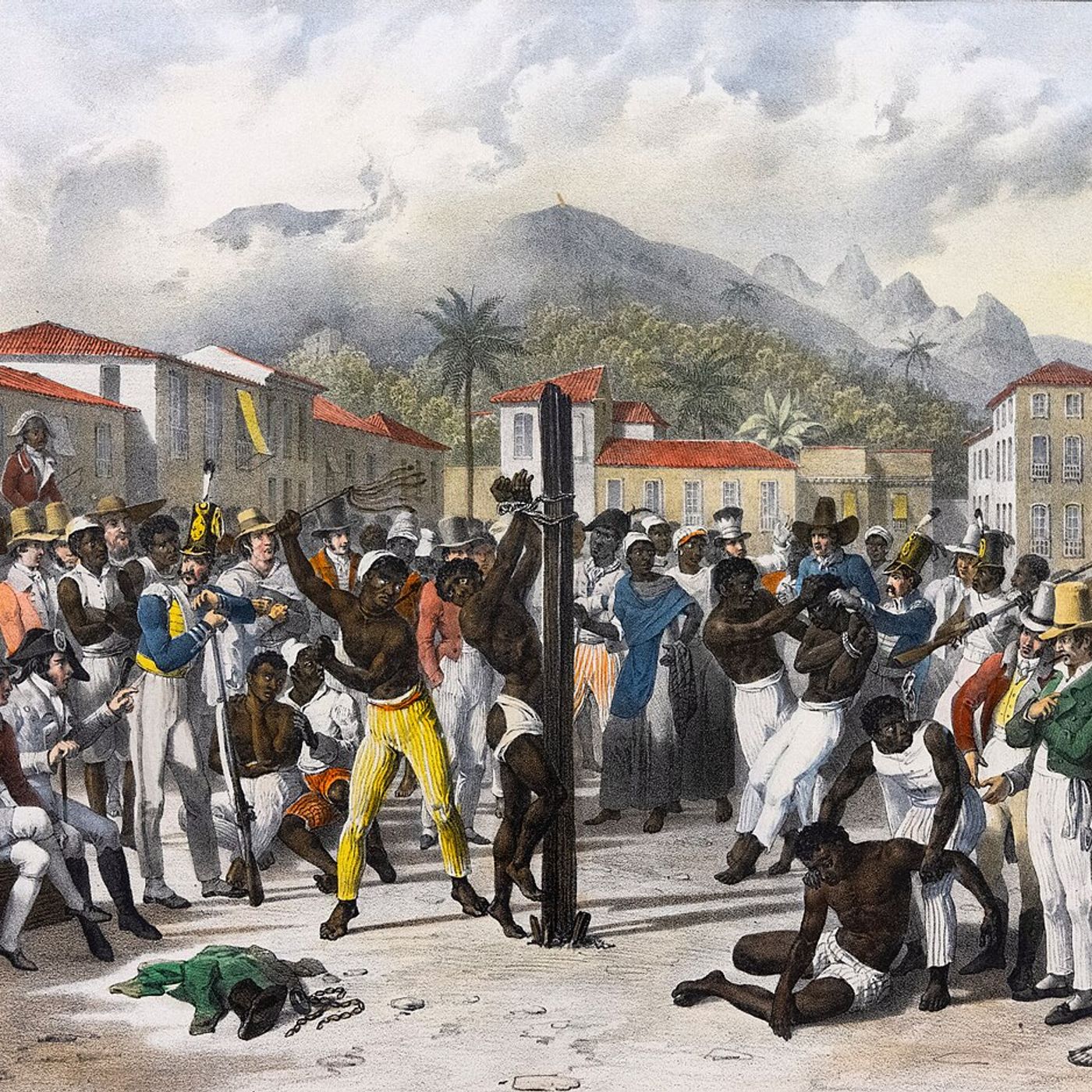
History, United States. Slavery in the United States was the legal institution of human chattel enslavement, primarily of Africans and African Americans, that existed in the United States of America in the 18th and 19th centuries, after it gained independence from the British and before the end of the American Civil War. Slavery had been practiced in British America from early colonial days and was legal in all Thirteen Colonies, at the time of the Declaration of Independence in 1776. By the time of the American Revolution, the status of slave had been institutionalized as a racial caste associated with African ancestry. The United States became polarized over the issue of slavery, represented by the slave and free states divided by the Mason–Dixon line, which separated free Pennsylvania from slave Maryland and Delaware. Congress, during the Jefferson administration, prohibited the importation of slaves, effective 1808, although smuggling (illegal importing) was not unusual. Domestic slave trading, however, continued at a rapid pace, driven by labour demands from the development of cotton plantations in the Deep South. Those states attempted to extend slavery into the new western territories to keep their share of political power in the nation. Such laws proposed to Congress to continue the spread of slavery into newly ratified states include the Kansas-Nebraska Act. The treatment of slaves in the United States varied widely depending on conditions, times, and places. The power relationships of slavery corrupted many whites who had authority over slaves, with children showing their own cruelty. Masters and overseers resorted to physical punishments to impose their wills. Slaves were punished by whipping, shackling, hanging, beating, burning, mutilation, branding and imprisonment. Punishment was most often meted out in response to disobedience or perceived infractions, but sometimes abuse was carried out to re-assert the dominance of the master or overseer of the slave. Treatment was usually harsher on large plantations, which were often managed by overseers and owned by absentee slaveholders. William Wells Brown, who escaped to freedom, reported that on one plantation, slave men were required to pick 80 pounds (36 kg) of cotton per day, while women were required to pick 70 pounds (32 kg) per day; if any slave failed in their quota, they were subject to whip lashes for each pound they were short. The whipping post stood next to the cotton scales. A New York man who attended a slave auction in the mid-19th century reported that at least three-quarters of the male slaves he saw at sale had scars on their backs from whipping. By contrast, small slave-owning families had closer relationships between the owners and slaves; this sometimes resulted in a more humane environment but was not a given. More than one million slaves were sold from the Upper South, which had a surplus of labour, and taken to the Deep South in a forced migration, splitting up many families. New communities of African American culture were developed in the Deep South, and the total slave population in the South eventually reached 4 million before liberation. In the 19th century, proponents of slavery often defended the institution as a "necessary evil". White people of that time feared that emancipation of black slaves would have more harmful social and economic consequences than the continuation of slavery. The French writer and traveler Alexis de Tocqueville, in Democracy in America (1835), expressed opposition to slavery while observing its effects on American society. He felt that a multiracial society without slavery was untenable, as he believed that prejudice against black people increased as they were granted more rights. Others, like James Henry Hammond argued that slavery was a "positive good" stating: "Such a class you must have, or you would not have that other class which leads progress, civilization, and refinement." The Southern state governments wanted to keep a balance between the number of slave and free states to maintain a political balance of power in Congress. The new territories acquired from Britain, France, and Mexico were the subject of major political compromises. By 1850, the newly rich cotton-growing South was threatening to secede from the Union, and tensions continued to rise. Many white Southern Christians, including church ministers, attempted to justify their support for slavery as modified by Christian paternalism. The largest denominations, the Baptist, Methodist, and Presbyterian churches, split over the slavery issue into regional organizations of the North and South. When Abraham Lincoln won the 1860 election on a platform of halting the expansion of slavery, according to the 1860 U.S. census, roughly 400,000 individuals, representing 8% of all U.S. families, owned nearly 4,000,000 slaves. One-third of Southern families owned slaves. The South was heavily invested in slavery. As such, upon Lincoln's election, seven states broke away to form the Confederate States of America. The first six states to secede held the greatest number of slaves in the South. Shortly after, over the issue of slavery, the United States erupted into an all-out Civil War, with slavery legally ceasing as an institution following the war in December 1865. In 1865, the United States ratified the 13th Amendment to the United States Constitution, which banned slavery and involuntary servitude "except as punishment for a crime whereof the party shall have been duly convicted," providing a legal basis for forced labor to continue in the country. This led to the system of convict leasing, which affected primarily African Americans. The Prison Policy Initiative, an American criminal justice think tank, cites the 2020 US prison population as 2.3 million, and nearly all able-bodied inmates work in some fashion. In Texas, Georgia, Alabama and Arkansas, prisoners are not paid at all for their work. In other states, prisoners are paid between $0.12 and $1.15 per hour. Federal Prison Industries paid inmates an average of $0.90 per hour in 2017. Inmates who refuse to work may be indefinitely remanded into solitary confinement or have family visitation revoked. From 2010 to 2015 and again in 2016 and in 2018, some prisoners in the US refused to work, protesting for better pay, better conditions, and for the end of forced labor. Strike leaders were punished with indefinite solitary confinement. Forced prison labor occurs in both government-run prisons and private prisons. CoreCivic and GEO Group constitute half the market share of private prisons, and they made a combined revenue of $3.5 billion in 2015. The value of all labor by inmates in the United States is estimated to be in the billions. In California, 2,500 incarcerated workers fought wildfires for only $1 per hour through the CDCR's Conservation Camp Program, which saves the state as much as $100 million a year. Wikipedia: Creative Commons Attribution-ShareAlike 4.0 License.This episode includes AI-generated content.
Embed this episode
What this episode covers
History, United States. Slavery in the United States was the legal institution of human chattel enslavement, primarily of Africans and African Americans, that existed in the United States of America in the 18th and 19th centuries, after it gained independence from the British and before the end of the American Civil War. Slavery had been practiced in British America from early colonial days and was legal in all Thirteen Colonies, at the time of the Declaration of Independence in 1776. By the time of the American Revolution, the status of slave had been institutionalized as a racial caste associated with African ancestry. The United States became polarized over the issue of slavery, represented by the slave and free states divided by the Mason–Dixon line, which separated free Pennsylvania from slave Maryland and Delaware. Congress, during the Jefferson administration, prohibited the importation of slaves, effective 1808, although smuggling (illegal importing) was not unusual. Domestic slave trading, however, continued at a rapid pace, driven by labour demands from the development of cotton plantations in the Deep South. Those states attempted to extend slavery into the new western territories to keep their share of political power in the nation. Such laws proposed to Congress to continue the spread of slavery into newly ratified states include the Kansas-Nebraska Act. The treatment of slaves in the United States varied widely depending on conditions, times, and places. The power relationships of slavery corrupted many whites who had authority over slaves, with children showing their own cruelty. Masters and overseers resorted to physical punishments to impose their wills. Slaves were punished by whipping, shackling, hanging, beating, burning, mutilation, branding and imprisonment. Punishment was most often meted out in response to disobedience or perceived infractions, but sometimes abuse was carried out to re-assert the dominance of the master or overseer of the slave. Treatment was usually harsher on large plantations, which were often managed by overseers and owned by absentee slaveholders. William Wells Brown, who escaped to freedom, reported that on one plantation, slave men were required to pick 80 pounds (36 kg) of cotton per day, while women were required to pick 70 pounds (32 kg) per day; if any slave failed in their quota, they were subject to whip lashes for each pound they were short. The whipping post stood next to the cotton scales. A New York man who attended a slave auction in the mid-19th century reported that at least three-quarters of the male slaves he saw at sale had scars on their backs from whipping. By contrast, small slave-owning families had closer relationships between the owners and slaves; this sometimes resulted in a more humane environment but was not a given. More than one million slaves were sold from the Upper South, which had a surplus of labour, and taken to the Deep South in a forced migration, splitting up many families. New communities of African American culture were developed in the Deep South, and the total slave population in the South eventually reached 4 million before liberation. In the 19th century, proponents of slavery often defended the institution as a "necessary evil". White people of that time feared that emancipation of black slaves would have more harmful social and economic consequences than the continuation of slavery. The French writer and traveler Alexis de Tocqueville, in Democracy in America (1835), expressed opposition to slavery while observing its effects on American society. He felt that a multiracial society without slavery was untenable, as he believed that prejudice against black people increased as they were granted more rights. Others, like James Henry Hammond argued that slavery was a "positive good" stating: "Such a class you must have, or you would not have that other class which leads progress, civilization, and...
Ready to play
41 - History, United States.
No transcript for this episode yet
Similar Episodes
No similar episodes found.