
EPISODE · May 18, 2026 · 3 MIN
46 - History, Medieval and early modern Europe.
from Slavery. · host Popular Culture and Religion.
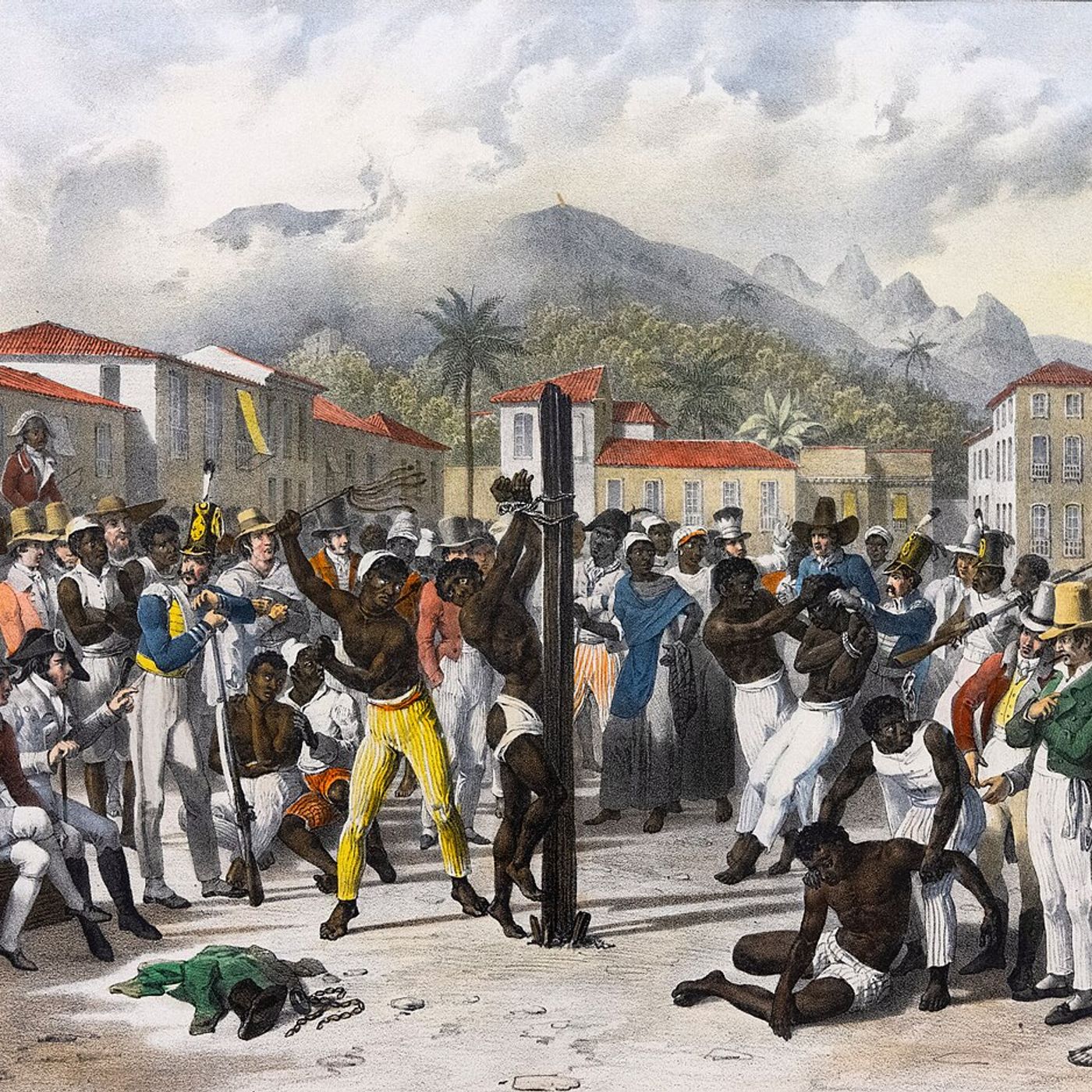
History, Medieval and early modern Europe. Medieval Spain and Portugal were the scene of almost constant Muslim invasion of the predominantly Christian area. Periodic raiding expeditions were sent from Al-Andalus to ravage the Iberian Christian kingdoms, bringing back booty and slaves. In a raid against Lisbon in 1189, for example, the Almohad caliph Yaqub al-Mansur took 3,000 female and child captives, while his governor of Córdoba, in a subsequent attack upon Silves, Portugal, in 1191, took 3,000 Christian slaves. From the 11th to the 19th century, North African Barbary Pirates engaged in raids on European coastal towns to capture Christian slaves to sell at slave markets in places such as Algeria and Morocco. The maritime town of Lagos was the first slave market created in Portugal (one of the earliest colonizers of the Americas) for the sale of imported African slaves – the Mercado de Escravos, opened in 1444. In 1441, the first slaves were brought to Portugal from northern Mauritania. By 1552, black African slaves made up 10% of the population of Lisbon. In the second half of the 16th century, the Crown gave up the monopoly on slave trade, and the focus of European trade in African slaves shifted from import to Europe to slave transports directly to tropical colonies in the Americas – especially Brazil. In the 15th century one-third of the slaves were resold to the African market in exchange of gold. Until the late 18th century, the Crimean Khanate (a Muslim Tatar state) maintained a massive slave trade with the Ottoman Empire and the Middle East. The slaves were captured in southern Russia, Poland-Lithuania, Moldavia, Wallachia, and Circassia by Tatar horsemen and sold in the Crimean port of Kaffa. About 2 million mostly Christian slaves were exported over the 16th and 17th centuries until the Crimean Khanate was destroyed by the Russian Empire in 1783. In Kievan Rus and Muscovy, slaves were usually classified as kholops. According to David P. Forsythe, "In 1649 up to three-quarters of Muscovy's peasants, or 13 to 14 million people, were serfs whose material lives were barely distinguishable from slaves. Perhaps another 1.5 million were formally enslaved, with Russian slaves serving Russian masters." Slavery remained a major institution in Russia until 1723, when Peter the Great converted the household slaves into house serfs. Russian agricultural slaves were formally converted into serfs earlier in 1679. Slavery in Poland was forbidden in the 15th century; in Lithuania, slavery was formally abolished in 1588; they were replaced by the second serfdom. In Scandinavia, thralldom was abolished in the mid-14th century. During the Age of Enlightenment, individuals, whether religious or not, held diverse and inconsistent beliefs about race and slavery and despite discussions on individual rights and freedoms; slavery was not abolished, but expanded significantly. The secular enlightenment allowed for scientific racism to emerge as a basis for slavery. It allowed for coexistence of conflicting views on the moral status of black enslavement and the inferior physical status of those people being enslaved, based on the science at the time. The theory of polygenesis (multiple independent human origins) generally lead to support or symapathy with slavery and this was used by nonreligious individuals to counter religious theories of monogenesis (single origin to one couple). Wikipedia: Creative Commons Attribution-ShareAlike 4.0 License.This episode includes AI-generated content.
Embed this episode
NOW PLAYING
46 - History, Medieval and early modern Europe.
No transcript for this episode yet
Similar Episodes
No similar episodes found.