
EPISODE · May 19, 2026 · 12 MIN
50 - Abolitionism.
from Slavery. · host Popular Culture and Religion.
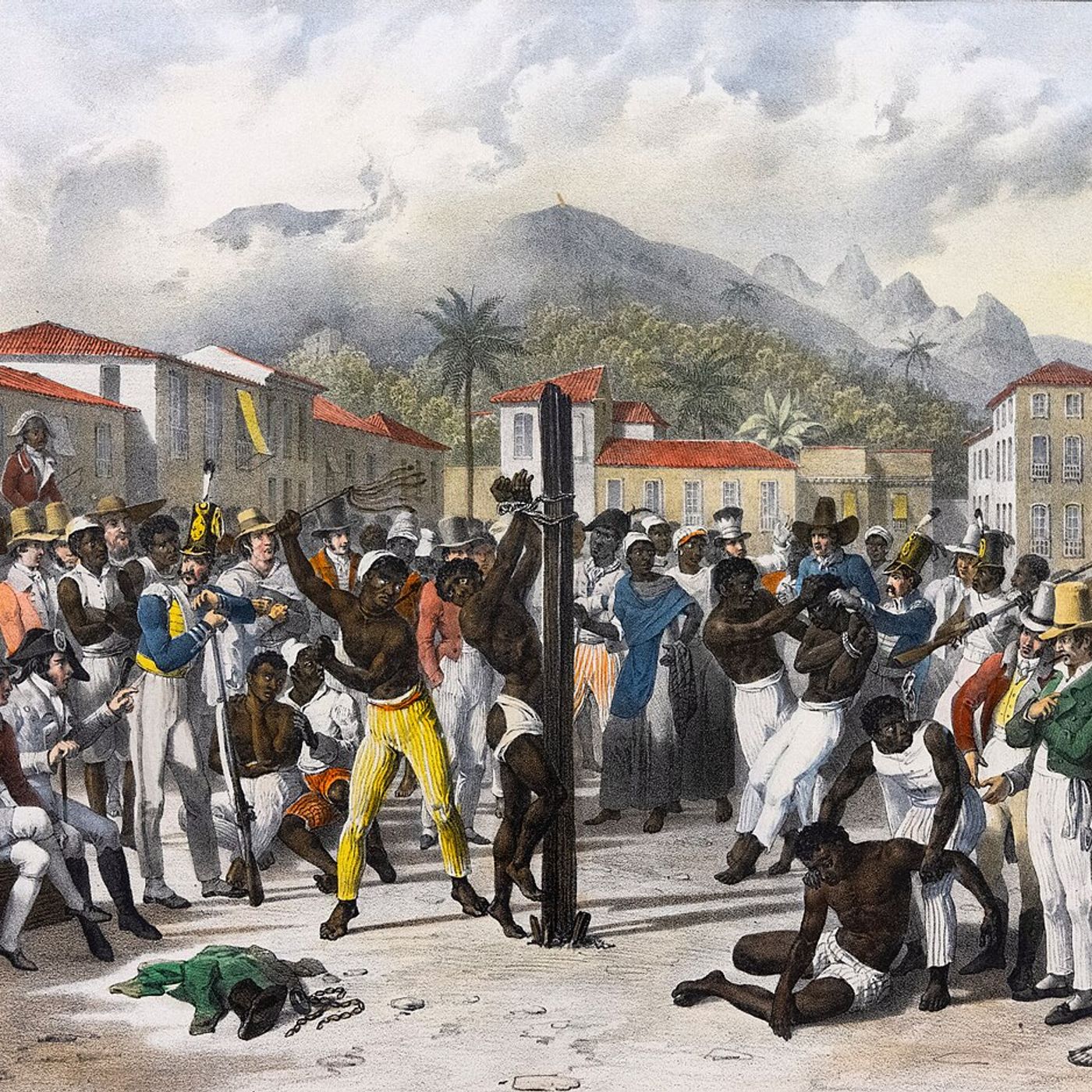
Abolitionism. Slavery has existed, in one form or another, throughout recorded human history – as have, in various periods, movements to free large or distinct groups of slaves. In antiquity. Emperor Ashoka, who ruled the Maurya Empire in the Indian subcontinent from 269 to 232 BCE, abolished the slave trade but not slavery. The Qin dynasty, which ruled China from 221 to 206 BCE, abolished slavery and discouraged serfdom. However, many of its laws were overturned when the dynasty was overthrown. Slavery was again abolished by Wang Mang in China in 17 CE but was reinstituted after his assassination. Americas. The Spanish colonization of the Americas sparked a discussion about the right to enslave Native Americans. A prominent critic of slavery in the Spanish New World colonies was the Spanish missionary and bishop, Bartolomé de las Casas, who was the first to document the European maltreatment of and cruelty towards American natives. In the United States, all of the northern states had abolished slavery by 1804, with New Jersey being the last to act. Abolitionist pressure produced a series of small steps towards emancipation. After the Act Prohibiting Importation of Slaves went into effect on January 1, 1808, the importation of slaves into the United States was prohibited, but not the internal slave trade, nor involvement in the international slave trade externally. Legal slavery persisted outside the northern states, but abolitionists took an active role in opposing slavery by supporting the Underground Railroad, and violent clashes between anti-slavery and pro-slavery Americans occurred, including in Bleeding Kansas, a series of political and armed disputes in 1854–1858 as to whether Kansas would join the United States as a slave or free state. By 1860, the total number of slaves reached almost four million, and the American Civil War, beginning in 1861, led to the end of slavery in the United States. Slaves in areas controlled by the Confederacy were legally emancipated in 1863, when Lincoln issued the Emancipation Proclamation, and slavery was banned nationwide, except as punishment for a crime, in 1865, with the ratification of the 13th Amendment to the U.S. Constitution. Many of the freed slaves became sharecroppers and indentured servants. In this manner, some became tied to the very parcel of land into which they had been born a slave having little freedom or economic opportunity because of Jim Crow laws which perpetuated discrimination, limited education, promoted persecution without due process and resulted in continued poverty. Fear of reprisals such as unjust incarcerations and lynchings deterred upward mobility further. Europe. France abolished slavery in 1794 during the Revolution, but it was restored in 1802 under Napoleon. It has been asserted that, before the Revolution, slavery was illegal in metropolitan France (as opposed to its colonies), but this has been refuted. One of the most significant milestones in the campaign to abolish slavery throughout the world occurred in England in 1772, with British Judge Lord Mansfield, whose opinion in Somersett's Case was widely taken to have held that slavery was illegal in England. This judgement also laid down the principle that slavery contracted in other jurisdictions could not be enforced in England. The last person to be deemed a slave in a British court was Bell (Belinda) who was transported to the Americas in 1772 as a "slave for life" by a Perth court. Sons of Africa was a late 18th-century British group that campaigned to end slavery. Its members were Africans in London, freed slaves who included Ottobah Cugoano, Olaudah Equiano and other leading members of London's black community. It was closely connected to the Society for Effecting the Abolition of the Slave Trade, a non-denominational group founded in 1787, whose members included Thomas Clarkson. British Member of Parliament William Wilberforce led the anti-slavery movement in the United Kingdom, although the groundwork was an anti-slavery essay by Clarkson. Wilberforce was urged by his close friend, Prime Minister William Pitt the Younger, to make the issue his own and was also given support by reformed Evangelical John Newton. The Slave Trade Act was passed by the British Parliament on March 25, 1807, making the slave trade illegal throughout the British Empire, Wilberforce also campaigned for abolition of slavery in the British Empire, which he lived to see in the Slavery Abolition Act 1833. After the 1807 act abolishing the slave trade was passed, these campaigners switched to encouraging other countries to follow suit, notably France and the British colonies. Between 1808 and 1860, the British West Africa Squadron seized approximately 1,600 slave ships and freed 150,000 Africans who were aboard. Action was also taken against African leaders who refused to agree to British treaties to outlaw the trade, for example against "the usurping King of Lagos", deposed in 1851. Anti-slavery treaties were signed with over 50 African rulers. Worldwide. In 1839, the world's oldest international human rights organization, Anti-Slavery International, was formed in Britain by Joseph Sturge, which campaigned to outlaw slavery in other countries. There were celebrations in 2007 to commemorate the 200th anniversary of the abolition of the slave trade in the United Kingdom through the work of the British Anti-Slavery Society. In the 1860s, David Livingstone's reports of atrocities within the Arab slave trade in Africa stirred up the interest of the British public, reviving the flagging abolitionist movement. The Royal Navy throughout the 1870s attempted to suppress "this abominable Eastern trade", at Zanzibar in particular. In 1905, the French abolished indigenous slavery in most of French West Africa. On December 10, 1948, the United Nations General Assembly adopted the Universal Declaration of Human Rights, which declared freedom from slavery is an internationally recognized human right. Article 4 of the Universal Declaration of Human Rights states: No one shall be held in slavery or servitude; slavery and the slave trade shall be prohibited in all their forms. In 2014, for the first time in history, major leaders of many religions, Buddhist, Hindu, Christian, Jewish, and Muslim met to sign a shared commitment against modern-day slavery; the declaration they signed calls for the elimination of slavery and human trafficking by 2020. The signatories were: Pope Francis, Mātā Amṛtānandamayī, Bhikkhuni Thich Nu Chân Không (representing Zen Master Thích Nhất Hạnh), Datuk K Sri Dhammaratana, Chief High Priest of Malaysia, Rabbi Abraham Skorka, Rabbi David Rosen, Abbas Abdalla Abbas Soliman, Undersecretary of State of Al Azhar Alsharif (representing Mohamed Ahmed El-Tayeb, Grand Imam of Al-Azhar), Grand Ayatollah Mohammad Taqi al-Modarresi, Sheikh Naziyah Razzaq Jaafar, Special advisor of Grand Ayatollah (representing Grand Ayatollah Sheikh Basheer Hussain al Najafi), Sheikh Omar Abboud, Justin Welby, Archbishop of Canterbury, and Metropolitan Emmanuel of France (representing Ecumenical Patriarch Bartholomew.) Groups such as the American Anti-Slavery Group, Anti-Slavery International, Free the Slaves, the Anti-Slavery Society, and the Norwegian Anti-Slavery Society continue to campaign to eliminate slavery. UNESCO has been working to break the silence surrounding the memory of slavery since 1994, through The Slave Route Project. Apologies. On May 21, 2001, the National Assembly of France passed the Taubira law, recognizing slavery as a crime against humanity. Apologies on behalf of African nations, for their role in trading their countrymen into slavery, remain an open issue since slavery was practiced in Africa even before the first Europeans arrived and the Atlantic slave trade was performed with a high degree of involvement of several African societies. The black slave market was supplied by well-established slave trade networks controlled by local African societies and individuals. There is adequate evidence citing case after case of African control of segments of the trade. Several African nations such as the Calabar and other southern parts of Nigeria had economies depended solely on the trade. African peoples such as the Imbangala of Angola and the Nyamwezi of Tanzania would serve as middlemen or roving bands warring with other African nations to capture Africans for Europeans. Several historians have made important contributions to the global understanding of the African side of the Atlantic slave trade. By arguing that African merchants determined the assemblage of trade goods accepted in exchange for slaves, many historians argue for African agency and ultimately a shared responsibility for the slave trade. In 1999, President Mathieu Kérékou of Benin issued a national apology for the central role Africans played in the Atlantic slave trade. Luc Gnacadja, minister of environment and housing for Benin, later said: "The slave trade is a shame, and we do repent for it." Researchers estimate that 3 million slaves were exported out of the Slave Coast bordering the Bight of Benin. President Jerry Rawlings of Ghana also apologized for his country's involvement in the slave trade. The issue of an apology is linked to reparations for slavery and is still being pursued by entities across the world. For example, the Jamaican Reparations Movement approved its declaration and action plan. In 2007, British Prime Minister Tony Blair made a formal apology for Great Britain's involvement in slavery. On February 25, 2007, the Commonwealth of Virginia resolved to 'profoundly regret' and apologize for its role in the institution of slavery. Unique and the first of its kind in the U.S.....Wikipedia: Creative Commons Attribution-ShareAlike 4.0 License.This episode includes AI-generated content.
Embed this episode
What this episode covers
Abolitionism. Slavery has existed, in one form or another, throughout recorded human history – as have, in various periods, movements to free large or distinct groups of slaves. In antiquity. Emperor Ashoka, who ruled the Maurya Empire in the Indian subcontinent from 269 to 232 BCE, abolished the slave trade but not slavery. The Qin dynasty, which ruled China from 221 to 206 BCE, abolished slavery and discouraged serfdom. However, many of its laws were overturned when the dynasty was overthrown. Slavery was again abolished by Wang Mang in China in 17 CE but was reinstituted after his assassination. Americas. The Spanish colonization of the Americas sparked a discussion about the right to enslave Native Americans. A prominent critic of slavery in the Spanish New World colonies was the Spanish missionary and bishop, Bartolomé de las Casas, who was the first to document the European maltreatment of and cruelty towards American natives. In the United States, all of the northern states had abolished slavery by 1804, with New Jersey being the last to act. Abolitionist pressure produced a series of small steps towards emancipation. After the Act Prohibiting Importation of Slaves went into effect on January 1, 1808, the importation of slaves into the United States was prohibited, but not the internal slave trade, nor involvement in the international slave trade externally. Legal slavery persisted outside the northern states, but abolitionists took an active role in opposing slavery by supporting the Underground Railroad, and violent clashes between anti-slavery and pro-slavery Americans occurred, including in Bleeding Kansas, a series of political and armed disputes in 1854–1858 as to whether Kansas would join the United States as a slave or free state. By 1860, the total number of slaves reached almost four million, and the American Civil War, beginning in 1861, led to the end of slavery in the United States. Slaves in areas controlled by the Confederacy were legally emancipated in 1863, when Lincoln issued the Emancipation Proclamation, and slavery was banned nationwide, except as punishment for a crime, in 1865, with the ratification of the 13th Amendment to the U.S. Constitution. Many of the freed slaves became sharecroppers and indentured servants. In this manner, some became tied to the very parcel of land into which they had been born a slave having little freedom or economic opportunity because of Jim Crow laws which perpetuated discrimination, limited education, promoted persecution without due process and resulted in continued poverty. Fear of reprisals such as unjust incarcerations and lynchings deterred upward mobility further. Europe. France abolished slavery in 1794 during the Revolution, but it was restored in 1802 under Napoleon. It has been asserted that, before the Revolution, slavery was illegal in metropolitan France (as opposed to its colonies), but this has been refuted. One of the most significant milestones in the campaign to abolish slavery throughout the world occurred in England in 1772, with British Judge Lord Mansfield, whose opinion in Somersett's Case was widely taken to have held that slavery was illegal in England. This judgement also laid down the principle that slavery contracted in other jurisdictions could not be enforced in England. The last person to be deemed a slave in a British court was Bell (Belinda) who was transported to the Americas in 1772 as a "slave for life" by a Perth court. Sons of Africa was a late 18th-century British group that campaigned to end slavery. Its members were Africans in London, freed slaves who included Ottobah Cugoano, Olaudah Equiano and other leading members of London's black community. It was closely connected to the Society for Effecting the Abolition of the Slave Trade, a non-denominational group founded in 1787, whose members included Thomas Clarkson. British...
Ready to play
50 - Abolitionism.
No transcript for this episode yet
Similar Episodes
No similar episodes found.