
EPISODE · May 8, 2026 · 13 MIN
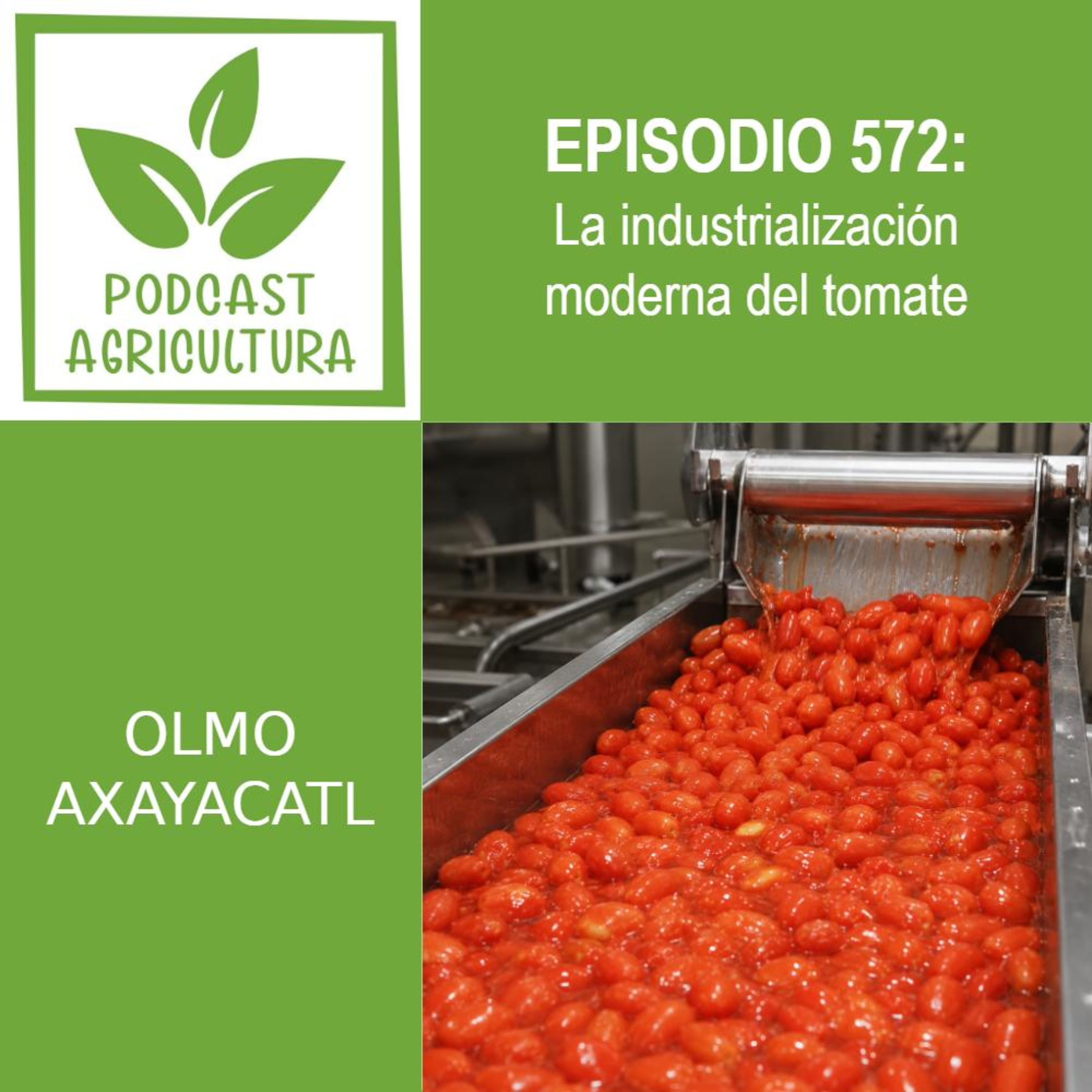
572 La industrialización moderna del tomate
from Podcast Agricultura · host Olmo Axayacatl
La domesticación moderna del tomate transformó por completo la agricultura y la industria alimentaria global. El jitomate que hoy termina convertido en salsa, pasta, catsup o puré fue diseñado para soportar cosechas mecanizadas, transporte intensivo y procesamiento industrial a gran escala. Detrás de ese cambio hubo décadas de selección genética y desarrollo tecnológico.Durante los años cuarenta y cincuenta, investigadores de California comenzaron a desarrollar variedades capaces de resistir máquinas cosechadoras sin destruirse. El objetivo no era mejorar el sabor, sino crear frutos uniformes, resistentes y con maduración simultánea. Ese proceso cambió la manera en que el mundo produce jitomate hasta la actualidad.La agricultura industrial moderna depende de características muy específicas como altos grados Brix, piel gruesa, pulpa firme y resistencia mecánica. Estas cualidades permiten reducir costos de procesamiento, optimizar transporte y aumentar la eficiencia en plantas industriales dedicadas a productos derivados del tomate.California, China e Italia dominan actualmente el mercado mundial del tomate de procesamiento. Las decisiones de producción en estas regiones afectan precios internacionales, exportaciones, cadenas de suministro y disponibilidad de productos alimentarios en decenas de países alrededor del mundo.La historia del tomate industrial también revela cómo la mecanización agrícola, la genética vegetal y la logística alimentaria redefinieron la producción global de alimentos, creando sistemas altamente eficientes que hoy sostienen gran parte del consumo alimentario contemporáneo.Escucha Agricultura Profesional:https://open.spotify.com/show/2ZuOW2DhD7PK4SM33gtFWy?si=e33021063a114550--Créditos musicales:INTROMusic from #Uppbeat (free for Creators!):https://uppbeat.io/t/kevin-graham/53License code: 62TIV9S8Q1XCM65WOUTROMusic from #Uppbeat (free for Creators!):https://uppbeat.io/t/ra/let-good-times-rollLicense code: KUSUTAITXDLYUTHQ--Fuentes consultadas:Gordie C. Hanna. Wikipedia / UC Davis News — Historia del desarrollo del VF145 y la cosechadora mecánica UC-Blackwelder. Fecha de designación como landmark histórico por la American Society of Agricultural and Biological Engineers: octubre 2003. Fuente: https://www.ucdavis.edu/news/uc-tomato-harvester-designated-historic-landmarkBoom California — "Thinking Through the Tomato Harvester" (2013). Análisis histórico profundo de las motivaciones humanas detrás del desarrollo de la cosechadora, con contexto sobre William Friedland y la sociología de la mecanización agrícola. Fuente: https://boomcalifornia.org/2013/06/24/thinking-through-the-tomato-harvester/The Henry Ford Blog — "Contradictory Impacts: Mechanizing California's Tomato Harvest" (2021). Sobre el impacto social de la mecanización y la conexión con el fin del Programa Bracero. Fuente: https://www.thehenryford.org/explore/blog/contradictory-impacts-mechanizing-californias-tomato-harvestWorld Processing Tomato Council / Morning Star Company — Estadísticas globales de producción 2024-2025. California: ~24% de producción global. Morning Star: mayor procesadora mundial con 4 millones de toneladas en 2024. Fuente: https://www.morningstarco.com/2026-global-tomato-production-outlook-brief-china-italy-and-california/Scielo Argentina — "Mejoramiento de la calidad del fruto por la incorporación de genes de especies silvestres en el tomate (Solanum lycopersicum L.)" — Sobre la reducción de diversidad genética como consecuencia de la selección para cosecha mecánica y el uso de especies silvestres para recuperar resistencias. Fuente: https://www.scielo.org.ar/scielo.php?script=sci_arttext&pid=S1852-62332021000300041
Embed this episode
NOW PLAYING
572 La industrialización moderna del tomate
No transcript for this episode yet
Similar Episodes
No similar episodes found.
Similar Podcasts
No similar podcasts found.