Do you keep peering podcast ads like this one, for example? But always wonder how you actually get involved with them for your own brand or organization? Well, it's easier than you think. We're Acast, and we give you the platform to do it all yourself.
Browse thousands of popular podcasts. Choose the shows that match your perfect audience, set your budget, and launch. And if you want to hand, our podcast specialists are there to help you launch with confidence. This is Podcast Advertising Without Barriers.
Get started at acast.com slash advertise. And finally, it is time. I want to apologize beforehand if you find mine or David's English to be subpar. In that case, please blame me.
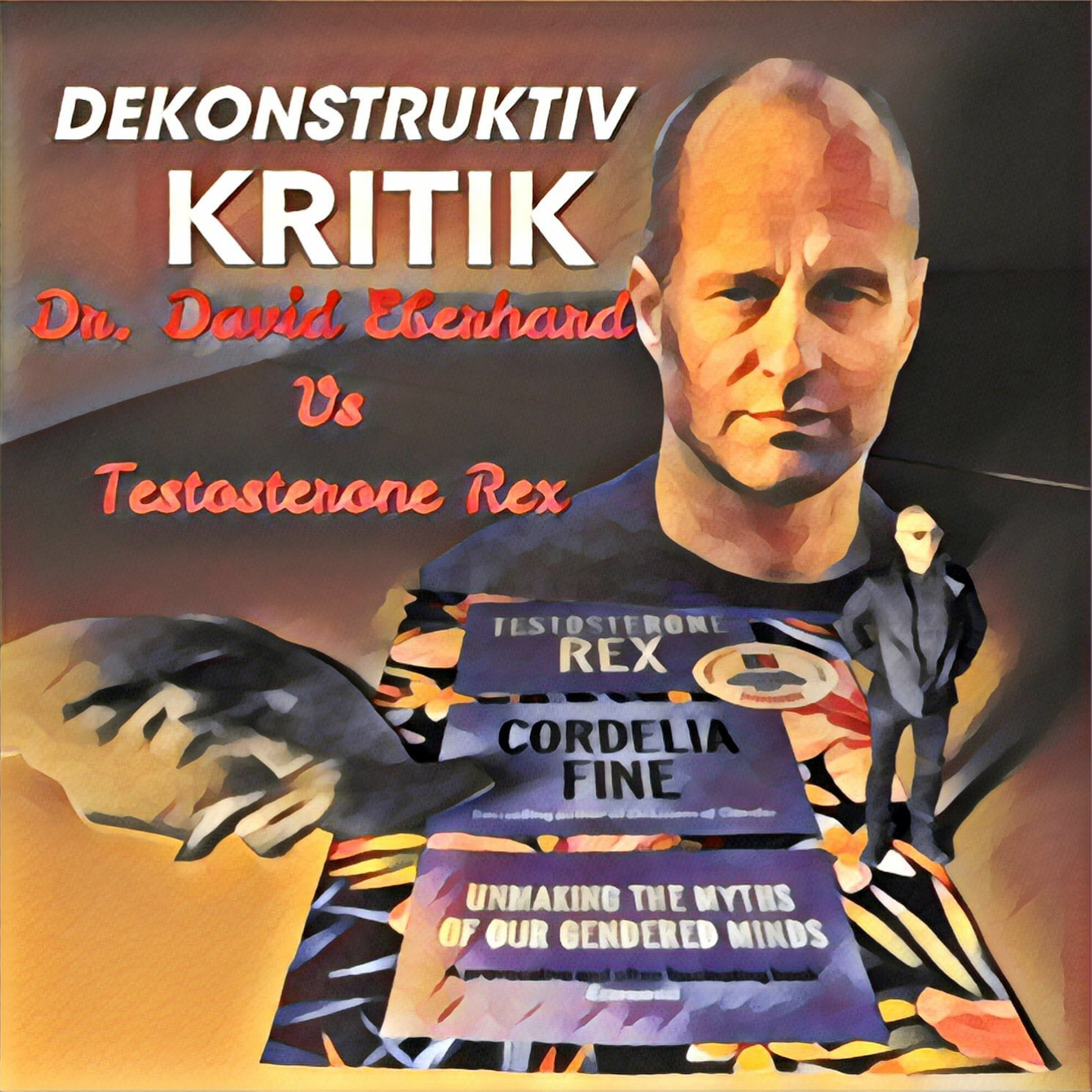
I thought it important to record this conversation in English, even though we both have Swedish as our native tongue, for the simple reason that Cordelia finds book was written in English. We read it in English, and the subject concerns more than just our Swedes. And since David is a medical doctor with some experience in the field of biology and a psychiatrist with some insight into the mine, I thought it important that his voice be heard. Personally, I'm not a scientist, and where I and David disagree here is on language.
He finds Cordelia finds book rhetorically brilliant. I do not. Maybe it's because as a comedian, I'm fairly used to using words as slide to hand. And that's my biggest problem with her book.
But before we go on, I'd like to thank you for being a patreon, swishing me atSL – Apj Islands – r pages on Tel Aviv – not fuel via search withkaros.com, nor Share your free visit. Or donating bitcoins to the address is written below in the description to this episode. Thank you. Your contribution is appreciated and put to good use.
Maybe not in this case, since some of your money... Cordelia finds the utimes for the interest of the Heliocentric World View as though she's poking a female version of the Catholic Church. What I'm trying to say to say is that I had to use some of your money to pay for her book. But if that is what it takes for people to realize they are being flim-flam than so be it.
In conclusion, I thank you and I'm sure that Cordelia Fine is even more grateful. And so let's listen to me and David discuss it as best we can. Enjoy. So welcome back to deconstructive criticism, David Eberhard.
Thank you. Is that how I pronounce it in English? I don't know. I suppose so.
Because we've pulled calls to be four. Eberhard, maybe. Eberhard. Maybe.
Eberhard. Both sounds equally cool or strange. But we've pulled calls to it before. Yes, every time.
Yes. Normally we do it in Swedish. Yes. But now it seems our podcast will be having maybe international implications.
So we decided to do it in English instead. Yeah, we'll try anyway. Yes. It depends on my English though.
Because I gave you an assignment or we gave each other an assignment to read Cordelia Fine's testosterone recs named Book of the Year by the Royal Society of England, founded in 1660 by some of the most, you know, prestigious scientists. Science in the Newton. Yes. Was a member of the Royal Society.
Charles Darwin was a member of several great scientists. Yes. And now the revolutionary Cordelia Fine. Yeah.
Yes. It is amazing. The book is called Testosterone Recs Are Making the Myths of Our Gendered Minds by Cordelia Fine. And so I think the judges' motivation for naming it Book of the Year is, and I quote, every man and woman should read this book on gender bias.
Testosterone recs is an important yet wickedly witty book about a 21st century, which touches on the current debates around identity and turns everything on its head. Pressingly contemporary, it's the ideal companion read to sit alongside the handmade tale and the power. I haven't heard of the power, but the handmade tale, I watched the show. And it has certain political meanings, one might say.
Yeah. You could do that. Yes. But you've read the book now.
I've read the book, yes. And I must say... And your background is actually from a stem field. I mean, you're a psychiatrist.
I'm a psychiatrist for the International Listener. They don't know. I'm a psychiatrist and I work as the head of staff as a senior consultant in the open ward clinic in Stockholm. And I used to be the head of staff of the Silicon County Psychiatric Emergence Awards.
And I've been working with psychiatry for, I don't know, 20 years. All right. So we can see this as sort of the admittance hearing of Cordelia Fine to your clinic. Yeah.
Because the Guardian, they wrote a raving review of this book. They said this proves with evidence that inequality of the sexes is society is purely cultural, not natural. Yeah. They obviously believe in what Cordelia Fine writes.
And I don't really blame them because they have no prior knowledge of biology. And if you don't have that and you read this book, it's really well written. It's witchy like they wrote it's fun. And she is rhetorically brilliant, I would say.
So it should have a price, but definitely not a price from the Royal Society. It should have a price in journalism or propaganda. A propaganda price. I would totally say this is the book to choose if you have a propaganda price.
Because the problem with the book is that she chooses a lot of, I don't know if we should say this. Personally, my personal, where I would like to start is to say that she starts almost every chapter with a personal anecdote of how she sexually oppresses her children, trying to form them into sociopaths. Yeah. And then exclaiming some sort of joy every time she closes in on success.
Yeah. You could say that. But for me, when I read the book, it's very obvious that she takes the most sort of, it's a straw. She builds up a straw man.
She builds up a straw man in every chapter. She says the bio, the sort of what do you say, the ones that are always, the defenders of what she calls testosterone, rex, is the sort of testosterone is the key. Only the siding factor. The only deciding factor.
Nobody believes that testosterone is the only deciding factor. That's a straw man argument to say. But people, especially biologists, they do believe that testosterone is one of the key factors. Testosterone is a really important factor, but it's not the only factor.
And there's no biologist or no scientist that says that testosterone is the reason why there are different, the only reason why there are differences between men and women. So when she always, she starts with this all the time. And oh, so we saw this was wrong because men may be different in different cultures. And if you look at the evidence from that, you have a lot of researchers brilliantly put in the blank slate by Stephen Pinker or in a nurture assumption by Judy Terris have written about six differences and why we turn out the way we turn out, you can say it's really obvious that around 50% of what makes our traits is defined in about 50% that's genetics.
And about 50% it's environmental factors, but around 40% of those environmental factors are due to unknown factors. Culture could be one of them. Culture is one of them, I would say. But we don't know the impact of it, but it has an impact.
And what she says in this book with how many pages is it? It's around 200 plus pages. 200 plus pages. And what she says is that, yeah, we know that culture has an impact.
So testosterone wrecks is wrong. That's the only thing she says over and over and over again. But that is obvious. Everybody knows this from the beginning.
Yes, but that's not all she does. No, she does a lot more than that. Don't they say something that we all can agree with that sex or biology is not the only thing deciding your personality, for instance. I don't believe that you don't believe that nobody believes that.
And then she jumps to the conclusion that because biology is not the only deciding factor. There's no biology involved. Yes, there's no biology involved. And already in like the first, like in the introduction, page 21, she accuses the scientists that I haven't really heard of before.
So that he emphasizes that people should be free to make counter stereotypical career choices. But he said most people will still be slaves under their biology to the extent that they sometimes choose more stereotypical career choices. Right? Yeah.
So he doesn't disagree with her. But she takes his argument and then she claims that he wants everyone to be different and all the toys in the store for boys and girls to be absolutely different. And then she comes to her conclusion on page 21, at least in the digital version that I bought. And I quote, but if the sexes are essentially different, then equality of opportunity will never lead to equality of outcome.
In equality of opportunity, we already have that in society. She is interested in making society from individual to individual, regardless of sex, sexuality and other preferences completely the same. Yeah. And that's what she said.
That's what this book is all about. And what she does is by saying that there are no differences from the beginning, there's no biological difference. So we could just as well do like this. We could just as well try to have that as a goal.
Yeah. But and then she has a lot of research that she goes, writes about a lot of research. And she always says that, okay, there are some small differences between men and women, which obviously indicates the differences on the population. Like you and I know we've discussed before, we are all individuals.
But what you have to remember is when you compare the sexes, you will find a lot of men that are more female than a lot of women and not women that are more male than men. Yeah. Men that are more female than women and you have a lot of women that are more male than men. So that you will always find.
So you have groups, but the groups don't totally overlap, but they do overlap. And this is nothing new. This is what every researcher knows. But you still can find on a group level differences.
And you find those differences. Well, the only thing that she agrees on is that there are differences when it comes to genitals, which is obvious. She can't obviously say something else. But then she says, well, when it comes to the brain and how the sex almost changed the brain, well, that's a totally different story because you have some people that are more female among men.
Yes. Which is fine. It's not a valid argument against the testosterone report. The testosterone rec.
As she calls it, but that's another mistake she constantly seems to make is she doesn't seem to be able to understand that even if culture is affecting the individual, culture also comes from individuals. So our biology determines culture as much as culture determines biology. Yeah. And that's one of the what you see in all cultures.
You have the same. And actually she says in some parts here that you have different cultures. You have some cultures where you are more show me, mainly chauvinistic than others. And it's also obvious.
But still, even in the cultures where and she finds, you know, she looks around with a looking glass to find one culture, whether it's sort of different. Where the circumstances of environment are so different that they actually affect like the natural order of human genogenomics. There's this blogger called, he calls himself Yale. He wrote a really good blog post about this, which is called, I'll see if I find, it's called a Wide Sexual Selection Matters and why Caudelia finds wrong.
And he has a lot of, she talks a lot about the Bateman's principle. I don't know if you're familiar with Bateman's principle. Yes. The fruit fly guy.
Yeah, the fruit fly guy. And she says, maybe I should explain to the listeners. So there was this guy back in the 40s who had, he was some sort of scientist, where at least he was that as an excuse because he had this huge fetish for how fruit flies mate. And he wants to see them have sex with each other.
So, and he wants to test the rions between the sexes, how much males mate versus how much female mates. And what he came, he came to the conclusion that it is more economically sound for males to try to mate with as many females as possible in order to maximize their chances of getting offspring. While women are more, the more economically sound strategy for them is to be choosier. That is to wait until an appropriate male approaches them.
And then she will decide if she wants to bear his offspring or not. And this is interesting because she has, she writes a lot about Bateman's principle. And really Bateman, he had some experiments that he did not publish, according to Caudelia Fine, which if he had published those, it would be in a totally different story. Yes.
She chooses his work being... By us and unscientific. Yeah, unscientific. Which is really, I would say she has nothing, she has no case doing that in first place.
But the second thing about it is that Bateman's principle, which he doesn't write about in the book, it's replicated 100 in all species, nearly all species. But she writes in the book that it isn't replicated. No, she writes that it is not replicated. But this is totally false.
Bateman's principle is replicated in hundreds of species. So this is... That's what she bases the whole book. Yeah, she tries to tear down the Bateman principle.
She tells down that she thinks she tears down the Bateman principle. And she says, okay, Bateman's principle is not valid. So that's why I say testosterone wrecks is not valid. But how can it then be named the Book of the Year by the Royal Society in England?
It's certainly astonishing. But it also had a lot of... There were a lot of people, biologists and scientists in different places that really have... criticism about this award.
Yes, but I mean that it could be named the Book of the Year just to begin with is kind of a sounding. You tell me, why is this? Politics, I suppose. Or maybe someone is blackmailing the Board of Directors.
Sure. She has something to do with me too, I think. It could have something to do with that. I'm not going to comment on it quite yet.
So she says in the book, on I think it's location 300, so page 36, by 2012 a lengthy table in an academic behavioral ecology journal listed 39 species from across the animal kingdom in which research had established that female promiscuity brings about greater reproductive success. 18 and while in many of these species, this link is nonetheless stronger from males. Sometimes it's equal, for instance, in the yellow pine chipmunk and the wild is doing something something. So this is something she does all the time.
All the time, all the book through, she finds one strange species. Species species. Species species. And says, okay, it doesn't, this applies for all other species, but not for those.
So then we say this is not correct. So she's quite an interesting technique because what she says is, because biology works this way for the dung beetle, biology doesn't matter for humans. That's what she says all the time, for two of them. One of the examples she takes, I think it's not maybe the dung beetle, but there's some beetle where the males have two options.
They can be born without antlers and huge antlers. And so they, the ones with huge antlers, they wrestle other males with huge antlers outside of the big antlers to the big cave that the female digs into the dirt. But then the female is smart and she also digs a side entrance for bugs or males that don't have big antlers. So they can take the side entrance.
So she can breed for strength or intelligence. Yeah. Yeah. Basically.
So there's only two options for the dung beetle male, and it's basically hardwired into its biology. And she takes this as an example of why human biology doesn't matter at all. Yeah. This is, this is so strange.
But it's also, she also, all the book through, she tries to tear down the theory of testosterone recs by saying that, okay, it's not only as a male, you should not only be strong in sort of, that's not the only way to go through with evolutionary. So the country needs to, you need other ways, or it's not only the biggest and strongest that survives, but this is also obvious. It's like Stephen Pinker writes about this in the blank slate that when it comes to humans, and obviously other species as well, but you need different ways evolutionary to survive. One way is you are stronger than the rest.
Another one is like you're more intelligent. A third way is you're more funnier, faster, sympathetic, bigger breasts, smaller breasts, smaller breasts. There's all ways, so different ways. But still we go back to Bateman's principle, you can say it's still the main way of reproducing himself is by trying to get as many as possible.
As many as possible, and the female ways you can't do that, you need to be a picker. Yes, and then she says because of the Bateman principle, this is what she lives for really, that men strive for status, means that women don't strive for status. She completely misunderstands the Bateman principle. Women still strive and compete amongst themselves by higher status males.
So there's still competition and status and rank among females, and she takes this up as if it doesn't exist in the, what she would call the testosterone paradigm. But what I think she does is really she's attacking the foundations of sexual selection, which is not according to her. That's a sub-fairy of natural selection, but not in your theory. But it's not.
It's actually the foundational pillar. Yes, of course. But it's also interesting. I don't know if you remember the part where she talks about or writes about when if you have a female that tells the total stranger, would you like to go to bed with me?
I read it, yes. And I've seen that experiment because you know, we're finding videos online. Yeah. Yeah.
That's really fun because. So let's just go through the experiment first. So some experiments sent out a boy and a girl, separately, film on campus asking people round, I believe they want to have sex with me. The first question was, do you want to go on a date with me?
The second question was, do you want to? Come by my place. Come by my place or something. And the third was, do you want to have sex with me?
And when it came to, do you want to go on a date, there were no, not so many, so much gender differences. It was quite a little bit. But when it came to the last question, you want to have sex with me. You have all, they were all men.
All the men said, yeah, okay. Immediately. Immediately. No, the funny part with this is this is this is amazing, huge difference between men and women.
But the thing Caudelia find us is she explains this by, oh, the women were afraid. That's why. And I'm giving her the benefit of the date. Now, it may very well be that some of the women would like that sex with this guy, but they were afraid.
But still, the difference is so huge. There's no overlap. That's not even more whatsoever. Even more than that.
She doesn't seem to understand that the risk of rape for women is one of the reasons that they have to be more biologically. She chooses it. Yeah. Of course.
So it really works in tandem. Yeah, it really does. And she never, never addresses that. Because she does, she does the trick where she still separates culture and biology.
Yeah. And they are interacting and everyone seems to agree with this. Even by all part of the biologists. And everyone knows this except Caudelia find.
Yes. And I'm guessing I'm still society. Did you? Apparently.
That is quite interesting, by the way. It's really fun because it's the blogger that I talked about. When he writes this blog post, he talks about the Occam razor, which is really the way you should address this book. Because it's like he writes and it's obvious.
You can always find arguments. You can even find arguments for that the earth really actually is flat or that we were created from Adam and Eve. But in order to have this world order to explain that, okay, the world is flat. You have a lot of flaws all the time.
You have things that don't really say it, but you have sort of, okay, it's not the fastest way to the simplest solution. No, no, but if you use Occam's razor, the fastest way to the simple solution is biology matters. Testosterone matters, other sexual hormones matters, other substances, other things, genetics matters. This thing, this is the simplest theory.
And you can always find another theory. But it has a lot of lot of holes all the way through. Like creationism, that earth society, they also have sort of, but they need to say, okay, we explain this by this and this and this. And that's what Kadi Le Fine is doing all the book through.
Yeah, she's argument and by... And she's doing it well, by the way. Yes, you think so. I personally don't think so.
I take offense with this. I take offense with it because I think she does it in a funny way. And I think that's why they like it. No, I think it suits them.
I think it suits them, but this is really what makes this book so bad, because if it would have been written by a person that were not so gifted in the way of writing and lying, they would never have been able to give a surprise. Yes, but I also think that maybe, or at least this is what I want to suspect, is that maybe the members of the Royal Society of England or London or the Royal Society, they've grown really tired of the social constructionist and just getting them to get some evolutionary biology into a text is such a huge win for them. They're willing to give her a prize for it. That's because that's how I felt after a while.
Yeah, but you get so tired when you read it. It's truly amazing. She also, she seems to use the words in short, to just dispel with evidence. Yeah, that's what she does all the time.
I can quote, in short, neither promiscuity nor competition are necessarily the preserve of male reproductive success. But even when she finds species where female barions of reproductive success is greater, it means that females actually can make a profit from fucking round. Yeah, yeah. Even then, the male barions in that species is higher.
Yeah, all the time. Yes. Every time she writes it, she ignores it. She ignores it and she says it disproves the Bateman principle and she comes back to this and every time she disproves herself.
Another fantastic example of the book is when she writes about that male people are more sensation seeking, they're more aggressive, they do more harmful stuff, which is obviously true. I don't know if you're familiar with the Darwin Award. I am quite familiar with it. It's one of the few points of light in my life.
Yeah, Darwin Award is for the listener, doesn't know. I don't know how they phrase it, but it's the best way this year to get rid of yourself, exclude yourself from the gene pool and that's contributing to human development. And it's always men. It's always 100% of the time because men live more dangerous, they take more risks and what clearly a fine says, oh, this is just because you have a narrow way of defining risk.
And then she starts comparing the risk for your life with baking of a souffle. Really? I remember that part. It's so hilarious when she says, okay, maybe men die more from living dangerous lives, but women, they may bake a souffle just before the guests arrive on a big dinner party.
And that's a risk. It's an embarrassment. But what she does with this example is saying, okay, it's different because men wouldn't mind whatsoever if the souffle wasn't puffy enough. So what she really says, her argument is saying that there's a huge difference between men and women from the beginning.
Yes. And that's what's so fascinating because when you come down to her basic points, it seems that she is reinforcing gender stereotypes on every single page she writes. And she's also calling for sexual morals to be revoked. But only for men because she says it's okay with women to be promiscuous, but not men.
Yes, she has. And what's funny is she refers sometimes in her statement critique to Swedish biologists, Mollyn Orking and Inid on her and let them sum it up. And they sum it up like this. Parental care, they know it seems less flexible.
But even this can sometimes vary within the species. For example, in some troops of wild Japanese macarkey monkeys, adult males protect caring room one and two year old infants. So here again, she takes an example from science. So I look these people up because they're Swedish, right?
Yeah. So you sent it to me. Yes. And I mean, it was quite obvious.
Once again, we meet the Swedish state secretariat for gender research. Yeah. Gender religion, you mean? Yes, precisely.
A Swedish government agency who gets 1.7 billion Swedish crowns a year to promote what they call in Swedish, it's called gender science. So it isn't even called gender researcher gender studies. It's actually called science. I know.
Yeah. And it's just a state funded. And so are these biologists. So their work is to say the least suspect.
Yeah. Yeah. And I will include the pictures of these two researchers, if you would like to call them that I certainly wouldn't. I don't know.
In the description of the episode, the episode on Patreon. So in the book, she writes, among other things, she says that I quote, I learned a plethora of words for women who had a lot of sexual partners, like slapper slut, flusie, tramp taut, lose easy, prosie, bi-core, and only one from M. Jigolo, which always seems to carry an air of humorous accomplishments somehow, which is fine. And there are probably fewer words for man who are than there is for female who are.
But I mean, Jigolo is not the only one. Toyboy, fuckboy, man slut. Yeah. She didn't do her research very well there.
Don Quand, Ladykiller, I can go on and on and on. And let's go to the last one, Rapist. So there's basically just a plethora of lies throughout every chapter of this book. Yeah, it is.
It is only based on lies. Or lies and even more, I would say, lack of relevant research that does not go in line with what she wants to say. So she either doesn't know about it, that there is a lot of research done, or she ignores it. No, I don't think she ignores it.
I think she willfully lies because she's painted herself into a corner where her entire income is based upon this lie, all her followers, all her friends, all her relationships are tied up into this lie. That explains why she wrote the book, but it doesn't explain why Royal Society gave her a prize. That is true. I did find the quote, however, quote, from this, we can consider a couple of ideas.
The first is that perhaps an updating of gendered norms of chivalry could usefully be made. So she wants to re-invoke, you know, I guess feudal society, because that's where chivalry comes from. So all right, her next quote here, Solicitune and generosity be redirected to the bedroom instead. The second is that some of the gap between the sexes in enthusiasm for casual sex might close if the event left men sexually frustrated the majority of the time, but women almost invariably enjoyed full sexual release.
Here she's arguing that it would be better if society reversed their roles for casual sex so that men never enjoyed casual sex and women enjoyed full but were cousins every time. Men could never have an orgasm. Okay, good luck. How is she going to do that?
Well, I'll tell you because actually she has a suggestion further down in the last chapter that you wanted me to read extra diligence. Yeah, yes. So in the last chapter, she suggests because it turns out that if you take mice away from their mother and put the father in a cage with the little mouse baby, the father will after a while in the cage start murdering the child or at least parenting the child. So Cordelia finds solution is to put all men in cages and when women have children put the babies in prison with their parents or their fathers.
That would do the trick, I think. Yes, but it is kind of an extreme solution. Yeah, but it is. But most people don't even consider a problem.
That is a fine summary of the book. I would say that there's no problem here. Men and women are different from the beginning. We live together.
It's fine. We have some problems, but if we lock up all men and the women will do whatever they do and we lock them up like you said and then the male will probably if they have a kid in jail, they will take care of the kid. Yes, but this is so strange. It's like they've taken a cue from the Islamists, but then turned it around.
It's like, I'm going to have four wives. I'm going to lock them up. They can never walk outside. They're going to attend for the children.
And in most human society, sure, women did stay home with the children, but they weren't necessarily locked up with the children. They had the fucking privilege to be home with the children. While the man wasn't enjoying male white privilege, he was toiling the field to support his offspring. Often really, other circumstances that were dangerous and dangerous or brutish and short.
And now she wants to reverse all that by taking the worst example of how males have treated females and do the same for all males. Are you sure she wants that? Well, she writes it in her book. I know, but I think you have to give it the benefit of the doubt.
Maybe she just did it rhetorically to be funny. Maybe she's an ideologically dangerous person who doesn't accept rational argument. And when you have presented that, we don't need to argue about that. No, but that's the point.
That's the proper paradox of tolerance. If your opponent doesn't accept rational argument, but still wants to violently reshape society, then you have the right to take up arms against that individual. So in essence, Crudelia Fine has written a book giving me permission to hit her in the head with it. Yeah, I would like to, we don't see what happens if you do.
I would probably be arrested. Probably you would. Which is sexism. Because if there is no biological difference between men and women, there should be no law against me hitting her.
No, of course not, because that is if she wants to imprison me and my child. Yeah, if she wants to imprison you and your child without the mother. That is not implied. That is explicitly written in her book.
Yeah, no, no. Then you may have to defend herself. Obviously, obviously. So in the last chapter that you wanted me to really delve into, she states that the gender development system of psychology and social science, do you keep hearing podcast ads like this one, for example, but always wonder how you actually get involved with them for your own brand or organization?
Well, it's easier than you think. We're Acast and we give you the platform to do it all yourself. Browse thousands of popular podcasts, choose the shows that match your perfect audience, set your budget and launch. And if you want to hand, our podcast specialists are there to help you launch with confidence.
This is podcast advertising without barriers. Get started at acast.com slash advertising. That she is what prenatal testosterone cannot do. She says that social constructivism explains everything that testosterone tries to explain.
Yeah, but once again, she's totally wrong. And we don't need to argue about it because all the research says that she's totally wrong. And she in the last chapter, she goes back to her own arguments in previous chapters all the time to say, like I said in this chapter, like I said in this chapter, but the problem is that she never, never in any of the previous chapters really slaughtered the testosterone paradigm thesis. She never does it.
It still holds. But she just says like we started this conversation with this roman version of arguments where she goes back to say that they're made different. I think she also writes about this where female that have problems with her adrenal glands, G-A-H exactly. And that which is all raised used as a powerful, not proof, but nearly a proof of the difference between men and women.
And she uses it. Twist it. She twisted. Totally reverse it to say that this since there since, you know, I don't know if you're familiar with C-H, it's like these women that have a lot of testosterone, they become more like men.
When they're in utero, when they're in mum's tummy. And they behave more like boys. And this is a quite valid, strong argument saying that testosterone really do matter. But she turns it around in some strange way to say that this is no, it doesn't really.
And I never understood how she did that. Because the only thing she really did was saying, because I say so. Yes. Like I showed.
I'm trying to find the... See if you can find it. Yes. As you might recall from chapter four, C-A-H is a condition in which very high levels of androgens are produced in utero.
And from here, it's just a few short steps to the conclusion that sex inequality is natural and inevitable. But since testosterone, Rex is extinct, we need an other explanation of what's going on. Yes. Can we talk?
In a talk of it. Okay. So this is how she does it. She says, as you might recall from chapter four, C-A-H is a condition in which very high levels of androgens are produced in utero.
And from here, it's just a few short steps to the conclusion that sex inequality is natural and inevitable. But since testosterone, Rex is extinct, we need another explanation. That's so amazing. So what she does is, this is one of many strong cases that support testosterone, Rex.
Yes. But she doesn't even... No, she just jumps over it. Yes.
Okay. Since it is extinct. Because she says so. Yes.
Because I said so. Then I don't need to bother with this little dilemma. No. This is the case.
Yes. It's so amazing. And so... And she does that all the time.
She comes to conclusion in the book that apparently we're all for sex equality. Okay. Yeah. And I think she's right.
Yeah. That started the book by saying she's for equality of outcome, not gender equality, which is something completely different. Yes. But what she states is, it could take 100 years or more for this change to actually take place.
So we have to settle for a half-changed world, the one we live in now, where women and men have equal opportunities. But they don't to a 50, 50 degree degree become engineers or nurses. Perfect. So we have discussed this in Swedish, you and I.
Yes. We have a quality principle. And you discussed it with Härädaia. Yes.
And Kristina of Summers. And Kristina of Summers. And Brandon O'Neill. And Brandon O'Neill, I know.
Yeah. So you've discussed it a lot. So you don't need to go into that. I think you as a listener by now know the difference between gender equity and gender equality.
So anyway, she states that if neither of these options of just waiting and see, that's my addendum, is appealing, then maybe it's time, and these are her words, to be less polite and more disruptive. Like the first and second wave feminists, they weren't always popular. It's true. But look at what they achieved by not asking nicely.
And then she concludes, which of these directions we prefer is up to us. It's a question for our values, not science. But that evolving science is showing that one time honored option is no longer available to us. It's time to stop blaming testosterone wrecks because that king is dead.
So she hasn't disproved testosterone wrecks. She decided before she set out that testosterone is not the defining factor in sex or gender difference. And she states that in the beginning of the book. And that's an extremely unscientific way to start the book.
Because you reach your conclusion before. That's the way gender theory always is, that they say, like gender theory is based on the axiom, axiom that there's no all differences between men and women are social constructs. There are no biological differences. That's what they say.
The starting point of gender theory. And that's what she does as well. Yes. The problem is that that's not how it's, that's not what research says.
That's what gender religion says. But you admire this book anyway, as a sort of a intellectual acrobatics. I admire the book because it's, it's so obviously wrong from page one to page 220. And if you and I would not have the know the things that we knew before we read the book, it would have been, it would sound really convincing.
So it is a book that should have a price for, like you said, propaganda prices. It's really an amazing piece of propaganda. I see. I don't know if you agree, because I totally agree that this is a terrible book.
I think it's just because it is so well-written. That's the, that's the worst part of the book. If it were like many of the Swedish gender religious, not cases, not cases would have written it. It would, it would not be troublesome, but it is a troublesome book because it's really well-written.
It's really funny in parts as well. Yes. She at one point she refers to the family dog and says it's going to die. And she toys with the idea of castrating it and using its balls as a key chain ring.
Yeah, I know. That sounds like a very funny person who you would like to hang around. I would say that this person is, if it would have been a man who had that kind of joke, you would call him a psycho. Without a doubt.
And a lot of the prescriptions she prescribes or at least a lot of the solutions she prescribes are obviously authoritarian or collectivist. But she gets away with it by being a woman. I think she does. So that's where one of the sex differences between men and women actually work to a woman's advantage.
Extreme advantage. And I think it might be biologic. So do I. Thank you for coming.
Thank you. Thank you for listening to me and my guest David Eberhardt. This podcast is called Deconstructed Criticism but in Swedish. So it's really the constructive tiktik.
And links to David's personal finds book and the articles mentioned can be found below the episode on Patreon. Thank you for being a patron, switching me at 076-894-3737-07689-4737 or donating bitcoins to the address written below in the description to this episode. I also want to remind you that it is per your request that I made t-shirts to symbolize the spirit of this podcast. A red t-shirt with the upbeat message crush socialism written in Swedish across the chest and the clarification socialism is evil dotted with a heart on the back by one.
Remember that with every purchase being an active act of capitalism we get closer to crushing socialism for good. There's also a blue t-shirt with Deconstratee Critic and this podcast slogan your feelings are hurting my thoughts written on the chest. They are fantastically stylish if you ask me. So please go into my webpage www.aronfland.com slash merchandise and buy one or two.
Until you hear from me next have a good unit of time. You keep hearing podcast ads like this one for example but always wonder how you actually get involved with them for your own brand or organization? Well it's easier than you think. We're ACAST and we give you the platform to do it all yourself.
Browse thousands of popular podcasts. Choose the shows that match your perfect audience, set your budget and launch. And if you want to hand our podcast specialists are there to help you launch with confidence. This is podcast advertising without barriers.
Get started at ACAST.com slash advertise.