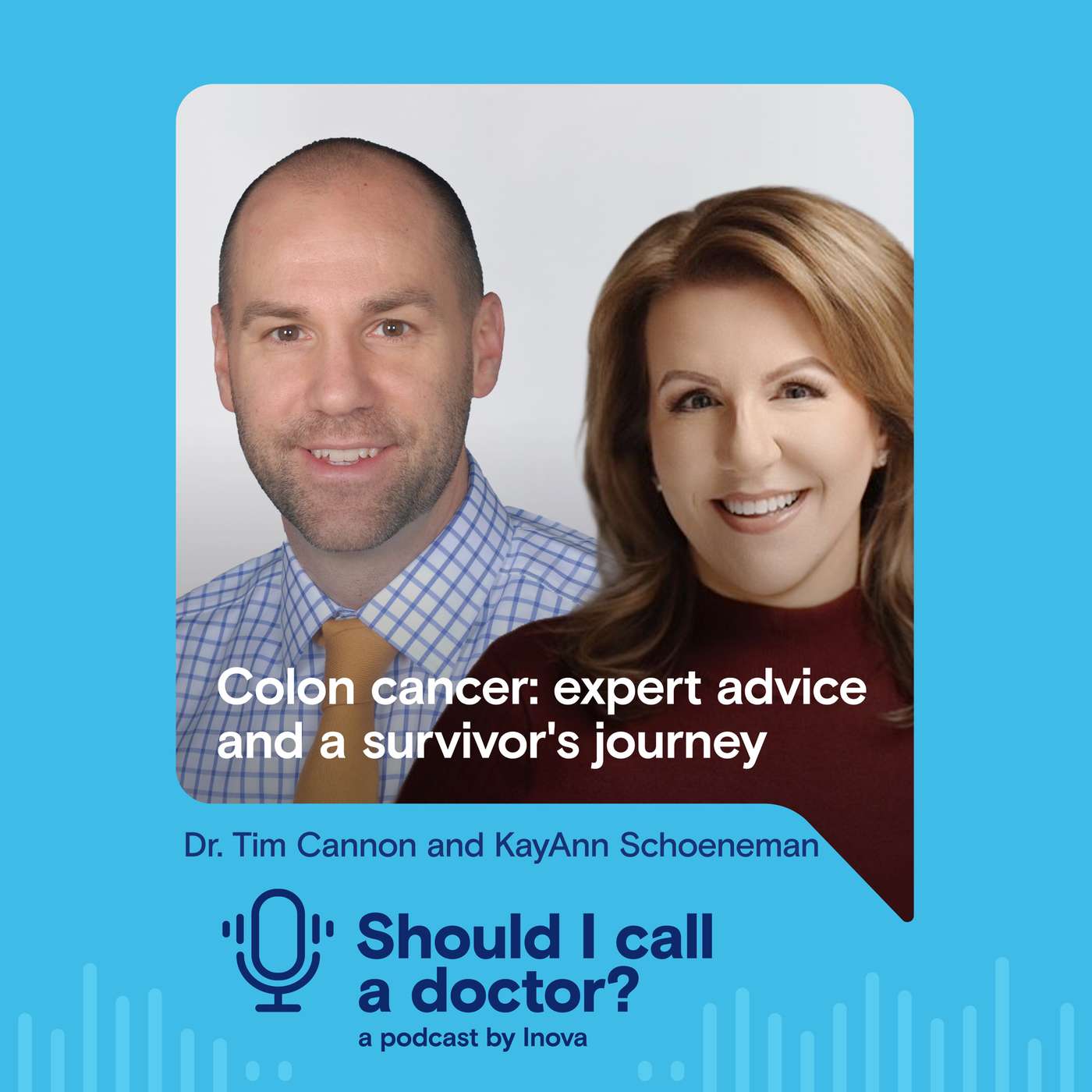
#7: Colon cancer — expert advice and a survivor's journey episode artwork

EPISODE · Mar 26, 2025 · 20 MIN

#7: Colon cancer — expert advice and a survivor's journey

from Should I Call a Doctor? · host Inova

What you’ll learn:In this episode, we're tackling an important topic – colon cancer, particularly its rise in younger adults. We are joined by Tim Cannon, MD, Sheridan Director, Molecular Tumor Board and Co-Director of the Gastrointestinal Cancer Program at Inova. Dr. Cannon breaks down the latest in colon cancer prevention, screening, and clinical research. KayAnn Schoenman, one of Dr. Cannon’s patients, shares her personal journey of being diagnosed with colon cancer at age 40, and becoming an advocate.  With our co-hosts, they discuss the importance of early detection, debunk common myths, and offer hope to those facing a similar battle. Whether you're looking for medical knowledge or personal inspiration, this conversation is one you won’t want to miss. Featured guests: Dr. Tim CannonSheridan Director, Molecular Tumor BoardCo-Director, Gastrointestinal Cancer ProgramInova  KayAnn SchoenmanAdvocate and colon cancer survivor Key takeaways with chapter markers:Young onset colorectal cancer has increased 50% since 1994 [2:20]Key symptoms include bleeding when you go to the bathroom, unexpected weight loss, bloating and changes in bowel habits [3:40]Advocating for yourself and finding a provider that really listens is the biggest lesson from KayAnn’s journey [8:29]Cure rate at stage 1 is over 95%, but outcomes change dramatically from stage 1-4, making early detection critical [10:15]Colon cancer screening is now recommended starting at age 45 [10:45]A colonoscopy can find and remove precancerous polyps before they become cancer [10:50]Family history doesn’t play as big a role as you’d expect in colorectal cancer risk [14:45]Ultramarathoners are another group showing signs of early onset colorectal cancer [18:26]FAQs:Do I need to be screened for colon cancer?Colon cancer screening is recommended for adults ages 45 to 75. Screening can find precancerous polyps, so they can be removed. When found early, colorectal cancer is highly treatable, although in its early stages, colorectal cancer usually presents no symptoms. Symptoms tend to appear as cancer progresses, which is why early screening is vital. What kind of screenings are available?A colonoscopy – a minimally invasive visual examination of the entire colon using a fiber optic camera – is the most comprehensive screening available. Other options include fecal tests, sigmoidoscopies (a visual examination of the lower part of the colon) and virtual colonoscopies (a special X-ray examination of the colon). How can I decrease my risk of colon cancer?You can decrease your colon cancer risk by eating a healthy diet, knowing your family history, having genetic testing, if indicated, getting screened as directed by your provider, exercising regularly, maintaining a healthy weight, not smoking and limiting your consumption of alcohol.

What you’ll learn:In this episode, we're tackling an important topic – colon cancer, particularly its rise in younger adults. We are joined by Tim Cannon, MD, Sheridan Director, Molecular Tumor Board and Co-Director of the Gastrointestinal Cancer Program at Inova. Dr. Cannon breaks down the latest in colon cancer prevention, screening, and clinical research. KayAnn Schoenman, one of Dr. Cannon’s patients, shares her personal journey of being diagnosed with colon cancer at age 40, and becoming an advocate.  With our co-hosts, they discuss the importance of early detection, debunk common myths, and offer hope to those facing a similar battle. Whether you're looking for medical knowledge or personal inspiration, this conversation is one you won’t want to miss. Featured guests: Dr. Tim CannonSheridan Director, Molecular Tumor BoardCo-Director, Gastrointestinal Cancer ProgramInova  KayAnn SchoenmanAdvocate and colon cancer survivor Key takeaways with chapter markers:Young onset colorectal cancer has increased 50% since 1994 [2:20]Key symptoms include bleeding when you go to the bathroom, unexpected weight loss, bloating and changes in bowel habits [3:40]Advocating for yourself and finding a provider that really listens is the biggest lesson from KayAnn’s journey [8:29]Cure rate at stage 1 is over 95%, but outcomes change dramatically from stage 1-4, making early detection critical [10:15]Colon cancer screening is now recommended starting at age 45 [10:45]A colonoscopy can find and remove precancerous polyps before they become cancer [10:50]Family history doesn’t play as big a role as you’d expect in colorectal cancer risk [14:45]Ultramarathoners are another group showing signs of early onset colorectal cancer [18:26]FAQs:Do I need to be screened for colon cancer?Colon cancer screening is recommended for adults ages 45 to 75. Screening can find precancerous polyps, so they can be removed. When found early, colorectal cancer is highly treatable, although in its early stages, colorectal cancer usually presents no symptoms. Symptoms tend to appear as cancer progresses, which is why early screening is vital. What kind of screenings are available?A colonoscopy – a minimally invasive visual examination of the entire colon using a fiber optic camera – is the most comprehensive screening available. Other options include fecal tests, sigmoidoscopies (a visual examination of the lower part of the colon) and virtual colonoscopies (a special X-ray examination of the colon). How can I decrease my risk of colon cancer?You can decrease your colon cancer risk by eating a healthy diet, knowing your family history, having genetic testing, if indicated, getting screened as directed by your provider, exercising regularly, maintaining a healthy weight, not smoking and limiting your consumption of alcohol.

NOW PLAYING

#7: Colon cancer — expert advice and a survivor's journey

0:00 20:37

No transcript for this episode yet

We transcribe on demand. Request one and we'll notify you when it's ready — usually under 10 minutes.

MG Show MG Show The MG Show, hosted by Jeffrey Pedersen and Shannon Townsend, is a leading alternative media platform dedicated to uncovering the truth behind today’s most pressing political issues. Launched in 2019, the show has grown exponentially, offering unfiltered insights, comprehensive research, and real-time analysis. With a commitment to independent journalism and factual integrity, the MG Show empowers its audience with knowledge and encourages active participation in the political discourse. Ask A Spaceman Archives - 365 Days of Astronomy Ask A Spaceman Archives - 365 Days of Astronomy Podcasting Astronomy Every Day of the Year French Your Way Jessica: Native French teacher founder of French Your Way Boost your French listening skills and test your comprehension with this one of a kind series of podcasts. Get the chance to listen to a real conversation between native speakers talking at normal speed AND customise your learning experience through carefully designed sets of questions (2 levels of difficulty) available for download at www.frenchvoicespodcast.com. All interviews also come with the transcript. French teacher Jessica interviews native speakers of French from around the world who share a bit of their life and passion. Where else would you meet in one same place a French yoga teacher based in Melbourne, a soap manufacturer from Provence, or a couple cycling around the world? The Small Business Startup School – Business Notes | Financial Literacy | Retail Psychology – For Professionals & Entrepreneurs The Small Business Startup School Inc. Starting or buying a small business? While personal circumstances may vary, business patterns remain timeless. On The Small Business Startup School, we explore strategies, insights, and practical solutions to help entrepreneurs confidently navigate their journey.Hosted by Ola Williams—a retail entrepreneur, fintech founder, and financial coach with over two decades of experience—this podcast marries financial awareness and retail psychology with optimism to deliver actionable takeaways.Join us to learn, grow, and connect as we uncover the keys to business success.Let’s continue to learn together and be encouraged to keep on connecting!

Frequently Asked Questions

How long is this episode of Should I Call a Doctor??

This episode is 20 minutes long.

When was this Should I Call a Doctor? episode published?

This episode was published on March 26, 2025.

What is this episode about?

What you’ll learn:In this episode, we're tackling an important topic – colon cancer, particularly its rise in younger adults. We are joined by Tim Cannon, MD, Sheridan Director, Molecular Tumor Board and Co-Director of the Gastrointestinal Cancer...

Is there a transcript available for this episode?

Yes, a full transcript is available for this episode. You can read the complete transcript on the episode page.

Can I download this Should I Call a Doctor? episode?

Yes, you can download this episode by clicking the download button on the episode player, or subscribe to the podcast in your preferred podcast app for automatic downloads.
URL copied to clipboard!