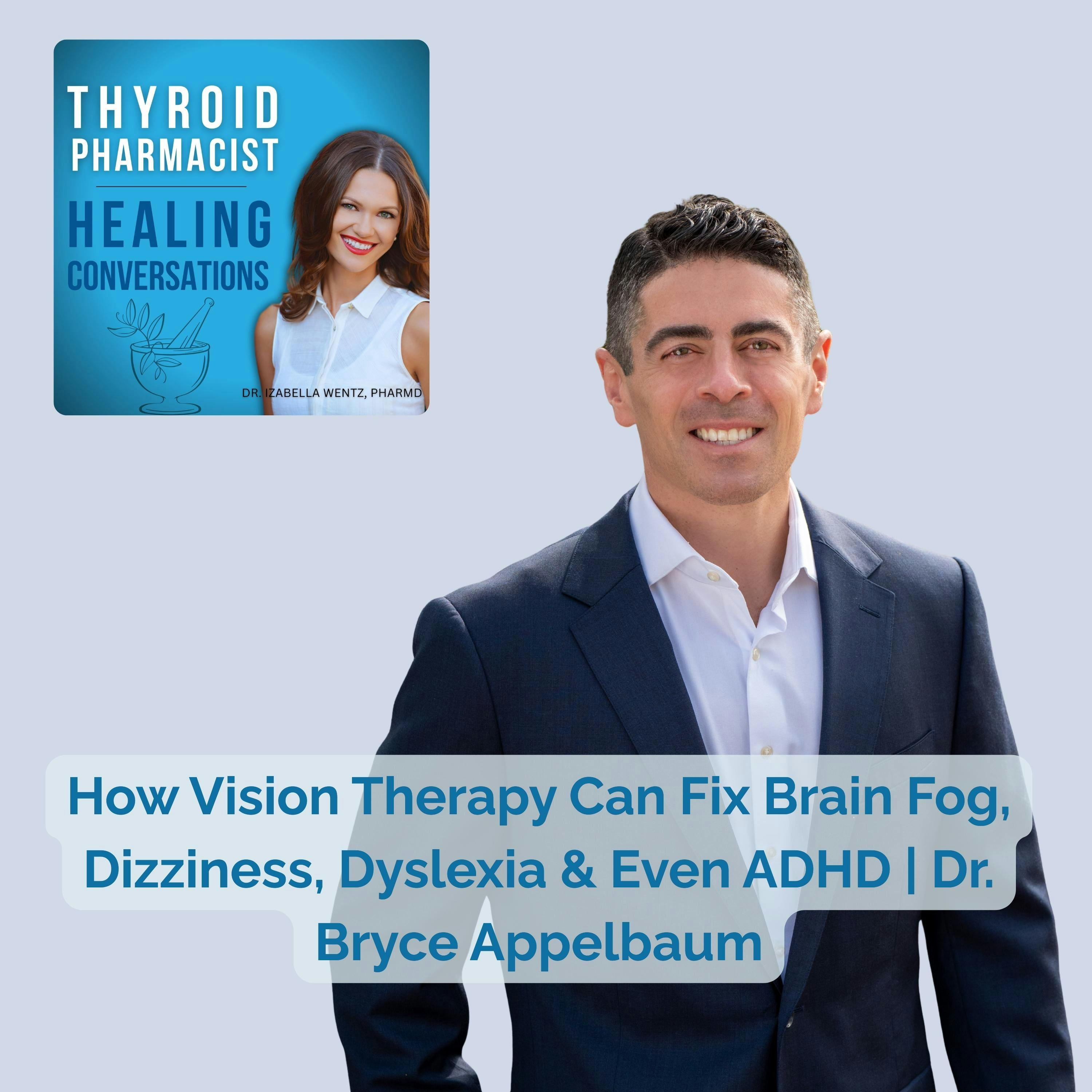
79: How Vision Therapy Can Fix Brain Fog, Dizziness, Dyslexia & Even ADHD | Dr. Bryce Appelbaum episode artwork

EPISODE · Dec 15, 2025 · 1H 14M

79: How Vision Therapy Can Fix Brain Fog, Dizziness, Dyslexia & Even ADHD | Dr. Bryce Appelbaum

from Thyroid Pharmacist Healing Conversations with Dr. Izabella Wentz · host Dr. Izabella Wentz

In this episode of Thyroid Pharmacist Healing Conversations, Dr. Izabella Wentz interviews neuro-optometrist Dr. Bryce Appelbaum about one of the most overlooked drivers of chronic health issues: our vision. Not just how clearly we see, but how our brain interprets visual input. Dr. Appelbaum explains that vision problems often masquerade as ADHD, anxiety, dizziness, and reading struggles, and that retraining the brain through targeted vision therapy can dramatically reduce symptoms. They explore the effect of screen time on the visual system, the shocking number of children misdiagnosed with learning disorders, and how even adults can regain focus, clarity, and spatial orientation. You’ll also learn simple exercises to improve your visual health today, without glasses or surgery. What you’ll learn in this episode: Vision is about brain function, not just eyesight: Vision is a complex brain-driven process involving focus, depth perception, spatial awareness, emotional regulation, and how our eyes coordinate and track. You can have “perfect” 20/20 eyesight yet still experience major visual processing issues that affect learning, attention, movement, and confidence. Functional vision problems can mimic ADHD, anxiety, dyslexia, or clumsiness: Difficulty reading, letter reversals, poor handwriting, focusing challenges, motion sensitivity, or behavioral issues may actually reflect an eye–brain coordination problem. Many children – and adults – are misdiagnosed because standard eye exams only measure clarity, not function. Vision therapy can rewire the brain and resolve symptoms at any age: Vision therapy is like physical therapy for the brain through the eyes. Using targeted, evidence-based exercises, it can strengthen eye coordination, focus, tracking, depth perception, and neural pathways. This helps treat issues related to concussions, dizziness, vertigo, visual intolerance, anxiety in busy environments, driving fears, and more. Screens are reshaping our visual system – and not in a good way: The average adult now spends 7+ hours a day on screens, while many children spend 6+ hours. This strains the visual system, narrows peripheral awareness, reduces blinking, disrupts circadian rhythms, and alters how our brains process information. Dr. Appelbaum shares simple habits – including the 20-20-20 rule and blinking breaks – to prevent visual stress. Simple daily exercises can improve focus, flexibility, and visual comfort: Activities like “eye push-ups,” peripheral awareness training, and eye stretches help strengthen the eye–brain connection and reduce headaches, eye strain, and reading fatigue. These exercises are accessible at any age and can delay or reduce the need for reading glasses. Floaters, headaches, and visual overwhelm may be vision-related – and treatable: Symptoms such as dizziness, nausea, light sensitivity, panic while driving, difficulty with stairs, or overwhelm in grocery stores and crowded environments often have a visual processing root cause. Dr. Appelbaum explains how addressing these issues through functional vision care can restore clarity, comfort, and confidence. Be sure to subscribe to the Thyroid Pharmacist Healing Conversations podcast so you don’t miss an episode! Sign up for the Thyroid Pharmacist Weekly Thyroid Solutions Newsletter here: https://thyroidpharmacist.com/gift/  For the full list of resources and products mentioned in this episode, and to get the full episode transcript, see complete show notes here: https://thyroidpharmacist.com/articles/podcast/ Learn more about your ad choices. Visit megaphone.fm/adchoices

In this episode of Thyroid Pharmacist Healing Conversations, Dr. Izabella Wentz interviews neuro-optometrist Dr. Bryce Appelbaum about one of the most overlooked drivers of chronic health issues: our vision. Not just how clearly we see, but how our brain interprets visual input. Dr. Appelbaum explains that vision problems often masquerade as ADHD, anxiety, dizziness, and reading struggles, and that retraining the brain through targeted vision therapy can dramatically reduce symptoms. They explore the effect of screen time on the visual system, the shocking number of children misdiagnosed with learning disorders, and how even adults can regain focus, clarity, and spatial orientation. You’ll also learn simple exercises to improve your visual health today, without glasses or surgery. What you’ll learn in this episode: Vision is about brain function, not just eyesight: Vision is a complex brain-driven process involving focus, depth perception, spatial awareness, emotional regulation, and how our eyes coordinate and track. You can have “perfect” 20/20 eyesight yet still experience major visual processing issues that affect learning, attention, movement, and confidence. Functional vision problems can mimic ADHD, anxiety, dyslexia, or clumsiness: Difficulty reading, letter reversals, poor handwriting, focusing challenges, motion sensitivity, or behavioral issues may actually reflect an eye–brain coordination problem. Many children – and adults – are misdiagnosed because standard eye exams only measure clarity, not function. Vision therapy can rewire the brain and resolve symptoms at any age: Vision therapy is like physical therapy for the brain through the eyes. Using targeted, evidence-based exercises, it can strengthen eye coordination, focus, tracking, depth perception, and neural pathways. This helps treat issues related to concussions, dizziness, vertigo, visual intolerance, anxiety in busy environments, driving fears, and more. Screens are reshaping our visual system – and not in a good way: The average adult now spends 7+ hours a day on screens, while many children spend 6+ hours. This strains the visual system, narrows peripheral awareness, reduces blinking, disrupts circadian rhythms, and alters how our brains process information. Dr. Appelbaum shares simple habits – including the 20-20-20 rule and blinking breaks – to prevent visual stress. Simple daily exercises can improve focus, flexibility, and visual comfort: Activities like “eye push-ups,” peripheral awareness training, and eye stretches help strengthen the eye–brain connection and reduce headaches, eye strain, and reading fatigue. These exercises are accessible at any age and can delay or reduce the need for reading glasses. Floaters, headaches, and visual overwhelm may be vision-related – and treatable: Symptoms such as dizziness, nausea, light sensitivity, panic while driving, difficulty with stairs, or overwhelm in grocery stores and crowded environments often have a visual processing root cause. Dr. Appelbaum explains how addressing these issues through functional vision care can restore clarity, comfort, and confidence. Be sure to subscribe to the Thyroid Pharmacist Healing Conversations podcast so you don’t miss an episode! Sign up for the Thyroid Pharmacist Weekly Thyroid Solutions Newsletter here: https://thyroidpharmacist.com/gift/  For the full list of resources and products mentioned in this episode, and to get the full episode transcript, see complete show notes here: https://thyroidpharmacist.com/articles/podcast/ Learn more about your ad choices. Visit megaphone.fm/adchoices

NOW PLAYING

79: How Vision Therapy Can Fix Brain Fog, Dizziness, Dyslexia & Even ADHD | Dr. Bryce Appelbaum

0:00 1:14:46

No transcript for this episode yet

We transcribe on demand. Request one and we'll notify you when it's ready — usually under 10 minutes.

MG Show MG Show The MG Show, hosted by Jeffrey Pedersen and Shannon Townsend, is a leading alternative media platform dedicated to uncovering the truth behind today’s most pressing political issues. Launched in 2019, the show has grown exponentially, offering unfiltered insights, comprehensive research, and real-time analysis. With a commitment to independent journalism and factual integrity, the MG Show empowers its audience with knowledge and encourages active participation in the political discourse. Eat to Live Jenna Fuhrman, Dr. Fuhrman Our health is our most precious gift and smart nutrition can change your life. Each month, join Dr. Fuhrman and his daughter, Jenna Fuhrman as they discuss important topics in the world of nutrition. Eat to Live will change the way you eat and think about food. French Your Way Jessica: Native French teacher founder of French Your Way Boost your French listening skills and test your comprehension with this one of a kind series of podcasts. Get the chance to listen to a real conversation between native speakers talking at normal speed AND customise your learning experience through carefully designed sets of questions (2 levels of difficulty) available for download at www.frenchvoicespodcast.com. All interviews also come with the transcript. French teacher Jessica interviews native speakers of French from around the world who share a bit of their life and passion. Where else would you meet in one same place a French yoga teacher based in Melbourne, a soap manufacturer from Provence, or a couple cycling around the world? That Hoarder: Overcome Compulsive Hoarding That Hoarder Hoarding disorder is stigmatised and people who hoard feel vast amounts of shame. This podcast began life as an audio diary, an anonymous outlet for somebody with this weird condition. That Hoarder speaks about her experiences living with compulsive hoarding, she interviews therapists, academics, researchers, children of hoarders, professional organisers and influencers, and she shares insight and tips for others with the problem. Listened to by people who hoard as well as those who love them and those who work with them, Overcome Compulsive Hoarding with That Hoarder aims to shatter the stigma, share the truth and speak openly and honestly to improve lives.

Frequently Asked Questions

How long is this episode of Thyroid Pharmacist Healing Conversations with Dr. Izabella Wentz?

This episode is 1 hour and 14 minutes long.

When was this Thyroid Pharmacist Healing Conversations with Dr. Izabella Wentz episode published?

This episode was published on December 15, 2025.

What is this episode about?

In this episode of Thyroid Pharmacist Healing Conversations, Dr. Izabella Wentz interviews neuro-optometrist Dr. Bryce Appelbaum about one of the most overlooked drivers of chronic health issues: our vision. Not just how clearly we see, but how our...

Can I download this Thyroid Pharmacist Healing Conversations with Dr. Izabella Wentz episode?

Yes, you can download this episode by clicking the download button on the episode player, or subscribe to the podcast in your preferred podcast app for automatic downloads.
URL copied to clipboard!