
EPISODE · Jul 16, 2026 · 49 MIN
A Clean Transition
from Reframe · host Pilotlight
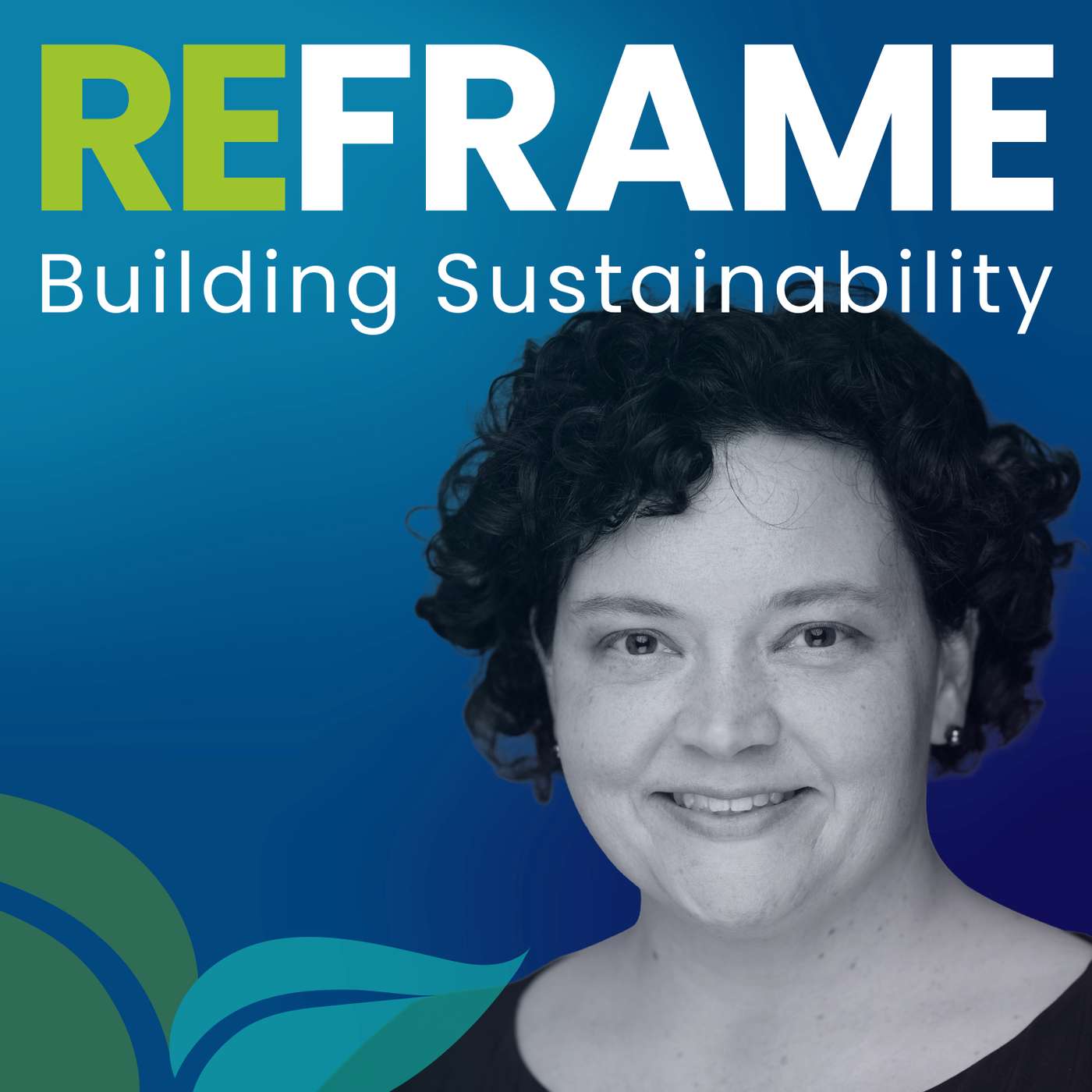
with Erin Hauk For decades, most people have viewed utilities through a simple lens: keep the lights on and the power flowing. But in this episode of Reframe, Erin Hauk, Sustainability Program Manager at Puget Sound Energy, challenges that perception, arguing that utilities are uniquely positioned to become some of the most influential drivers of energy efficiency, building decarbonization, and community-wide sustainability.Erin's journey started far from the utility world. After theater school, she became a Starbucks barista and espresso machine repairer before landing a corporate facilities role during the pandemic. That hands-on experience turned out to be foundational. She explains that building facilities managers who already track preventive maintenance and equipment health are "more than halfway" to compliance with Washington State's Clean Buildings Performance Standard. She says the challenge is rarely operational readiness, but documentation and awareness. This insight shapes how PSE administers its Clean Buildings Accelerator Program, which walks larger Tier 1 and smaller Tier 2 building owners through compliance with one-on-one coaching, virtual scans, and cohort-based support.One of Erin's most compelling observations is that the clean energy transition isn't fundamentally a technology challenge: it's a people challenge. She argues that utilities possess deep technical expertise—citing engineers, usage-pattern data, and established customer relationships that position them to guide the adoption of newer technologies, where consumer awareness often lags what's actually available. She contrasts this with the disjointed experience many building owners face: separate processes for benchmarking, operations and maintenance plans, capital planning, and financing, with no clear throughline. Utilities, she suggests, are well placed to help stitch that journey together because they already sit at the intersection of customer relationships and technical resources.The episode's emotional anchor is Erin's story about a grieving orca mother from the Pacific Northwest, which she says permanently reoriented her toward environmental work. It’s a connection that resurfaces literally in her current role, as PSE balances hydropower generation with salmon and orca population health on the Baker River. She uses this, along with a callback to the 1990s six-pack-ring turtle PSA, to argue that data and compliance mandates alone won't shift behavior. Storytelling and emotional connection are what make sustainability feel urgent and personal.Perhaps Erin's most hopeful message is that the tools needed to build a more sustainable future already exist. The challenge is creating the awareness, trust, and momentum to use them. When utilities embrace their role as educators, conveners, and community partners—not simply energy providers—they become powerful catalysts for change.Erin closes by encouraging listeners weighing a career pivot to look specifically at utilities, describing her move into the industry as a chance to apply corporate strategic thinking toward something bigger than the bottom line, and calling out that "fixed mindsets," not a lack of resources, are the real obstacle to progress.Get more info on Puget Sound Energy’s Clean Buildings Accelerator ProgramLearn about Washington State’s Clean Energy Transformation Act (or CETA)PSE partners with Stillwater Energy to help address energy efficiency and building decarbonization challenges in collaboration with the Washington State Department of Commerce, which offers incentives and grants to building owners required to comply with Washington’s Clean Buildings Performance Standard (CBPS). In the interview, Erin refers to “MIA” or Measure Impact Assessment, which was a program administered by the U.S. Department of Energy’s Office of Energy Efficiency and Renewable Energy (EERE). Note that the U.S. Department of Energy released a new organizational chart in 2025 that removed groups focused on energy efficiency, renewable energy, and reducing carbon emissions, including the EERE.The Reframe podcast is hosted by Jeff Nichols and presented by Pilotlight. If you have questions or feedback for the Reframe team, please email us: [email protected]
What this episode covers
with Erin Hauk For decades, most people have viewed utilities through a simple lens: keep the lights on and the power flowing. But in this episode of Reframe, Erin Hauk, Sustainability Program Manager at Puget Sound Energy, challenges that perception, arguing that utilities are uniquely positioned to become some of the most influential drivers of energy efficiency, building decarbonization, and community-wide sustainability.Erin's journey started far from the utility world. After theater school, she became a Starbucks barista and espresso machine repairer before landing a corporate facilities role during the pandemic. That hands-on experience turned out to be foundational. She explains that building facilities managers who already track preventive maintenance and equipment health are "more than halfway" to compliance with Washington State's Clean Buildings Performance Standard. She says the challenge is rarely operational readiness, but documentation and awareness. This insight shapes how PSE administers its Clean Buildings Accelerator Program, which walks larger Tier 1 and smaller Tier 2 building owners through compliance with one-on-one coaching, virtual scans, and cohort-based support.One of Erin's most compelling observations is that the clean energy transition isn't fundamentally a technology challenge: it's a people challenge. She argues that utilities possess deep technical expertise—citing engineers, usage-pattern data, and established customer relationships that position them to guide the adoption of newer technologies, where consumer awareness often lags what's actually available. She contrasts this with the disjointed experience many building owners face: separate processes for benchmarking, operations and maintenance plans, capital planning, and financing, with no clear throughline. Utilities, she suggests, are well placed to help stitch that journey together because they already sit at the intersection of customer relationships and technical resources.The episode's emotional anchor is Erin's story about a grieving orca mother from the Pacific Northwest, which she says permanently reoriented her toward environmental work. It’s a connection that resurfaces literally in her current role, as PSE balances hydropower generation with salmon and orca population health on the Baker River. She uses this, along with a callback to the 1990s six-pack-ring turtle PSA, to argue that data and compliance mandates alone won't shift behavior. Storytelling and emotional connection are what make sustainability feel urgent and personal.Perhaps Erin's most hopeful message is that the tools needed to build a more sustainable future already exist. The challenge is creating the awareness, trust, and momentum to use them. When utilities embrace their role as educators, conveners, and community partners—not simply energy providers—they become powerful catalysts for change.Erin closes by encouraging listeners weighing a career pivot to look specifically at utilities, describing her move into the industry as a chance to apply corporate strategic thinking toward something bigger than the bottom line, and calling out that "fixed mindsets," not a lack of resources, are the real obstacle to progress.Get more info on Puget Sound Energy’s Clean Buildings Accelerator ProgramLearn about Washington State’s Clean Energy Transformation Act (or CETA)PSE partners with Stillwater Energy to help address energy efficiency and building decarbonization challenges in collaboration with the Washington State Department of Commerce, which offers incentives and grants to building owners required to comply with Washington’s Clean Buildings Performance Standard (CBPS). In the interview, Erin refers to “MIA” or Measure Impact Assessment, which was a program administered by the U.S. Department of Energy’s Office of Energy Efficiency and Renewable Energy (EERE). Note that the U.S. Department of Energy released a new organizational chart in 2025 that removed groups focused on energy efficiency, renewable energy, and reducing carbon emissions, including the EERE.The Reframe podcast is hosted by Jeff Nichols and presented by Pilotlight. If you have questions or feedback for the Reframe team, please email us: [email protected]
NOW PLAYING
A Clean Transition
No transcript for this episode yet