
EPISODE · Apr 25, 2026 · 1H 40M
A KGB Spy and the Conception of South African Democracy
from ARCLIGHT Strategic Insights Podcast · host Arclight
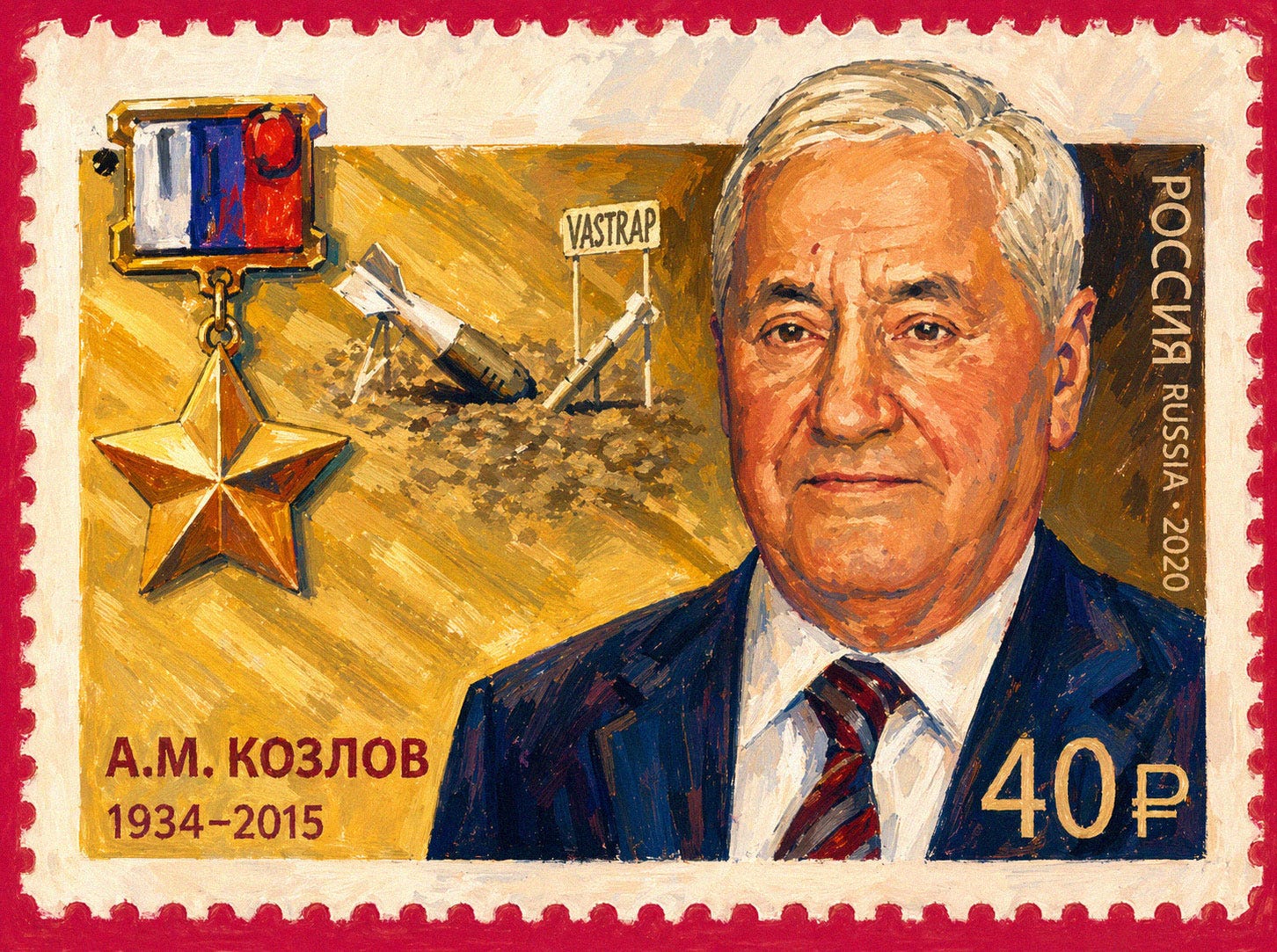
In 1981, a Soviet KGB officer operating under deep cover was arrested in South Africa. Kozlov was an “illegal” — a long-term infiltrator, not an embassy officer under diplomatic cover.South Africa had been involved in capturing Soviet operatives before — as the junior partner. This time, the National Intelligence Service led.The arrest is largely forgotten. Its consequences are not.This is the fourth ARCLIGHT conversation between Andrew Charter and Dr Anthony Turton, and the first to step outside the National Hydraulic Mission series. The focus shifts to the intelligence system that emerged after the Info Scandal — smaller, quieter, and more deliberate.Kozlov sits at the centre of that shift.Kozlov's arrest in July 1980 sits inside a rising curve of MK activity: from the 1982 Koeberg bombing through the 1985 Amanzimtoti attack to the landmine campaign of the late 1980s. The Vastrap test range on the commemorative stamp marks what he was sent to find out. Figure: Dr A.R. Turton, 2026.At the time, the NIS was still establishing itself. It had inherited pieces of a broken system. What it lacked was standing. Counter-espionage provided the test. The successful capture of an illegal changed how other services engaged. Liaison followed. Not political. Service to service.The arrest led to a multi-party spy swap. South Africa had little to trade. Others did. The deal was structured accordingly. Prisoners moved. So did technology.What arrived was practical. Interception capability. Surveillance systems. The means to access and analyse communications at scale.The stamp tells the other half of the story. Vastrap was the airfield near Upington where South Africa’s first nuclear device was to be tested. Part of Kozlov’s mission was to determine how far that programme had gone. The Russians honour their captured agents by placing them on stamps. The background is the mission.At the same time, the structure of intelligence inside the country was being reorganised.Under Dr Neil Barnard, analysis was centralised. Intelligence from across the state was routed through a single channel. A delay was introduced between event and response. Not hesitation. Assessment.The premise was simple. Fast reactions were producing poor outcomes.The new model imposed a pause. Information was tested before action. Patterns mattered more than incidents.The conclusion that followed was not military.If instability is driven by a society confronting an illegitimate state, force does not resolve it. Legitimacy does. The mechanism is constitutional reform.That view was reinforced by what the system could now see.Communications revealed fragmentation, pressure, and limits. The war in Angola was not being decisively won. It was being sustained. On all sides, the cost was rising.Service-to-service contact created a channel where those realities could be acknowledged without posture.It did not replace diplomacy. It preceded it.The Kozlov affair did not end the war. It did not design the transition. It opened a line of contact at a critical moment.In systems like this, that is often enough.ARCLIGHT is a strategic intelligence platform documenting African geopolitics, security, and defence history through long-form dialogue with the operators, engineers, and analysts who were there. This is a public episode. If you would like to discuss this with other subscribers or get access to bonus episodes, visit arclightafrica.substack.com
NOW PLAYING
A KGB Spy and the Conception of South African Democracy
No transcript for this episode yet
Similar Episodes
Mar 26, 2026 ·1m
Jan 2, 2026 ·47m
Dec 21, 2025 ·46m