
EPISODE · Jun 24, 2026 · 23 MIN
AC 05. 《河口之处(一) I》| THE DAY THE RIVER LOOKED UP
from Palimpsest | 行间
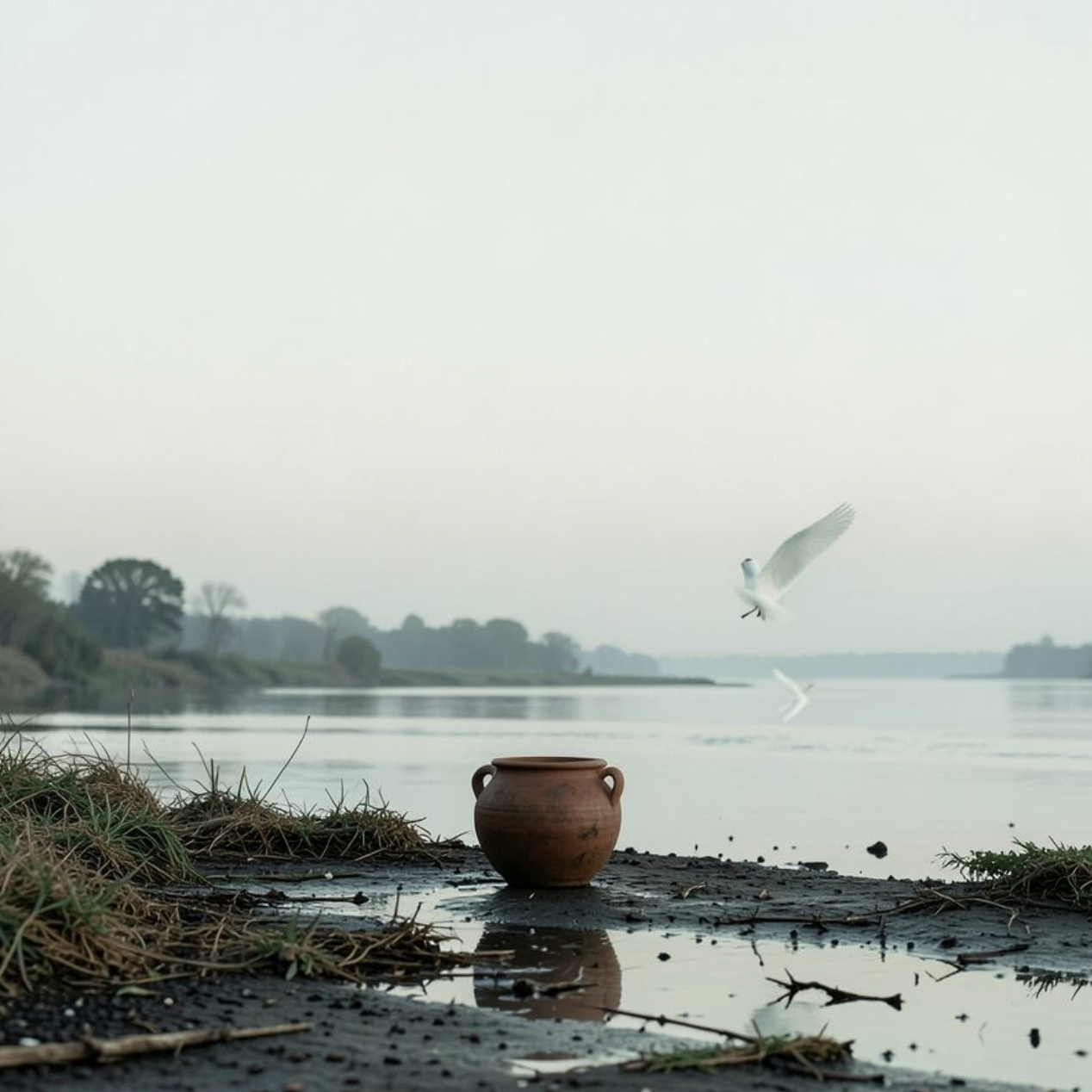
音乐剧《河口之处》第一部第一曲--《河口之处》是一部音乐文献剧。作品取材于15世纪末葡萄牙航海记录、编年史、传教文书、以及关于刚果王国早期接触的历史材料,并在这些“可考史料”的缝隙中,重构普通人的声音:一名在大西洋上濒临脱水的无名水手、一位在河口清洗陶罐的年轻女性、被带往葡萄牙的刚果贵族等。作品由一系列独白式的吟唱构成。每一段声音都作为一种历史意识的残片存在,它们彼此并不解释,也不相互归纳,而是在同一时间中并置、漂移与回响,从而形成一种介于档案、口述史与诗性重构之间的表达形态。音乐结构以航海的移动为隐喻:起初是伊比利亚半岛晚期中世纪的航海音响——简约的拨弦、低沉的鼓点与近乎消耗殆尽的男性吟唱;随着船只逼近刚果河口,声音逐渐被另一种节奏逻辑侵入,那些来自中非河流与土地的微弱节拍与呼吸感,开始在结构内部显现。在这一过程中,历史像一个正在发生的听觉现场:误解、凝视、疲惫与陌生感共同构成声音的材料。《河口之处》的音乐和人声由Suno生成。——一南,2026年夏--The Mouth of the River is a musical documentary theatre work.The work draws on late 15th-century Portuguese maritime records, chronicles, missionary writings, and historical materials concerning early contact with the Kingdom of Kongo, and within the gaps of these “verifiable sources,” reconstructs the voices of ordinary people: an anonymous sailor on the verge of dehydration in the Atlantic Ocean, a young woman washing clay pots at the river mouth, and Kongo nobles taken to Portugal.The work is composed as a sequence of monologue-like chants. Each voice exists as a fragment of historical consciousness; they do not explain or organize one another, but instead coexist, drift, and resonate within the same temporal field, forming an expressive form between archive, oral history, and poetic reconstruction.The musical structure is conceived as a metaphor of maritime movement: it begins with late medieval Iberian seafaring sonorities—minimal plucked strings, low percussion, and an almost exhausted male chant. As the ship approaches the mouth of the Congo River, another rhythmic logic gradually begins to intrude: faint pulses and breath-like textures from Central African riverine and terrestrial sound worlds emerge within the structure.In this process, history appears as a live auditory situation: misunderstanding, gaze, exhaustion, and estrangement become the very material of sound.The music and vocal composition of The Mouth of the River are generated using Suno.--1483年的刚果河口。当时山上的M'banza Kongo是王城。国王下面有贵族(mani),管理各个地区。有铁匠、陶工、木匠、织布者。有专门负责口述历史的人。有祭司(nganga),负责治疗、祭祀、解释梦境。河流是高速公路,独木舟每天往返。人们捕鱼、种植木薯(后来才大量普及,1483年前主要是高粱、小米、香蕉、油棕等)、芋头、香蕉、采集棕榈酒。海边的人并不天天望着大海,他们更多是生活在河口。刚果河才是他们真正熟悉的世界。所以,在写葡萄牙航海者到来这个时刻时,我决定写一个二十岁左右的年轻女人。为什么?因为男人很多已经划着独木舟出去捕鱼了。女人会留在河边洗编织用的纤维、清洗鱼、照顾孩子、收集贝壳、洗陶罐。她的世界很具体。我甚至已经能看见她。她今天心情不好。昨天晚上丈夫没有回来。可能只是去了邻村。也可能捕鱼去了。所以今天早晨她一直在河边洗一个陶罐。她甚至没有抬头。她一直低着头。因为河水比天空更重要。然后——不是她先看到船。是水先告诉她。她发现:河面忽然开始起了一种奇怪的波纹。不是鱼。不是鳄鱼。不是独木舟。一种她从来没有见过的节奏。她抬头。远处有一块白色。她以为:是哪一片云掉到了海里。于是继续洗陶罐。过了一会儿。那朵云没有散。反而越来越高。越来越近。她开始觉得奇怪。她把手上的泥擦掉。站起来。眯着眼。她心里没有"外国人"这个概念。她脑子里真正出现的念头可能是:河神今天把什么东西送来了?或者:是不是有人在海上燃烧树林?因为那一整片白帆,在她看来更像森林,而不是船。她没有尖叫。她也没有逃跑。她把湿手放在嘴边。吹了一声很长的口哨。这是村子里叫人的方式。一个孩子先跑过来。他们站成一排。没有人说话。因为谁也不知道应该说什么。他们只是看。一直看。直到有人说了一句:那东西……会呼吸。不是因为它真的呼吸。而是因为风吹动帆的时候,整条船像胸膛一样,鼓起来。瘪下去。鼓起来。瘪下去。这是一个当地人最可能产生的身体经验。"我看见一个会呼吸的树林。"她后来也不会跑去见国王。她很可能只是对一个正在修独木舟的老人说:河口来了一个会呼吸的东西。老人可能不会相信。他会继续削木头。然后她会说:真的。像森林。但它在水上。我觉得,真正的历史,就是从这样一句没人相信的话开始的。它没有史诗的姿态,只有一个人停下手里的活,抬头,看见了一件自己的语言还无法命名的东西。--【歌词】Ten seasons have passed.Ten floods.Ten dry winds.My daughter is taller now.The clay remembersthe shape of my hands,but my handsdo not rememberthe womanthey once were.People ask me,"When did it begin?"I never knowhow to answer.Because beginningsare quiet.Quieterthan birds.Quieterthan water.I rememberI was washinga cooking pot.Nothing more.Nothing less.The fish had been smallthat morning.I was thinkingmy husbandwould laughwhen he came home.I was thinkingI should mendmy daughter's basket.I was thinkingordinary thoughts.The kindthat disappearbefore sunset.Thenthe river changed.Not its color.Not its voice.Its breathing.The watermovedas thoughsomething largerthan memoryhad entered it.I looked up.Only becausethe riverlooked up first.Far away,I sawwhat I believedwas a pieceof white skyfloatingon the sea.It did not dissolve.It came closer.It grew taller.It carriedits own wind.I remember saying,not to anyone,only to myself,"The foresthas learnedto float."I laughed.Yes.I laughed.Because the worldhad becomestrange,and laughterwas easierthan fear.I calledthe others.Not becauseI was afraid.Becausebeautiful thingsshould neverbe seenalone.We stoodwithout speaking.Children stopped running.Old womenforgottheir stories.Even the birdscircledwithout landing.Ten seasons.Ten seasonshave passed.Now there are menwho wearsmall crosses.There are boyswho speaknew wordsI cannot pronounce.There are songsI did not knowwhen I was young.There are prayersthat risebesidethe old prayers.Sometimesthey rise together.Sometimesthey refuseto meet.When I washmy pots now,I still watchthe river.Not becauseI expectanother ship.Because I knowthe rivercan changewithout warning.People ask,"Did you know?"No.How could I?I sawcloth,wood,and wind.I did not seethe yearsinside them.If I had known,would I havecalled the others?I ask myselfthis questionwhen the nightsare long.The rivernever answers.Sometimes,before sleep,I close my eyesand returnto that morning.The potis stillin my hands.The wateris stillcool.The skyis stillempty.And somewhere,far beyondwhat I can name,a white wingis opening,slowly,toward us.一南 | Yinan前往小宇宙评论区与主播互动
Embed this episode
NOW PLAYING
AC 05. 《河口之处(一) I》| THE DAY THE RIVER LOOKED UP
No transcript for this episode yet
Similar Episodes
No similar episodes found.
Similar Podcasts
No similar podcasts found.