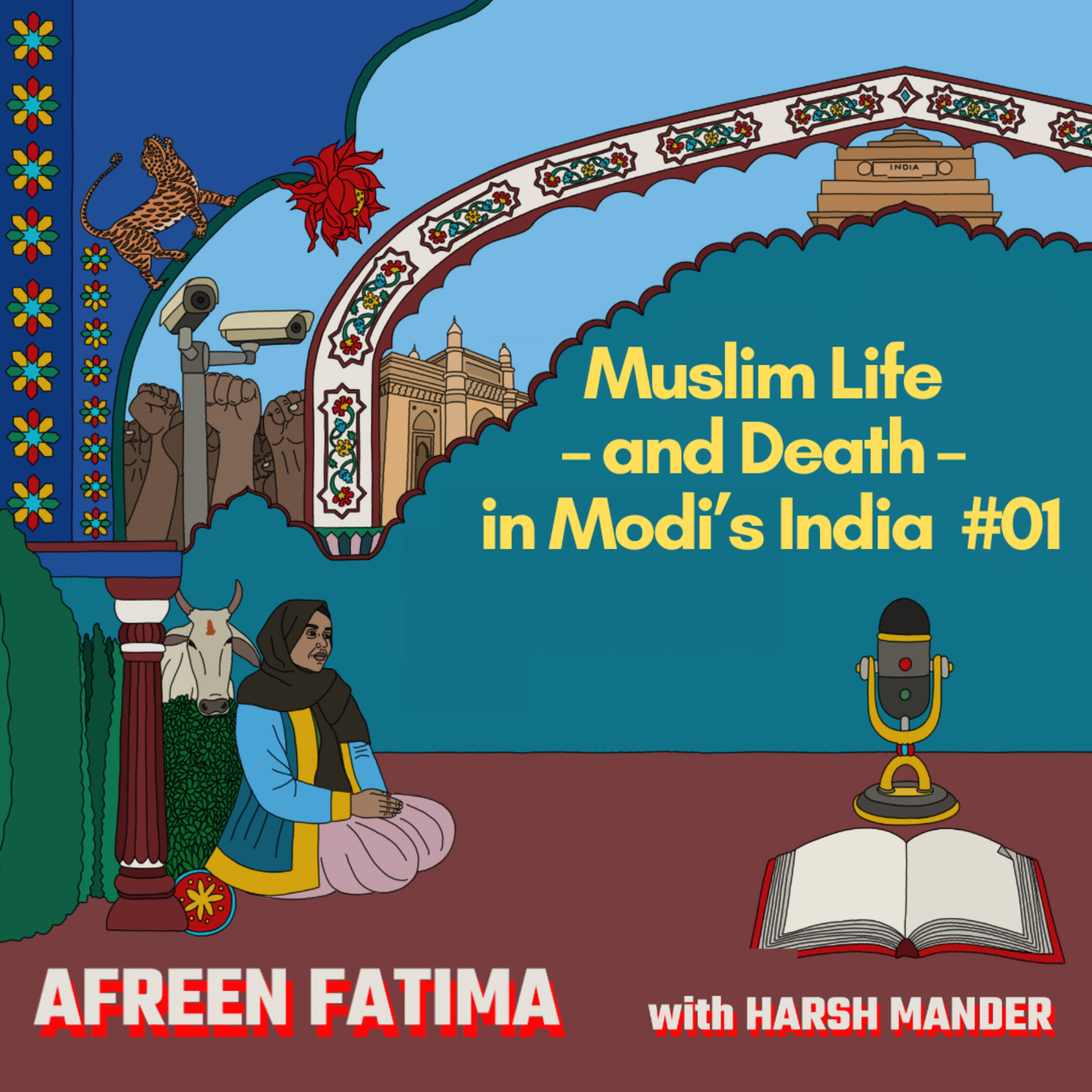
Afreen Fatima & Harsh Mander: Bulldozers, the hijab and Muslim rage in Modi’s India episode artwork

EPISODE · Jun 4, 2025 · 59 MIN

Afreen Fatima & Harsh Mander: Bulldozers, the hijab and Muslim rage in Modi’s India

from Himal Southasian Podcast Channel · host Himal Southasian Podcast Channel

In this episode, the researcher and activist Afreen Fatima speaks to Harsh Mander about what it means to be Muslim in India today. Afreen experienced first-hand punitive demolitions by the state. In June 2022, authorities in Prayagraj, formerly called Allahabad, bulldozed her house, on the pretext that her father had orchestrated protests against anti-Islamic comments made by members of the India’s ruling right-wing Bharatiya Janata Party.Afreen speaks about the loss of her home, the anguish when her father was arrested for 22 months and the risks that Muslims take everyday when they leave their houses facing attacks, lynchings and more. Afreen talks about the lack of true solidarity with Muslims even in liberal circles borne of an inability to listen to Muslim voices and the expectation of those voices: “It should always be very docile. It should not be furious. It should not be angry,” she says. While Muslims bear the burden of always having to prove their nationalism and secularism, there is no respect from others for their faith, she says. Catch the full episode on YouTube, Spotify and Apple podcasts. Episode notesGlossary of terms:BJP: Bharatiya Janata Party, the ruling party in India headed by Narendra Modi known for its right-wing bent and anti-Muslim policies and rhetoricRSS: Rashtriya Swayamsevak Sangh, the BJP’s ideological and organisational parent that has espoused remoulding India as a Hindu nation. Mulakat: meeting CAA: Citizenship Amendment ActEnacted in 2019, the law removed barriers to citizenship for non-Muslim minorities from countries neighboring India but excluded several persecuted groups like Rohingyas and Sri Lankan Tamils. When combined with the National Register of Citizens and Foreigners Tribunals, it poses a significant threats to many of India’s Muslims who can be rendered stateless. In 2019 and early 2020, there were massive countrywide protests against the act and episodes of violence against the protesters. The anti-CAA movement died down after Covid lockdowns and restrictions were enforced. JNU deprivation points:The Jawaharlal Nehru University in Delhi has a system of adding marks to the entrance test score of a student from a disadvantaged background based on certain criteria.La ilaha illallah: The first kalima and a basic tenet of Islam that means “there is no god but Allah.” Anti-CAA protestors used it as a slogan of defiance against a law that was discriminating against Muslims in particular.  Himal Southasian is Southasia’s first and only regional news and analysis magazine. Stretching from Afghanistan to Burma, from Tibet to the Maldives, this region of more than 1.4 billion people shares great swathes of interlocking geography, culture and history. Yet today neighbouring countries can barely talk to one another, much less speak in a common voice. For three decades, Himal Southasian has strived to define, nurture, and amplify that voice. Read more: https://www.himalmag.com/Support our independent journalism and become a Patron of Himal: https://www.himalmag.com/support-himalFind us on:https://twitter.com/Himalistanhttps://www.facebook.com/himal.southasianhttps://www.instagram.com/himalistan/

In this episode, the researcher and activist Afreen Fatima speaks to Harsh Mander about what it means to be Muslim in India today. Afreen experienced first-hand punitive demolitions by the state. In June 2022, authorities in Prayagraj, formerly called Allahabad, bulldozed her house, on the pretext that her father had orchestrated protests against anti-Islamic comments made by members of the India’s ruling right-wing Bharatiya Janata Party.Afreen speaks about the loss of her home, the anguish when her father was arrested for 22 months and the risks that Muslims take everyday when they leave their houses facing attacks, lynchings and more. Afreen talks about the lack of true solidarity with Muslims even in liberal circles borne of an inability to listen to Muslim voices and the expectation of those voices: “It should always be very docile. It should not be furious. It should not be angry,” she says. While Muslims bear the burden of always having to prove their nationalism and secularism, there is no respect from others for their faith, she says. Catch the full episode on YouTube, Spotify and Apple podcasts. Episode notesGlossary of terms:BJP: Bharatiya Janata Party, the ruling party in India headed by Narendra Modi known for its right-wing bent and anti-Muslim policies and rhetoricRSS: Rashtriya Swayamsevak Sangh, the BJP’s ideological and organisational parent that has espoused remoulding India as a Hindu nation. Mulakat: meeting CAA: Citizenship Amendment ActEnacted in 2019, the law removed barriers to citizenship for non-Muslim minorities from countries neighboring India but excluded several persecuted groups like Rohingyas and Sri Lankan Tamils. When combined with the National Register of Citizens and Foreigners Tribunals, it poses a significant threats to many of India’s Muslims who can be rendered stateless. In 2019 and early 2020, there were massive countrywide protests against the act and episodes of violence against the protesters. The anti-CAA movement died down after Covid lockdowns and restrictions were enforced. JNU deprivation points:The Jawaharlal Nehru University in Delhi has a system of adding marks to the entrance test score of a student from a disadvantaged background based on certain criteria.La ilaha illallah: The first kalima and a basic tenet of Islam that means “there is no god but Allah.” Anti-CAA protestors used it as a slogan of defiance against a law that was discriminating against Muslims in particular.  Himal Southasian is Southasia’s first and only regional news and analysis magazine. Stretching from Afghanistan to Burma, from Tibet to the Maldives, this region of more than 1.4 billion people shares great swathes of interlocking geography, culture and history. Yet today neighbouring countries can barely talk to one another, much less speak in a common voice. For three decades, Himal Southasian has strived to define, nurture, and amplify that voice. Read more: https://www.himalmag.com/Support our independent journalism and become a Patron of Himal: https://www.himalmag.com/support-himalFind us on:https://twitter.com/Himalistanhttps://www.facebook.com/himal.southasianhttps://www.instagram.com/himalistan/

NOW PLAYING

Afreen Fatima & Harsh Mander: Bulldozers, the hijab and Muslim rage in Modi’s India

0:00 59:54

No transcript for this episode yet

We transcribe on demand. Request one and we'll notify you when it's ready — usually under 10 minutes.

That Hoarder: Overcome Compulsive Hoarding That Hoarder Hoarding disorder is stigmatised and people who hoard feel vast amounts of shame. This podcast began life as an audio diary, an anonymous outlet for somebody with this weird condition. That Hoarder speaks about her experiences living with compulsive hoarding, she interviews therapists, academics, researchers, children of hoarders, professional organisers and influencers, and she shares insight and tips for others with the problem. Listened to by people who hoard as well as those who love them and those who work with them, Overcome Compulsive Hoarding with That Hoarder aims to shatter the stigma, share the truth and speak openly and honestly to improve lives. The Small Business Startup School – Business Notes | Financial Literacy | Retail Psychology – For Professionals & Entrepreneurs The Small Business Startup School Inc. Starting or buying a small business? While personal circumstances may vary, business patterns remain timeless. On The Small Business Startup School, we explore strategies, insights, and practical solutions to help entrepreneurs confidently navigate their journey.Hosted by Ola Williams—a retail entrepreneur, fintech founder, and financial coach with over two decades of experience—this podcast marries financial awareness and retail psychology with optimism to deliver actionable takeaways.Join us to learn, grow, and connect as we uncover the keys to business success.Let’s continue to learn together and be encouraged to keep on connecting! DIOSA. Carolina Sanper This podcast is a sacred space created by Carolina Sanper where you connect with your inner wisdom and embody your magnetic feminine power.It is the realization that the mystical realm is where you plant the seeds of your desired reality.It is a portal to your true essence: awareness, presence, and receiving with ease. Welcome home, DIOSA. 🖤 XXX Tech by SOVRYN Dr. Brian Sovryn The crossroads between technology, sensuality, and metaphysics - and the longest running anarchist podcast in the world! Brought to you by Dr. Brian Sovryn.

Frequently Asked Questions

How long is this episode of Himal Southasian Podcast Channel?

This episode is 59 minutes long.

When was this Himal Southasian Podcast Channel episode published?

This episode was published on June 4, 2025.

What is this episode about?

In this episode, the researcher and activist Afreen Fatima speaks to Harsh Mander about what it means to be Muslim in India today. Afreen experienced first-hand punitive demolitions by the state. In June 2022, authorities in Prayagraj, formerly...

Can I download this Himal Southasian Podcast Channel episode?

Yes, you can download this episode by clicking the download button on the episode player, or subscribe to the podcast in your preferred podcast app for automatic downloads.
URL copied to clipboard!