
EPISODE · Apr 8, 2026 · 12 MIN
Agent Need Identity !?
from Sovereign Agentic AI (Volodymyrs View) Podcast · host Volodymyr Pavlyshyn
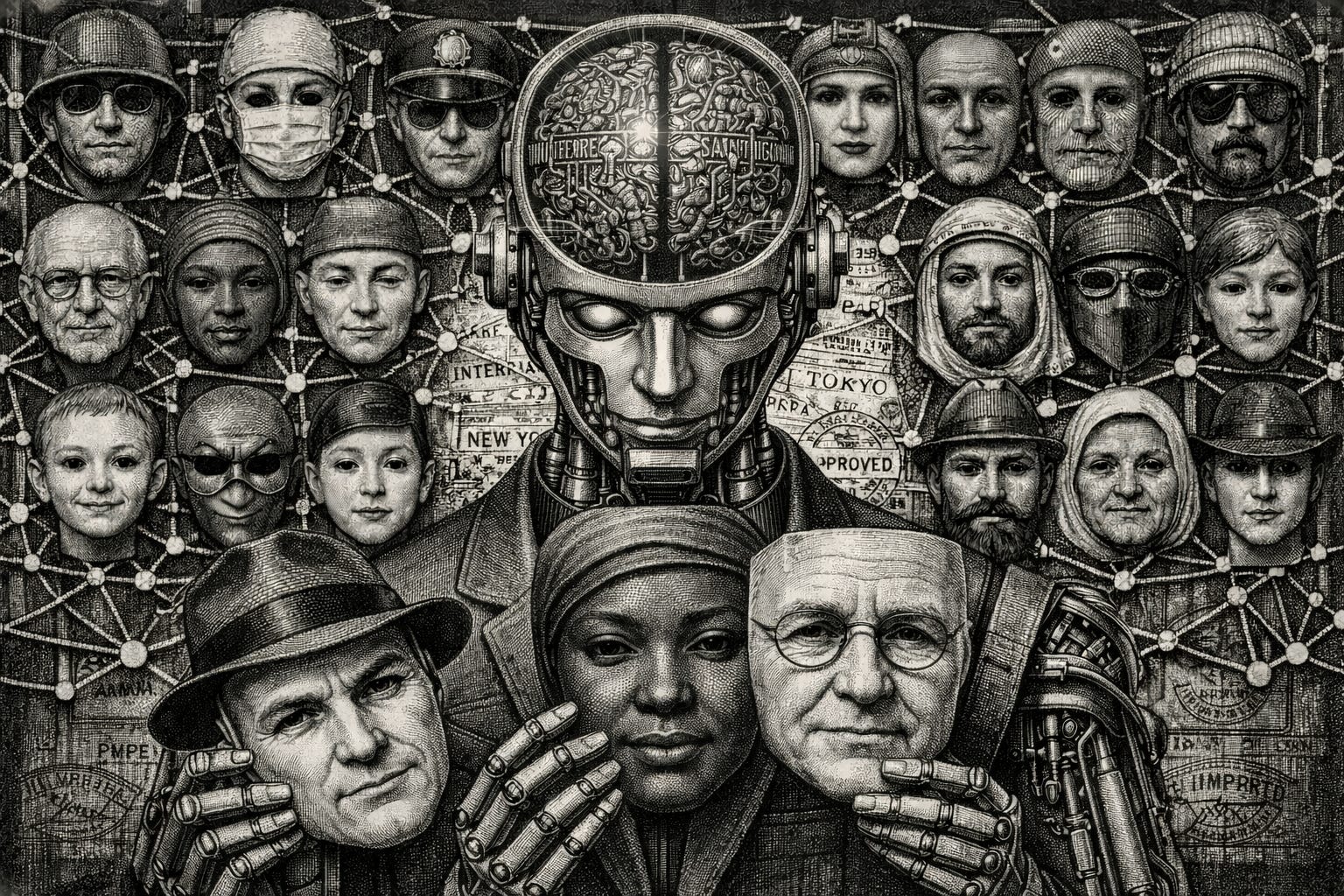
Introduction to IdentityHey, it’s me, [unintelligible], and today we will talk about my favorite topic. Maybe not everybody knows, but I’m more the crypto and **self-sovereign identity** guy. And yeah, I love graphs, I love the memory, and agents, and all this topics. But originally, I was spending a lot of time to give the identity—cryptographically verified identity—to the humans. And humans didn’t know what to do with it, but looks like **agents**—and agents care. So if we will talk about identity, what is it? What came to your mind? Because, is the name your identity? For sure, you identify yourselves with some name tags that people know how to call it, call you. But is it the identity? I don’t know. Or you have the passport with the passport number. So, is the passport your identity? And here is a super important thing to understand: that quite often when we’re talking about the identity, we’re mixing the **identity with identifiers**. And identifiers is the name, passport number, social security numbers, and all things that, you know, registries driven by governments invent to identify the people. But it’s not the human identity itself. ---Sovereign Agentic AI (Volodymyrs View) is a reader-supported publication. To receive new posts and support my work, consider becoming a free or paid subscriber.Dimensions of Human IdentityAnd what then forms the human identity? So, is the nationality and belonging to some group identity? Is the gray eyes actually somehow identify you? Or the fact that you vote for Democrats and hate Trump—is it identity or not? And that’s all the big questions for people. And the answer is that **we don’t have the monolithic identity**. This identity have a lot of different traits and faces. We even inside our brain actually have the concept in psychotherapy of “internal family,” and we could even have the different voices. And if you argue with yourself in your head, do not worry; it’s our internal architecture. Actually, nobody knows how it’s work, but it is. And we have multiple “us” inside us. We have multiple “us” when we interact with different environments and social groups. You could talk and behave differently when you’re talking with the parents, when you’re talking with your family, and you have your professional profile and professional identity that you use at work and on the public events and all the things. For some nations, it’s different. For some cultures, they have more monolithic one that doesn’t have internal worlds. They’re more open, they’re more solid. They’re not better, they’re just different because they don’t understand why they need to be different in different environments or different social groups. In some other cultures, it’s completely opposite—that people build the walls, you know, fortify everything and have really multiple “yourself.” ---Contextual Identity and AI AgentsFrom culture to culture, it’s different. So, identity is one of the most challenging psychology, sociology, and technical questions that I ever faced because it have so many dimensions—even more than the vector embeddings for some top-performing models. So then, what’s actually form of identity? So, the answer is simple: it depends on the **context**. So, identity is context-dependent. And it’s also easier to say that you as a personality have different traits. So, different traits that could be mapped in technology that I do to the claims and verifiable statements in a form of cryptographically protected documents. And this claim could say the small piece of information about you and your properties, right? And then we have some physical properties: how high you are, your weight, maybe some measurements, maybe the fact that you’re right-handed and all that, the color of your eyes. And maybe we have some context where this information is super important, and that’s form some physical identity that are mandatory for some certain tasks or some certain access right. Agent IdentitiesThen we have some work identities, right? The social identities, our dependencies, our position in the company at work, our access rights to different data sources—it’s also the identities. Our dependencies: with whom we work, on which tasks, what we do. And all this forms somehow the social dependencies and social identity. If we’re talking about the agents—agents are doing something for us, and it’s the biggest context where agents get supplied. It’s **agent capabilities**, and the capabilities and skills. It’s a huge amount of data points that form quite complex identity that make an agent useful for task-oriented jobs, right? So, we have a task: we need to find the plumber. Then we go and find the agent with the plumbing capabilities. And actually, it’s the most straightforward and understandable type of identity in a context of the task execution. So we’re looking for the agents that could do work for us. ---Ownership and VerificationAlso, the **ownership**. Ownership is the huge pillar of identity. So, is it the local agents that run on our hardware, owned completely by us? It’s one use case. Then maybe we don’t need to know much about him; we just know that it’s “he,” and we own it completely and we know how he built, and we don’t care about these things. Stuff gets complex if the agent was built by somebody else. And then we need to know on what kind of model the model capabilities this agent run, what kind of other agents and tools it’s use, in which region this agent are located, on which type of hardware it’s run, who provisioned the data, who provisioned the identity, what kind of data sources and knowledge bases agent have the access to. And it produces some kind of mixture of the capability, resources, and what I say, the “body” or the hardware. So, how the agent built. It’s the same as we have some physical qualities of the color of eyes, and our agent have the LLM model, the model parameters, the hardware that run the model, and some regional location. I guess it’s common for the agents and people, that I’m based in Berlin, I’m the residence of the European Union, and I could work in the European Union. So agent also could have the permit to work only in European Union countries, for example, if you have some kind of requirements to it. ---Conclusion: Identity as DataSo, the answer to the agent identity, actually, it’s simple. If we see the myriads of properties of the agents, we put them in a context of the tasks, we put them in a context of the hardware and software, and we put them in a context of the skills and capabilities. Then we have some natural clustering of the properties that form different kind of agent identities. And the overlap of this agent identities form us the profiles. And these profiles actually could be useful when we form some **personas**, right? And this persona, it’s one of the piece of the agent identity that capable to do some certain task on some environment and hardware in physical setup for us. And it’s simple—we could go from this property-based multi-identities and identity profiles and unify on this framework not only the humans, but the agents. Because humans also have this—maybe we don’t have the hardware part, yeah? We built differently and have the different properties. But yeah, why not? And the answer of the question: **the identity is a data**. Identity contain of the claims and properties and data points that form different kind of profiles. And all together, this identities form one big general identity that could satisfy the majority of different contexts and tasks. And the separate question that I try to answer in my current company—and the separate question that I try to answer in my book, actually, about the self-sovereign agents—how we could verify and confirm all these properties? How we could confirm that Volodya have the gray eyes? We could take a look on Volodya photo, and maybe this photo should be cryptographically verified that it was not changed. So we need to have some kind of proof that we could validate without having Volodya on board. And same for the agents: we need to have some kind of **verifiable claims** that we could validate and verify before we start the interaction with the agents to see some properties of the agents, maybe without disclosing the property itself. Sometimes it’s matter. So you wants to make sure that the agent have the big enough model, or this model is not hosted in China, or this model has some certain parameters—the size and temperature—but without the disclosing the concrete configuration of the agent because it could create some good environments for future attacks. And all this actually, it’s a task for the **self-sovereign identity and crypto protocols** that I’m going to explore in my next book. Get full access to Sovereign Agentic AI (Volodymyrs View) at volodymyrpavlyshyn.substack.com/subscribe
NOW PLAYING
Agent Need Identity !?
No transcript for this episode yet
Similar Episodes
Mar 26, 2026 ·1m
Jan 2, 2026 ·47m
Dec 21, 2025 ·46m