
EPISODE · Apr 29, 2026 · 20 MIN
Ahmedabad Heritage Walk: The Complete Guide to the Pols of India's First UNESCO World Heritage City
from Incredible India Travel | Social Impact & Culture Tours · host Madhusudan Narayanan | 5 Senses Tours
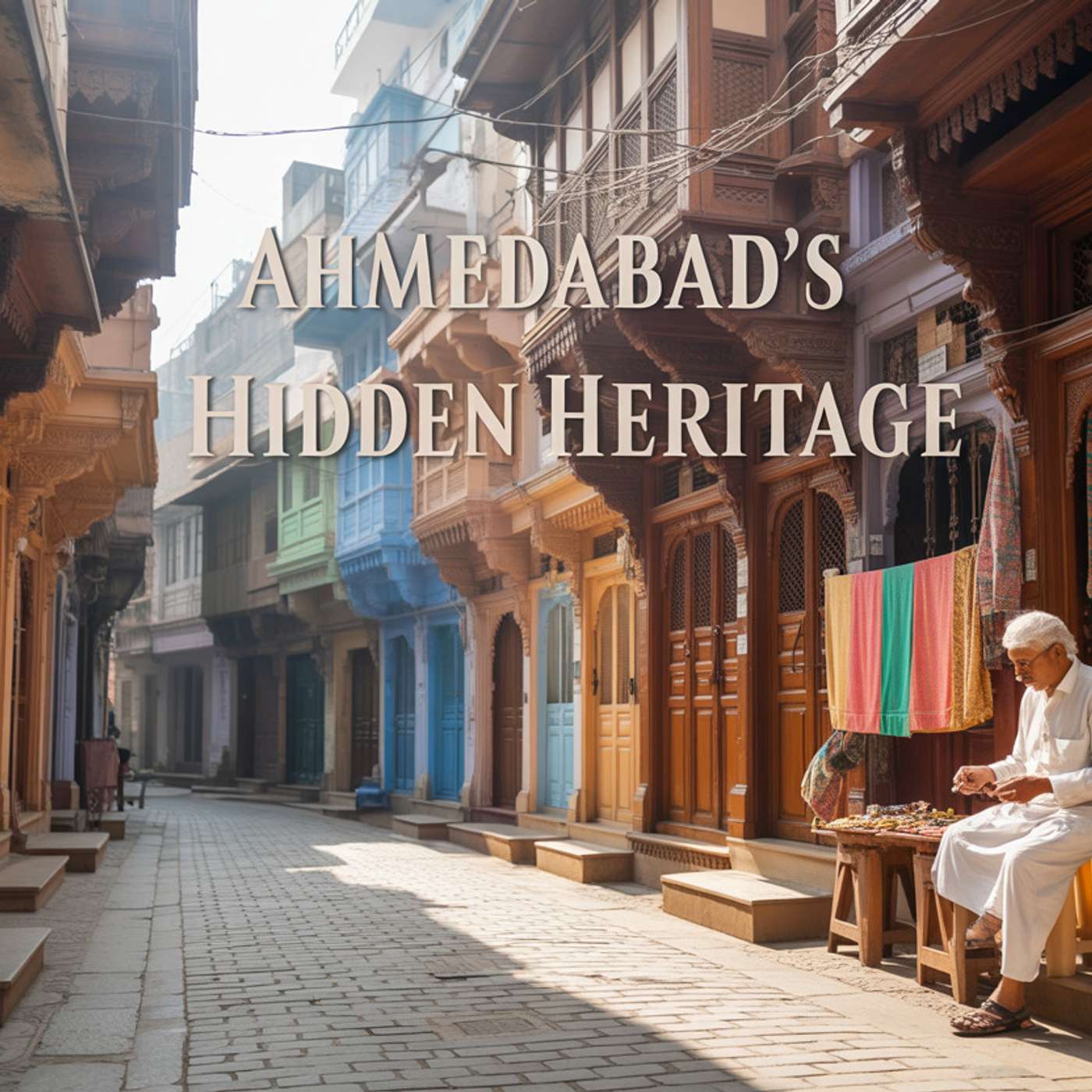
Six hundred years ago a sultan stood on the banks of the Sabarmati River and built a city.Not just any city. A city of extraordinary ambition and extraordinary intelligence, planned around a system of residential clusters called pols that would prove so well-designed, so socially sophisticated and so architecturally brilliant that UNESCO would recognise them six centuries later as an outstanding universal value belonging not just to India but to the entire world.Ahmedabad became India's first UNESCO World Heritage City in 2017.And the pols at the heart of that recognition are not ruins. They are not restored heritage precincts with ticketed entry and audio guides. They are living, breathing, actively inhabited neighborhoods where the same families have been practicing the same crafts in the same wooden havelis for generations. Where patola weavers still use the double ikat technique that can take months to produce a single saree. Where wood carvers still use hand tools to create the intricate jharokhas and jaalis that define the visual language of Gujarati heritage architecture. Where the morning ritual of women gathering at community wells and drawing rangoli at their doorsteps has continued without interruption since the 15th century.In this episode we take you on a complete Ahmedabad heritage walk through the pols of the walled city, from the origins of the pol system in Sultan Ahmed Shah's 15th century urban vision to the extraordinary preservation challenges that threaten these irreplaceable architectural treasures today.We explore the architectural language of the pols in depth, the central chowks that serve as neighborhood beating hearts, the elaborate jharokhas and jaalis that offer privacy while allowing air circulation, the carved wooden doorways whose symbolic language communicates family identity, religious belief and social status to anyone who knows how to read it. We walk the labyrinthine streets of the old city, discovering hidden courtyards behind unassuming facades and secret passages that once allowed residents to move between buildings without using public streets. We visit the artisan workshops tucked into the ground floors of ancient havelis, where master craftsmen in textile weaving, wood carving and metalworking practice skills passed down through bloodlines spanning centuries.We experience the extraordinary daily life of the pols at dawn when elderly women draw intricate rangoli patterns at their doorsteps. We witness the festival transformations when narrow alleys explode with color during Navratri and every balcony and doorway blazes with oil lamps during Diwali. We watch children transform centuries-old stone courtyards into timeless playgrounds, navigating these ancient spaces with an inherited knowledge that bridges past and present in the most moving possible way.And we share everything you need to know to plan your own Ahmedabad heritage walk, the best time to visit, the photography techniques that will help you capture the extraordinary architectural details and the authentic moments of daily life that make these neighborhoods so special, and how to experience the pols with the depth and understanding they genuinely deserve.What You Will Discover in This EpisodeHow the pol system emerged in the 15th century as Sultan Ahmed Shah's grand urban vision took shape, creating tightly-knit residential clusters designed around community bonds, shared identities and trade guilds that transformed a riverbank into one of Asia's greatest trading citiesWhy Ahmedabad became India's first UNESCO World Heritage City in 2017 and what the international recognition of the pols' outstanding universal value means for their preservation and for the communities who still live within their ancient wallsThe extraordinary architectural language of pol design, including the central chowks that provide natural ventilation and community gathering spaces, the elaborately carved jharokhas and jaalis that are masterpieces of Gujarati woodcarving tradition, and the narrow lanes that follow ancient urban design principles perfectly suited to Gujarat's demanding climateThe symbolic meanings encoded in the carved wooden doorways of every pol haveli, where lotus motifs signal spiritual purity, kalash designs communicate abundance and hospitality, and the size and elaborateness of the carving traditionally indicated the wealth and importance of the family withinThe hidden courtyards and secret passages that lie behind the unassuming facades of pol houses, the private chowks that remain invisible from the main pathways and the underground passages that once allowed residents to move between buildings without using public streetsThe seven primate species of artisan traditions still practiced within the pols today, including patola weavers using the extraordinary double ikat technique, bandhani artists creating thousands of tiny knots with extraordinary precision, block printers using vegetable dyes derived from indigo and turmeric, and wood carvers whose hand tools have remained unchanged for centuriesThe extraordinary social fabric of pol life, the otla culture where raised platforms outside homes serve as semi-public gathering spaces, the shared kitchens during weddings and religious events, the informal elder councils that maintain community order without formal authorities, and the festival celebrations that transform entire pols into vibrant theatre stagesThe preservation challenges that threaten these irreplaceable architectural treasures, from original families migrating to modern suburbs to developers demolishing intricate wooden structures for concrete apartments, and why growing awareness among young Gujaratis and international heritage organisations offers genuine hopeThe complete photography guide to the pols including the best lighting conditions for capturing intricate wooden carvings, respectful approaches to photographing residents that build genuine connections rather than intrusion, equipment recommendations for narrow alleyways and composition techniques that reveal the extraordinary visual richness of these confined heritage spacesExperience Ahmedabad's Extraordinary Heritage With 5 Senses ToursThe pols of Ahmedabad are waiting for you in the walled city, exactly as they have been for six centuries. The patola weavers are at their looms. The wood carvers are at their benches. The morning rangoli is being drawn at the doorsteps. The courtyards are alive with children.Our Ahmedabad tours take you deep into this extraordinary living heritage with cultural evangelists who have spent years understanding every layer of the walled city's story, giving you access to the artisan communities, the hidden courtyards and the human stories that most visitors to Ahmedabad never find. Book at https://5sensestours.com/home-ahmedabad-tours/The ancient Indus Valley civilisation sites of Dholavira and Lothal take you 4500 years further back into the extraordinary depth of Gujarat's human story. Dholavira is a UNESCO World Heritage Site whose 4500-year-old drainage systems and urban planning predates the modern world by four millennia. Book our Dholavira tour at https://5sensestours.com/tour/dholavira-tour/ and our Lothal tour at https://5sensestours.com/tour/lothal-tour/The ancient stepwells of Gujarat, including the UNESCO World Heritage Rani ki Vav at Patan and the extraordinary Adalaj Stepwell near Ahmedabad, represent one of the most remarkable architectural traditions in Indian history. Our Ahmedabad tours include guided visits to ...
Embed this episode
Ready to play
Ahmedabad Heritage Walk: The Complete Guide to the Pols of India's First UNESCO World Heritage City
No transcript for this episode yet
Similar Episodes
No similar episodes found.