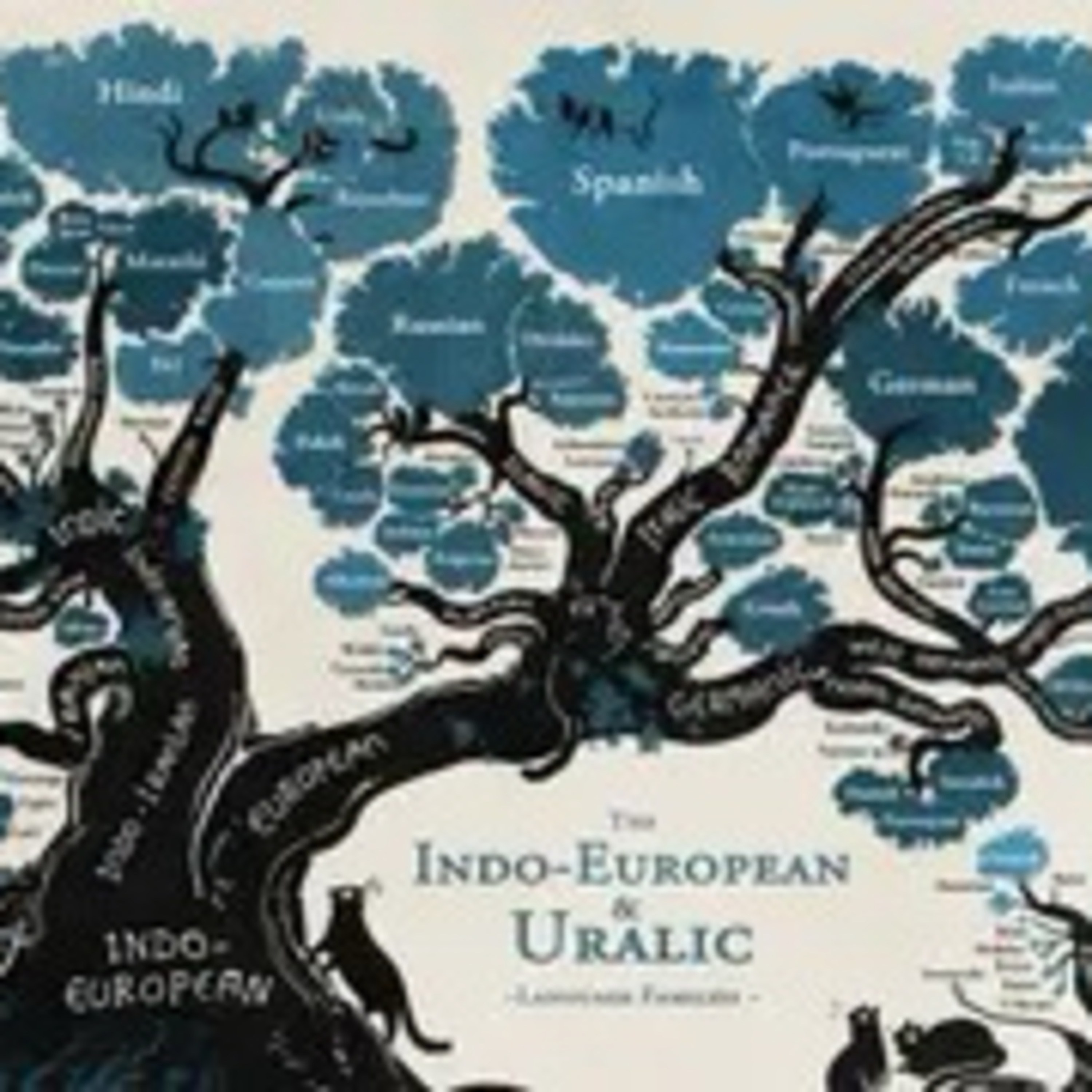
An Introduction to Indo-European Linguistics ,Part 3: (Archaeology & Indo-European Languages) episode artwork

EPISODE · Jul 18, 2024 · 49 MIN

An Introduction to Indo-European Linguistics ,Part 3: (Archaeology & Indo-European Languages)

from Orientalistics: Podcast on Language, Religion and Culture · host Farshid Delshad

Gordon Childe, a notable Australian archaeologist, published "The Aryans," reflecting early interest in Europe's past. Unfortunately, the Nazi regime misused archaeological findings to promote their ideology, leading to atrocities during the Holocaust. This dark chapter caused archaeologists to avoid race and ethnicity topics. Earlier racial theories in archaeology, primarily based on craniometry, have been debunked. Modern anthropology uses advanced methods to study past populations, and claims about racial groups based on ancient skeletal remains are highly skeptical. Despite its controversial past, linguistic archaeology offers valuable insights. The migration of Celtic peoples to Britain and Ireland around 2000 BC, for instance, lacks substantial evidence. Some argue Celtic languages have older roots in these regions. The concept of Indo-European languages, coined by Thomas Young in 1813, remains a central puzzle. Scholars debate whether these languages spread through mass migrations or cultural exchanges. This question extends to linguistic ties with India and Iran. Investigating early literate societies in Europe, like the Greeks and Romans, and archaeological finds from the Iron Age, such as the Hallstatt and La Tène cultures, offer insights into early European societies. Prehistoric Europe saw significant transitions, from hunter-gatherer societies to farming communities and metallurgy. Monumental constructions like Megalithic Tombs and changes in burial practices reflect evolving social structures. As we reconsider early European archaeology, we must approach old questions with fresh perspectives. By updating our methodologies, we can better understand the migrations and cultural transformations that shaped ancient Europe.

Gordon Childe, a notable Australian archaeologist, published "The Aryans," reflecting early interest in Europe's past. Unfortunately, the Nazi regime misused archaeological findings to promote their ideology, leading to atrocities during the Holocaust. This dark chapter caused archaeologists to avoid race and ethnicity topics. Earlier racial theories in archaeology, primarily based on craniometry, have been debunked. Modern anthropology uses advanced methods to study past populations, and claims about racial groups based on ancient skeletal remains are highly skeptical. Despite its controversial past, linguistic archaeology offers valuable insights. The migration of Celtic peoples to Britain and Ireland around 2000 BC, for instance, lacks substantial evidence. Some argue Celtic languages have older roots in these regions. The concept of Indo-European languages, coined by Thomas Young in 1813, remains a central puzzle. Scholars debate whether these languages spread through mass migrations or cultural exchanges. This question extends to linguistic ties with India and Iran. Investigating early literate societies in Europe, like the Greeks and Romans, and archaeological finds from the Iron Age, such as the Hallstatt and La Tène cultures, offer insights into early European societies. Prehistoric Europe saw significant transitions, from hunter-gatherer societies to farming communities and metallurgy. Monumental constructions like Megalithic Tombs and changes in burial practices reflect evolving social structures. As we reconsider early European archaeology, we must approach old questions with fresh perspectives. By updating our methodologies, we can better understand the migrations and cultural transformations that shaped ancient Europe.

NOW PLAYING

An Introduction to Indo-European Linguistics ,Part 3: (Archaeology & Indo-European Languages)

0:00 49:27

No transcript for this episode yet

We transcribe on demand. Request one and we'll notify you when it's ready — usually under 10 minutes.

Big Old Life: Heather Blackbird interviews people on planet earth. Heather Blackbird loves asking questions. This podcast is a learning experience. Join me, Heather Blackbird, as I talk to people about their lives. Frequency of new episodes is a little all over the place and I'm learning as I go. Big Old Life is a small way of talking about the vastness of life, one person at a time. If you are reading this or found this podcast it's probably because someone you know gave you a link to it. :) Explicit Tales Of A Superstar DJ The Insomniac Spun seemingly out of nowhere from her complacent life in the corporate world, turned seemingly overnight from 16-Hour shift work and into the life of a literally starving artist and working musician, The Protagonist navigates her supposed rise to fame and superstardom on a journey through spiritual awakening, coming-of-age, and intimate self-realization--guided by an omnipresent force and equipped with the power of love, magic, and music. {Enter The Multiverse.} [The Festival Project] The Festival Project, Inc.™ is a multidimensional multimedia platform which encompasses exploratory and artistic social personifications and expressions on cosmic theory, spirituality, growth, health & wellness, philosophy and theoretic dynamics in entertainment such as music, design, film, television, radio, dance and festival culture, art, fashion, literature, and science. The Festival Project™ and its subsidiary Non-Profit, The Collective Complex © aims to challenge modern artistic and philosop Explicit Bitcoin Is Dead Trey Carson Welcome to Bitcoin is Dead, the ultimate Bitcoin variety show where host Trey takes you on a journey through the ever-evolving world of Bitcoin. Each episode brings new personalities, fascinating locations, and insightful conversations with politicians, educators, and innovators shaping the future of Bitcoin. Whether you're a seasoned Bitcoiner or just starting your journey, tune in for thought-provoking discussions, unique perspectives, and a deep dive into the ideas and people driving the Bitcoin revolution. Explicit The Sacred +Profane Podcast nephtaragrace The Sacred + Profane Podcast is a provocative conversation dedicated to cementing a better future for all. We specialize in unpacking the nuances of what is considered sacred and profane, particularly focusing on sex, death, and all that pertains to the circle of life. Our aim in focusing on such ”taboo” subject matter is to demystify what is unconscious, bring to light what has been known for centuries as ”the occult,” and empower the rapid transformation that is occurring on the Planet. Explicit

Frequently Asked Questions

How long is this episode of Orientalistics: Podcast on Language, Religion and Culture?

This episode is 49 minutes long.

When was this Orientalistics: Podcast on Language, Religion and Culture episode published?

This episode was published on July 18, 2024.

What is this episode about?

Gordon Childe, a notable Australian archaeologist, published "The Aryans," reflecting early interest in Europe's past. Unfortunately, the Nazi regime misused archaeological findings to promote their ideology, leading to atrocities during the...

Can I download this Orientalistics: Podcast on Language, Religion and Culture episode?

Yes, you can download this episode by clicking the download button on the episode player, or subscribe to the podcast in your preferred podcast app for automatic downloads.
URL copied to clipboard!