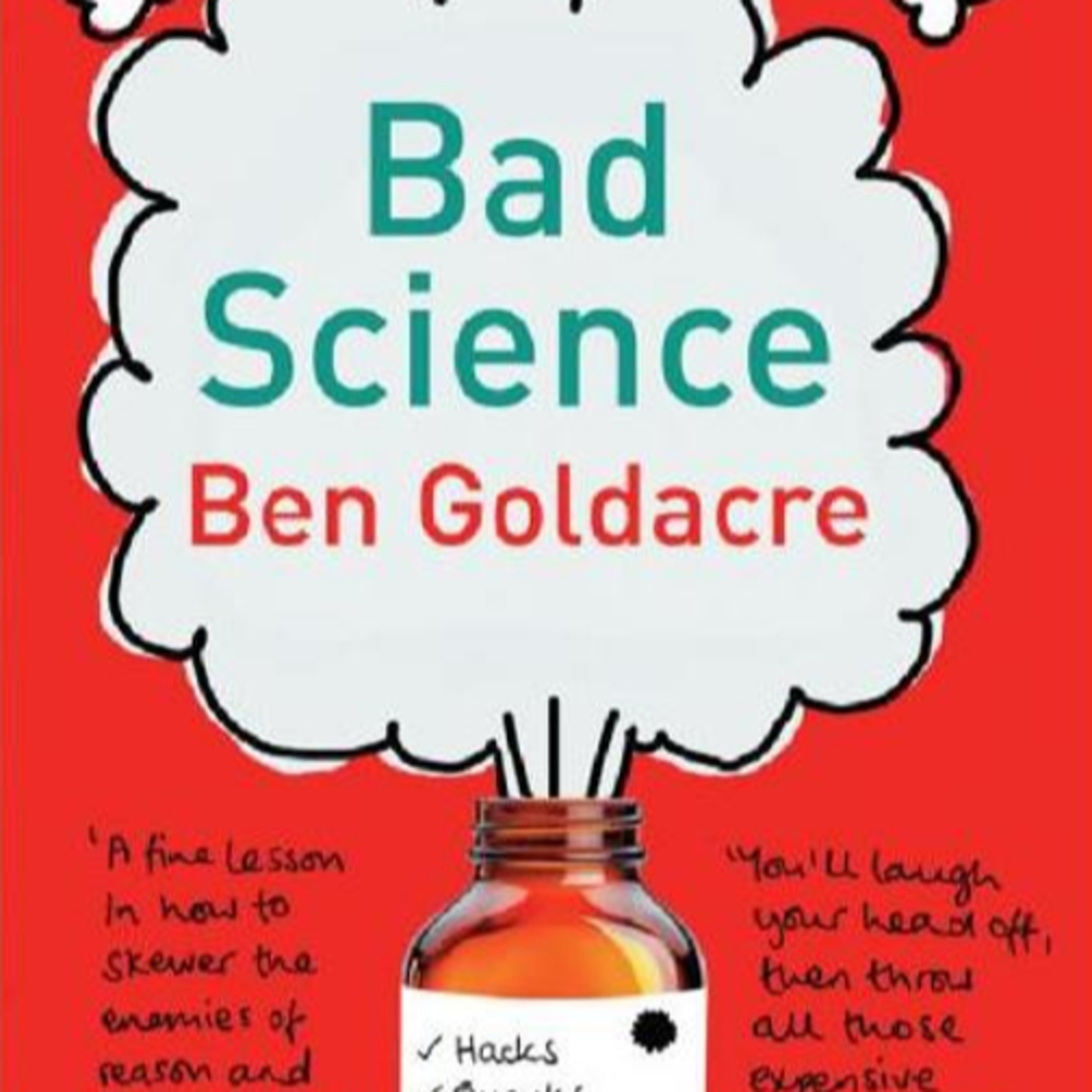
Bad Science — How Weak Evidence Becomes Medical Certainty
from Crisis in Perception Hosted by Crisis in Perception
Why do scientific-sounding claims remain persuasive even when the evidence supporting them is weak? And what happens when the institutions responsible for producing and communicating medical knowledge contribute to the confusion? This episode presents AI-narrated educational analysis based on published sources. The voices are synthetic and do not represent real conversations, interviews with the authors, or human experts. AI-assisted tools support research synthesis, production, and narration. Source selection, editorial framing, and final editorial decisions are guided by human judgment as part of the Crisis in Perception project. Welcome to Crisis in Perception, where we examine the systems shaping our world. In Bad Science, physician and author Ben Goldacre examines the widespread misuse of scientific evidence in alternative medicine, the supplement industry, pharmaceutical research, and mainstream health journalism. Beginning with detox products and homeopathic remedies, Goldacre demonstrates how easily people can confuse an improvement following treatment with proof that the treatment caused it. Placebo responses, natural recovery, selective observation, and flawed trials can all produce misleading impressions of effectiveness. But the investigation extends far beyond pseudoscience. Pharmaceutical companies can influence the available evidence through research design and selective publication. Media organizations can amplify unreliable findings by emphasizing dramatic statistics, manufacturing controversy, or presenting isolated studies without their broader context. Goldacre's historical examination of the MMR vaccine scare illustrates the consequences when public perceptions of scientific risk become disconnected from the weight of evidence. Through randomized trials, blinding, systematic reviews, and meta-analysis, the episode explores how scientific methods protect against the very reasoning errors to which individuals and institutions are vulnerable. The central systems question is how commercial incentives, institutional authority, information selection, and human cognitive biases interact to determine which claims become accepted as scientific knowledge. The transferable lesson is straightforward: evidence becomes useful not because it sounds authoritative, but because it survives meaningful attempts to test and challenge it. 📺 Watch on YouTube: https://youtu.be/bO0o-PncZiI ❤️ Support / Episode Post on Patreon: https://www.patreon.com/CrisisinPerception/posts/bad-science-how-174781578?utm_medium=clipboard_copy&utm_source=copyLink&utm_campaign=postshare_creator&utm_content=join_link If these ideas resonate, consider reading the work yourself or borrowing it from your local library. Supporting authors and libraries helps keep critical inquiry accessible. If you value systems-level analysis like this, please follow, rate, and share the project.
Embed this episode
No transcript yet.