Behind the Study: How Mitochondrial Dysfunction and Iron Buildup Drive Multiple Sclerosis
from Aging-US Hosted by Aging Podcast
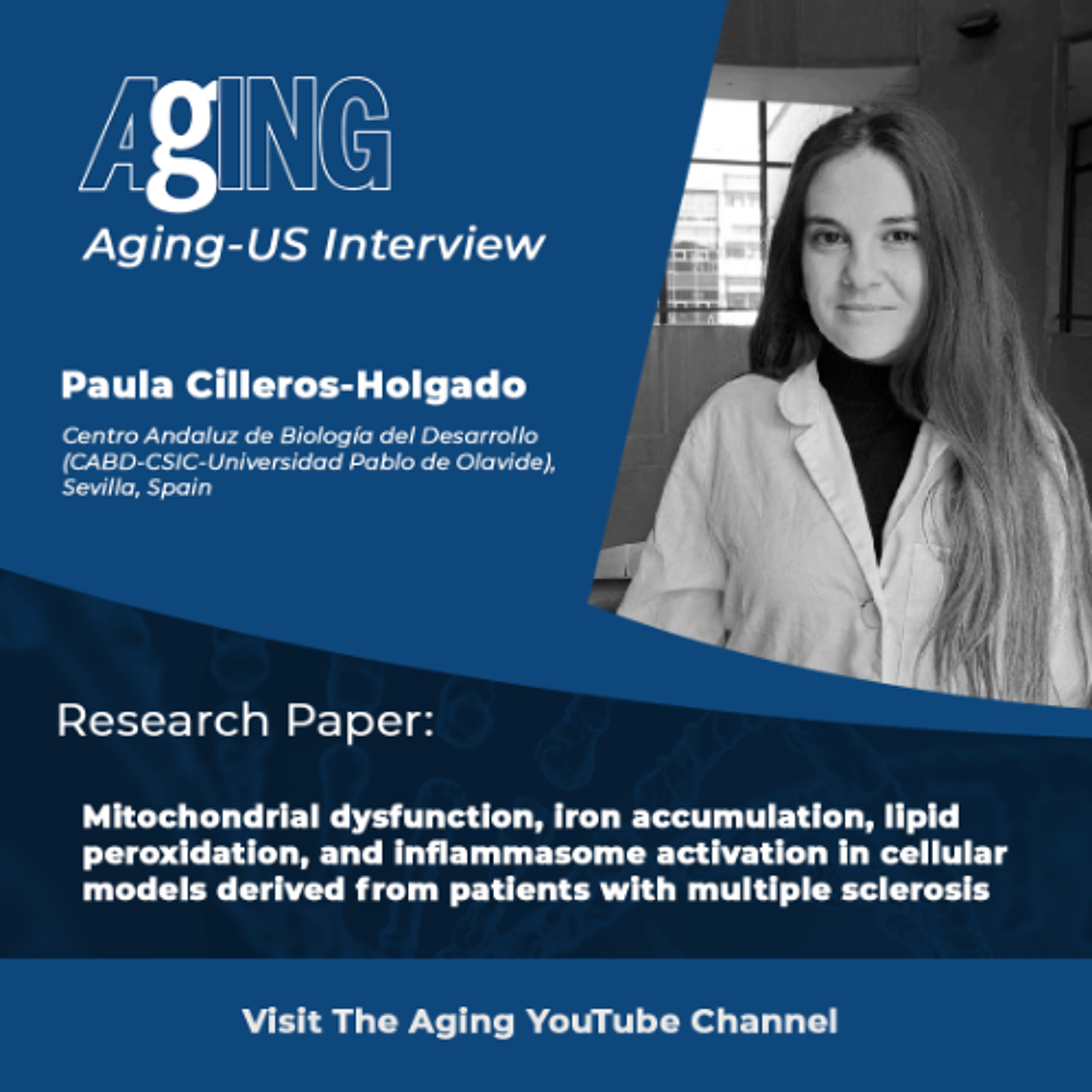
Paula Cilleros-Holgado from Pablo de Olavide University discusses a #research paper she co-authored that was #published in Volume 17, Issue 2 of Aging (Aging-US), entitled “Mitochondrial dysfunction, iron accumulation, lipid peroxidation, and inflammasome activation in cellular models derived from patients with multiple sclerosis.” DOI - https://doi.org/10.18632/aging.206198 Corresponding author - José Antonio Sánchez-Alcázar - [email protected] Video interview - https://www.youtube.com/watch?v=wIV0lAHPA_M Abstract Multiple sclerosis (MS) is an inflammatory demyelinating disease of the central nervous system (CNS). Despite advancements in managing relapsing active illness, effective treatments for the irreversible progressive decline in MS remain limited. Research employing skin fibroblasts obtained from patients with neurological disorders revealed modifications in cellular stress pathways and bioenergetics. However, research using MS patient-derived cellular models is scarce. In this study, we collected fibroblasts from two MS patients to investigate cellular pathological alterations. We observed that MS fibroblasts showed a senescent morphology associated with iron/lipofuscin accumulation and altered expression of iron metabolism proteins. In addition, we found increased lipid peroxidation and downregulation of antioxidant enzymes expression levels in MS fibroblasts. When challenged against erastin, a ferroptosis inducer, MS fibroblasts showed decreased viability, suggesting increased sensitivity to ferroptosis. Furthermore, MS fibroblasts presented alterations in the expression levels of autophagy-related proteins. Interestingly, these alterations were associated with mitochondrial dysfunction and inflammasome activation. These findings were validated in 7 additional patient-derived cell lines. Our findings suggest that the underlying stress phenotype of MS fibroblasts may be disease-specific and recapitulate the main cellular pathological alterations found in the disease such as mitochondrial dysfunction, iron accumulation, lipid peroxidation, inflammasome activation, and pro-inflammatory cytokine production. Sign up for free Altmetric alerts about this article - https://aging.altmetric.com/details/email_updates?id=10.18632%2Faging.206198 Subscribe for free publication alerts from Aging - https://www.aging-us.com/subscribe-to-toc-alerts Keywords - aging, multiple sclerosis, iron accumulation, lipid peroxidation, inflammasome, mitochondrial dysfunction To learn more about Aging (Aging-US), please visit our website at https://www.Aging-US.com and connect with us on social media at: Facebook - https://www.facebook.com/AgingUS/ X - https://twitter.com/AgingJrnl Instagram - https://www.instagram.com/agingjrnl/ YouTube - https://www.youtube.com/@AgingJournal LinkedIn - https://www.linkedin.com/company/aging/ Pinterest - https://www.pinterest.com/AgingUS/ Spotify - https://open.spotify.com/show/1X4HQQgegjReaf6Mozn6Mc [email protected]
Embed this episode
No transcript yet.