
EPISODE · Feb 18, 2025 · 46 MIN
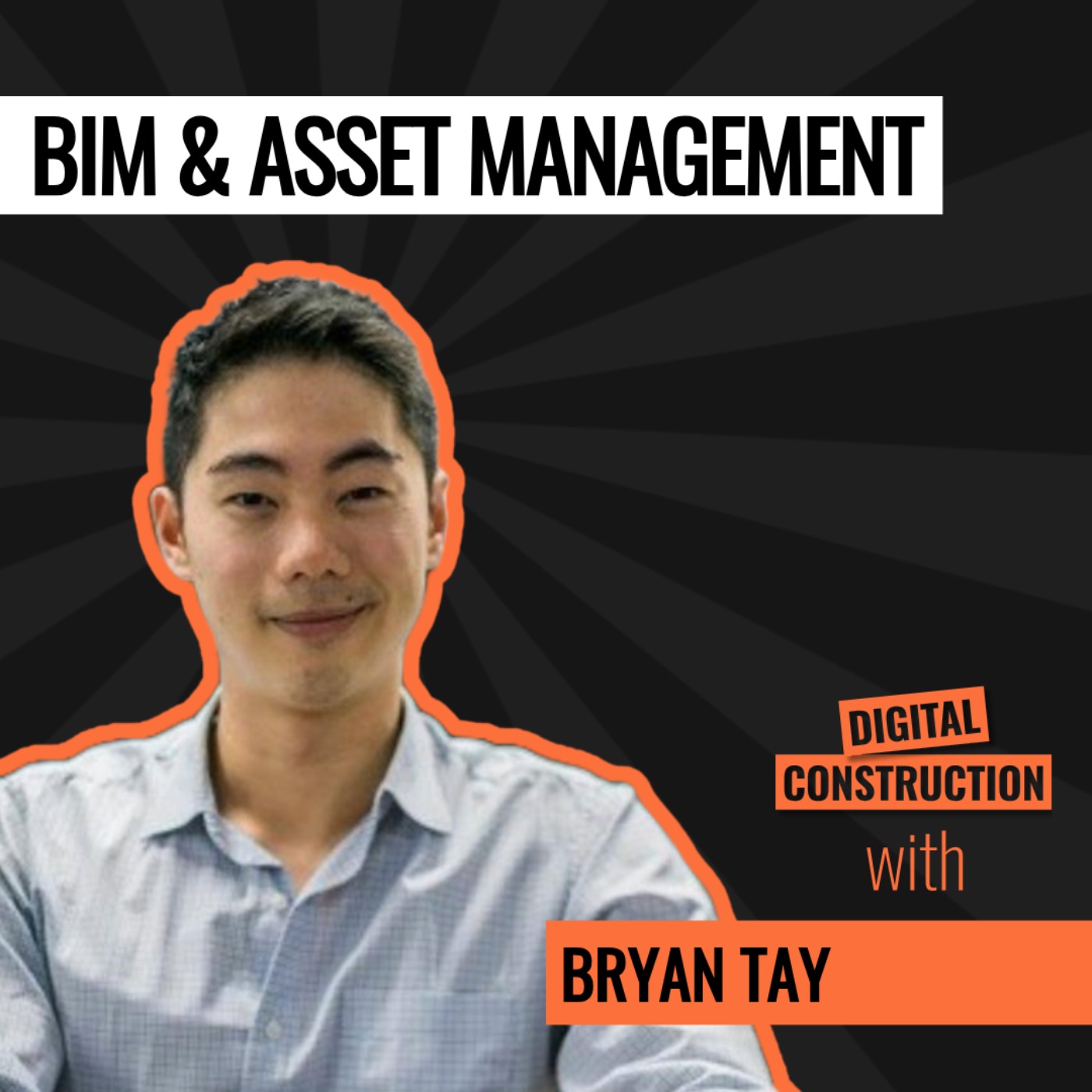
BIM and Asset Management- Bryan Tay
from Digital Construction Podcast
In this episode of the Digital Construction Podcast, Andrea interviews Bryan, a principal digital engineer at Arcadis, about the intersection of BIM and asset management. Bryan shares his career journey, starting as a structural engineer in Singapore before moving to Australia, where he worked on major infrastructure projects and eventually transitioned into digital engineering leadership. Andrea and Bryan discuss how BIM is traditionally used in design and construction but holds valuable data that can support asset management. Bryan explains that while BIM models contain information that can be integrated into asset management systems, challenges arise due to differences in how asset owners interpret and apply BIM data, particularly between building asset owners and infrastructure managers. Andrea asks about the benefits of using BIM in asset management, and Bryan highlights key advantages such as better data standardization for tracking assets, improved handover processes, and the ability to forecast maintenance costs using structured BIM data. He emphasizes that integrating BIM with asset databases can enhance efficiency, but challenges remain. One major challenge, Bryan notes, is the lack of early involvement from asset managers in project planning, which results in a disconnect between BIM data and maintenance workflows. Another issue is defining the minimum maintainable asset—whether, for example, a streetlight should be tracked as a single asset or as multiple components like the pole, foundation, and light fixture. He also discusses differences in data standards, referencing methodologies, and classification systems that complicate integration. Andrea then shifts the conversation to digital twins, asking Bryan to clarify the distinction between BIM models and digital twins in asset management. Bryan describes a digital twin as a virtual representation of a physical asset that evolves with real-time data, whereas BIM is a structured model used primarily for construction. He acknowledges that digital twins can be useful for asset maintenance, particularly in industries like offshore infrastructure, where remote visualization and monitoring are essential. However, he cautions that maintaining a digital twin requires significant investment and ongoing updates, which may not always be cost-effective, especially in infrastructure projects like roads. When asked about the future of BIM in asset management over the next five to ten years, Bryan predicts that the industry will move toward more scalable and adaptable applications of BIM, rather than applying a one-size-fits-all approach. He sees potential in AI-driven predictive maintenance but stresses the importance of human oversight to ensure data reliability, particularly in engineering workflows where accuracy is critical. Andrea asks how BIM and asset management teams can collaborate more effectively, and Bryan suggests that training both groups is essential—BIM teams need to structure data in ways that asset managers can use, and asset managers need guidance on how to leverage BIM models effectively. He recommends a gradual implementation of new workflows and urges asset owners to engage earlier in projects to define their data needs upfront. The conversation concludes with Bryan emphasizing that successful BIM integration in asset management depends on understanding each organization’s specific requirements. Hosted on Acast. See acast.com/privacy for more information.
What this episode covers
In this episode of the Digital Construction Podcast, Andrea interviews Bryan, a principal digital engineer at Arcadis, about the intersection of BIM and asset management. Bryan shares his career journey, starting as a structural engineer in Singapore before moving to Australia, where he worked on major infrastructure projects and eventually transitioned into digital engineering leadership. Andrea and Bryan discuss how BIM is traditionally used in design and construction but holds valuable data that can support asset management. Bryan explains that while BIM models contain information that can be integrated into asset management systems, challenges arise due to differences in how asset owners interpret and apply BIM data, particularly between building asset owners and infrastructure managers. Andrea asks about the benefits of using BIM in asset management, and Bryan highlights key advantages such as better data standardization for tracking assets, improved handover processes, and the ability to forecast maintenance costs using structured BIM data. He emphasizes that integrating BIM with asset databases can enhance efficiency, but challenges remain. One major challenge, Bryan notes, is the lack of early involvement from asset managers in project planning, which results in a disconnect between BIM data and maintenance workflows. Another issue is defining the minimum maintainable asset—whether, for example, a streetlight should be tracked as a single asset or as multiple components like the pole, foundation, and light fixture. He also discusses differences in data standards, referencing methodologies, and classification systems that complicate integration. Andrea then shifts the conversation to digital twins, asking Bryan to clarify the distinction between BIM models and digital twins in asset management. Bryan describes a digital twin as a virtual representation of a physical asset that evolves with real-time data, whereas BIM is a structured model used primarily for construction. He acknowledges that digital twins can be useful for asset maintenance, particularly in industries like offshore infrastructure, where remote visualization and monitoring are essential. However, he cautions that maintaining a digital twin requires significant investment and ongoing updates, which may not always be cost-effective, especially in infrastructure projects like roads. When asked about the future of BIM in asset management over the next five to ten years, Bryan predicts that the industry will move toward more scalable and adaptable applications of BIM, rather than applying a one-size-fits-all approach. He sees potential in AI-driven predictive maintenance but stresses the importance of human oversight to ensure data reliability, particularly in engineering workflows where accuracy is critical. Andrea asks how BIM and asset management teams can collaborate more effectively, and Bryan suggests that training both groups is essential—BIM teams need to structure data in ways that asset managers can use, and asset managers need guidance on how to leverage BIM models effectively. He recommends a gradual implementation of new workflows and urges asset owners to engage earlier in projects to define their data needs upfront. The conversation concludes with Bryan emphasizing that successful BIM integration in asset management depends on understanding each organization’s specific requirements. Hosted on Acast. See acast.com/privacy for more information.
NOW PLAYING
BIM and Asset Management- Bryan Tay
No transcript for this episode yet
Similar Episodes
Mar 26, 2026 ·1m
Jan 2, 2026 ·47m
Dec 21, 2025 ·46m