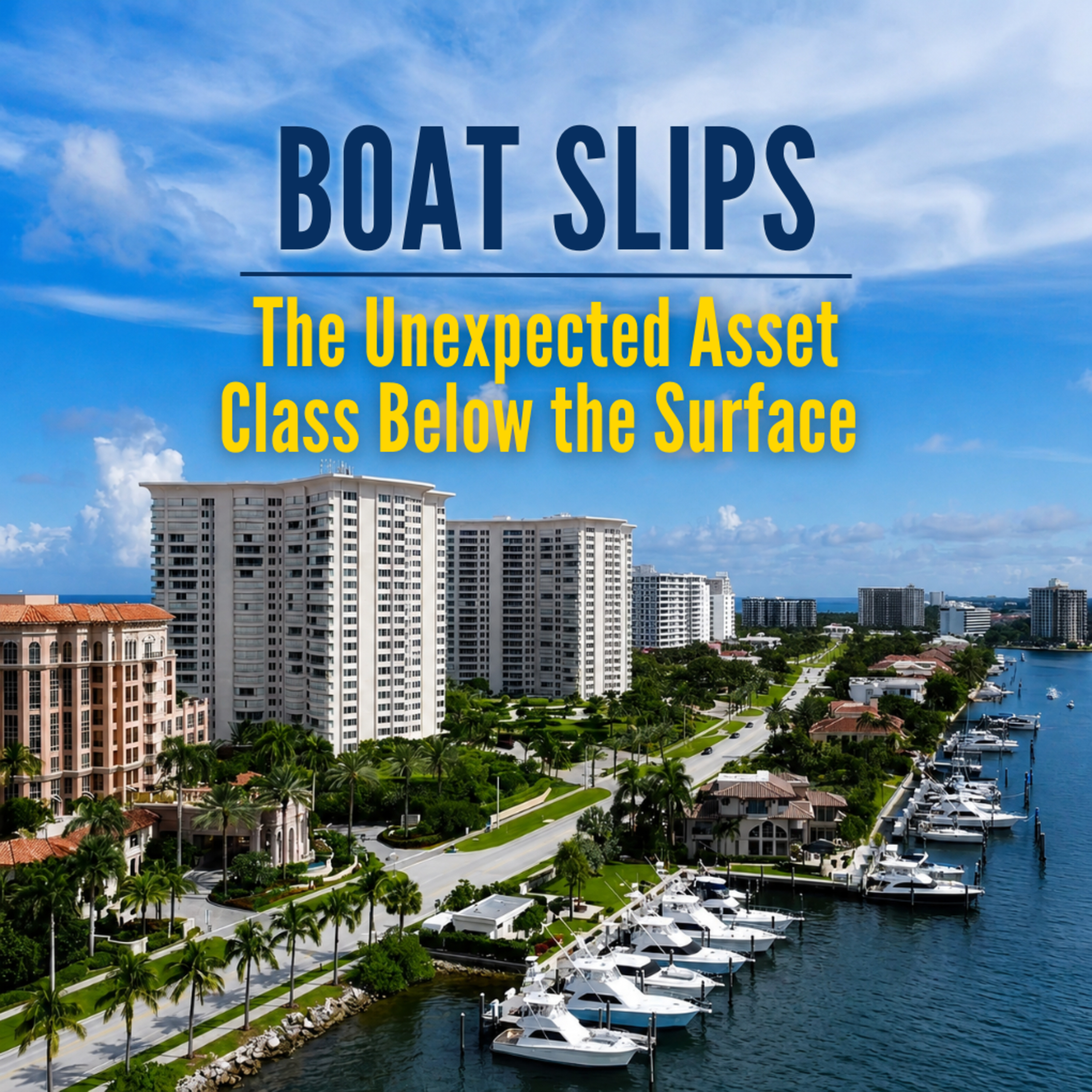
Boat Slips | The Unexpected Asset Class Below the Surface
from Property Unpeeled Hosted by PropertyOnion
Boat slips can behave like real estate, but the rules underneath them are very different. From deeded submerged land to leaseholds and riparian rights, the ownership structure can determine whether a slip becomes a scarce asset or an expensive liability. Tony Stern breaks down what drives boat slip values, why location and physical capability matter, and how water depth, regulation, special assessments, and state leases can change a deal. He also looks at examples from Florida, Texas, Ohio, Pennsylvania, Colorado, and the Great Lakes before closing with a five-point due diligence framework. For real estate investing articles and educational resources, visit https://propertyonion.com/education/. For more in-depth real estate investing education, visit PropertyOnion Academy at https://propertystudent.com/. EPISODE CHAPTERS 00:00 - Why Boat Slip Demand Is Rising 01:33 - Four Ways a Boat Slip Can Be Owned 04:33 - Attached vs. Deeded Slips 06:53 - Scarcity, Regulation & Physical Capability 09:03 - Florida: Deep Water, Access & Appreciation 10:33 - Texas: Drought Risk and Upside 13:53 - Ice, Siltation & Special Assessments 18:53 - Colorado Reservoirs and Drawdown Risk 21:13 - State Leases, Associations & Reserve Funds 23:53 - Cash Flow and the Great Lakes 25:13 - Five-Point Due Diligence Checklist This Unpeeled Short is hosted by Tony Stern. ABOUT THIS EPISODE Florida, Texas, Ohio, Pennsylvania, Colorado, and the Great Lakes are discussed as examples of how regional conditions affect boat slip risk and value. This episode explores boat slip investing as a niche real estate and alternative asset strategy, including dockominiums, fee simple submerged land, leasehold boat slips, riparian rights, littoral rights, deeded boat slips, marina property, and waterfront real estate. It covers the difference between slips attached to residential property and independently deeded slips, along with scarcity created by permitting, regulation, limited marina development, and supply constraints. Investor due diligence includes slip length, vessel beam, draft, electrical power, deep-water access, fixed bridges, navigability, water-level volatility, drought exposure, ice jacking, deicing systems, river siltation, dredging, reservoir drawdowns, state submerged-land leases, marina association management, reserve funds, maintenance obligations, and special assessments. The episode also examines boat slip appreciation, rental income, cash-on-cash return, seasonal marina economics, freshwater versus saltwater slips, and risks that can reduce usability or resale value. For investors evaluating unconventional real estate assets, waterfront investments, marina investments, passive income opportunities, or deeded property rights, the central lesson is that legal structure and physical access matter as much as location. A slip that looks attractive on paper can carry hidden costs or restrictions below the surface, making title and ownership review, association financial review, regulation, water conditions, and infrastructure key parts of real estate risk management. PROPERTY UNPEELED Whether you are a seasoned foreclosure investor, a fix-and-flip pro, or a landlord building a passive income portfolio, Property Unpeeled is your ultimate real estate playbook. Hosted by Tony Stern, this podcast goes beneath the surface of traditional real estate investing to uncover hidden traps, macro market trends, and advanced wealth-building strategies. From niche tax liens and distressed property auctions to standard property market analysis, tune in weekly to get the data you need to scale your portfolio. Subscribe to Property Unpeeled on Apple Podcasts, Spotify, Amazon Music, YouTube, or visit PropertyOnion.com.
Embed this episode
No transcript yet.