
EPISODE · Sep 7, 2025 · 26 MIN
Book Discussion: Flashlight by Susan Choi; The Palm Wine Drinkard by Amos Tutuola
from Be a Cactus Podcast · host Victoria Waddle
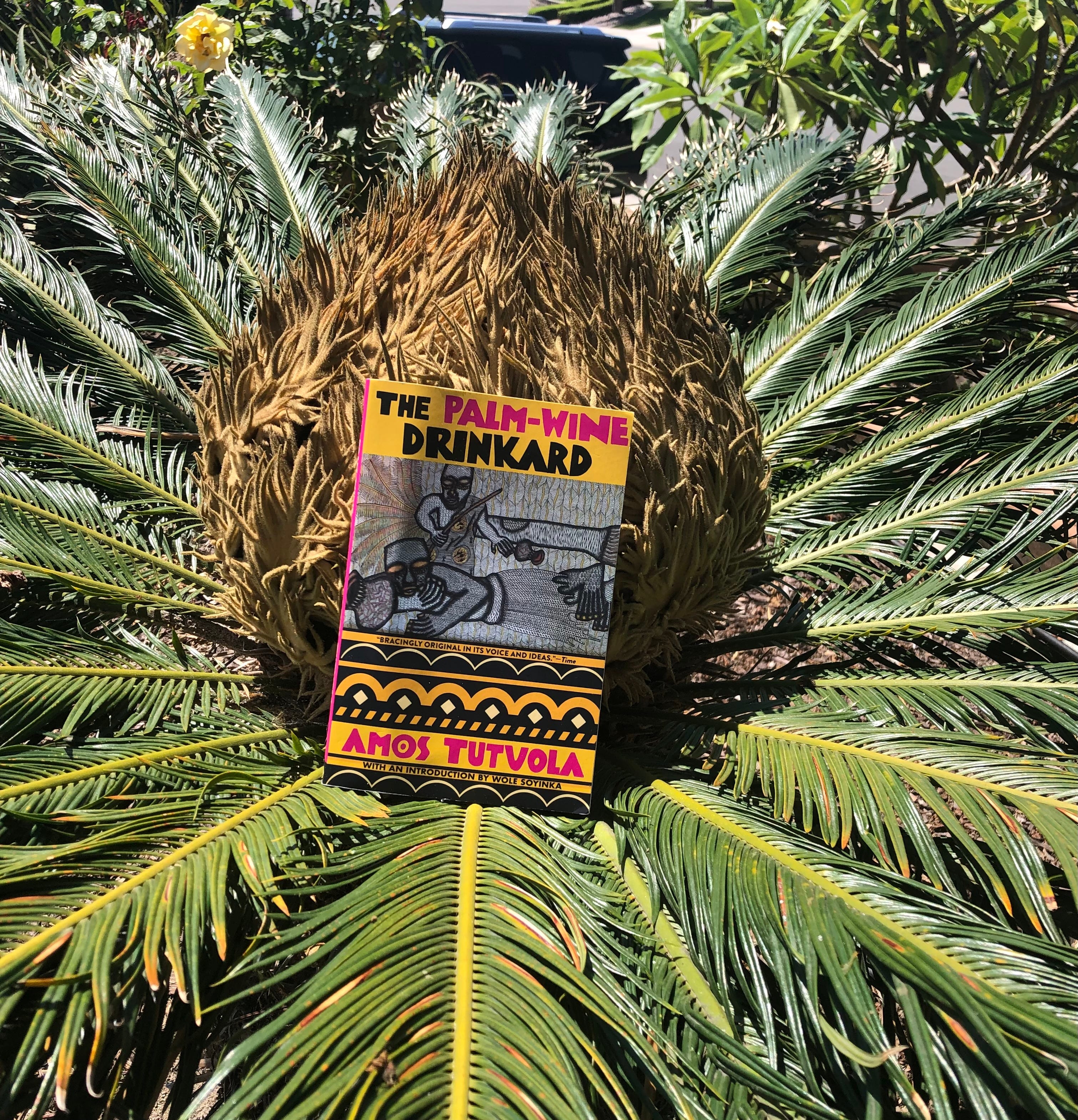
Hello Friends,Today I’d like to look at and recommend—or not—some of my recent reading: Flashlight by Susan Choi, The Palm Wine Drinkard by Amos Tutuola, and for kids, How to Talk to Your Succulent by Zoe Persico.Before I dive in, I thought you might be interested in some news pertinent to readers:* Reading for Pleasure has Plummeted More than 40% [in the last 20 years] from the Los Angeles Times* Why Magic, Dragons and Explicit Sex Are in Bookstores Everywhere from the New York TimesRomantasy is propping up the fiction market. Thanks to a generation that grew up reading about a boy wizard.* I am enjoying The Ordinatio and Monte Mader. I have five one-month gift subscriptions to give away for each. If either of those sound interesting and you want to try one out, let me know. On to this week’s book discussion.Flashlight by Susan ChoiOn Flashlight by Susan Choi, I found only positive reviews in my email newsletter from Bookmarks Reviews, several of which were raves. And I read a very positive review in the New York Times. (Here’s a gift link if you would like to read the whole thing) and one of my absolutely favorite book people, Ron Charles of the Washington Post, liked it, but didn’t love it. Both he and Hamilton Cain of The Los Angeles Times (another paper I subscribe to—the link to the full review is here) point to one of the things that lost my interest early on—the excessive description and the discussion of: Every. Single. Thing that crosses the characters’ paths. Cain describes this as “baggy.” Charles says: “Too often, I was disappointed to finish a page and realize it could have been trimmed to a single crisp sentence.”Here’s the publisher’s back copy:One night, Louisa and her father take a walk on the beach. He’s carrying a flashlight. He cannot swim. Later Louisa is found washed up by the tide, barely alive. Her father is gone. She is ten years old.In chapters that shift from one member to the next, turning back again and again to that night by the sea, Susan Choi's Flashlight chases the shockwaves of one family’s catastrophe. Louisa is an only child of parents who have severed themselves from the past. Her father, Serk, an ethnic Korean born and raised in Japan, lost touch with his family when they bought into the promises of postwar Pyongyang and relocated to the DPRK. Her American mother, Anne, is estranged from her family after a reckless adventure in her youth. And then there is Tobias, Anne’s illegitimate son, whose reappearance in their lives will have astonishing consequences.What really happened to Louisa’s father? Why did he take Louisa and her mother to Japan just before he disappeared? And how can we love, or make sense of our lives, when there’s so much we can’t see?In opposition to the critics’ evaluation of characters, I found them wholly unsympathetic and one dimensional for most of the novel. (In the last third, they are more rounded; however, the last third is pretty didactic.) Louisa is a precocious child who also is somehow very dull, lacking understanding of things commonly known by children. While the goal, I think, is to show the characters as alienated and lonely, Serk, Anne, and Louisa are so out of tune with one another and with the world at large that they feel entirely unconnected not just to each other, but to anything (including the reader) and mostly hateful. I did not believe them, did not believe in them, could not imagine the marriage or the parenting taking place.The book was so overlong that I was glad I’d opted for the audio version. The narrator draws out each rounded word, I suppose to exasperate the listener. I switched it 1.25 speed, and finally, becoming so tired of the whole business, to 1.5 speed.All this made me reflect on why I was continuing with a book I didn’t like much at all. I hate to admit it, but it was only because: 1) Choi has a stellar reputation 2) Professional critics praised it so highly that I feel I must be too stupid to ‘get it.’ At any rate, I’m finally done. For someone who feels as I do, here’s Graham Hillard from the Washington Examiner:I read the new Susan Choi novel in five long sittings, each of which produced a storm cloud of indecision. Had Choi penned, as often seemed possible, the worst serious book in recent memory, an overwrought parody of self-conscious “MFA fiction”? Or was Flashlight a flawed but sometimes brilliant international saga, occasionally losing its thread, yes, but asking and answering momentous questions?That I still haven’t decided a week later says much about the state in which Flashlight is likely to leave readers. The follow-up to 2019’s slippery Trust Exercise, Choi’s new release is expansive, cinematic, and badly in need of editing. Whereas its National Book Award-winning predecessor demanded a puzzle-solver’s attention, Flashlight requires nothing so much as the page-turner’s dogged resolve. More than once, as its plot unspooled, I declared its main character, Louisa Kang, to be the least likable literary protagonist since Patrick Bateman, the cannibal-necrophiliac who narrates American Psycho.All of this puts me in mind of the recent argument over Ocean Vuong’s The Emperor of Gladness with the question of whether it is okay to say negative things about an author’s work. My take on this is that there is no point in saying negative things about most authors. They are grinding away and not making a living. They are bringing their creative work into the world. Like it or don’t. Yours is just an opinion among many. So consider that it isn’t good to shut emerging writers down as they work and strive. In critiquing them, you may make the mistake of misunderstanding their experiments. Looking back at Susan Choi, I think of a part of Trust Exercise where she switches POV from paragraph to paragraph, and then, finally, within paragraphs. This actually works because, in this particular novel, there’s a question of who has the right to tell the story. But I also think that if an unknown writer had done the same thing in a similar book, they wouldn’t even have made it past a literary agent. They would have been considered too much the amateur to even understand POV. There are the anointed, and then there’s everyone else. Our loss.However, when we take someone with the reputation as stellar as that of Ocean Vuong (or Susan Choi), there is a larger question of their being revered as one of the gods of the western canon, as one of the elite group of great American novelists. If that’s the conversation we’re having, then, yes, serious critiques are in order. And, honestly, I think that’s about the only time such critiques matter. If you have missed the Vuong brouhaha, here is the sort of takedown that outraged those readers who find Vuong a sweet person and, therefore, an unfair mark for criticism:How to Talk to Your Succulent by Zoe PersicoA book I read this week and enjoyed was How to Talk to Your Succulent by Zoe Persico. I received it from the publisher because the name of this Substack is Be a Cactus. It’s a graphic novel for kids 8-12 years old. I’m guessing there’s not a lot of interest among Be a Cactus readers, but: if you are looking for a book for a tween, I reviewed it over on School Library Lady. The illustrations are delightful and the story of grief and loneliness concludes happily.The Palm Wine Drinkard by Amos TutuolaPeriodically, I look for a ‘family book club’ title. We often try to read something that we might not otherwise. I saw a review of The Palm Wine Drinkard by Amos Tutuola in the New York Times. It was originally published in 1952, but Grove published a new edition in June. The review discusses the background for the book and its original reception as much as it does the book itself. (Here’s the gift link if you would like to read it in its entirety.)Originally published under the Evergreen imprint of Grove Press, the books appeared alongside the storied house’s rogues’ gallery of midcentury American and European avant-garde authors like William Burroughs, Henry Miller, Samuel Beckett and Jean Genet.Inspired in part by folk tales and written in an idiosyncratic vernacular that mixes English with Yoruba syntax, “The Palm-Wine Drinkard” went on to become something of a cult classic in the West. Time magazine named it one of the 100 best fantasy books of all time. It has been hailed as a forerunner of the magical realism of Gabriel García Márquez and others, and it had a significant impact on African literature, even if it has been largely overshadowed by Chinua Achebe’s “Things Fall Apart.”My family likes folklore and myth, so we decided to try it. Three of us ended up reading it. We all loved it. The Palm Wine Drinkard is interesting and strange, a journey through mythical events, more a picaresque than a novel. There’s a Gulliver’s Travels sort of whimsy in an African mythology and setting. However, unlike Gulliver, this doesn’t appear to be political satire. There’s no characterization—no descriptions at all of the characters. Just wild event after wild event engaging with supernatural creatures, the dead, and more. The language shifts from standard English to local vernacular, sometimes in ways to amuse the reader.The main character refers to himself as “father of gods who could do anything in this world.” Unlike Gulliver, he has a purpose in his travels. His favorite palm wine tapster has died after falling out of a palm tree. The drinkard, who can consume hundreds or thousands of gallons of palm wine a day, decides to venture to “dead’s land” to retrieve him. On the way, he saves a princess from an evil captor and marries her. The two continue the journey, meeting and outwitting all sorts of creatures. They sell their deaths and so will not die, but are unable to sell their fear, which is with them in each circumstance. With the magic and power of his juju, the drinkard gets out of scrape after scrape.Readers familiar with any culture’s mythology know that the living do not belong in ‘deads’ land’. But the journey and its result are the story’s purpose. One of my favorite adventures was among the Red-people of the Red-town in the Red-Bush. The Red-people endure this red punishment because their Red-king failed to listen to two magical red creatures and decided to put them in a fire. Now, not only is everything in his town red, but the community must sacrifice one person each year to the red creatures. The king wants the drinkard to volunteer, and so he does. What ensues is wildly creative and strange.If you want to try an out-of-the-ordinary-read, I highly recommend this one.Thanks for reading!Thanks for reading Be a Cactus! Subscribe for free to receive new posts and support my work. This is a public episode. If you would like to discuss this with other subscribers or get access to bonus episodes, visit victoriawaddle.substack.com
Embed this episode
NOW PLAYING
Book Discussion: Flashlight by Susan Choi; The Palm Wine Drinkard by Amos Tutuola
No transcript for this episode yet
Similar Episodes
No similar episodes found.
Similar Podcasts
No similar podcasts found.