
EPISODE · Mar 12, 2026 · 20 MIN
BRAZILIAN URBAN AMERINDIANS & ADVOCACY
from J P LINSTROTH EPOCHAL RECKONINGS PODCAST
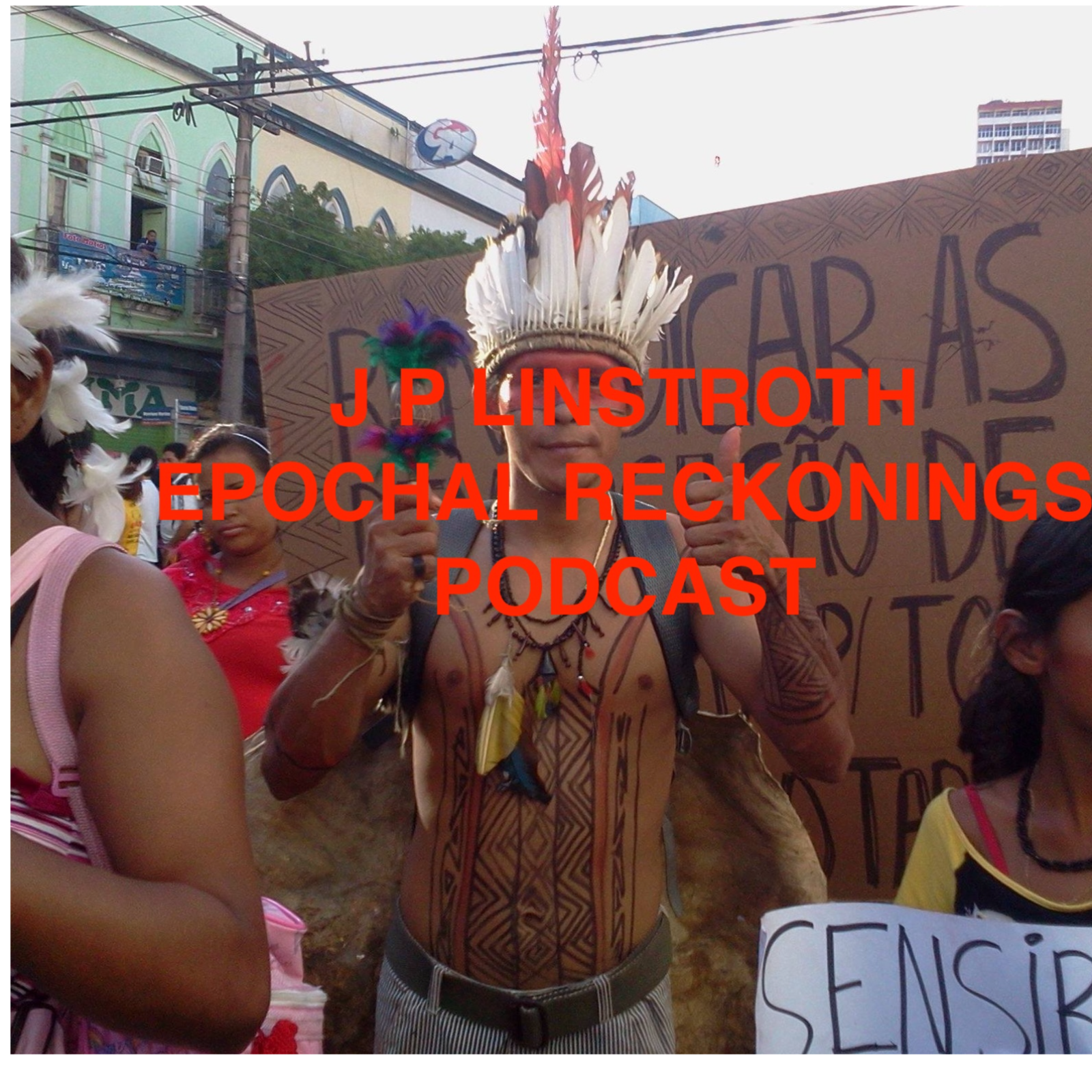
In J. P. Linstroth's book chapter, "Urban Amerindians and Advocacy: Toward a Politically Engaged Anthropology Representing Urban Amerindigeneities in Manaus, Brazil" (2015), my political engagement in advocacy for urban Amerindians in Manaus, Brazil may be characterized as more by accident than not in the sense of not knowing a priori that my fieldwork should follow some Brazilian anthropologists' leads in advocating for Indian rights. Prior to fieldwork I did not know about the indigenous politics in Manaus or for that matter not much about Indian groups living in Manaus as little is known about these city dwelling Indians outside Brazil. Also, I did not know of the many years of activism and advocacy of anthropologists in the Department of Anthropology at the Universidade Federal do Amazonas (UFAM) who had been working for the political rights of urban Amerindians and Amerindians throughout Brazil for years. I was a novice by comparison. To many Indians I encountered I was an oddity from North America but with the possibility of being strategically important to them in their indigenous politics for reaching a wider English-speaking audience. In this manner, as with other anthropologist acquaintances, I became a "political object' to them in a positive sense. I was someone who might prove to be politically useful to them over time. Anthropologists who become political objects to Indians serve as an example of what engagement might entail for the interethnic relationship of anthropologists with politically mindful Indians. In my view political engagement with indigenous peoples not only entails advocacy but also evokes a multiplicity of relations between anthropologist and Indian. It implies an interethnic and intersubjective relationship, which is also reciprocal. Indians, on the one hand, use Brazilian anthropologists for their advantage in gaining access to governmental organizations, NGOs, and addressing health and economic needs and in navigating judicial issues. (In this sense, I fit in with a model of a type of a professional they were already accustomed to dealing with.) Anthropologists, on the other hand, seek empirical data in which to theorize anthropologically about Indians. Engagement is therefore a mutual dialogue and may involve indigenous peoples determining the direction of anthropological inquiry and its outcomes (as in my case). In my particular study the urban Indians of Manaus were most concerned with my promulgating their politics to a broader audience and my propagating their memories of racism and discrimination from the mistreatment of Brazilian society and Brazilian government agencies. The reason for writing this essay is thus in support of urban Amerindians living in Manaus and to demonstrate to others the discrimination and racism they have experienced. Writings such as this chapter may add to the dedication and work of Brazilian anthropologists who have successfully advocated for the rights and recognition of urban Indians in Manaus, a continual process, and especially in negotiating with governmental agencies such as FUNAI and FUNASA. This writing contribution however attempted to move beyond mere recognition of the Indians and their causes. Rather, it also analysed the indigenous trauma experienced through discrimination and racism and how trauma may be regardedas a catalyst for overcoming interethnic strife while at the same time defining indigeneity in juxtaposition to Brazilian society.
NOW PLAYING
BRAZILIAN URBAN AMERINDIANS & ADVOCACY
No transcript for this episode yet
Similar Episodes
Mar 26, 2026 ·1m
Jan 2, 2026 ·47m
Dec 21, 2025 ·46m