
EPISODE · Apr 23, 2024 · 33 MIN
Breaking Free from the Overparenting Trap: How to Raise Independent, Resilient Teens with Julie Lythcott-Haims
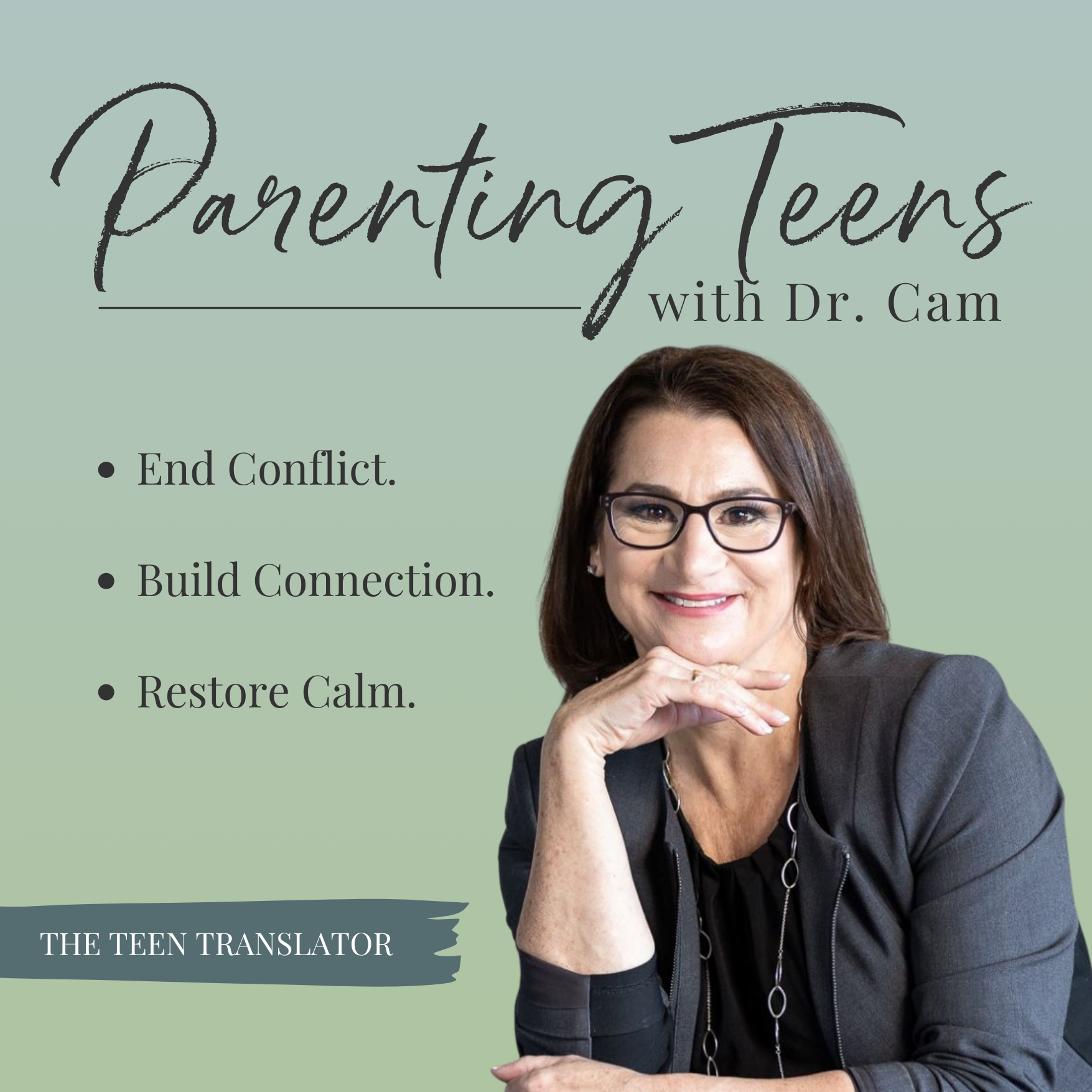
from Parenting Teens with Dr. Cam · host Dr. Cam
In today’s high-pressure world, teens are expected to excel in academics, extracurriculars, and beyond. Parents, driven by love and fear, often take on their children’s stress in an attempt to ensure their success. But what if this well-intentioned involvement is actually doing more harm than good? In this episode, Dr. Cam welcomes bestselling author and renowned speaker Julie Lythcott-Haims to explore the dangers of overparenting and how parents can foster independence and resilience in their teens. Julie, former dean of freshmen at Stanford University, shares insights from her acclaimed book, How to Raise an Adult, and her viral TED Talk with over 7 million views. WHAT YOU'LL LEARN IN THIS EPISODE How overparenting hinders teens' independence and problem-solving skills The key differences between supporting and controlling your child Why failure is an essential part of a teen’s growth (and how to let them experience it) Practical steps to shift from overparenting to empowering your teen 5 KEY TAKEAWAYS FOR PARENTS OF TEENS Overparenting stunts development. When parents do too much, teens miss out on learning essential life skills. Fear and societal pressure drive overparenting. Many parents micromanage out of anxiety about their child’s future rather than their immediate needs. Failure is crucial for growth. Allowing teens to struggle helps them build confidence and resilience. Parents must regulate their own fears. Managing personal insecurities helps create a healthier parenting approach. Balance support with autonomy. Providing guidance while letting teens make their own decisions fosters true independence. 🎧❤️ ENJOYING THE SHOW? Don’t keep it to yourself! Share your favorite episode and leave a rating and review to help other parents find the support they need. Your feedback helps me create even more episodes filled with practical tips for you and your family! Thanks so much for your support! 🙏💫 🔔 Remember to hit SUBSCRIBE so you never miss another solution-packed episode! 🙌 RESOURCES MENTIONED IN THIS EPISODE Julie Lythcott-Haims Ted Talk: How to Successful Raise Kids--With Over-Parenting Julie’s Parent Resource Recommendations CONNECT WITH OUR GUEST: Julie Lythcott-Haims Website: julielythcotthaims.com Instagram: @jlythcotthaims Facebook: @jlythcotthaims Twitter: @jlythcotthaims LinkedIn: Julie Lythcott-Haims CONNECT WITH YOUR HOST: Dr. Cam Caswell Website: AskDrCam.com Instagram: @DrCamCaswell TikTok: @the.teen.translator YouTube: Parenting Teens with Dr. Cam Facebook: @DrCamCaswell TRANSCRIPT Dr. Cam: She sparked a national dialogue challenging conventional parenting wisdom in her acclaimed book, How to Raise an Adult, and her TED Talk, How to Raise Successful Kids Without Overparenting, boasting over seven million views, many of which are mine. Welcome, Julie. First, share a bit of your backstory with us. What inspired you to focus on overparenting? Julie Lythcott-Haims (00:53.853): Well, thank you for having me, Dr. Cam, and everyone listening to us. I hope you get something useful out of this. Pay attention to what comes up in your body because that's a clue that maybe there's something that you want to pay attention to. I am the author of How to Raise an Adult, which Dr. Cam mentioned, and I wrote this having been the dean of freshman students at Stanford University for 10 years. As a college administrator in the early 2000s... Dr. Cam (07:35.812): It really is. And then doing that is going to send our kids to therapy too. So keep going. Julie Lythcott-Haims (07:41.113): Well, I would just say, you know, I've been there. I have a 24-year-old and a 22-year-old, and I'm the expert, so to speak. And yet, turns out I was overparenting. My son, who's 24, came home for what I now call bonus years—mental health crisis in college right before the pandemic, left college, things got worse, came home to shelter in place, really depressed, finally got great therapy. We went into family therapy. Julie Lythcott-Haims (21:15.881): I hope you get some downtime. I'm in the other room if you need me. Like, I love you. You know, like the warmth and the juice and then walk away so the kid can be like, okay, right. I am responsible. So the more we hound them and we're on them and we act like, "I have to hound you because you won’t do it unless I make you," the more they're like, "Screw you. You can't make me," right? Or, "Fine, you are making me." In fact, Dr. Cam, I had a call from a mom who Julie Lythcott-Haims (21:45.545): ...point you've been making about the harmful effects of nagging and reminding. She said, "I got two sons. I got a biological son who's 17 and an adopted son who's 15. My bio son has had a lot of struggles. He's in a residential boarding school in a different state. We have family therapy on the phone once a week. And in family therapy this week, he said, 'Mom, every time you ask, Have you done this? When are you going to do this? Why haven’t you done this? Don’t forget to do this. Oh, I think you should do this…'" Julie Lythcott-Haims (22:43.449): My adopted son—I am more loving toward my adopted son because she worked it out. So I tell parents, maybe you don’t have the A/B test of your adopted kid and your biological kid, but think about how you are with your nieces and nephews and best friends’ kids. You are that loving adult who doesn’t judge, who doesn’t act like it’s yours to fix. Like when their kid comes home, when you’re at their house, you know, you’re the aunt or the uncle or the best friend of the family. It’s Friday afternoon, their kid comes home... Dr. Cam (24:55.058): Doing less but still showing how much we care. Julie Lythcott-Haims (25:00.989): Well, part of it is listening to a great podcast like this where we try to say this, right? But I think this is where I said the definition of love has become like, "I do everything for you," instead of creating the conditions under which you can do. And this goes back to our own ego. Like, I feel needed and useful when I’m doing more as opposed to, "I am creating the conditions under which my kid can thrive." So one hack for this is... Dr. Cam (26:43.194): Please do that. Yes, get off that. It's the worst invention. It's terrible. Julie Lythcott-Haims (26:50.833): But it's evidence that you are so wrapped up in this person's existence that you're hitting refresh to calm your own dysregulation, right? Let me give you another story. Can I give you another story? All right. My son—24. I have a great daughter too, 22, but my story is, he's the one that lives with us still, so I got more stories right now. In the pandemic, it was 2021, George Floyd had been murdered nine months earlier, we’re a Black family... Dr. Cam (28:27.153): I'll write you a script. Julie Lythcott-Haims (28:43.985): Yeah, sweetie, that does sound hard. And then I paused, and my little heart is fluttering because I don’t want my kid to feel anything is hard. And then I looked at him and said, "But you know what? You do hard things." And I kind of stayed—I didn’t get all up in his face. I was like, "You do hard things." Smile. Confidence. And his eyes flew open, and he was like, "I do hard things." Dr. Cam (30:05.74): That is a good point. Julie Lythcott-Haims (30:08.781): It’s just a different type of doing, right? Instead of doing the thing, the fixing, the handling, the arranging, it's, "Okay, my job is to work on myself to not need to do the thing so that I don’t deprive my kid." My kid needs the opportunity to do the thing. We need to flip the language—it needs to be like, "Why would I deprive my child of the chance to learn in this moment?" Dr. Cam (30:29.742): The deprivation—I love that, because it does change it to, it’s not that I’m not helping him, it’s that I’m giving him the opportunity. I’m going to let him have this one; I’m not going to take it for myself. And I think that’s a language that might help us. Julie Lythcott-Haims (31:42.141): So let me say this, and this is for your producer to edit out. I am supposed to be on a call three minutes ago, which I didn’t realize. So I do need to wrap. Okay. Dr. Cam (31:49.467): Oh, we can go. Julie Lythcott-Haims (31:49.467): Sure, absolutely. Let’s do this. And I just want to do one golden nugget to give the listeners to walk away with. The golden nugget is your child is actually a separate person from you, and they are a gift from the universe or God or however you believe we all get here. Your job is not to live their life for them, but simply to prepare the conditions under which this precious gift will become themselves. They are a wildflower. You don’t even know what they’re going to look like or be like. You just create the right conditions where this wildflower can become their glorious self. Dr. Cam (32:41.074): I love that. What a great place to close. Thank you, Julie, so much for joining us. Julie Lythcott-Haims (32:45.937): Thank you, Dr. Cam, and to everyone who listened. Hope you got something good and useful out of it. Appreciate you. ABOUT THE SHOW The Parenting Teens with Dr. Cam Podcast is your go-to resource for navigating the challenges of raising teenagers. Hosted by Dr. Cam Caswell, an adolescent psychologist and certified parenting coach, this podcast offers practical strategies, expert advice, and real-world insights to help you build a stronger relationship with your teen and support their emotional growth. Whether you’re struggling with teenage behavior or looking to improve communication, each episode provides actionable tips to make parenting teens easier and more rewarding. Perfect for both new and seasoned parents, this podcast helps you build the confidence to handle teen challenges and thrive together. #theteentranslator #drcamcaswell #parentingteenswithdrcam
Embed this episode
What this episode covers
Dr. Cam welcomes Julie Lythcott-Haims, bestselling author of How to Raise an Adult and speaker of the viral TED Talk How to Raise Successful Kids—Without Overparenting (7M+ views!). She’s leading the charge against overparenting—helping parents raise independent, confident teens.
NOW PLAYING
Breaking Free from the Overparenting Trap: How to Raise Independent, Resilient Teens with Julie Lythcott-Haims
No transcript for this episode yet
Similar Episodes
No similar episodes found.
Similar Podcasts
No similar podcasts found.