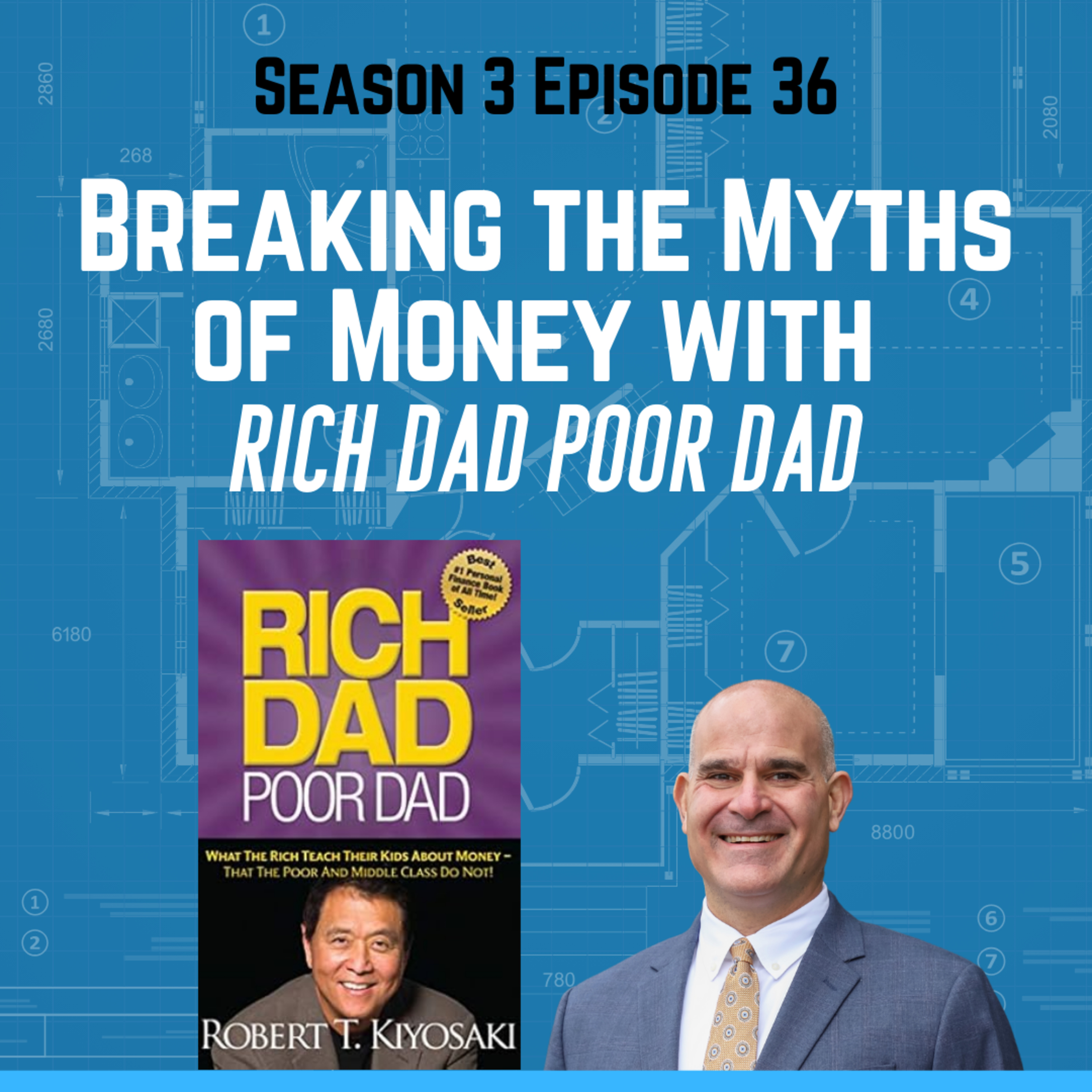
Breaking the Myths of Money with Rich Dad Poor Dad episode artwork

EPISODE · Sep 19, 2025 · 17 MIN

Breaking the Myths of Money with Rich Dad Poor Dad

from This One Time in Real Estate... · host Mark Gellman

➡️ Today we’re diving into one of the most influential personal finance books of all time: Rich Dad Poor Dad by Robert Kiyosaki. This book has sold millions of copies worldwide—and for good reason. It challenges the way most of us think about money, work, and wealth.➡️ The big idea? It’s not about how much money you make. It’s about how you think about money and what you do with it. Let’s break it down together.➡️ Kiyosaki grew up with two father figures.His Poor Dad—his biological father—was well educated, had a stable government job, and believed in the traditional path: go to school, get good grades, find security in a career.His Rich Dad—his best friend’s father—didn’t have a college degree but built wealth through business and investments. He believed in making money work for you.➡️ Those two mindsets—Poor Dad vs. Rich Dad—showed Kiyosaki firsthand how differently people can think about money. And that contrast shaped his financial education.➡️ The Core LessonsLesson 1: The Rich Don’t Work for Money.“Employees chase paychecks. The wealthy focus on building assets that pay them even when they’re not working. The lesson is clear: don’t just trade time for money.”Lesson 2: Financial Literacy—Assets vs. Liabilities.“An asset puts money in your pocket. A liability takes it out. Most people mix them up. For example, your personal home feels like an asset, but unless it generates cash flow, it’s really a liability.”Lesson 3: Mind Your Own Business.“Even if you have a job, you should be building wealth outside of it—through side hustles, real estate, or investments. That’s how you grow long-term wealth.”Lesson 4: The Power of Corporations and Taxes.“The wealthy use corporations to protect wealth and minimize taxes. Employees earn, pay taxes, then spend. Corporations earn, spend, then pay taxes on what’s left. It’s a completely different game.”Lesson 5: Work to Learn, Not Just to Earn.“Don’t chase the biggest paycheck. Chase skills. Sales, marketing, leadership, investing—these are worth more than a raise. You’re not working for money; you’re working to grow your financial intelligence.”➡️ Myths to BreakMyth #1: Your house is your greatest asset. Truth: unless it puts money in your pocket, it’s a liability.Myth #2: The success path is school, job, retirement. Truth: jobs can vanish, but assets create freedom.Myth #3: You need money to make money. Truth: you really need knowledge, creativity, and courage.➡️ So here’s the bottom line: Rich Dad Poor Dad isn’t a get-rich-quick scheme. It’s about shifting your mindset. It’s about learning the language of money, building assets, and creating financial freedom.📌 Here’s my challenge to you this week:Take a piece of paper and list your assets and liabilities. Which column is bigger?Then choose one action that grows your assets: maybe it’s starting a side hustle, investing in real estate, or even just reading another financial book.

➡️ Today we’re diving into one of the most influential personal finance books of all time: Rich Dad Poor Dad by Robert Kiyosaki. This book has sold millions of copies worldwide—and for good reason. It challenges the way most of us think about money, work, and wealth.➡️ The big idea? It’s not about how much money you make. It’s about how you think about money and what you do with it. Let’s break it down together.➡️ Kiyosaki grew up with two father figures.His Poor Dad—his biological father—was well educated, had a stable government job, and believed in the traditional path: go to school, get good grades, find security in a career.His Rich Dad—his best friend’s father—didn’t have a college degree but built wealth through business and investments. He believed in making money work for you.➡️ Those two mindsets—Poor Dad vs. Rich Dad—showed Kiyosaki firsthand how differently people can think about money. And that contrast shaped his financial education.➡️ The Core LessonsLesson 1: The Rich Don’t Work for Money.“Employees chase paychecks. The wealthy focus on building assets that pay them even when they’re not working. The lesson is clear: don’t just trade time for money.”Lesson 2: Financial Literacy—Assets vs. Liabilities.“An asset puts money in your pocket. A liability takes it out. Most people mix them up. For example, your personal home feels like an asset, but unless it generates cash flow, it’s really a liability.”Lesson 3: Mind Your Own Business.“Even if you have a job, you should be building wealth outside of it—through side hustles, real estate, or investments. That’s how you grow long-term wealth.”Lesson 4: The Power of Corporations and Taxes.“The wealthy use corporations to protect wealth and minimize taxes. Employees earn, pay taxes, then spend. Corporations earn, spend, then pay taxes on what’s left. It’s a completely different game.”Lesson 5: Work to Learn, Not Just to Earn.“Don’t chase the biggest paycheck. Chase skills. Sales, marketing, leadership, investing—these are worth more than a raise. You’re not working for money; you’re working to grow your financial intelligence.”➡️ Myths to BreakMyth #1: Your house is your greatest asset. Truth: unless it puts money in your pocket, it’s a liability.Myth #2: The success path is school, job, retirement. Truth: jobs can vanish, but assets create freedom.Myth #3: You need money to make money. Truth: you really need knowledge, creativity, and courage.➡️ So here’s the bottom line: Rich Dad Poor Dad isn’t a get-rich-quick scheme. It’s about shifting your mindset. It’s about learning the language of money, building assets, and creating financial freedom.📌 Here’s my challenge to you this week:Take a piece of paper and list your assets and liabilities. Which column is bigger?Then choose one action that grows your assets: maybe it’s starting a side hustle, investing in real estate, or even just reading another financial book.

NOW PLAYING

Breaking the Myths of Money with Rich Dad Poor Dad

0:00 17:55

No transcript for this episode yet

We transcribe on demand. Request one and we'll notify you when it's ready — usually under 10 minutes.

MG Show MG Show The MG Show, hosted by Jeffrey Pedersen and Shannon Townsend, is a leading alternative media platform dedicated to uncovering the truth behind today’s most pressing political issues. Launched in 2019, the show has grown exponentially, offering unfiltered insights, comprehensive research, and real-time analysis. With a commitment to independent journalism and factual integrity, the MG Show empowers its audience with knowledge and encourages active participation in the political discourse. Eat to Live Jenna Fuhrman, Dr. Fuhrman Our health is our most precious gift and smart nutrition can change your life. Each month, join Dr. Fuhrman and his daughter, Jenna Fuhrman as they discuss important topics in the world of nutrition. Eat to Live will change the way you eat and think about food. French Your Way Jessica: Native French teacher founder of French Your Way Boost your French listening skills and test your comprehension with this one of a kind series of podcasts. Get the chance to listen to a real conversation between native speakers talking at normal speed AND customise your learning experience through carefully designed sets of questions (2 levels of difficulty) available for download at www.frenchvoicespodcast.com. All interviews also come with the transcript. French teacher Jessica interviews native speakers of French from around the world who share a bit of their life and passion. Where else would you meet in one same place a French yoga teacher based in Melbourne, a soap manufacturer from Provence, or a couple cycling around the world? That Hoarder: Overcome Compulsive Hoarding That Hoarder Hoarding disorder is stigmatised and people who hoard feel vast amounts of shame. This podcast began life as an audio diary, an anonymous outlet for somebody with this weird condition. That Hoarder speaks about her experiences living with compulsive hoarding, she interviews therapists, academics, researchers, children of hoarders, professional organisers and influencers, and she shares insight and tips for others with the problem. Listened to by people who hoard as well as those who love them and those who work with them, Overcome Compulsive Hoarding with That Hoarder aims to shatter the stigma, share the truth and speak openly and honestly to improve lives.

Frequently Asked Questions

How long is this episode of This One Time in Real Estate...?

This episode is 17 minutes long.

When was this This One Time in Real Estate... episode published?

This episode was published on September 19, 2025.

What is this episode about?

➡️ Today we’re diving into one of the most influential personal finance books of all time: Rich Dad Poor Dad by Robert Kiyosaki. This book has sold millions of copies worldwide—and for good reason. It challenges the way most of us think about money,...

Can I download this This One Time in Real Estate... episode?

Yes, you can download this episode by clicking the download button on the episode player, or subscribe to the podcast in your preferred podcast app for automatic downloads.
URL copied to clipboard!